What Is Karate? How Many Styles, How the Belt Ranks Work, and the Basic Techniques
Karate explained from the name itself: where 空手 comes from, why nobody can give one official count of styles, how the Kyu-Dan belt system actually works, and what karate looks like in Thailand today.
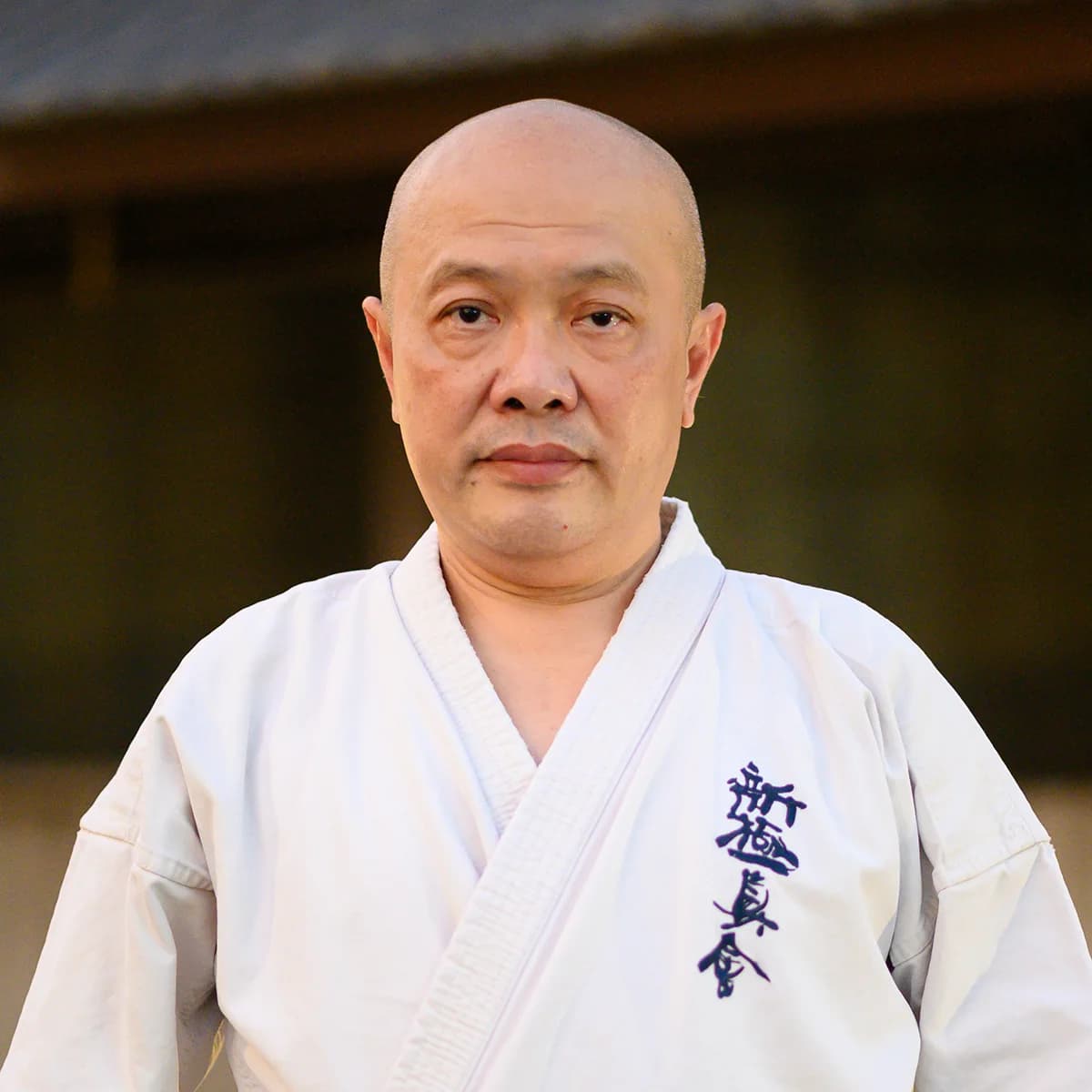
- Author
- Thaninpong Supapitakpong (Phoenix)
- Published
- Last updated
- Sources
- 4
- Reading time
- 9 min
Short Answer
Karate (空手) is a martial art that took shape on Okinawa and then spread to mainland Japan. It was written 唐手, meaning Chinese hand, until masters meeting in Naha on 25 October 1936 adopted 空手, meaning empty hand. There is no single official count of karate styles: what can be checked is which organisations each governing body recognises, and separately, how each organisation orders its own belt ranks.
Key Takeaways
- The name 空手 means empty hand and replaced 唐手, Chinese hand, at a masters' meeting in Naha on 25 October 1936.
- There is no official worldwide count of styles. The Japan Karatedo Federation's own links page names 剛柔会, 糸東会, 松涛館, 和道会 and 錬武会.
- Alongside point-scoring karate sits a separate full-contact lineage, which began with Mas Oyama's Kyokushin; WKO Shinkyokushinkai is the organisation IMAC Dojo belongs to.
- Belt ranks use Kyu counting down towards Dan, and every organisation sets its own colours: there is no single worldwide colour standard.
- Training rests on three pillars everywhere: Kihon basics, Kata forms, and Kumite sparring.
Ask how many karate styles exist and you will get a confident number. Ask which organisation the number comes from and the confidence disappears.
Two questions usually arrive together for anyone new to karate: what karate actually is, and how many styles it has. The second one is harder than it looks, because the honest answer depends on which organisation is counting.
This article separates the two things people mean by karate divisions, the schools and the belts, and answers each from source organisations rather than from summary: the Japan Karatedo Federation, the full-contact bodies, and the Thailand Karate Federation.
In this article
What karate is, and where the name comes from
Karate is written 空手 in Japanese. 空 (kara) means empty and 手 (te) means hand, so the name describes an art practised with the body alone. Adding 道 (do) to make 空手道 shifts the meaning from technique towards a path of self-training.
The name was not always this one. It was written 唐手, evoking the Chinese hand and reflecting the southern Chinese influence that reached the Ryukyu islands, until a meeting of karate masters convened by the Ryukyu Shimpo newspaper in Naha on 25 October 1936 adopted 空手 instead. That transition is covered in our article on karate's path to the Olympics in Thailand.
So the answer to which country karate is from is that it took shape on Okinawa, today a prefecture of Japan, on roots influenced by Chinese boxing, before spreading to mainland Japan and reaching the world under its Japanese name.
How many karate styles: one question, two different answers
In Thai the word for a karate division, sai, covers both a school of practice and the belt around the waist. English keeps them apart as styles and ranks, but the confusion behind the question is the same: people asking how karate is divided often mean quite different things.
| What is meant | The real question | Short answer |
|---|---|---|
| A school of practice | Which styles does karate divide into? | No single official number; it depends on which body is counting. |
| A belt rank | What are the ranks, and in what colour order? | Kyu ranks lead to Dan ranks, but colours belong to each organisation. |
The next two sections answer each meaning in turn, citing the source organisations rather than summarising them.
Divisions as schools: the styles of karate
The first honest point is that no body publishes a global count of karate styles. What can be checked is which organisations each governing body recognises. The Japan Karatedo Federation, which governs point-scoring karate in Japan, links these style organisations from its own links page:
- 全日本空手道連盟剛柔会
- 一般社団法人 全日本空手道連盟糸東会
- 一般財団法人 全日本空手道松涛館
- 全日本空手道連盟和道会
- 全日本空手道連盟錬武会
That list can be read directly on the JKF links page. Counting it gives five organisations, not four, even though people commonly speak of four major styles: 松濤館, 剛柔流, 糸東流 and 和道流. That small discrepancy is exactly why it is better to cite an organisation's list than to repeat a number.
Beside point-scoring karate sits full-contact karate, fought with real contact instead of scored touches. It began with Kyokushin, founded by Mas Oyama, and after 1994 that legacy divided into several organisations, one of them WKO Shinkyokushinkai, the organisation IMAC Dojo belongs to. The sequence is set out in our history of Shinkyokushinkai.
The two sides are not enemies. In Japan, the JKF and the International Karate Organization Kyokushinkaikan (IKO, a different body from WKO Shinkyokushinkai, the organisation IMAC Dojo belongs to) signed a cooperation agreement on 16 April 2015, recorded in the announcement on the JKF site, without merging the rule sets into one.
Divisions as belts: how Kyu and Dan work
Karate ranks use two words. Kyu ranks count downwards, so a beginner starts at a high number and works towards Kyu 1, after which Dan ranks count upwards. Judo uses the same structure, described in our article on what judo is.
The most common misunderstanding is about colour. There is no single worldwide colour standard. Each organisation sets its own order, so a green belt in one organisation is not automatically equivalent to a green belt in another. Comparing ranks starts with asking whose system is being used.
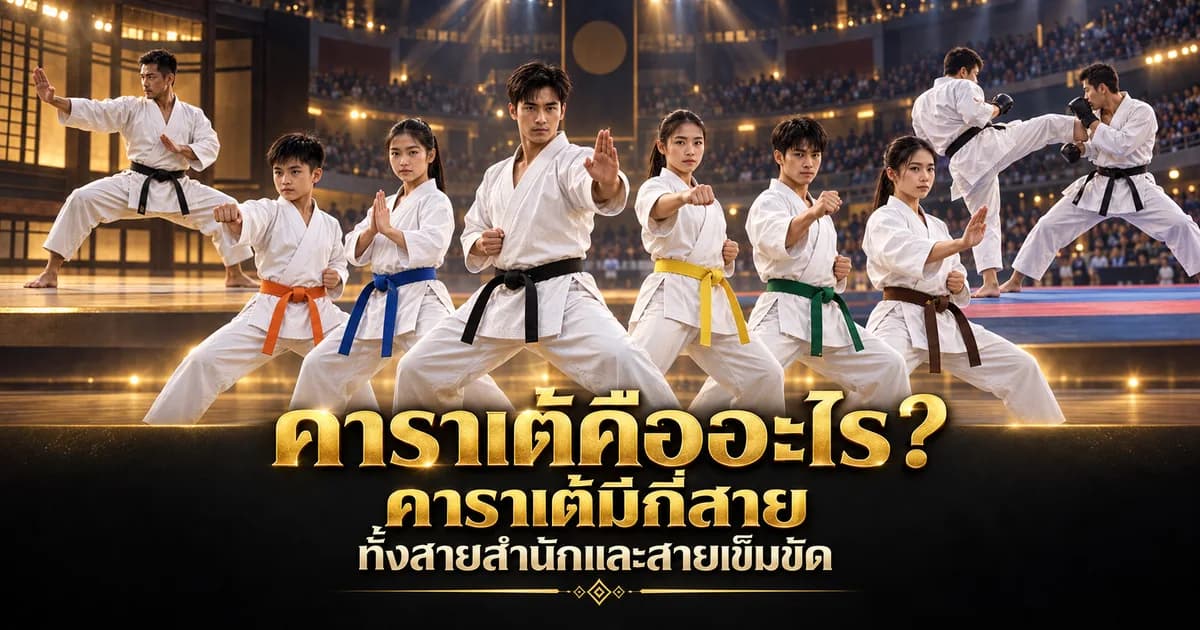
Rather than describe that in the abstract, the table below is the order IMAC Dojo actually uses under Shinkyokushin criteria.
| Rank | Belt colour |
|---|---|
| Kyu 10 | Orange |
| Kyu 9 | Orange / Black Stripe |
| Kyu 8 | Blue |
| Kyu 7 | Blue / Black Stripe |
| Kyu 6 | Yellow |
| Kyu 5 | Yellow / Black Stripe |
| Kyu 4 | Green |
| Kyu 3 | Green / Black Stripe |
| Kyu 2 | Brown |
| Kyu 1 | Brown / Black Stripe |
| Dan 1 | Black |
The requirements at each step, including Kihon, Kata and the grading criteria, are set out on our grading course page.
What karate training contains: Kihon, Kata and Kumite
Whatever the style, karate training rests on the same three pillars.
- Kihon is the basics: stances, movement, punches, blocks and kicks, repeated until the body structure is correct.
- Kata are set forms that string techniques together; they carry a school's knowledge and let quality of movement be examined.
- Kumite is sparring with a partner, from fully prearranged drills to free sparring under an organisation's own rules.
People also search simply for karate moves, which in practice means a handful of families: stances, punches, blocks and kicks, later assembled into kata. Those can be imitated from video up to a point, but joint angles, weight transfer and breathing need someone to correct them, or the repetition just reinforces the error.
The basic karate techniques: Kihon, Ido Geiko, and Sokugi
"Karate techniques" sounds like a list hundreds of items long. In practice it divides into four families: stances, punches, blocks, and kicks. Everything visible in a kata or in sparring is assembled from those four, with the angle, the distance, and the timing changed.
In the dojo those four are trained through three named formats. Kihon is basics on the spot, getting the body structure right before it gets fast. Ido Geiko is the same basics in motion, training weight transfer, stepping, and holding the line of the body through a change of direction. Sokugi is the kicking set, trained separately because it needs its own discipline in the supporting leg, the knee lift, and recovering the foot in time.
Once the basics hold, they are strung into kata. In the dojo's criteria the sequence runs from the entry forms, through Pinan and Yantsu in the middle grades, then Gekisai Dai, Tsuki no Kata, Gekisai Sho, Tensho, Saiha, and Seienchin, finishing the pre-black-belt grades at Sushiho and Garyu. The full order with the criteria for each step is set out in the IMAC Dojo grading review course.
One limit is worth stating plainly: the basics can be copied from video up to a point, but what decides whether a technique works is what the camera angle hides — the elbow angle in a block, the weight settling into the back foot, the breathing. Those need someone standing there correcting them, one repetition at a time.
Karate in Thailand, and how to choose a dojo
In Thailand the national competitive path runs on point-scoring rules under the Thailand Karate Federation, which connects to the international WKF system. Full-contact karate follows its own path, with WKO Shinkyokushinkai as the Japanese parent body.
Neither path is better; they answer different goals. If the goal is a national-team athletic career, point-scoring rules are the route that actually exists. If the goal is conditioning, learning to absorb contact, and intensive training of body and mind together, full-contact karate fits more directly.
Before deciding, three questions help more than photographs on a website.
- Which organisation does this dojo belong to, and whose grading criteria does it use?
- What level of certification do the instructors hold from that organisation?
- Can you come and watch training during a group class before you decide?
If full-contact karate in Bangkok is what interests you, our course page has the details, and if you are comparing karate with another art for a child, we have written that comparison in karate versus taekwondo for children. For which karate style suits a child and the age to begin, see the main styles to know before your child starts. For which of those styles you actually meet in Thailand, see how many karate schools Thailand has.
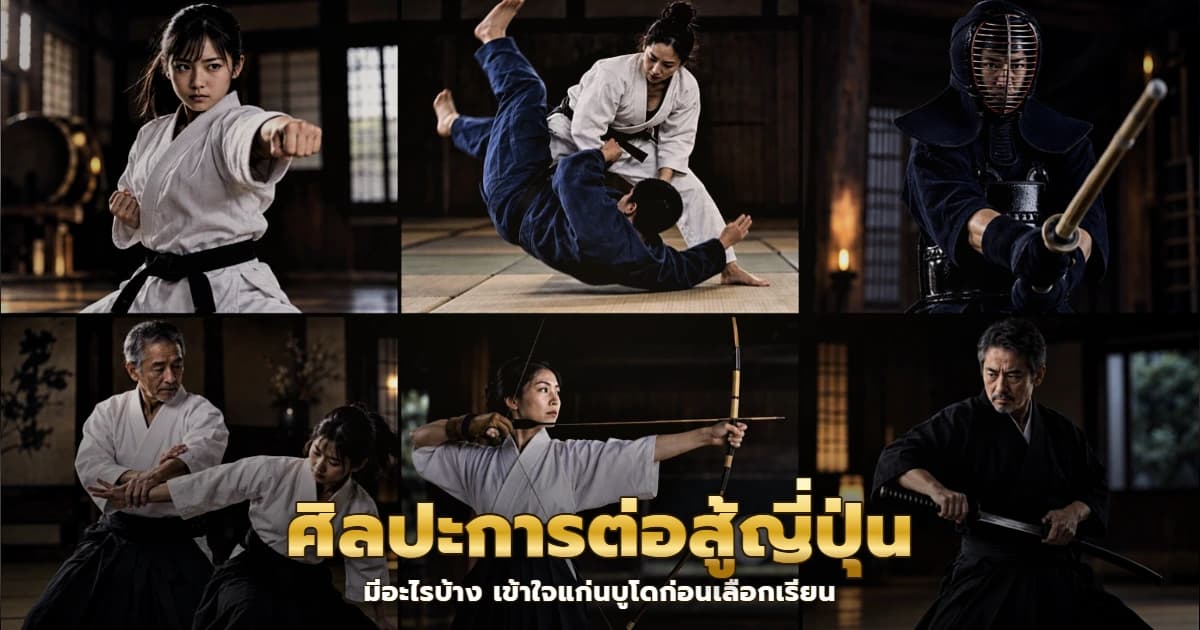
Read next: Judo vs Karate: How Do They Differ? Explained From a Real Instructor's Perspective.
See the Shinkyokushin karate course at IMAC DojoSources and further reading
- Japan Karatedo Federation (JKF) links pageReferenceAccessed 26 Aug 2026
- JKF news record of the cooperation agreement with IKO Kyokushinkaikan (16 April 2015)ReferenceAccessed 26 Aug 2026
- WKO Shinkyokushinkai official websiteReferenceAccessed 26 Aug 2026
- Thailand Karate Federation official websiteReferenceAccessed 26 Aug 2026
Frequently Asked Questions
Which country is karate from?
Karate took shape on Okinawa, today a prefecture of Japan, on roots influenced by southern Chinese boxing. It was written 唐手, Chinese hand, until masters meeting in Naha on 25 October 1936 adopted 空手, empty hand.
What are the karate ranks?
Kyu ranks count down from a high number to Kyu 1, then Dan ranks count upwards. Belt colours have no single worldwide standard; each organisation sets its own. At IMAC Dojo the Shinkyokushin order runs from an orange belt at Kyu 10 to a black belt at Dan 1.
So how many karate styles are there?
If styles means schools, there is no single official number; it depends on which body is counting. The Japan Karatedo Federation's own links page names five style organisations, while people commonly speak of four major styles, and full-contact karate sits outside that count altogether.
What are the basic karate techniques?
They fall into four families: stances, punches, blocks, and kicks. They are trained through Kihon on the spot, Ido Geiko in motion, and Sokugi for kicking, and then strung into the kata of whichever style you train. There is no universal list of techniques shared by every school.
What is the difference between karate and taekwondo?
Both are standing arts using hands and feet, but they differ in origin and in the balance of weapons. Karate comes from Okinawa and Japan; taekwondo comes from Korea and leans more heavily on kicking technique. Our comparison article covers this for parents in detail.
How is judo different from karate?
Karate is a standing striking art built on punches, kicks and blocks, while judo is a grappling art of throws and ground control that starts with learning to fall safely. Both use the same Kyu and Dan rank structure.
Can an adult with no experience start karate?
Yes. Adult classes begin from the same basics as any beginner, with training intensity adapted to physical condition. We have written separately about starting karate as an adult.
Ready to start martial arts?
Message IMAC Dojo to ask which course fits your age, goals, and training background.
Ask on LINE Official