Is Kyokushin Karate Painful? The Contact Rules, and What a Beginner Actually Does
The most common question before starting Kyokushin is whether it hurts. An honest answer has to separate two things: the competition rules, and what actually happens in a beginner's class.
By
 KenKarate, Judo, and martial arts instructor
Updated 5 Oct 2026
- Author
- Ken
- Published
- Last updated
- Sources
- 1
- Reading time
- 5 min
Short Answer
Kyokushin and Shinkyokushin use full-force contact rules: bare-hand strikes to the face and above the neck are forbidden, while kicks to the head and punches to the body are allowed. That is the competition context. Class is a different one — the instructor sets the drill, the equipment, and the level of force according to the student's experience, so beginners are not put into hard contact on day one.
Key Takeaways
- Full-force rules forbid bare-hand strikes to the face and above the neck; head kicks and body punches are allowed
- Competition and class are different contexts; the instructor sets drill, gear, and force by experience
- Beginners start with kihon — stance, movement, basic technique — not sparring
- Fatigue and muscle soreness are ordinary; sharp, localised, or joint pain is a signal to stop
- A contact art carries an injury risk that cannot be reduced to zero, and we do not claim otherwise
The hard question is not whether Kyokushin hurts, but what kind of discomfort, and at which point in the training.
Almost everyone considering Kyokushin asks the same thing first: does it hurt? It is a fair question, because the public image of Kyokushin is competition fought at full force without gloves.
An honest answer has to separate two things first — the competition rules, and what actually happens in a beginner's class. They are not the same, and collapsing them together is where nearly all the misunderstanding comes from.
In this article
The rules that make Kyokushin a contact art
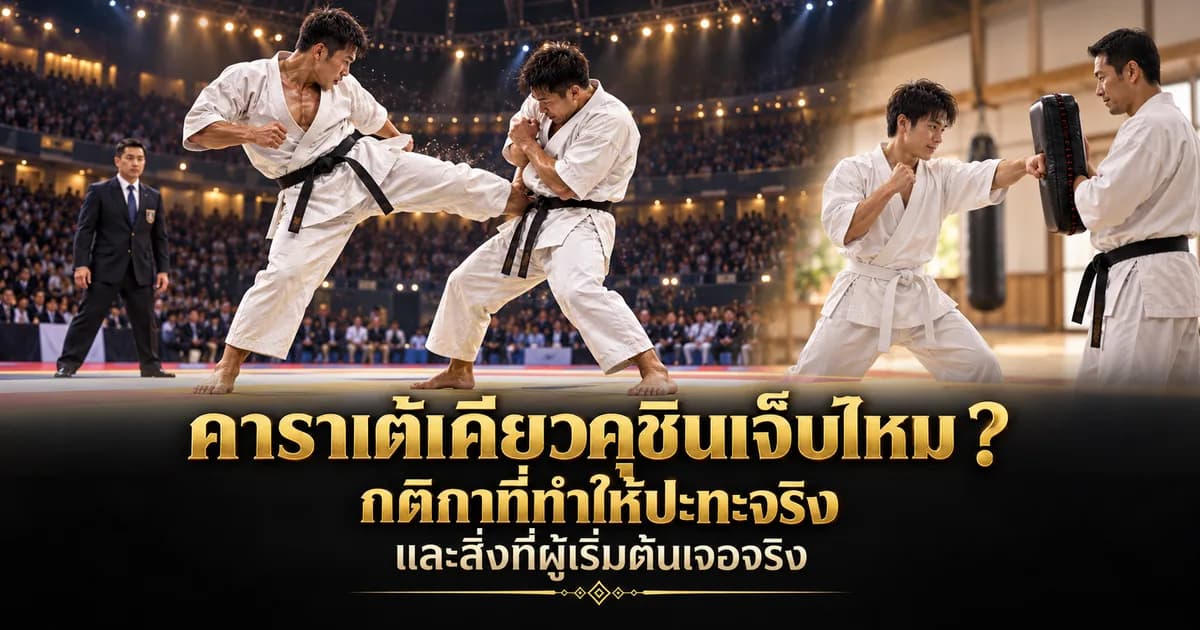
Shinkyokushin uses full-force contact rules: bare-hand strikes to the face and above the neck are forbidden, while kicks to the head and punches to the body are allowed. WKF lineages control the contact and decide bouts on points.
The ban on bare-hand strikes to the face is the part outsiders usually do not know, and it is why bouts can be fought at full force without gloves. The rule does not make the sport safe; it places the risk differently from a sport where the head can be punched.
- Full-force punches to the body are allowed
- Kicks to the head are allowed
- Bare-hand strikes to the face and above the neck are forbidden
- Training and competition are done with bare hands and bare feet, apart from basic safety equipment in practice
The difference between full-contact lineages and point-scored ones is set out in more detail in the article on karate and the Olympic path.
Class and competition are not the same context
Full-contact competition rules and classroom training are different contexts. In class the instructor sets the drill, the equipment, and the level of force according to the student's experience, so that distance, timing, receiving, and answering are learned without rushing into heavy contact.
A beginner therefore spends the early period on kihon — the fundamentals of punching, kicking, blocking, stance, breathing, and dojo etiquette — not on facing a partner at force. Kumite comes when the base is stable enough for the student to control themselves.
This is why the question to ask a dojo is not only whether it hurts, but how long before kumite, what equipment is used, and how the instructor decides who is ready.
Ordinary discomfort, and the signals that mean stop
Any training that works the body brings discomfort with it. Fatigue and muscle soreness after training happen in nearly every sport and usually ease as the body adapts.
What is different is pain that is sharp, localised, or in a joint. That is not part of training to be endured; it is a signal to stop and tell the instructor.
We do not say training carries no risk. A contact art carries a chance of injury that cannot be reduced to zero. What can be done is a sensible order of training, controlled force, correct equipment, and a student who is willing to say when something is wrong.
Children and adults do not start the same way
Children's classes and adults' classes have different purposes. For children, training emphasises etiquette, focus, body control, and confidence rather than contact.
For adults starting later, the instructor adjusts intensity to health, experience, and goals. Not everyone who starts Kyokushin intends to compete; many start for fitness, discipline, and confidence.
The route for adults starting in their thirties to sixties is covered in the article on karate for adults.
What to ask before joining, and how we do it
- What a beginner does on the first day, and when kumite begins
- What protective equipment is used in each kind of drill
- How the instructor adjusts force and partners for age and build
- What to do if something feels wrong during training
At IMAC Dojo in Bangkok we teach the Shinkyokushin lineage within the WKO system. Class details, schedule, and fees are on the Shinkyokushin karate course page.
Where the lineage comes from, from Mas Oyama to the present organisation, is explained in the Shinkyokushin history article.
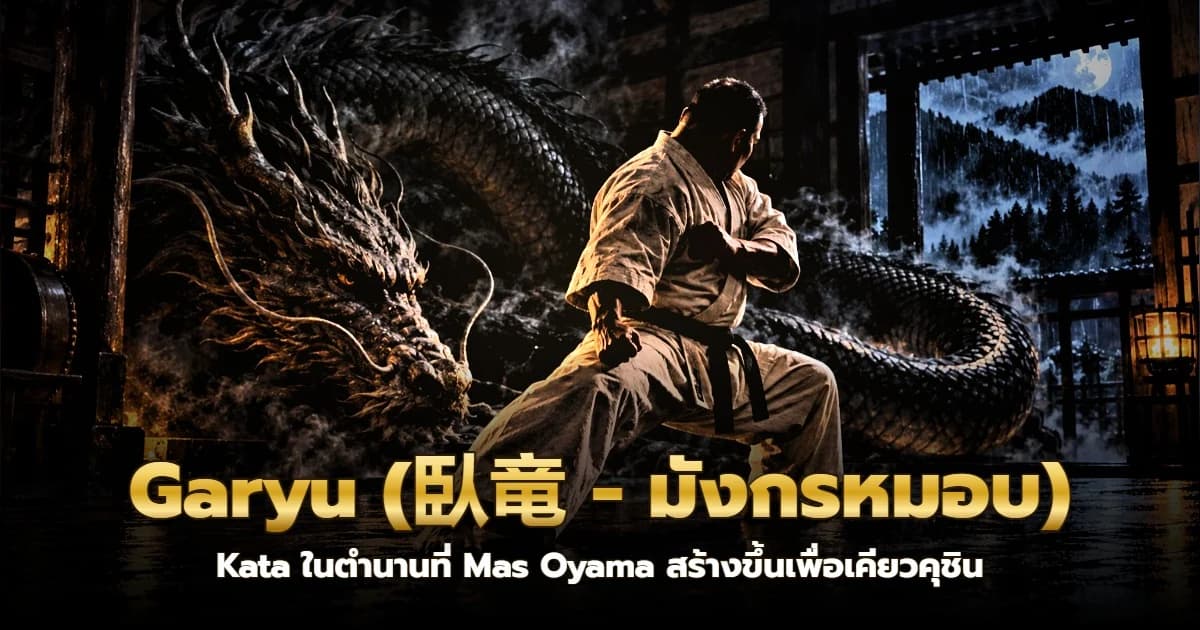
Read next: Garyu Crouching Dragon Kata.
Sources and further reading
- WKO Shinkyokushinkai competition rules — World Karate Organization ShinkyokushinkaiOfficialAccessed 5 Oct 2026
Frequently Asked Questions
Is Kyokushin karate painful?
Training that works the body brings fatigue and muscle soreness, which is ordinary. Full-force contact belongs to the competition context, not to a beginner's first day. In class the instructor sets the drill, the equipment, and the level of force according to the student's experience.
Do they punch to the face in Kyokushin?
Under Shinkyokushin's full-force rules, bare-hand strikes to the face and above the neck are forbidden, while kicks to the head and punches to the body are allowed. That prohibition is one reason bouts can be fought at full force without gloves.
Do I have to spar on the first day?
No. Beginners start with kihon — the fundamentals of punching, kicking, blocking, stance, breathing, and dojo etiquette. Kumite comes when the base is stable enough to control yourself. It is worth asking a dojo directly how long that takes and how they decide.
Can children train Kyokushin?
Children's classes have a different purpose from adults': etiquette, focus, body control, and confidence rather than contact. The instructor adjusts drills and partners to the child's age and build.
Is there a risk of injury?
Yes. A contact art carries a chance of injury that cannot be reduced to zero, and we do not say otherwise. What reduces it is a sensible order of training, controlled force, correct equipment, and a student who tells the instructor when something feels wrong. Sharp, localised, or joint pain is a signal to stop, not something to endure.
Ready to start martial arts?
Message IMAC Dojo to ask which course fits your age, goals, and training background.
Ask on LINE Official