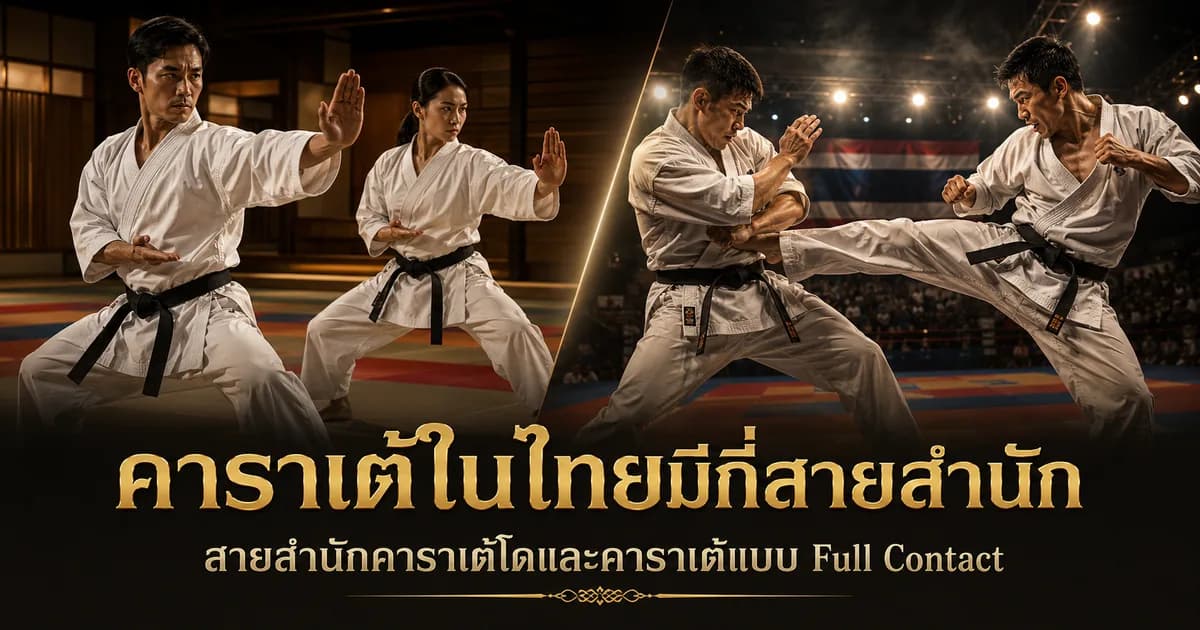
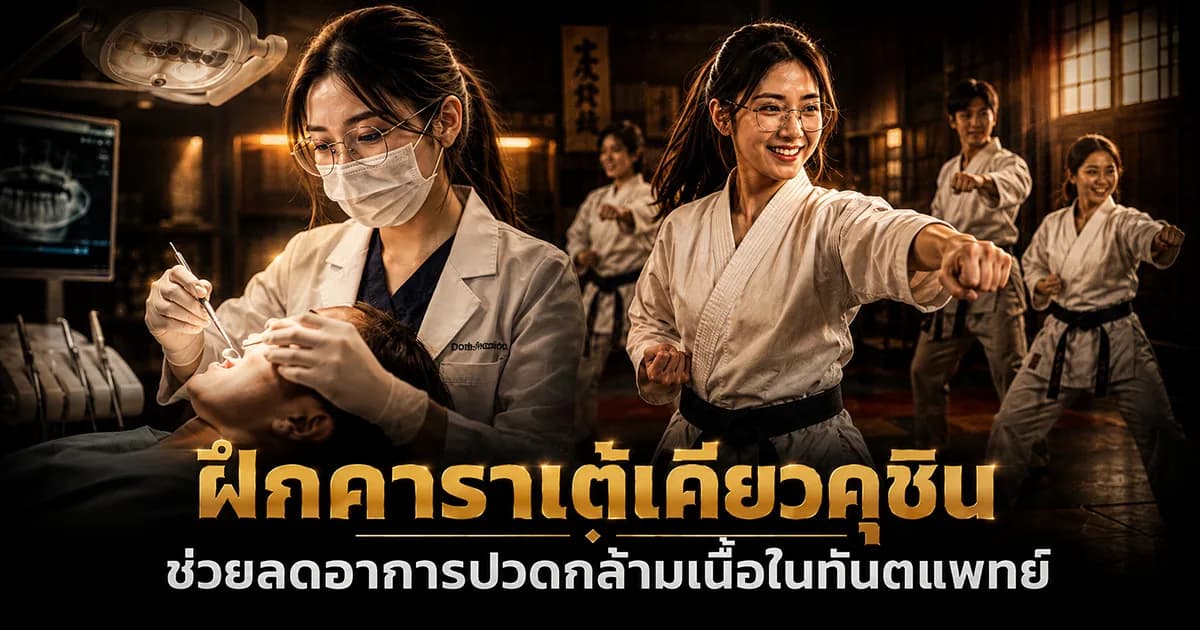
How Kyokushin Karate Training Eases Muscle Pain in Dentists
A dentist in my dojo told me his back felt like an old man's after ten years of chairside work. This article places research on pain prevalence, the limits of ergonomic equipment, and core muscle mechanics next to what I actually teach in the dojo.
By
 Thaninpong Supapitakpong (Phoenix)Founder and instructor at IMAC Dojo
Updated 9 Aug 2026
- Author
- Thaninpong Supapitakpong (Phoenix)
- Published
- Last updated
- Sources
- 10
- Reading time
- 8 min
Short Answer
Kyokushin karate training is not a treatment for pain. It supplies what dental work lacks: core endurance and dynamic movement. Research shows that intra-abdominal pressure increases lumbar spine stiffness and that deep trunk muscles contract before the limbs move, the same mechanism used when reaching for an instrument chairside. Ergonomic equipment reduces postural load, but it does not build muscular endurance.
Key Takeaways
- A systematic review reports musculoskeletal pain prevalence of 64-93% among dental professionals.
- A German study reported a 95.8% lifetime prevalence, and 12-month rates of 70.9% for the neck, 55.6% for the shoulders, and 45.8% for the lower back.
- Prolonged static muscle contraction is associated with localized ischemia and trigger points.
- Loupes and microscopes reduce neck load, but the work stays static, so they do not build core endurance.
- Karate training must progress gradually; anyone with an existing injury or health condition should consult a clinician and tell the instructor before increasing intensity.
This article is written from the perspective of Phoenix, founder of IMAC Dojo, as an instructor rather than a healthcare professional. The research cited provides context. It is not a diagnosis, not treatment advice, and not a promise that training works or is safe for everyone. Anyone with persistent pain should consult a physician or physiotherapist first.
A dentist who trains in my dojo once told me, I have been sitting doing dental work for ten years and my back already feels like an old man's. That statement is not an exaggeration. Multiple studies report very high musculoskeletal pain prevalence among dental professionals across their working lives.
What I want to share is not a promise that karate cures back pain. It is an explanation of why a day of holding still damages muscle, and why dynamic training fills a gap that ergonomic equipment cannot fill on its own.
In this article
Why dentists face more neck, shoulder, and back pain than most professions
A systematic review of musculoskeletal disorders among dental professionals reports general musculoskeletal pain prevalence between 64% and 93%, with the back and neck the most affected regions among dentists. The range is wide because studies differ in definitions, populations, and recall periods.
A questionnaire study of 450 dentists and dental students in Germany reported a lifetime musculoskeletal disorder prevalence of 95.8%, and 12-month prevalence of 70.9% for neck pain, 55.6% for shoulder pain, and 45.8% for lower back pain. These are self-reported figures from one national sample and should not be read as the rate for every dentist worldwide.
A review of the mechanisms leading to musculoskeletal disorders in dentistry explains that prolonged seated postures are associated with sustained muscle contraction, localized ischemia, trigger points, and the muscle imbalance that follows. That is why sitting up straighter, on its own, is not enough.
As a martial arts instructor, I notice that dentists manage their schedules better than many professions because they work by appointment. Yet the work itself forces the body into unnatural postures for long stretches. A narrow, poorly lit oral cavity means bending forward, tilting the neck, and repeatedly twisting toward the same side.
The problem is not one particular posture. It is holding the same posture for hours. Muscles held in sustained contraction never rest and never trade the load with other muscles. That is a different exposure from work that lets you move.
Ergonomic equipment genuinely helps, but only halfway
A study of prismatic deflection loupes and cervical spine load measured ten medical students during a simulated microsuturing task and reported 16.3 lbf over the cervical spine with through-the-lens loupes versus 9.6 lbf with prismatic deflection loupes, along with a 17.2% reduction in upper trapezius activation. The setting was microsurgical rather than a working dental clinic, so it is a comparable reference point, not a conclusion covering every dental procedure.
A posture assessment during third lower molar extractions performed with a microscope, loupes, or the naked eye found a significant reduction in neck bending when magnification aids were used, and the effect was clearest with the microscope.
What equipment cannot do is make the work stop being static. The dentist still holds the same position for the same length of time, and the muscles still contract without rest. Equipment lowers the load per exposure; it does not raise the endurance of the muscles carrying that load. The missing half has to come from training outside the clinic.
Many people believe that buying loupes or a microscope makes the pain disappear. The available data supports that these tools reduce neck flexion and cervical load. They help in one dimension only: posture.
Why Kyokushin karate supplies what equipment cannot
A critical appraisal of spinal muscle evaluation using the Sorensen test notes that holding time, which reflects back extensor endurance, has been used as a measure associated with low back pain, while its predictive accuracy and the factors behind the result remain debated. The usable point is that endurance matters in back care, not maximum strength alone.
An experiment on intra-abdominal pressure and lumbar spine stiffness, which applied sudden loads to the trunk and compared pressure levels realistic to work situations, reported that intra-abdominal pressure of a size likely to occur at work increased spine stiffness. That is the same principle practitioners describe as a natural back-support belt, although the study did not test karate students.
A second mechanism is feedforward core activity. The classic study on feedforward contraction of transversus abdominis before arm movement showed that deep trunk muscles engage before the muscles that actually move the limb. Punches and kicks that demand sudden force in full-contact karate therefore rehearse the same timing the body should use when reaching for an instrument beside the dental chair.
Evidence on Kyokushin training itself remains limited. A trial on eight weeks of Kyokushin karate training, leg muscle activity, and arch height studied 24 adolescent girls with foot pronation and found significantly increased tibialis anterior and lateral gastrocnemius activity along with a higher medial longitudinal arch. That sample is not working-age dentists, so it can indicate a direction but cannot be generalized to adults with back pain.
To see what a real class covers and how the progression is staged, visit the IMAC Dojo Shinkyokushin Karate course and the full schedule and fees page.
What I teach in the dojo does not begin with high kicks or contact. It begins with the Sanchin-dachi stance and Ibuki breathing, a resisted exhalation through the throat and abdomen. Students feel the abdominal wall, diaphragm, and pelvic floor working together as a ring around the trunk. That is a training explanation I use as an instructor, not a clinical claim of treatment.
Dentists who genuinely train full contact do exist
One documented example is Riichi Seto, a dentist and clinic director in Kanagawa Prefecture, who became a live-in student of Mas Oyama in 1969 and holds a 7th-dan black belt in a Kyokushin karate organization. This comes from a user-edited encyclopedia, so treat it as an illustrative example rather than academic evidence.
In practice at my dojo, students who work with their hands start with hand wraps and training gloves, and do controlled-force partner drills first. That sequence is a dojo practice, not a guarantee against injury. Anyone worried about their hands should raise it with the instructor before starting, and can read how we teach on the IMAC Dojo instructor profile.
The question I hear most often from dentists is what happens to their work if a hand is injured. It is a fair question, because the hands are the instrument of the profession.
Comparing approaches to dentists' pain
| Approach | What the evidence supports | Limitation |
|---|---|---|
| Prismatic deflection loupes | Cervical load reduced from 16.3 to 9.6 lbf and upper trapezius activation reduced by 17.2% in a simulated microsurgical task | Measured in ten medical students, not a working dental clinic, and the work remains static |
| Dental operating microscope | The clearest reduction in neck bending in a posture assessment during third lower molar extractions | Improves posture without building core muscular endurance |
| Kyokushin karate training | Trains core endurance, breath control, and feedforward trunk activity along the mechanisms described in basic research | No study has tested its effect on dentists' pain directly; intensity must match the individual |
How to start safely as a working professional
If you are unsure whether a working adult can genuinely start karate, read the first-hand account in starting karate between 30 and 60, or see every programme on the full course listing.
See the adult Karate schedule, fees, and class formatI advise dentists who already have pain to begin with basic stances and breathing rather than high kicks or deeply lowered positions. Range and speed come after endurance returns. Rushing the sequence is what injures beginners, not the martial art itself.
At IMAC Dojo we teach Shinkyokushin Karate under the Shinkyokushinkai approach, which emphasizes staged fundamentals and long-term development over quick results. Anyone with a herniated disc, radiating leg pain, or a chronic condition should be assessed by a physician or physiotherapist first, and then tell the instructor about those limits.
Sources and further reading
- A systematic review of musculoskeletal disorders among dental professionals — PubMedReferenceAccessed 9 Aug 2026
- Prevalence of Musculoskeletal Disorders among Dentists and Dental Students in Germany — PubMed CentralReferenceAccessed 9 Aug 2026
- Mechanisms leading to musculoskeletal disorders in dentistry — PubMedReferenceAccessed 9 Aug 2026
- Ergonomic Benefits of Prismatic Deflection Loupes — Safety (MDPI)ReferenceAccessed 9 Aug 2026
- Posture Assessment in Dentistry for Different Visual Aids Using 2D Markers — PubMedReferenceAccessed 9 Aug 2026
- Spinal muscle evaluation using the Sorensen test: a critical appraisal — PubMedReferenceAccessed 9 Aug 2026
- Feedforward contraction of transversus abdominis — PubMedReferenceAccessed 9 Aug 2026
- Increase in spinal stability obtained at levels of intra-abdominal pressure realistic to work situations — PubMedReferenceAccessed 9 Aug 2026
- The Effect of Eight Weeks of Kyokushin Karate Training on Leg Muscle Activity — Physical Treatments JournalReferenceAccessed 9 Aug 2026
- Riichi Seto — Japanese WikipediaCommunityAccessed 9 Aug 2026
Frequently Asked Questions
How does Kyokushin karate differ from general karate?
Kyokushin is a full-contact line that trains real impact and uses Ibuki breathing together with stances that demand constant trunk support, so it emphasizes core endurance more than styles scored on light contact. Both approaches have their own value, and the intensity has to match the student's physical condition.
Can dentists with disc problems train?
A physician or physiotherapist must assess this first. If exercise is cleared, begin with higher stances, reduce trunk rotation, and avoid high kicks until endurance returns, and tell the instructor about the limits every session. This article is not individual medical advice.
I am worried about hand injuries from training. What should I do?
Tell the instructor on day one that your profession depends on fine hand work. At our dojo these students start with hand wraps and training gloves and do controlled-force partner drills before any real contact. The practice reduces risk, but no training method can guarantee that injury will not occur.
How long does training take before results appear?
No timeframe applies to everyone. An eight-week Kyokushin trial in adolescent girls with foot pronation found changes in leg muscle activity, but that sample was not working adults in pain. Individual results depend on consistency, workload, recovery, and prior physical condition.
Ready to start martial arts?
Message IMAC Dojo to ask which course fits your age, goals, and training background.
Ask on LINE Official