IMAC DOJO ロゴIMAC DOJO

Course Detail

Waikru Muaythai

Learn Wai Kru Muay Thai movements, meaning, rhythm, and Thai cultural values through structured practice.
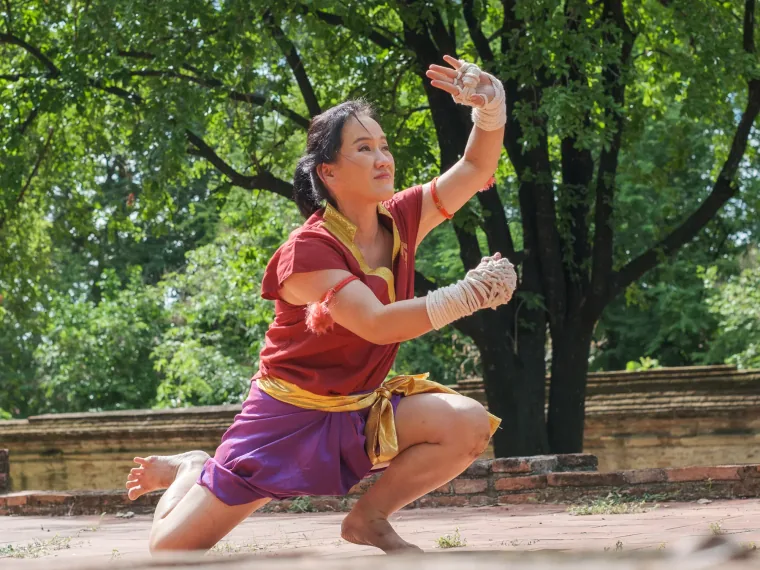
Wai Kru Muay Thai class at IMAC Dojo, Bangkok

Short Answer

A short answer for people who want to learn Wai Kru Muay Thai

“Wai Kru Muay Thai at IMAC Dojo teaches the movement, meaning, rhythm, focus, Mae Mai, Luk Mai, and how to show proper respect to the teacher lineage, in a structured way.

It is suitable for children, youth, fighters, Muay Thai students, instructors, and learners who need Wai Kru skills for competition, performance, or Thai cultural study.”

Children and youthFightersMuay Thai studentsMuay Thai instructorsThai culture learners
Ask about Wai Kru Muay Thai on LINE

Learning Outcomes

What students gain from Wai Kru Muay Thai

Movement

Rhythm

Meaning

Mae Mai

Confidence

Schedule & Pricing

Wai Kru Muay Thai Schedule and Fees

Last updated 14 July 2026

Morning Private Class

Monday - Thursday, 10:00 - 12:00

1,000 THB/person/hour

Book in advance through LINE Official.

Evening Private Class

Tuesday and Thursday, 16:00 - 20:00

1,000 THB/person/hour

Suitable for individual training or performance preparation.

Ask about Wai Kru Muay Thai on LINE

Equipment

Uniform

Training uniform information for preparing before class.

  • IMAC Dojo martial arts school T-shirt: 300 THB per shirt.
  • Students may wear the school T-shirt with Muay Thai shorts or flexible training pants suitable for movement.
  • Students prepare their own training pants so they can move safely, comfortably, and appropriately for dojo standards.

Course Detail

Course Overview

Lesson Content

IMAC Dojo's Wai Kru Muay Thai course is designed for students who want to learn the art of Wai Kru Muay Thai systematically. It covers Muay Thai fundamentals, movement, Muay Thai weapons, defense, Mai Khru for fighting, and Wai Kru dance performed correctly according to the art. ¶ The course has two main programs to suit each group of students' goals: the Standard Wai Kru Muay Thai Program and Wai Kru Muay Thai for Performance. • Standard Wai Kru Muay Thai Program • Wai Kru Muay Thai for Performance

Standard Wai Kru Muay Thai Program

This course was developed by Khru Muay Thai Nareepas Supapitakpong. It emphasizes step-by-step learning, clear levels, and assessment according to the school's standards.

  • Stance, footwork, and movement
  • Muay Thai weapons: punches, elbows, knees, kicks, and teeps
  • Defense and Mai Khru for fighting strategy
  • Mae Mai and Luk Mai Muay Thai
  • Wai Kru movements in level sequence

Structure of Each Level

At each level, students train the core elements in sequence: the basics, stance and movement, Muay Thai weapons, defense, Mai Khru for fighting, and Mae Mai and Luk Mai Muay Thai, through to the Wai Kru poses for that stage.

  • Basics, such as wrapping the hands with hand wraps, basic fist making and warming up before training
  • Stance and movement, such as the guard stance, shuffle footwork, stepping, retreating, circular movement, angle steps and the movement added at higher levels
  • Muay Thai weapons — punches, elbows, knees, kicks and teeps — in basic and applied forms, with more complex techniques at the higher levels
  • Defense, such as parrying, blocking, raised guards, evading, slipping and deflecting, jumping, and applied defense
  • Mai Khru for fighting, and Mae Mai and Luk Mai Muay Thai, to understand fighting strategy and how the techniques are applied
  • Wai Kru Muay Thai poses, from the basic poses to advanced poses and the combined sequence

Nine Learning Levels

Students train through each level in sequence and take an assessment to pass each stage. After passing, students receive a certificate from IMAC Dojo and can continue to the next level.

  • Level 1: starts from the basics — hand wrapping, making a fist, warming up, the guard stance, shuffle footwork, basic Muay Thai weapons, basic defense, basic Mai Khru, and introductory Wai Kru poses such as Pathom, Phrom Nang, the three bows, Kop Phra Mae Thorani, Thawai Bangkhom and Sao Noi Pa Paeng
  • Level 2: adds alternating advancing and retreating steps; the rising, horizontal and descending elbows; the middle roundhouse kick, side teep and diagonal knee; diagonal blocking and diagonal raised-guard defense; plus Mai Khru and higher Wai Kru poses
  • Level 3: forward and backward split shuffles and split steps; spinning back fist, spinning elbow and spinning kick; turning back teep and turning back kick; teep-blocking defense, Mai Khru and more complex Wai Kru poses
  • Level 4: crossing shuffles and crossing steps; adds weapons such as the overhand 'buffalo' swing punch (Mat Wiang Khwai), the forward-thrusting elbow, the whipping kick and the low roundhouse kick; slipping, deflecting and evasive movement; plus Mai Khru and intermediate Wai Kru poses
  • Level 5: focuses on circular movement; the downward hammer punch (Mat Khok), chopping elbow, high teep and high roundhouse kick; the eight-direction Khun Phon Krai Thuan defense; and the three-line Yang Sam Khum Wai Kru pose
  • Level 6: angle shuffles and angle steps; double straight punches, double hooks and double uppercuts; jumping defense; plus Mai Khru and advanced Wai Kru poses
  • Level 7: angle shuffles and angle steps with foot withdrawal; jumping punch, jumping kick, jumping teep and jumping knee; plus the Mai Khru and Wai Kru poses for this level
  • Level 8: builds on advanced movement with the flying punch, flying kick, flying teep and flying knee, flying defense, and the Mai Khru and Wai Kru poses used at the higher levels
  • Level 9: the highest level of the course — crossing shuffles and crossing steps with foot withdrawal, combining several weapons together, ducking defense, advanced Mai Khru, and the combined seated and standing Phrom Wai Kru sequence

Wai Kru Muay Thai for Performance

This program is designed for students who want to use Wai Kru Muay Thai skills in performances, stage work or cultural presentations, emphasizing correctness, beauty, suitability for the performer and fit with the performance time. It suits students preparing solo or group performances, ceremonies, school events, cultural events or other special occasions. The performance program selects content to suit the student, the type of event and the performance time, while keeping the correct foundations of Muay Thai and the Wai Kru poses.

  • Introductory knowledge, hand wrapping, fist formation, and warm-up
  • Basic footwork skills: the guard stance, forward and backward shuffles, alternating advance and retreat, circular footwork, outside-angle attacking and receiving steps left and right, and inside-angle attacking and receiving steps left and right
  • Basic punching skills: lead and rear straight punches, descending elbow, horizontal elbow and rising elbow, both standing in place and on the move
  • Basic leg skills: straight teep, straight kick, diagonal kick and straight knee, both standing in place and on the move
  • Select Mae Mai and Luk Mai suitable for the performance format
  • Design Wai Kru movements that fit the learner and performance duration

Assessment, Uniform Cost, and Private Class

Students in the standard program must take an assessment against each level's criteria. The assessment fee is 500 THB per test, and the test date and time can be booked at the student's convenience. Training attire starts with an IMAC Dojo T-shirt and pants suitable for movement.

  • Private Class Monday-Thursday 10.00-12.00
  • Private Class Tuesday and Thursday 16.00-20.00
  • Private Class tuition 1,000 THB per person per hour
  • IMAC Dojo school T-shirt 300 THB per shirt

Cultural Meaning of Wai Kru Muay Thai

Wai Kru Muay Thai is a way to show respect to teachers, family, lineage, and the Thai martial tradition.

It is not only a performance before a fight.

Students learn the meaning behind movement, posture, direction, and rhythm.

Understanding the meaning helps the Wai Kru look natural and respectful.

The course keeps the cultural context clear for Thai and international learners.

  • Respect for teachers and lineage
  • Thai cultural identity
  • Meaning behind movement

Basic Movement and Body Line

Training starts from posture, hand position, stepping, kneeling, standing, and controlled transitions.

Students learn how to move with balance rather than only copying shapes.

The body line, eye direction, hand placement, and timing are corrected carefully.

This helps children, beginners, and performers build clean movement quality.

The class can adjust intensity for age and experience.

  • Posture and balance
  • Hand and eye direction
  • Clean transitions

Nine-Level Curriculum

The standard curriculum is divided into nine levels so students can progress step by step.

Each level adds movement, weapons, defense, Mai Khru, Mae Mai, Luk Mai, and Wai Kru forms.

The level structure helps students know what to practice and what to review.

It also supports assessment and certification through IMAC Dojo.

Students who already have experience can ask about placement assessment.

  • Level 1 foundation
  • Level 2-5 movement and weapons
  • Level 6-9 advanced movement and presentation

Rhythm, Music, and Breathing

Wai Kru depends on rhythm and calm breathing.

Students learn how to listen to the music and move with suitable timing.

Breathing helps control posture, emotion, and balance.

The class trains rhythm slowly before adding expression.

This makes the performance more composed and less rushed.

  • Move with rhythm
  • Control breathing
  • Keep expression calm

Mae Mai and Luk Mai Connection

Wai Kru training is connected to Muay Thai knowledge, not separated from it.

Students learn how basic weapons, defensive ideas, Mae Mai, and Luk Mai relate to the ceremony and movement.

This gives the course more depth than memorizing a dance sequence.

It also helps fighters and teachers explain the art with better context.

The connection is taught according to each student's goal.

  • Muay Thai weapons
  • Mae Mai and Luk Mai ideas
  • Cultural and technical context

Performance Preparation

Students who need Wai Kru for stage, school, cultural events, or media work can train with a performance goal.

The instructor can adjust movement length, difficulty, formation, and rhythm.

For group performance, timing and spacing are carefully prepared.

For solo performance, the class focuses on expression, detail, and confidence.

The goal is a respectful performance that fits the occasion.

  • Solo or group performance
  • Event-appropriate movement
  • Timing and spacing

Competition Preparation

Fighters who need Wai Kru before a match can train the order, meaning, and presentation in a practical way.

The class helps the student prepare a sequence that fits the ring setting.

Movement should be confident, respectful, and not too long for the event.

Students learn how to stay focused before the fight.

The training can be adjusted for age, competition rules, and experience.

  • Ring-ready Wai Kru
  • Focus before competition
  • Respectful presentation

Children, Adults, and International Learners

Children can use Wai Kru training to build focus, respect, coordination, and cultural understanding.

Adults can use it to study Thai culture and improve movement quality.

International learners can understand why the ceremony matters before learning the sequence.

Teachers can deepen their explanation and class structure.

The course adjusts language, pace, and detail to the learner.

  • Children and youth
  • Adults and cultural learners
  • Muay Thai teachers

Assessment and Certificate

Students in the standard program take an assessment at each level.

The test fee is 500 THB per assessment.

When students pass, they receive a certificate from IMAC Dojo and can continue to the next level.

Assessment helps keep progress clear and prevents students from skipping important foundations.

Students should ask LINE Official before scheduling a test.

  • Level assessment
  • Certificate after passing
  • Clear progression

Private Class and Booking

Wai Kru Muay Thai is mainly arranged as a private class so the teacher can adjust content to the student's goal.

Available time can vary, so booking through LINE Official is recommended.

Students should share age, experience, purpose, and preferred schedule.

The school can then recommend the right class format.

Private training is suitable for culture study, performance, competition, or teacher development.

  • Book through LINE Official
  • Share learning purpose
  • Private training by goal

Quick Answers

Quick answers before enrolling

Who is it for?

It is suitable for children, youth, fighters, Muay Thai students, and learners interested in Thai culture.

Beginner friendly

Yes. The teacher starts with basic movement, rhythm, posture, and meaning.

Training purpose

It can be used for competition, performance, personal development, and Thai cultural preservation.

Private class fee

Private Class is 1,000 THB per person per hour during the scheduled private class periods.

Level assessment fee

Students in the standard program take assessments according to each level's criteria. The assessment fee is 500 THB per test.

Media

Wai Kru Muay Thai training atmosphere

Open video
Wai Kru Muay Thai video thumbnail

Wai Kru Muay Thai introduction video from IMAC Dojo

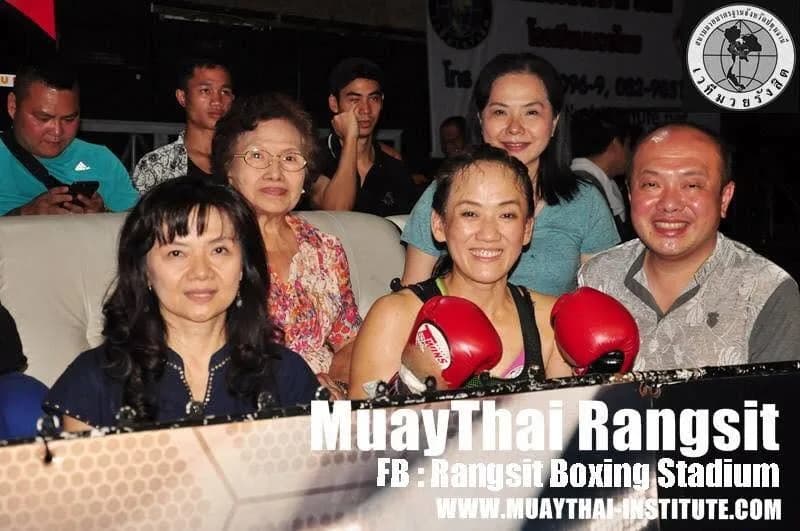
Khru Patty in red Muay Thai gloves with supporters beside the ring
Khru Patty on the day she fought in the ring, 18 August 2018
Wai Kru Muay Thai students posing in traditional training outfits at an ancient brick templeGallery
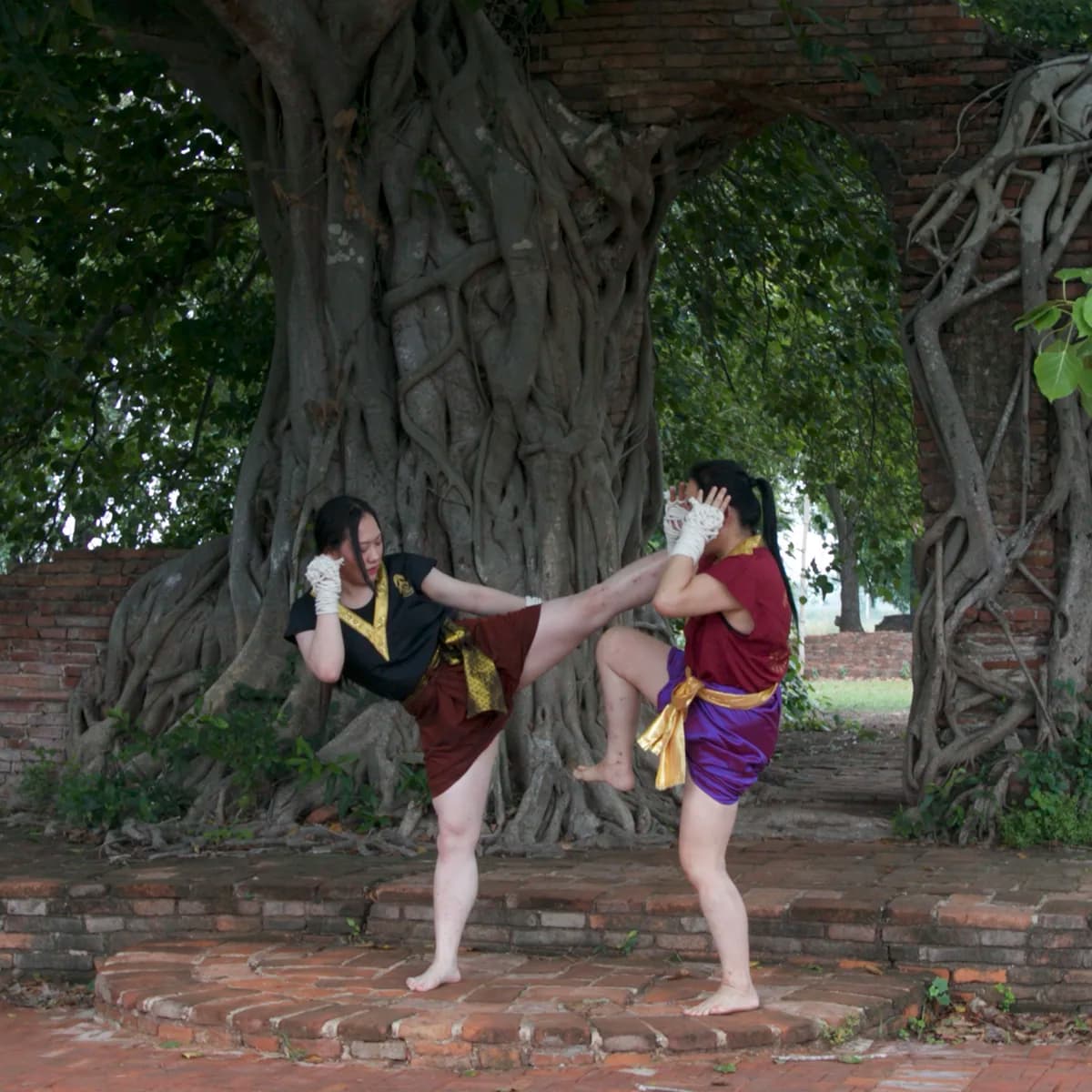
Two Wai Kru Muay Thai students practicing a high kick and guard under a large tree
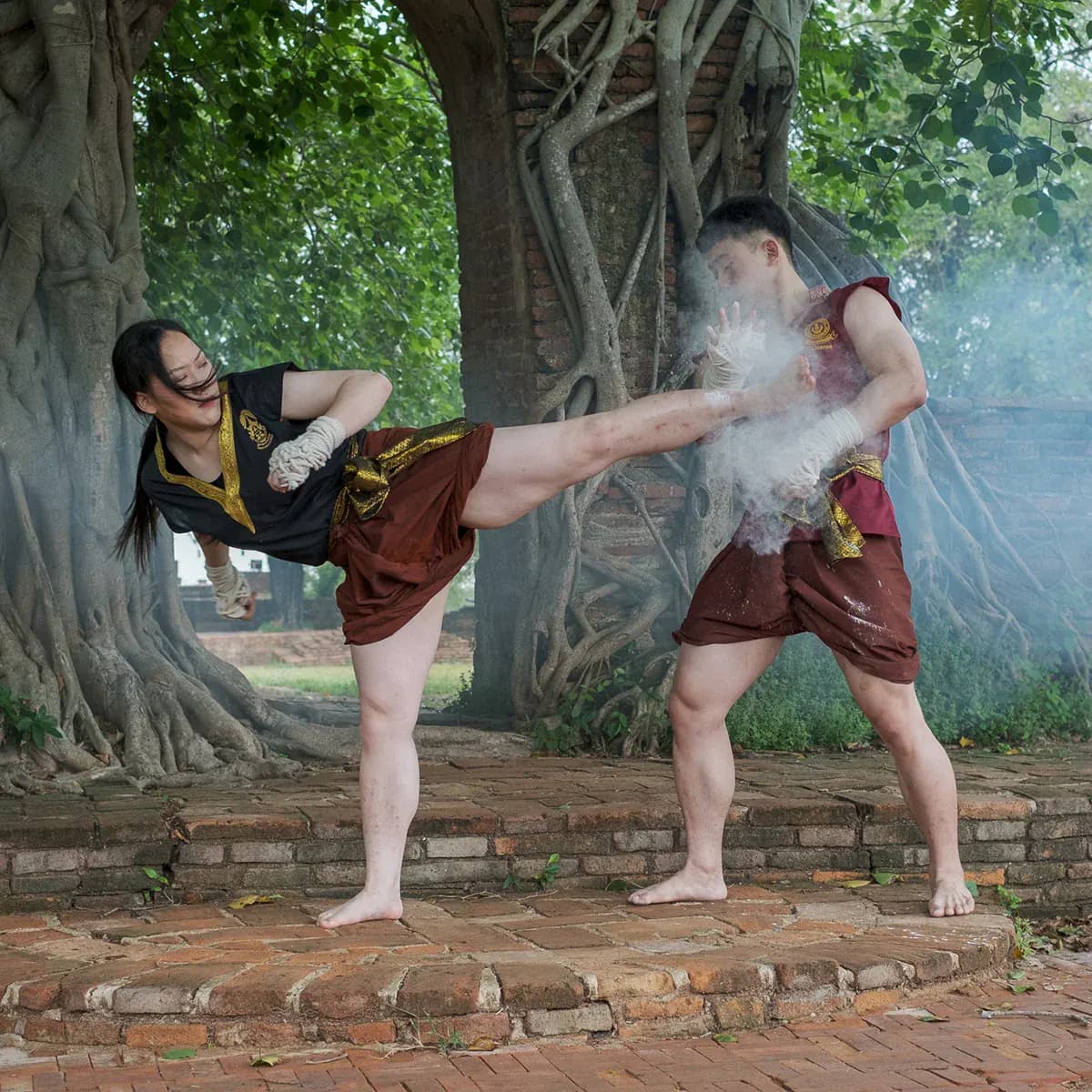
Wai Kru Muay Thai kick demonstration with powder impact during outdoor practice
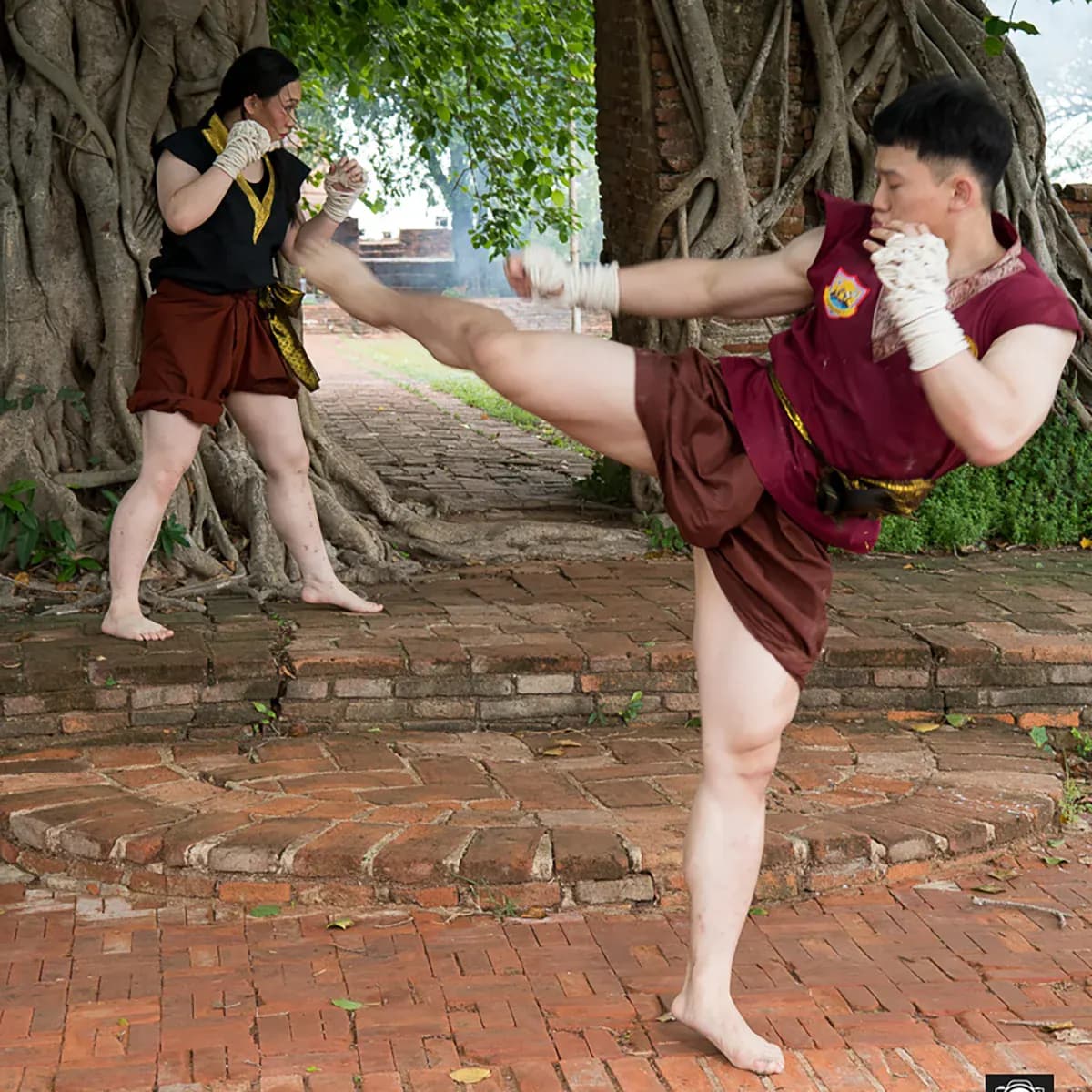
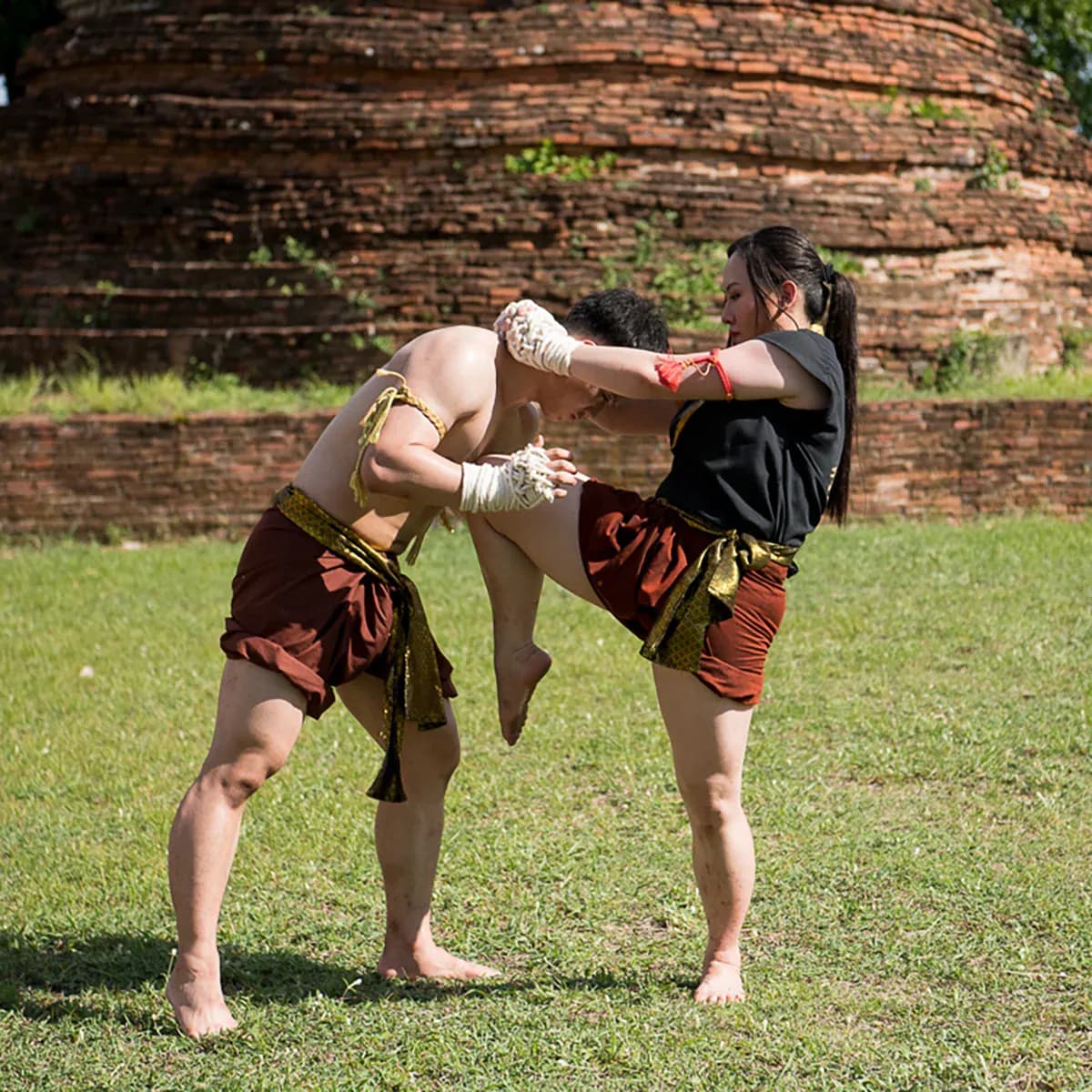
Muay Thai student demonstrating a front kick while a partner guards in traditional costume
Wai Kru Muay Thai knee strike practice in front of an ancient brick stupa
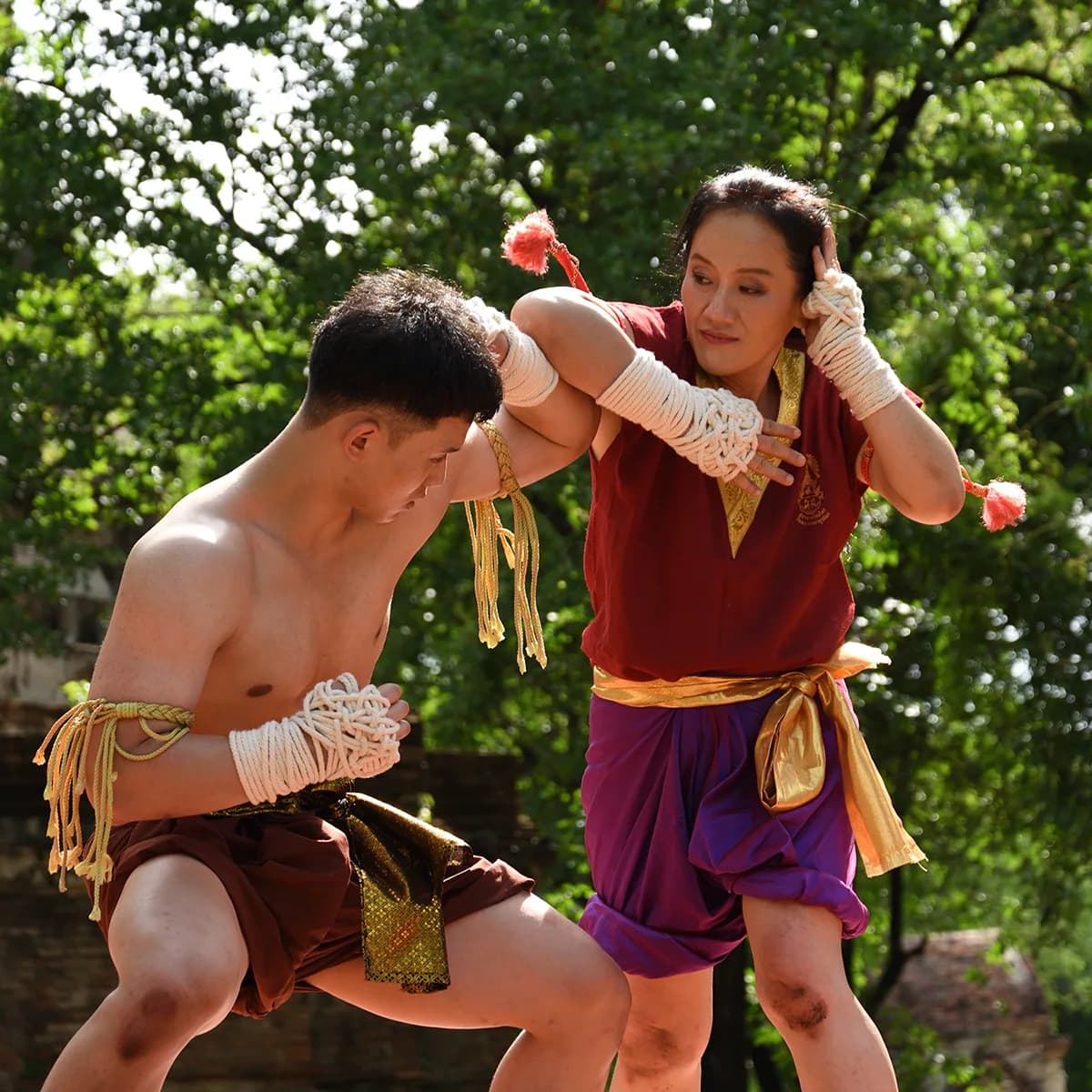
Close-up Wai Kru Muay Thai elbow and guard movement during outdoor training

Schedule & Pricing

How to join

  1. Message us on LINE Official with the student's age, any previous experience, and the training goal.

  2. We recommend the class that fits and confirm which times are open.

  3. Agree a start date and come to the dojo at that time.

You do not need to buy a uniform for the first session — a t-shirt and comfortable trousers are fine.

Direction

Getting to IMAC Dojo

Near Ladprao 101PokaewBangkapiKlongchanBueng KumRamkhamhaengNawaminChokchai 4
Open in Google Maps

The dojo is on Soi Pokaew 3 Yak 9 in Klongchan, Bangkapi. The soi opens onto Ladprao 101, so it is an easy trip from Bangkapi, Klongchan, Bueng Kum, Ramkhamhaeng, Nawamin and Chokchai 4. By train, take the MRT Yellow Line to Ladprao 101 station and continue into the soi.

Parking: you can park along the front of the school. This is the same soi as NIVA International School, so there is plenty of space, and police patrol it regularly because of the school's police box. Parents bringing children can wait and watch the class.

FAQ

Wai Kru Muay Thai Bangkok questions

How many types of Wai Kru Muay Thai courses does IMAC Dojo offer?
Short answer: IMAC Dojo presents Wai Kru Muay Thai as both a standard learning course and a performance-focused course, depending on the student's purpose.
What is taught in the standard Wai Kru Muay Thai course?
Short answer: Students progress through 9 structured levels covering Wai Kru movement, meaning, rhythm, posture, focus, Mae Mai, and Luk Mai, with a level test and an IMAC Dojo certificate for each level passed.
Who is the performance Wai Kru Muay Thai course for?
Short answer: It is suitable for students, performers, fighters, schools, or groups preparing a Wai Kru Muay Thai presentation.
What is Wai Kru Muay Thai?
Short answer: Wai Kru Muay Thai is the traditional ceremony and movement sequence used to show respect to teachers, lineage, and Muay Thai heritage.
Why is Ram Muay performed before a fight?
Short answer: Ram Muay before a fight lets fighters show respect to their teacher, focus the mind, survey the ring and warm up the body before competition.
How is Wai Kru Muay Thai different from Ram Muay?
Short answer: Wai Kru emphasizes paying respect to the teacher, while Ram Muay is the dance-like movement sequence often performed after the Wai Kru.
What are popular Wai Kru Muay Thai movements?
Short answer: Common movements include Thep Phanom, Pathom, Phrom Si Na (four-faced Brahma), Sao Noi Pra Paeng (the powder-applying maiden), and Nok Yung Ram Paen (the dancing peacock), each with its own meaning and varying by school.
What is Thep Phanom in Wai Kru Muay Thai?
Short answer: Thep Phanom is the seated pose with palms pressed together, used to pay respect to the teacher in the Wai Kru Muay Thai ceremony.
What is Phrom Si Na in Wai Kru Muay Thai?
Short answer: Phrom Si Na, or four-faced Brahma movement, is a symbolic Wai Kru movement that expresses respect and graceful directional awareness.
What music is used for Wai Kru Muay Thai?
Short answer: Wai Kru music is played by a Pi Phat Muay ensemble, with instruments such as the Pi Chawa (Javanese oboe), Klong Khaek drums and Ching cymbals, which guide the rhythm and atmosphere.
What is the Mongkhon in Muay Thai?
Short answer: The Mongkhon is a sacred amulet a fighter wears on the head before a fight or before performing the Wai Kru; it is usually given by the teacher as a blessing and a sign of the bond between student and teacher.
Why must the teacher remove the Mongkhon for the fighter?
Short answer: The teacher removes the Mongkhon because it is regarded as sacred and bound to the teacher lineage; by tradition only the teacher, or someone the teacher allows, puts it on and takes it off.
What is good about learning Wai Kru Muay Thai at IMAC Dojo?
Short answer: IMAC Dojo teaches Wai Kru Muay Thai with structure, meaning, cultural understanding, movement accuracy, and instructor guidance.
Can beginners learn Wai Kru Muay Thai?
Short answer: Yes. Beginners can start with basic posture, rhythm, hand position, balance, and the meaning of each movement.
Can children learn Wai Kru Muay Thai?
Short answer: Yes, children can learn Wai Kru Muay Thai if they are ready — able to concentrate, follow instructions and control their body — and are taught appropriately.
Can adults learn Wai Kru Muay Thai?
Short answer: Yes. Adults can learn Wai Kru Muay Thai for culture, performance, exercise, competition preparation, or personal development.
How does Wai Kru Muay Thai develop the body?
Short answer: It improves balance, coordination, flexibility, rhythm, posture, leg strength, body control, and graceful movement.
Does Wai Kru Muay Thai help with focus?
Short answer: Yes. Wai Kru training encourages calmness, rhythm, breathing, concentration, respect, and mindful movement.
Can Wai Kru Muay Thai be used for performance?
Short answer: Yes. Wai Kru Muay Thai is suitable for stage performance, school presentations, cultural events, and competition openings.
Can I learn Wai Kru Muay Thai for a short performance?
Short answer: Yes. Private lessons can be adjusted for a specific performance goal, available time, and the student's level.
Do I need Muay Thai experience before learning Wai Kru?
Short answer: No. Students can start from basic rhythm, posture, meaning, and movement before connecting to Muay Thai techniques.
Does the standard Wai Kru Muay Thai course include assessment?
Short answer: Yes. The standard course has 9 levels, and students take an assessment at each level that checks understanding, accuracy of form, movement, rhythm, focus and readiness before moving on.
Will I receive a certificate after completing Wai Kru Muay Thai?
Short answer: Students who pass the standard course assessment can receive a certificate from IMAC Dojo.
Is Wai Kru Muay Thai suitable for foreigners?
Short answer: Yes. It is suitable for foreign learners who want to understand Thai culture through Muay Thai movement and teacher-respect tradition.
What should I look for when choosing a Wai Kru Muay Thai school?
Short answer: Look for a teacher who understands Muay Thai culture, clear course structure, correct movement, safety, meaning, and appropriate adaptation for each learner.

Next Courses

Continue training with other courses

Students interested in Wai Kru Muay Thai can also explore other core martial arts programs at IMAC Dojo.
Courses

Read and review Muay Thai

Choose a subject you are learning, read alongside the clips and bring questions to your instructor.

Local Guide

Wai Kru Muay Thai class in Bangkok near Ladprao 101

The Wai Kru Muay Thai course is suitable for learners in Bangkok, Ladprao 101, Bangkapi, and Ramkhamhaeng who want to understand proper Wai Kru movement, meaning, rhythm, and presentation for competition, performance, or Thai cultural study.

Ladprao 101BangkapiRamkhamhaengPokaewBangkok
Open in Google Maps
Ask about Wai Kru Muay Thai on LINE