
Why Starting Karate Between 30 and 60 Can Be One of Your Best Choices
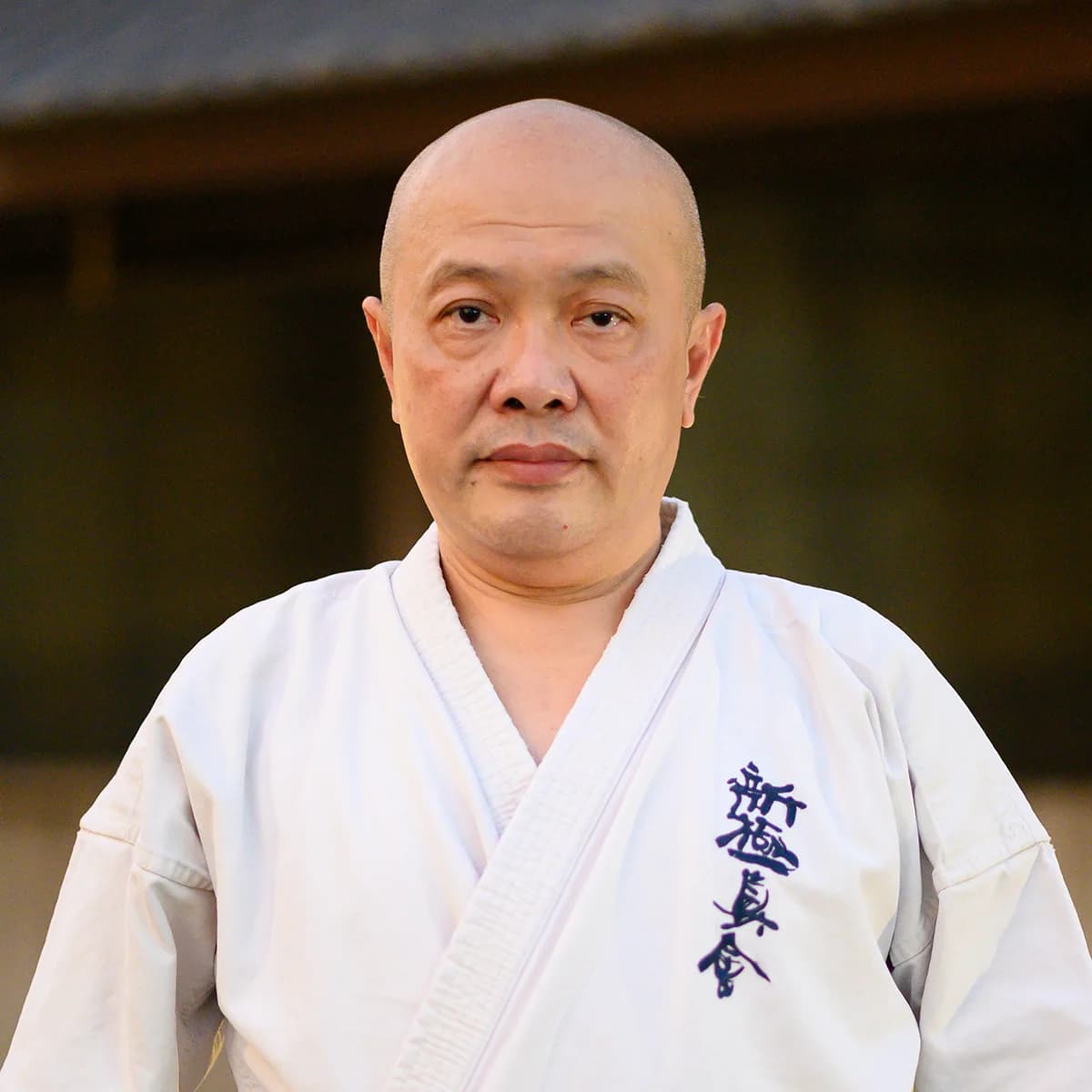
Phoenix began karate at 42. His first-hand experience is considered alongside research on lifelong motor learning, injury evidence, and age-adapted activity so adults can decide without rushing their bodies.
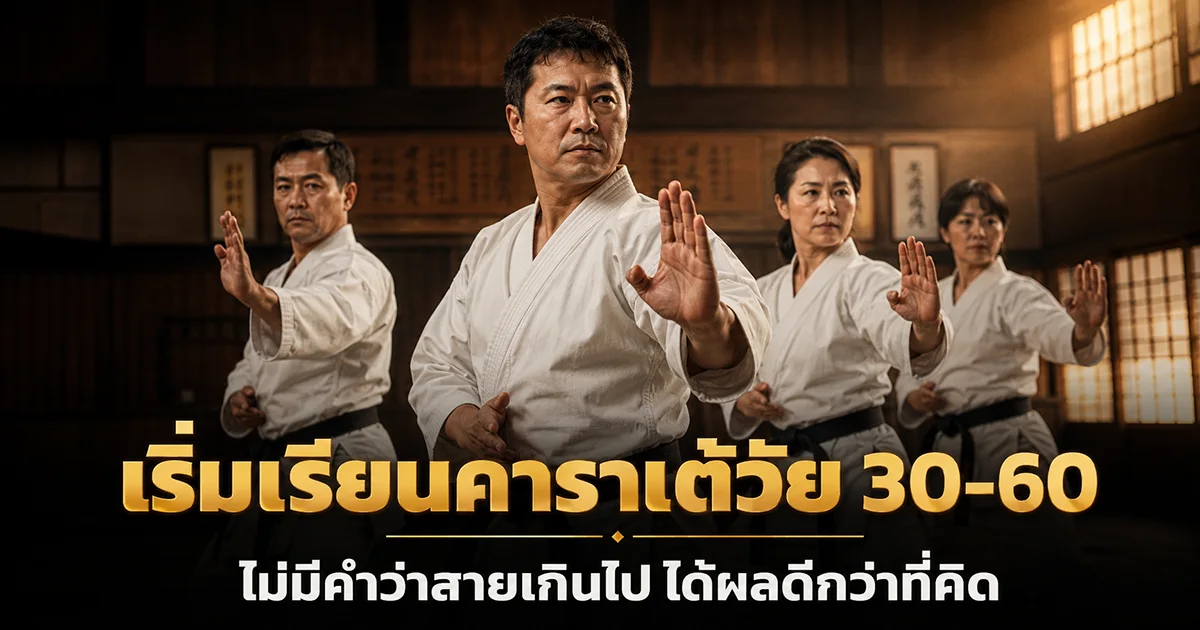
Short Answer
Adults aged 30-60 can start karate because the capacity to learn new motor skills remains present with age, although pace, recovery, and limitations differ between individuals. The important choice is a dojo that teaches fundamentals progressively, adjusts intensity, and does not rush beginners into contact.
- Author
- Thaninpong Supapitakpong (Phoenix)
- Published
- Last updated
- Sources
- 4
Key Takeaways
- Phoenix began karate at 42 and built endurance gradually through consistent training.
- Research supports continued motor learning in adulthood, but it does not mean age has no effect.
- Karate injury findings vary by rules, setting, and study method, so no single percentage establishes how safe training is for every person.
- Matching the style, instructor, and intensity to your goal matters more than rushing into contact.
- People with health conditions, previous injury, or concerns should seek appropriate advice before increasing intensity.
This article draws on the experience of Phoenix, founder of IMAC Dojo, who began karate at 42 and later brought his family into training. Research provides context; it is not medical advice or a promise that training is safe for everyone.
I still remember a nearly 60-year-old Singaporean karate teacher waiting patiently for students at a sports complex in Bangkok. Even when nobody came, he arrived at the announced time. That image led me, at 42, to walk into a dojo, and it changed my life.
In this article
I first walked into a karate dojo at 42
For the current class format, schedule, and fees, visit the IMAC Dojo adult Shinkyokushin Karate page before deciding.
I had practised Shaolin kung fu for about three or four years, so I had some flexibility. Yet a Kyokushin test of six barefoot laps around a football field almost emptied me on the first lap.
The change did not happen overnight. After about four months of steady Kihon and physical training, I could cover the distance more comfortably. I then brought my wife and our four children to train. Classmates came from France, Singapore, China, and Canada, and many were between 30 and 60.
Why adults can still learn new movement skills
A review of brain plasticity and motor practice in cognitive ageing explains that the brain can continue adapting structurally and functionally through experience and practice, while outcomes still depend on the individual and the training design.
The fear of being too old often appears before the body has had a fair trial. Motor learning does not stop after childhood. Adults and older adults can still adapt through practice, although learning speed, recovery, and appropriate complexity may differ from those of younger students.
For me, Mokuso before and after class creates a transition from work and daily noise into focused practice. That is a personal observation, not a claim that meditation treats stress.
Match the karate style and class to your goal
| Training approach | Common focus | Question to ask |
|---|---|---|
| Traditional karate | Kihon, Kata, etiquette, and a school-specific competition format | How are movements and intensity adapted for beginners? |
| Full-contact Karate, such as Kyokushin or Shinkyokushin | Fundamentals, conditioning, and progressively introduced contact | How long do students prepare before Kumite? |
| Applied self-defence | Movement, distance, avoidance, and scenario practice | Are fundamentals separated from high-intensity drills? |
A style name should not be the only criterion. Someone seeking gradual exercise may not suit a class that rushes contact, while someone seeking challenge may prefer a clearly staged system. Ask about lesson progression, adaptations, and whether students can stop when they are not ready.
What injury evidence can and cannot tell an adult beginner
The systematic review of karate injuries found wide variation between studies and called for more data on age, experience, and training injuries. A distribution reported by any single study should therefore not be treated as a universal fact for every karate student.
A percentage from one study should not be used to claim where every karate student is most likely to be injured. Studies use different definitions, populations, rules, and competition settings. A tournament and an introductory class are not the same exposure.
Beginners can check whether fundamentals come before contact, whether force and complexity increase gradually, whether the space and equipment are suitable, and whether pain can be reported without pressure to continue. No technique can guarantee that injury will not occur.
Dojo etiquette and the humility to begin again
For the wider lineage, read Who was Mas Oyama? and the history of Shinkyokushinkai.
In the dojo where I trained, saying Osu and lining up by belt rank meant that job title and age outside the room did not set the order. A 50-year-old executive in a white belt might stand behind a teenager in green. It is a lesson in returning to fundamentals and accepting correction.
I felt this strongly at a Shinkyokushinkai seminar in Singapore hosted by Shihan Patric Teo, with Kancho Kenji Midori and Norichika Tsukamoto, champion of the 6th and 10th World Tournaments, sharing training. Shihans from several countries and many adult students trained in the same room.
Older adults can train, but the evidence needs proportion
A preliminary five-week karate study involving adults aged 59-90 reported changes in selected balance measures, but had only 16 participants. It is early evidence, not a forecast for every student.
The World Health Organization toolkit for older-adult physical activity emphasises services and programmes tailored to each person's capacities, preferences, and goals. The same principle is useful when choosing a dojo.
Whether someone can begin at 40, 60, or later cannot be answered with one promise for everyone. Research includes older adults in adapted karate programmes, but samples remain limited and results should not be turned into guarantees.
A group class can also provide a regular activity and contact with people of different ages. Karate is not, by itself, a treatment for loneliness, and people with limitations need a programme they can genuinely access.
Plan the cost and the first step
If your work holds you in one position all day, as dentistry does, read Kyokushin karate and muscle pain in dentists next. If you would rather bring the whole household, read parents training martial arts with their children.
See the adult Karate class schedule, fees, and training formatDojo costs may include tuition, uniform, protective equipment, and grading, but generic figures should not replace the current terms of a real school. Ask what is included, what may be charged later, and whether you can begin at an appropriate level.
Your first task is not to prove that you are still strong. Tell the instructor about your experience, previous injury, and goal. Try the fundamentals and observe whether the teaching respects your current limits.
Sources and further reading
- Brain plasticity and motor practice in cognitive aging — PubMed CentralReferenceAccessed 31 Jul 2026
- Injuries in karate: systematic review — PubMedReferenceAccessed 31 Jul 2026
- Five weeks of karate training in older adults: preliminary study — PubMed CentralReferenceAccessed 31 Jul 2026
- Promoting physical activity for older people: a toolkit for action — World Health OrganizationReferenceAccessed 31 Jul 2026
Frequently Asked Questions
Is karate suitable for adults aged 30-60?
Many adults can begin with fundamentals and progress when training matches their current condition and recovery. Age alone is not the only consideration. Anyone with a health condition, previous injury, or concern should seek appropriate advice and tell the instructor before increasing intensity.
Where should an adult beginner start karate?
Choose a dojo that can explain its lesson progression, adapt training for adults, avoid rushing contact, and show its schedule, fees, and terms clearly.
Which karate style should an adult aged 30-60 choose?
Choose according to the goal and teaching method, not the style name alone. For fitness, ask about intensity and recovery. For full-contact training, ask how students prepare before Kumite and what protective equipment is used.
Ready to start martial arts?
Message IMAC Dojo to ask which course fits your age, goals, and training background.
Ask on LINE Official