Japanese Karate Training: A Spirit Toward Ultimate Truth
Drawn from training alongside Japanese friends, this article explains how the bowing ceremony, mokuso, the kihon-kata-kumite structure, and wiping the dojo floor add up to the spirit of budo.
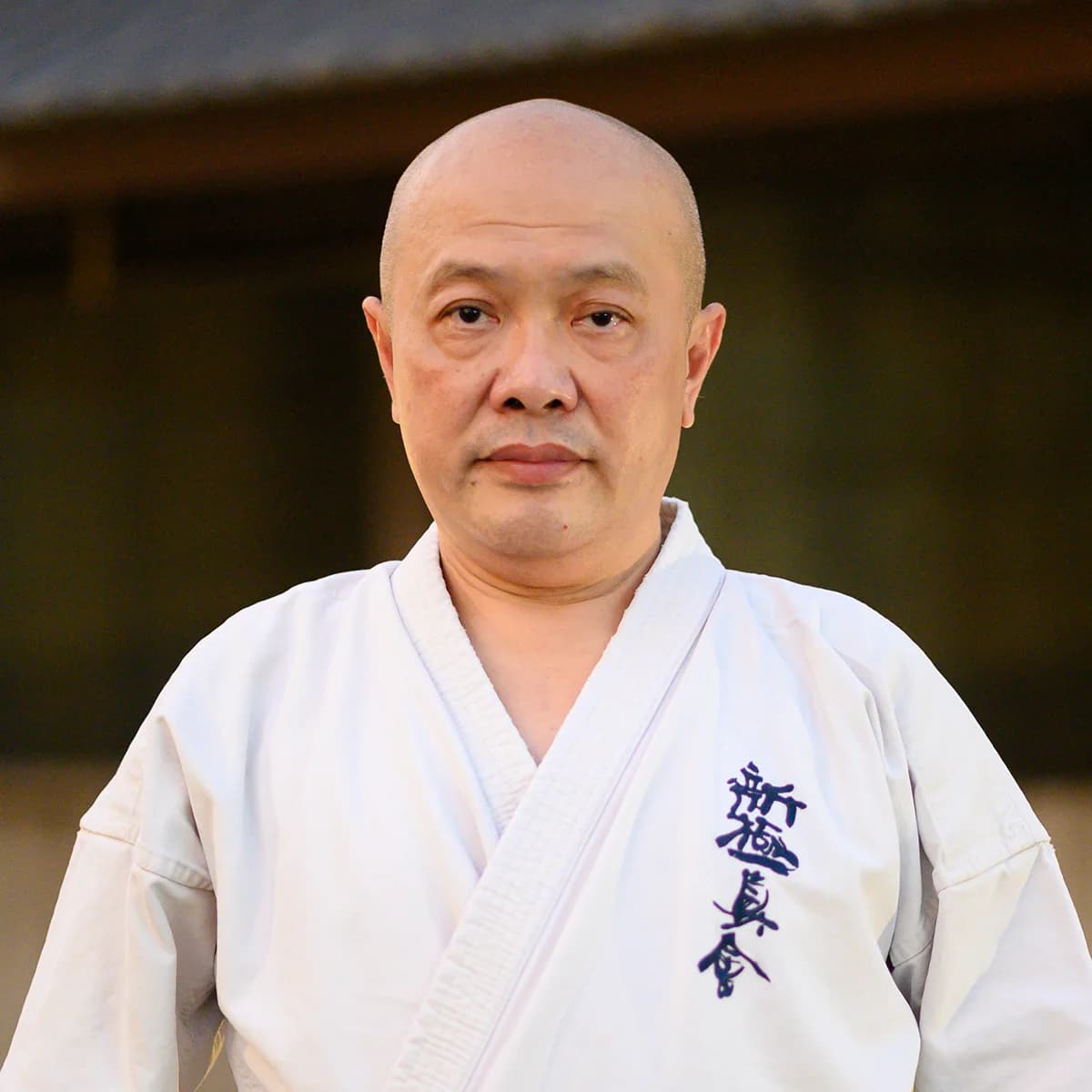
- Author
- Thaninpong Supapitakpong (Phoenix)
- Published
- Last updated
- Sources
- 4
- Reading time
- 8 min
Some drafts are prepared with the help of AI writing tools. The named author reads and edits every article and decides what is published. Editorial policy
Short Answer
Japanese karate training follows the principle of beginning with rei and ending with rei (礼に始まり礼に終わる), combining three dimensions: physical technique, mental discipline through meditation, and traditional etiquette. A class typically runs one to two hours, and many dojos close with everyone cleaning the floor together, black belt and beginner alike.
Key Takeaways
- Training opens with a bowing ceremony and mokuso (黙想), a short seated meditation that sets the day aside before practice begins.
- The technical structure has three interlocking parts: kihon (基本), kata (型), and kumite (組手).
- Traditional and full-contact karate differ most clearly in the point of contact and in the equipment used.
- The JKF dan regulation requires a written examination from 6th dan upward, and makes the 8th dan examination an essay.
I still remember exactly how it felt to step into a dojo alongside my Japanese friends. That was when I began to understand that the spirit of budo is not a decorative phrase but a system of thought embedded in every movement a practitioner makes, from the first step onto the dojo floor to the last second walking out the door.
I am Phoenix, Thaninpong Supapitakpong, founder of IMAC Dojo. The art I hold a black belt in and teach myself is Shinkyokushin karate. What follows comes in two layers, and I keep them separate throughout. The first is what I saw for myself while training with Japanese friends, which is the custom of the dojos I trained in rather than a rule that applies everywhere. The second is what can be checked in an organisation's own documents, and I link the source at every such point.
In this article
The Opening Ceremony and Meditation, Before Stepping into Intensity
What impressed me most while training with Japanese friends was the etiquette on entering the dojo. There we had to walk up to every practitioner and greet them individually with osu (押忍), rather than calling it out once to the room. I want to be clear that this was the custom of the dojos I trained in, not a central rule every school shares. But it says something about how a Japanese dojo treats respect: as something owed to a person, not performed as a ceremony.
Before practice, everyone lines up by seniority of grade, faces the shomen (正面), the front of the dojo, and kneels into seiza (正座) according to the convention known as sa-za u-ki (左座右起), which literally means sitting down on the left knee first and rising on the right foot first. That convention is not there to look elegant. It comes from swordsmen's custom of keeping the body ready to move at all times.
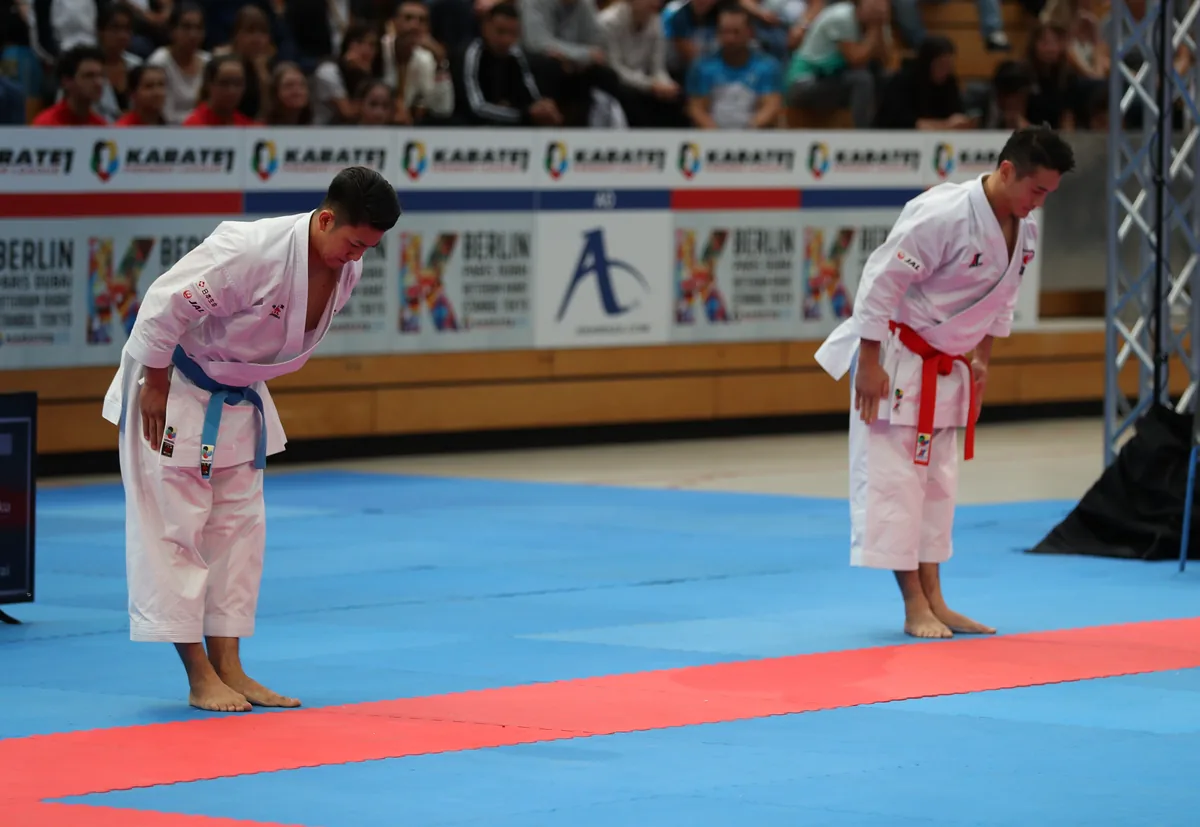
Then the instructor calls mokuso (黙想), a short seated meditation with the eyes closed. The purpose, as my teachers explained it to me, is to set the day's noise aside so the mind is on what is about to happen. I do not know whether research has measured the physiological effect of this step in a karate context, and I will not claim what I cannot check. What I can confirm is that the room genuinely changes after that command, from a room where people are still talking to a room where everyone is ready for the next instruction.
Another image stayed with me: anyone arriving late did not simply join the line. They sat in seiza at the back with their back turned to the class, and only when the sensei called them did they turn round and join — even when the latecomer held a higher grade than others in the class. If you want to read more about what the word dojo means and where its Buddhist roots lie, I wrote about that in what a dojo is and what the budo spirit means.
 Read next · Self DefenseWhat Is a Dojo? Meaning, Origins, and the Spirit of a Martial Arts Training PlaceWhat a dojo is: where the bow and the respect come from
The Three-Part Structure: Kihon, Kata, Kumite, Which Never Come Apart
Karate-do puts these three in order. Kihon (基本) is the basics, drilled one movement at a time; kata (型) strings those movements into a set; and kumite (組手) takes both to a live opponent. Weak basics distort the set, and a distorted set does not survive contact. Our own federation sums the relationship up in one line in its online textbook.
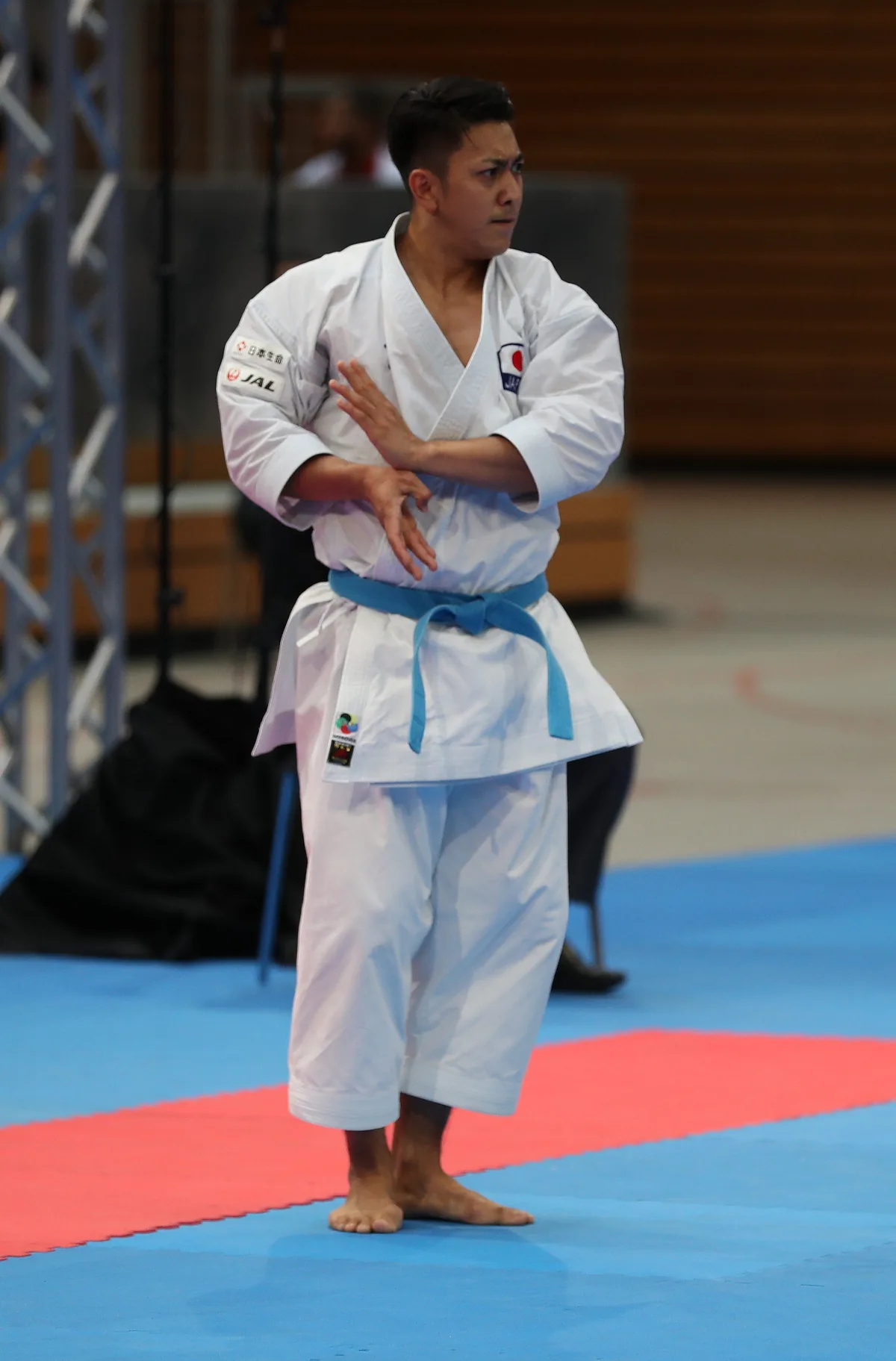
空手の命は組手にあり、組手の命は基本にあり (The life of karate lies in kumite, and the life of kumite lies in kihon)
Practising kihon means repeating strikes, blocks, and kicks hundreds of times from stances such as zenkutsu-dachi (前屈立ち), which carries the weight mainly on the front leg, or kiba-dachi (騎馬立ち), which spreads the legs evenly for stability. The core of it is hikite (引き手), drawing the other hand back as the fist goes out, which relies on rotation through the torso and hips rather than arm strength alone.
Once a student reaches kata, they usually train the foundation sets before moving to advanced forms. What cannot be skipped is bunkai (分解), decoding how a movement in the kata conceals a joint lock or a leg sweep. Kumite then progresses from yakusoku kumite (約束組手), where the movements are agreed in advance, up to jiyu kumite (自由組手), free sparring, which an instructor weighs carefully before allowing, because emotional control matters as much as physical strength.
If you want a clearer picture of how the karate styles differ from the beginning, I set that out separately in what karate is and how its grade system works.
 Read next · Shinkyokushin KarateWhat Is Karate? How Many Styles, How the Belt Ranks Work, and the Basic TechniquesWhat karate is, its styles, and how belt ranks work
The Difference Between Traditional and Full-Contact, Worth Understanding Before You Choose
Many people ask me how traditional Japanese karate differs from full-contact karate. The main answer is the point of contact. The traditional side under the Japan Karatedo Federation (全日本空手道連盟, or JKF) works on stopping the strike before it reaches the target, while the full-contact side makes real contact with the torso and thighs. IMAC Dojo teaches under Shinkyokushin (新極真会), which sits on the full-contact side; I traced where that organisation came from in the history of Shinkyokushinkai.
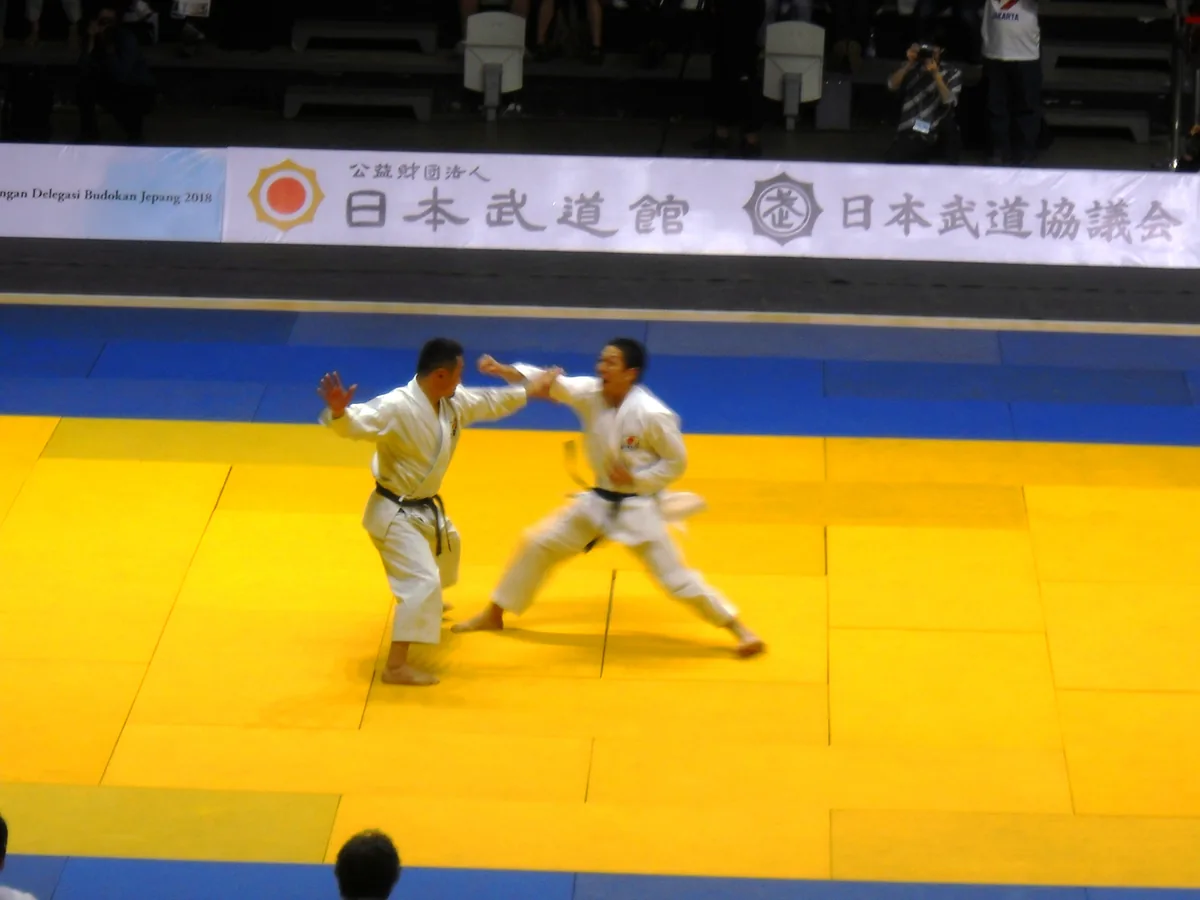
What is interesting is that even the traditional side is not one school. The JKF links page lists five style organisations: 剛柔会, 糸東会, 松涛館, 和道会, and 錬武会. Each has its own approach to guard and to absorbing impact. That matters when choosing a dojo, because "traditional karate" does not name a single format — and one of those five, 錬武会, belongs to the lineage that trains in protective headgear, which is not the picture most people have of traditional karate.
| Comparison | Traditional karate | Full-contact karate |
|---|---|---|
| Point of contact | The strike is stopped before it reaches the target | Real contact to the torso and thighs |
| Primary distance | Works from longer range and drives in | Works close, inside the opponent's range |
| Protective equipment | Hand and foot protectors under competition rules; training in headgear belongs only to certain organisations | Shin guards in practice; bare-handed body strikes in competition |
| Content of the dan examination | Under the JKF regulation, 1st dan performs one designated kata and free sparring; 2nd and 3rd dan perform two kata and free sparring | Emphasis on consecutive kumite against several opponents, under each organisation's own rules |
| Example organisations | The JKF and the five style organisations on its links page | The Kyokushin and Shinkyokushinkai organisations |
Wiping the Dojo Floor, and a Dan Examination That Measures More Than Strength
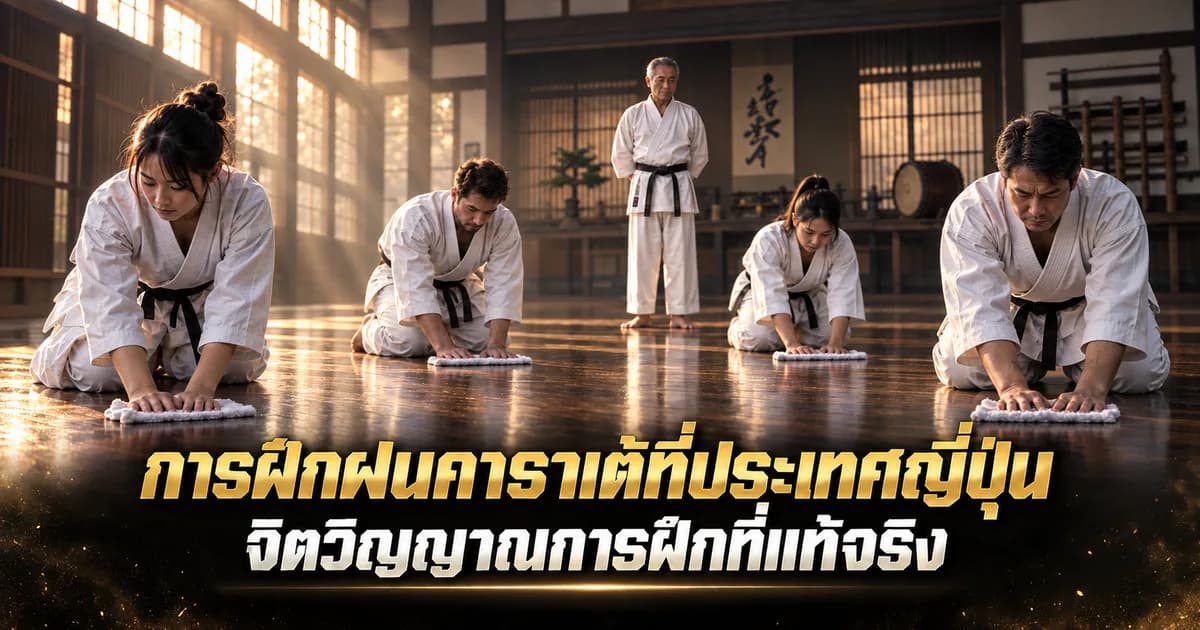
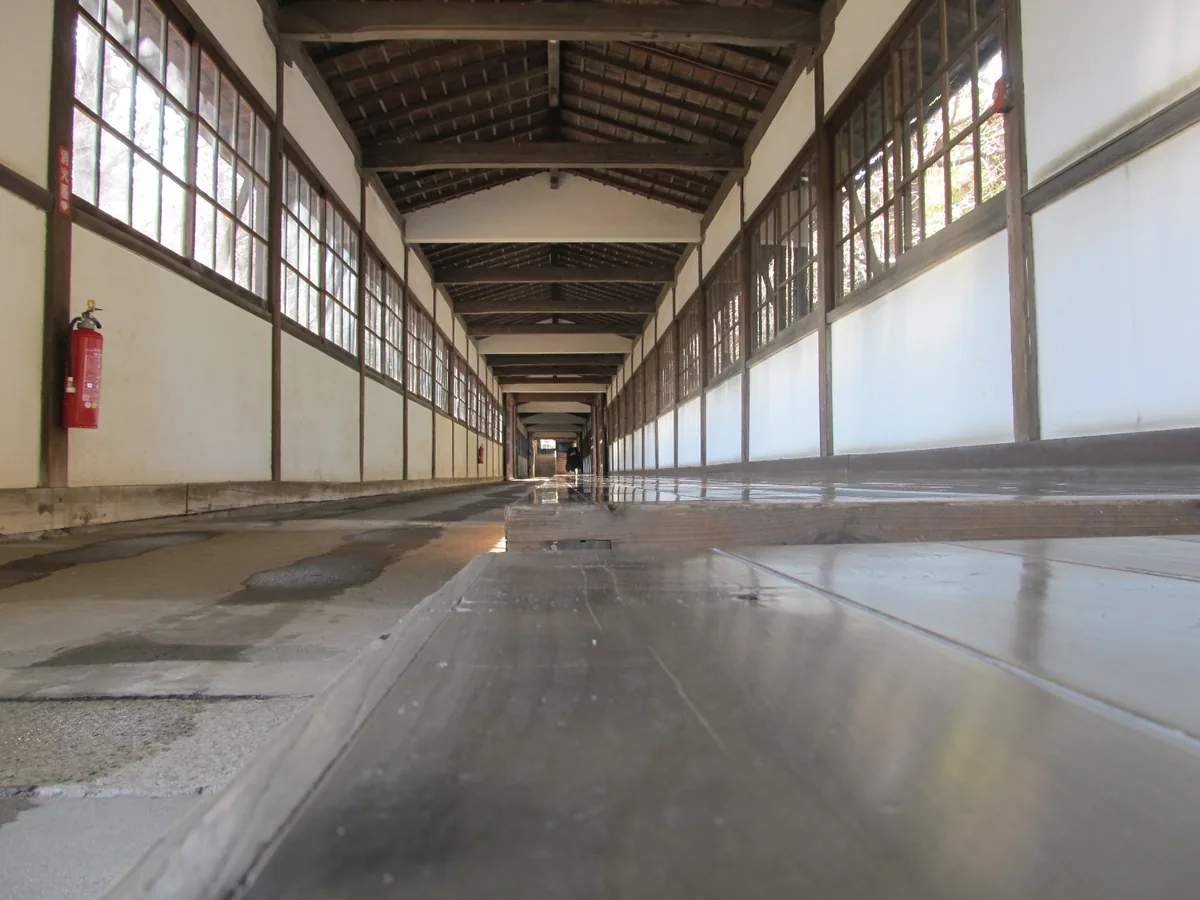
One thing I saw for myself is that once training finished, everyone picked up a wet cloth and helped wipe the dojo floor. In Japanese the custom is called zokin-gake (雑巾がけ). I have no research to confirm what it means psychologically, and I will not pretend otherwise. What I can speak to is what I saw: people who had been sparring at full force ten minutes earlier back on their knees on the same floor, nobody treating themselves as too senior to do it.
Grading, by contrast, is documented and checkable. The JKF dan regulation sets recognised grades from 1st to 10th dan, with 1st through 8th awarded by examination and 9th and 10th by special recommendation. The same regulation caps how often examinations may be held in a year: as a rule up to three times for 1st through 3rd dan, up to twice for 4th and 5th, up to twice for 6th and 7th, and as a rule once a year for 8th dan.
The part I find most telling sits in the written-examination clause of that same regulation. A written test applies from 6th dan upward, and for 8th dan the regulation specifies an essay examination. The JKF report on its 6th, 7th and 8th dan examinations records that 8th dan candidates wrote an 800-character essay on a set theme, which that year concerned how to maintain and grow the karate population as the birthrate falls and the population ages — not a technical subject at all. That is a test of maturity as a teacher, not of how hard someone punches.
The full-contact side uses different criteria. A black-belt examination commonly includes consecutive kumite against several opponents in a row, with the number and the conditions set by each organisation's own rules. I am not quoting a single figure here, because there is no one number that applies across organisations. The grading pathway at IMAC Dojo is set out on the karate grading page.
Conclusion: The Budo Spirit Lives in the Details Nobody Scores
Across the years I have trained with Japanese friends and passed this approach on through IMAC Dojo, I have become more convinced that karate-do is not merely a set of striking techniques but a system for refining yourself that covers body, mind, and manners at once. From the first bow to the last time you kneel down to wipe the floor at the end of the day, all of it teaches humility alongside strength.
If you want to see how this approach becomes an actual timetable, see the IMAC Dojo Shinkyokushin karate course and the class schedule and pricing.
Sources and further reading
- Recognised dan regulation of the Japan Karatedo Federation (JKF) — Japan Karatedo FederationReferenceAccessed 12 Sept 2026
- JKF report on the Reiwa 6 examinations for 6th, 7th and 8th dan — Japan Karatedo FederationReferenceAccessed 12 Sept 2026
- JKF page of related organisation links — Japan Karatedo FederationReferenceAccessed 12 Sept 2026
- Shinkyokushinkai textbook of basics and kata — World Karate Organization ShinkyokushinkaiReferenceAccessed 12 Sept 2026
Frequently Asked Questions
Why must one meditate before every karate training session?
The purpose of mokuso (黙想), as my teachers explained it, is to set the day's noise aside so the practitioner is present for what is about to happen. I do not claim physiological effects I cannot verify. In practice, this is the point at which a student begins learning to control themselves before controlling a training partner.
At what age should a child start learning karate?
The Shinkyokushin Karate course at IMAC Dojo takes students from ages 7 to 60, because foundations such as kihon and kata can be scaled in intensity by age. Parents can check the days, times and fees on the class schedule and pricing page.
Traditional or full-contact karate — how do you choose which suits you?
It depends on your goal. If you want the precision of kata and traditional discipline, a style within the JKF system may suit you better. If you want to test endurance and the ability to absorb real contact, the Shinkyokushin approach taught at IMAC Dojo is closer. The best check is which organisation a dojo belongs to and what it actually teaches, not the style name alone.
Ready to start martial arts?
Message IMAC Dojo to ask which course fits your age, goals, and training background.
Ask on LINE Official