Who Was Mas Oyama? The Kyokushin Master Who Made Karate Feel Real
A source-aware guide to Mas Oyama, the founder of Kyokushin Karate, separating official Japanese timelines, popular legends, and the legacy that continues in Shinkyokushin.
By
- Author
- Thaninpong Supapitakpong (Phoenix)
- Published
- Last updated
- Sources
- 5
- Reading time
- 7 min
Short Answer
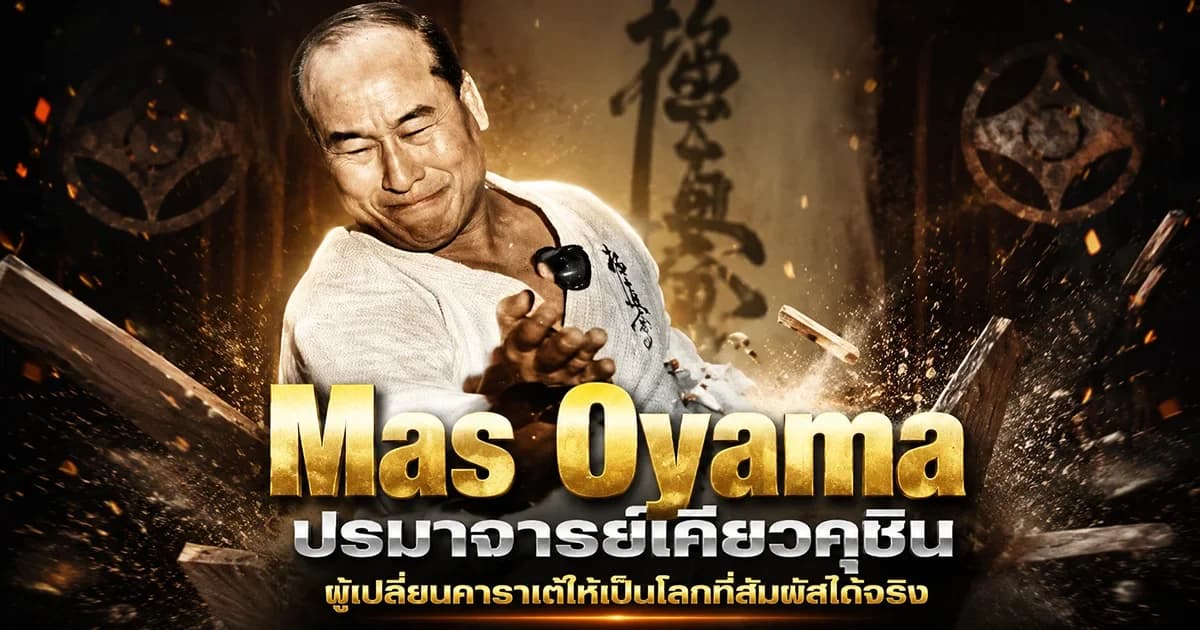
Mas Oyama, also known as Masutatsu Oyama, founded Kyokushin Karate and helped reshape modern karate around full-contact testing, hard conditioning, and mental discipline. His life must be read in layers: documented milestones, institutional memory, popular legend, and later debates about succession and representation.
Key Takeaways
- Mas Oyama founded Kyokushin Karate and made full-contact karate globally influential.
- Japanese official sources emphasize mountain training, Oyama Dojo in 1954, IKO Kyokushinkaikan in 1964, the first All Japan Open in 1969, the first World Open in 1975, and global tournaments.
- Stories such as bull fighting, God Hand, and 100-man kumite are powerful cultural memory and should be read with context.
- After 1994, Kyokushin split into several organizational lines, including Shinkyokushinkai.
To answer who was Mas Oyama, we need more than a heroic summary. We need the official timeline, the training method, the legends, and the organizational legacy.
- Key topics: history of Mas Oyama founder of Kyokushin Karate, what is 100-man kumite, full contact karate in Bangkok
Mas Oyama is one of the most recognizable names in modern karate. He is remembered as the founder of Kyokushin Karate, a teacher who pushed karate toward direct physical testing, and a figure whose image was amplified through books, manga, film, demonstrations, and dojo storytelling.
Japanese-language materials show that Oyama exists online as both a documented historical person and a highly stylized martial arts symbol. This article keeps those layers separate so readers can understand what is well attested, what is part of Kyokushin memory, and why his legacy still matters for Shinkyokushin students today.
In this article
1. Mas Oyama in the history of karate
Mas Oyama founded Kyokushin Karate, a system that challenged karate to prove itself under pressure. Instead of treating karate only as formal movement, Oyama emphasized contact, conditioning, courage, and the ability to remain composed when impact is real.
Official Japanese sources repeatedly mention his early karate training under major teachers such as Gichin Funakoshi of the Shotokan tradition and Gogen Yamaguchi of Goju-kai, followed by mountain ascetic training, his postwar tournament victory in 1947, demonstrations in the United States from 1952, the 1954 Oyama Dojo signboard, the 1964 establishment of IKO Kyokushinkaikan, the first All Japan Open Karate Tournament in 1969, the first World Open Karate Championship in 1975, and his death in 1994.
Useful source starting points include the Mas Oyama official history and the IKO Kyokushinkaikan founder page.
From inherited karate to the demand for real contact
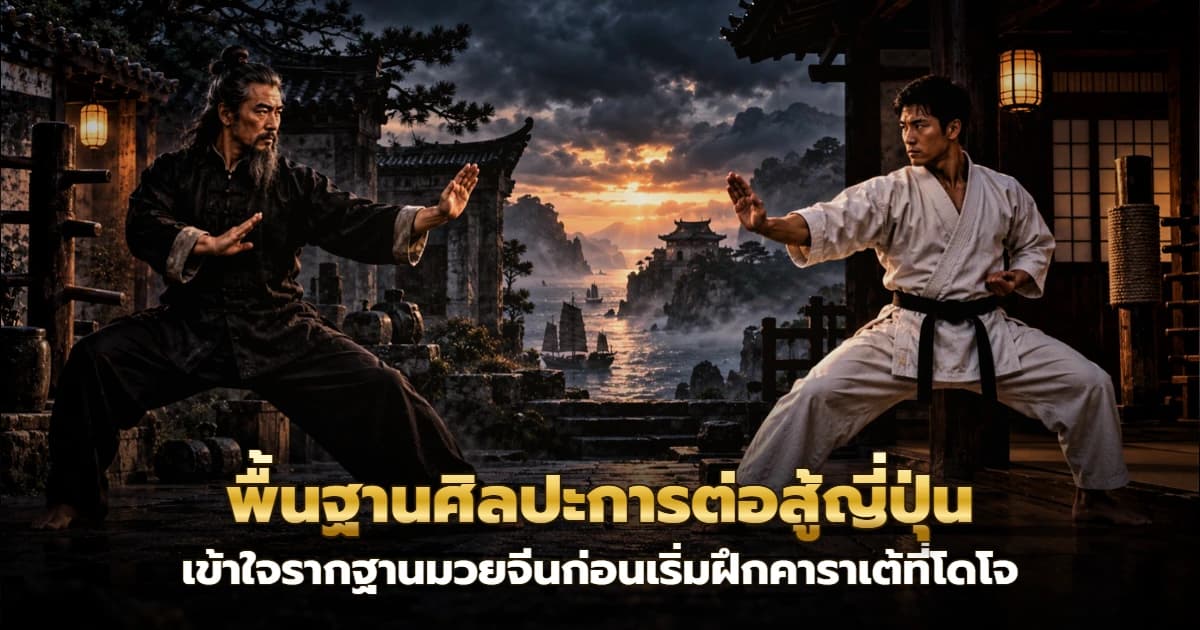
Oyama did not appear outside karate history; he absorbed a world already shaped by formal basics, kata, etiquette, and multiple Okinawan-Japanese lineages. Shotokan gave him a strong model of disciplined basics and educational karate, while Goju-kai exposed him to close-range body mechanics, hard-soft tension, breathing, and the idea that the body itself must be forged. His decisive move was to ask a harsher question: if a student can perform beautiful technique but loses composure when a real opponent closes distance, has that training reached the level of budo?
This is why the mountain-training episodes became central to the Oyama story. In the official and institutional timeline, Minobu and Kiyosumi are not decorative places; they stand for the act of stripping training down to loneliness, repetition, cold, fatigue, fear, and willpower. Running slopes, striking trees, conditioning the hands, repeating techniques, meditating, and living with few comforts turned karate from something learned in class into something carved into the body.
After coming down from the mountains, the bull stories turned Oyama into a public symbol. Official history places him in Tateyama, Chiba, near an abattoir environment where he trained against bulls; later demonstrations and overseas tours transformed that image into a language ordinary audiences could understand immediately. Whether a viewer knew kata or not, the idea of a karateka stopping a bull or breaking a horn with the bare hand made karate visible as impact, risk, and courage.
That public image mattered. It helped Kyokushin escape the narrow frame of a private dojo method and become a story people could talk about: a man hardening himself in the mountains, returning to face animals and opponents, then teaching a karate that could be tested. The later Oyama Dojo and Kyokushinkaikan grew from this mixture of severe training, memorable demonstration, and the promise that karate could be felt in the body rather than only admired as form.
2. Why Kyokushin changed karate
The question what is Kyokushin Karate is not answered by saying it is simply hard sparring. Kyokushin is a training culture that connects basics, kata, kumite, etiquette, body conditioning, and perseverance.
For Oyama, the problem was not kata itself. The problem was training that stopped at form. A student might have clean lines, strong stances, and elegant movement, but if fear takes over when another person attacks with real intention, the art has not yet become usable. Kyokushin made that gap unavoidable by putting basics, body conditioning, and kumite into the same training loop.
This is the natural answer to searches such as what makes Kyokushin different from other karate or what is full contact karate: Kyokushin keeps kata, etiquette, and self-cultivation, but it adds an unmistakable testing ground where breath, stance, courage, and respect must survive impact.
| Kyokushin element | Training meaning |
|---|---|
| Kihon | Builds repeatable mechanics and discipline. |
| Kata | Preserves movement principles, breath, timing, and application. |
| Kumite | Tests composure and technique under pressure. |
| Osu no Seishin | Trains perseverance, humility, and the resolve to stand firm without losing respect. |
3. History, legend, and God Hand
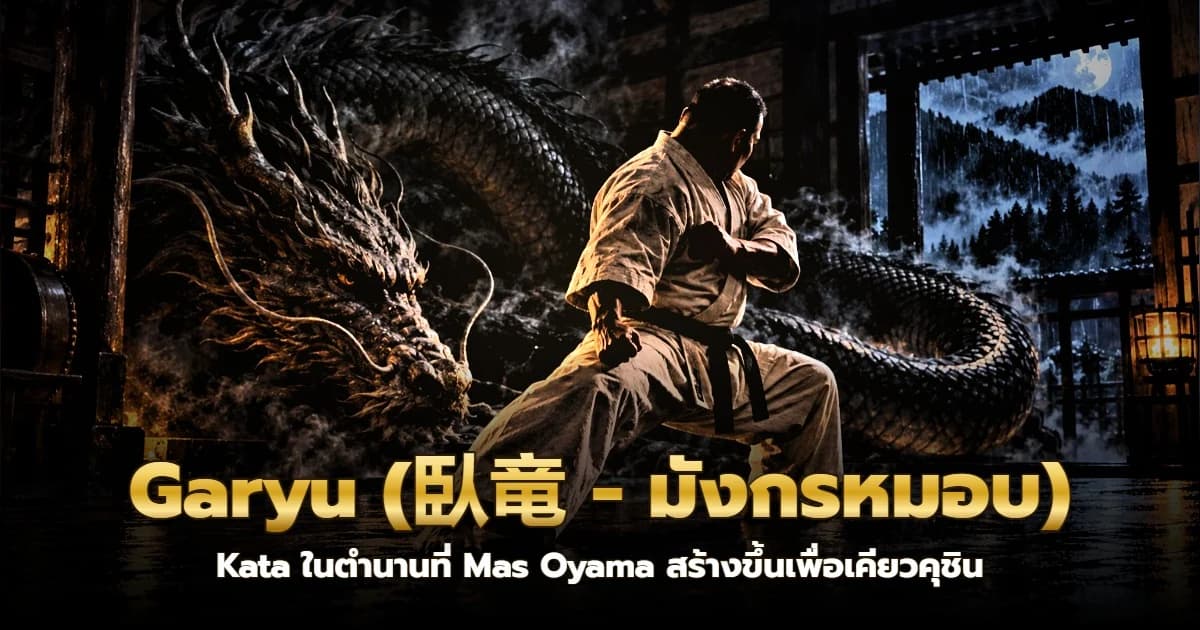
Oyama's image includes bull-fighting stories, extreme demonstrations, the phrase God Hand, and 100-man kumite. These stories shaped how people imagined full-contact karate, but careful writing should distinguish cultural memory from verified chronology.
The power of these legends comes from the postwar atmosphere around them. Oyama's story gave audiences an image of someone who could pass through defeat, poverty, isolation, pain, and public doubt, then turn all of it into visible strength. Once the story moved through books, manga such as Karate Baka Ichidai, film, demonstrations, and dojo retelling, it became larger than biography alone.
The bull story is especially important because it translated karate into a scene that non-karate people could feel. A spectator did not need to understand hip rotation or kata application to understand the shock of a bare hand against a horn. In that sense the story helped Kyokushin become a public myth: severe mountain training, animal-strength demonstrations, full-contact matches, and a founder whose body seemed to prove the method.
Critical and publisher-based sources such as Oyama Masutatsu Seiden are useful because they remind readers that martial arts biographies can become mythic brands as well as historical accounts.
4. What is 100-man kumite, and why do people still talk about it?
One of the questions people search for most is what 100-man kumite is. At its core it means fighting a long series of opponents one after another, testing the body, the technique, the breathing, the decision-making, and a heart that refuses to back down. This kind of training is not only about rawness. It puts the practitioner face to face with exhaustion, pain, and fear without letting go of discipline.
For ordinary students today, the lesson of 100-man kumite is not that everyone has to attempt it. It stands for the principle that training should be gradual and safe, supervised by an instructor, and that body and mind should grow together. That is something anyone who wants to train Kyokushin-style karate in Bangkok or start karate as an adult in Bangkok should understand from day one.
5. The legacy after 1994
After Oyama passed away in 1994, Kyokushin entered a complex succession era. Different organizations presented themselves as inheritors of Oyama's spirit, technical method, and institutional mission. Mas Oyama and Shinkyokushinkai is therefore best understood as continuity through training culture rather than a simple one-line succession story.
Explore Shinkyokushin Karate at IMAC DojoI have written separately about the final period of his life and a Buddhist reading of illness in Karma or coincidence: a Buddhist view on the Kyokushin master's illness, for anyone who wants to follow that thread further.
6. What Mas Oyama teaches karate students today
- Do not stop at the image: legends can inspire, but real training has to come back to fundamentals and discipline.
- Do not fear contact: good karate does not have to be brutal, but it does have to build the body and the mind gradually until they can meet reality.
- Do not train alone from stories: to start safely, have the IMAC Dojo instructors guide the order of your training.
- Do not separate body from mind: the most important part of Oyama's legacy is that he made technique, endurance, and self-refinement a single thing.
The Story and Legend of Mas Oyama and Kyokushin Karate
An IMAC Dojo video recounting Mas Oyama and the story of Kyokushin Karate.
Video published
Sources and further reading
- Gichin FunakoshiPrimary
- Gogen YamaguchiPrimary
- Mas Oyama official historyPrimary
- IKO Kyokushinkaikan founder pagePrimary
- Oyama Masutatsu SeidenPrimary
Frequently Asked Questions
Who was Mas Oyama?
Mas Oyama, also known as Masutatsu Oyama, was the founder of Kyokushin Karate and one of the major figures behind full-contact karate.
What is Kyokushin Karate?
Kyokushin Karate is a full-contact karate system that combines basics, kata, kumite, conditioning, etiquette, and mental discipline.
What is 100-man kumite?
100-man kumite is an extreme continuous sparring challenge associated with Kyokushin, used to test endurance, technique, and spirit.
Is every Mas Oyama story historically verified?
No. Many stories are part of Kyokushin cultural memory. A careful article separates official timelines, popular legends, and later critical sources.
How is Mas Oyama connected to Shinkyokushinkai?
Shinkyokushinkai is one of the organisations that carried on the Kyokushin legacy after the Mas Oyama era, still focused on full-contact karate training and on refining body and mind together.
Can beginners train in this style of karate?
Yes, provided the training is in a safe system with an instructor and the foundation is built gradually. Training does not start with hard contact. It starts with stance, movement, control of force, and discipline.
Ready to start martial arts?
Message IMAC Dojo to ask which course fits your age, goals, and training background.
Ask on LINE Official