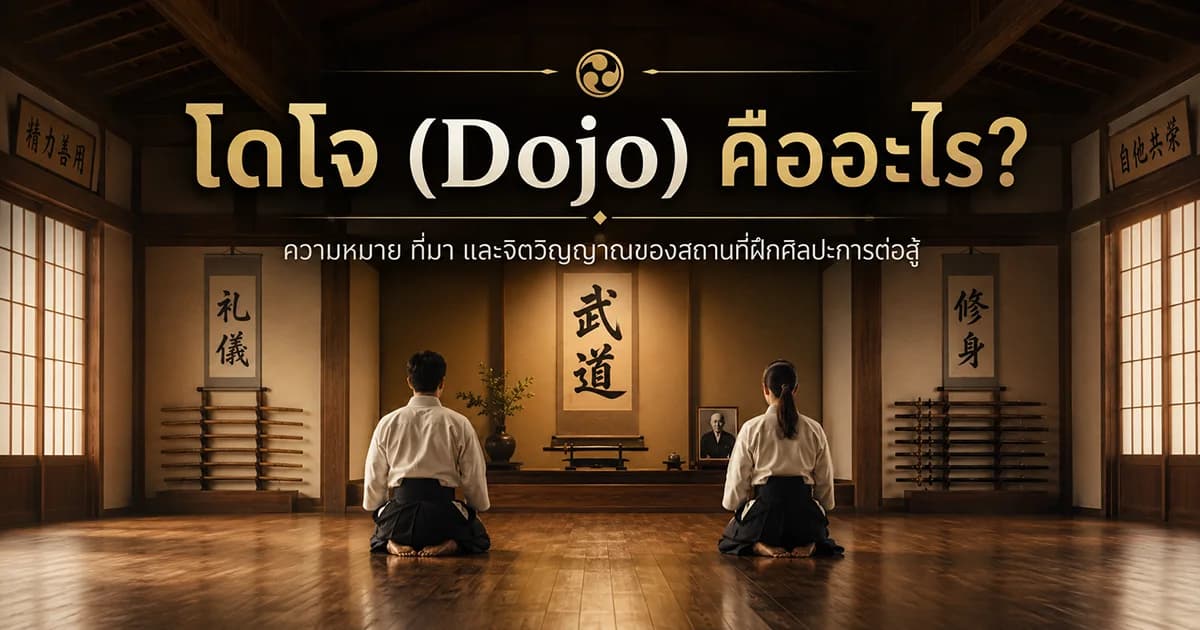
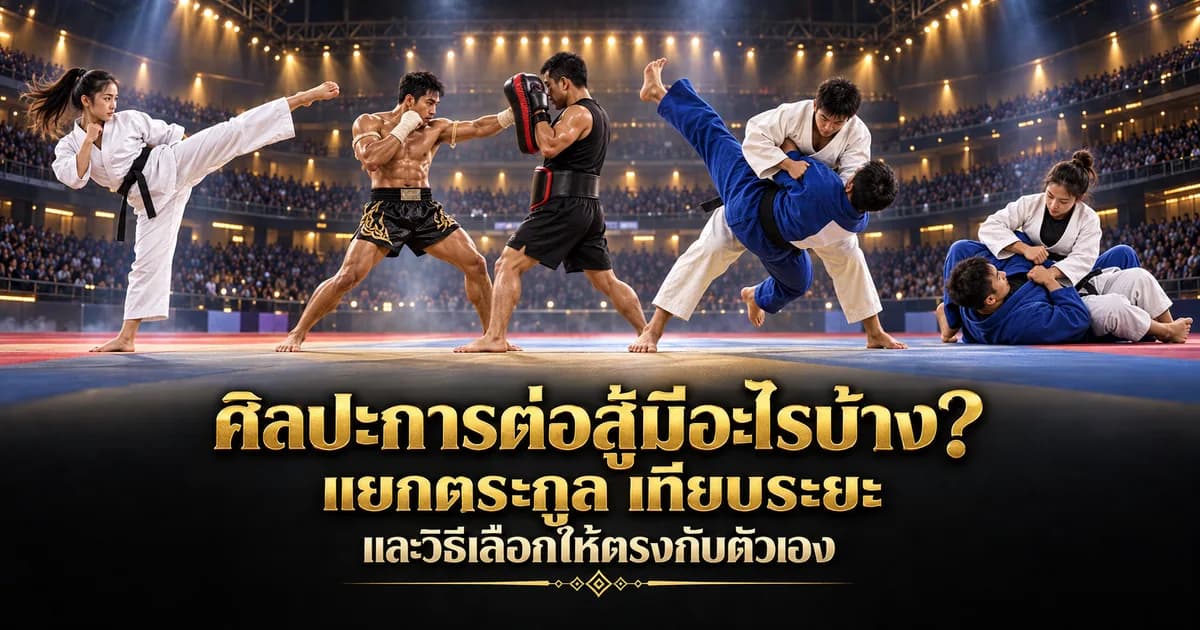
What Are the Martial Arts? Families, Range, and How to Choose One
Instead of ranking which art hits hardest, this sorts the martial arts into families by range and by how an exchange ends, then gives criteria you can actually decide with, and says plainly what we teach and what we do not.
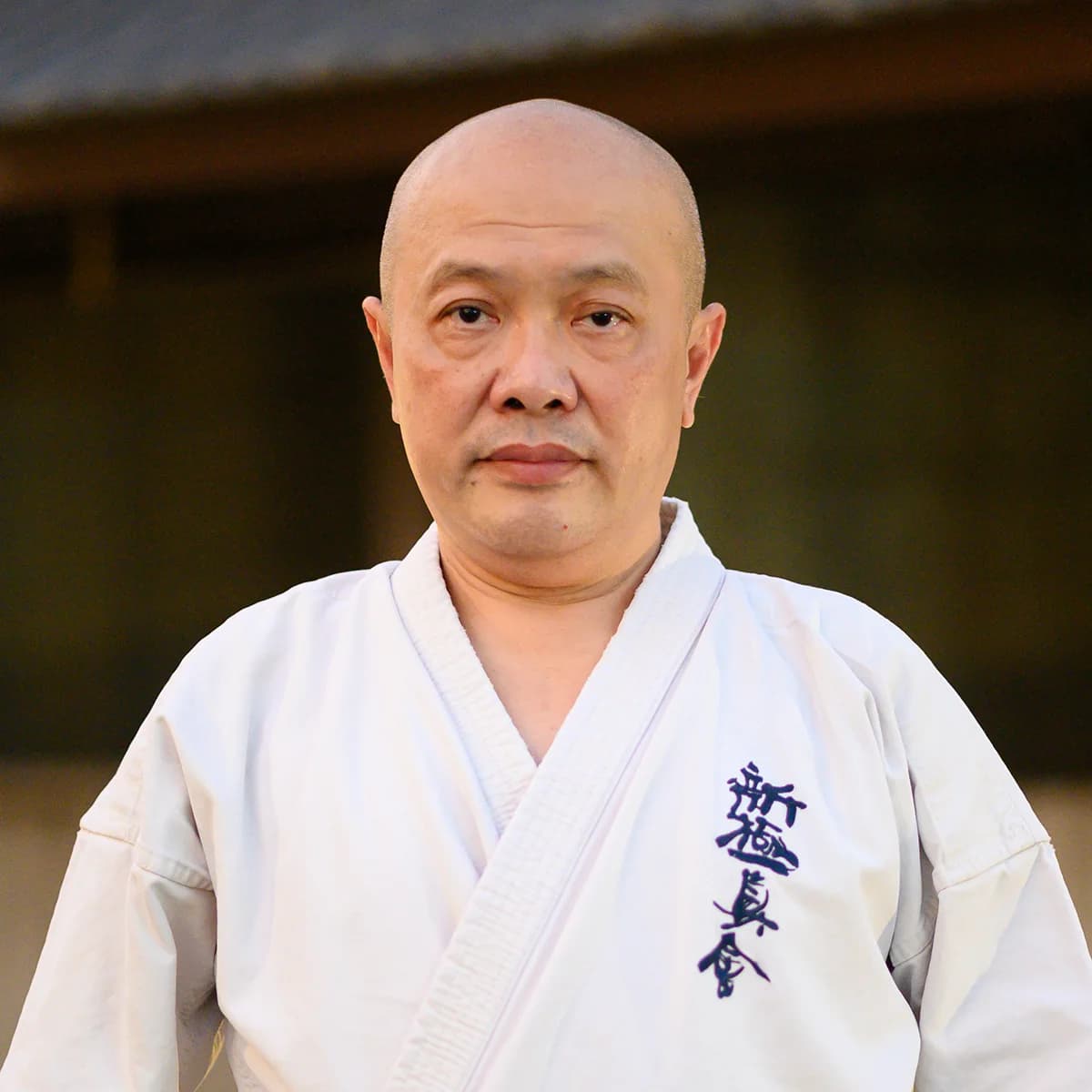
- Author
- Thaninpong Supapitakpong (Phoenix)
- Published
- Last updated
- Sources
- 1
- Reading time
- 6 min
Short Answer
Martial arts sort most usefully by range and by how an exchange ends: striking arts such as karate, Muay Thai and taekwondo; grappling and control arts such as judo, jujitsu and wrestling; close-range centreline arts such as Wing Chun; and weapon or internal arts such as kendo and tai chi. Choosing one should start from your own goal and body, not from a ranking of which art is strongest.
Key Takeaways
- Four broad families by range: striking, grappling and control, close-range centreline, and weapon or internal arts.
- The same art can be trained for different purposes: as a competitive sport, as self-defence, and as a path of self-discipline.
- No art is best for everyone; the real variables are goal, body, available time, and the quality of the instruction.
- IMAC Dojo teaches four: judo, Shinkyokushin karate, Wing Chun Sambo, and Wai Kru Muay Thai.
- Arts we do not teach are described neutrally, even where an instructor holds a grade in one: a credential is not a course.
The hard question is not which martial arts exist. It is which one fits the person asking.
What are the martial arts? Sorted by the range each art works at, there are four main families: standing range (karate, Muay Thai, taekwondo, boxing), clinch to ground (judo, jujitsu, wrestling, aikido), very close range built on the centre line (Wing Chun and some southern Chinese styles), and arts trained around weapons or solo practice. The rankings of which art is strongest that a search usually returns are entertaining, but you cannot decide anything with them, because no common competition measures every art under one rule set.
So this article answers differently: it sorts the arts into families by range and by how an exchange ends, gives criteria a beginner can use, and closes by stating plainly what our dojo teaches and what it does not.
In this article
What a martial art is, and how it differs from a combat sport
A martial art is an organised system for using the body against force from another person: it has a teaching order, a way of measuring progress, and usually an etiquette around it. A collection of techniques is not yet an art.
The same art is usually trained for three different purposes, often by the same person at once.
- As a sport, with rules, judging, and competition as the goal.
- As self-defence, focused on situations outside any rule set, on keeping distance, and on avoidance before contact.
- As a path of self-training, where discipline, consistency and self-control matter more than winning.
The distinction matters when choosing. Someone who wants to compete and someone who wants to feel safer walking home may belong in different classes, even though they started from the same question.
Sorting by range, not by how hard it hits
The grouping that helps you decide is the one that asks at what range an art operates, and how an exchange typically ends.
| Family | Working range | How an exchange usually ends | Examples |
|---|---|---|---|
| Striking | Standing, with a gap between partners | Punches, kicks, knees, elbows | Karate, Muay Thai, taekwondo, boxing |
| Grappling and control | From the clinch down to the ground | Throws, pins, locks | Judo, jujitsu, wrestling, aikido |
| Close-range centreline | Very short range, almost body to body | Holding the centreline and following up | Wing Chun and some southern Chinese arts |
| Weapon and internal arts | Set by the weapon, or trained solo | Weapon forms, or breathing and structure work | Kendo, tai chi, wushu |
No family covers everything. A pure striker is usually uncomfortable once gripped, and a pure ground specialist is often at a disadvantage before the range closes. That is why many people add a second art once their base is solid.
The arts people ask about most often, side by side
This table compares only basic facts, origin and the character of the training. It does not rank one art above another.
| Art | Origin | Character of the training |
|---|---|---|
| Karate | Okinawa and Japan | Standing striking: punches, kicks and blocks, with basics, kata and sparring |
| Judo | Japan | Begins with falling safely, then throws, pins and locks |
| Muay Thai | Thailand | Fists, feet, knees and elbows, with the Wai Kru ritual before a bout |
| Wing Chun | Southern China | Close range, working the centreline and exchanging force with a partner |
| Taekwondo | Korea | Standing striking with a high proportion of kicking technique |
| Brazilian jiu-jitsu | Brazil, developed from the Japanese lineage | Ground work, positional change and submissions |
| Tai chi | China | Structure, weight transfer and breathing as the main content |
That is why the popular question of which art beats which has no direct answer: each was designed for a different range under a different rule set.
Choosing for your goal and your body
Instead of starting from which art is best, start from these four questions and the options narrow themselves.
- What is the goal: competition, self-defence, or discipline and health?
- What is your body like now: old injuries, joint limits, back or knee problems?
- How many sessions a week can you realistically train? Consistency outweighs intensity over time.
- Which organisation does the instructor belong to, and is there a grading standard that can be checked?
For a beginner who is unsure, an art with a clear order of basics, one that teaches falling before throwing, is usually safer at the start. Judo is the clearest example, since it begins with ukemi; there is more in our article on what judo is. For the full-contact side, the styles and rank structure are explained in our article on what karate is.
If you are choosing for a child, the comparison written for parents is in karate versus taekwondo for children, and if the goal is self-defence for women, we have a dedicated women's self-defence course.
What IMAC Dojo teaches, and what it does not
We teach four arts, listed here so you can match them against what you need.
- Judo, starting from falling safely before moving on to throws and control.
- Shinkyokushin karate, the full-contact style, with grading against the organisation's own criteria.
- Wing Chun Sambo, close-range Wing Chun on the centreline, extended with Sambo throws and locks so striking, throwing and locking cover every range.
- Wai Kru Muay Thai, focused on the ritual, the movements, and the meaning of the ceremony before a bout.
What has to be said plainly is that the other arts in the table above are not taught here, even where an instructor holds a grade in one of them. An instructor's credential is not a course on the timetable, and we do not leave that ambiguous.
The courses page lists every course together, along with when each one runs; choose the one that matches the goal you set at the start of this article.
See every course at IMAC DojoSources and further reading
- OkinawaReference
Frequently Asked Questions
What are the main types of martial arts?
Four broad families sorted by range and by how an exchange ends: striking arts such as karate, Muay Thai and taekwondo; grappling and control arts such as judo, jujitsu and aikido; close-range centreline arts such as Wing Chun; and weapon or internal arts such as kendo and tai chi.
Which martial art suits a child?
There is no single answer for every child. What to look at is whether the art teaches basics in a clear order, whether falling is taught before throwing, and how the instructor handles safety. We have written a separate comparison for parents.
What should I learn for self-defence?
Start with an art that has clear fundamentals and lets you train safely with a partner. Self-defence rests on managing distance, keeping balance, and being used to real force, far more than on memorising situational techniques.
Which martial art is strongest?
There is no direct answer, because no common competition measures every art under one rule set. Each was designed for a different range under different rules. The more useful comparison is whether an art matches the learner's goal.
What does IMAC Dojo teach?
Four arts: judo, Shinkyokushin karate, Wing Chun Sambo, and Wai Kru Muay Thai. The other arts mentioned in this article are not taught here, even where an instructor holds a grade in one.
Ready to start martial arts?
Message IMAC Dojo to ask which course fits your age, goals, and training background.
Ask on LINE Official