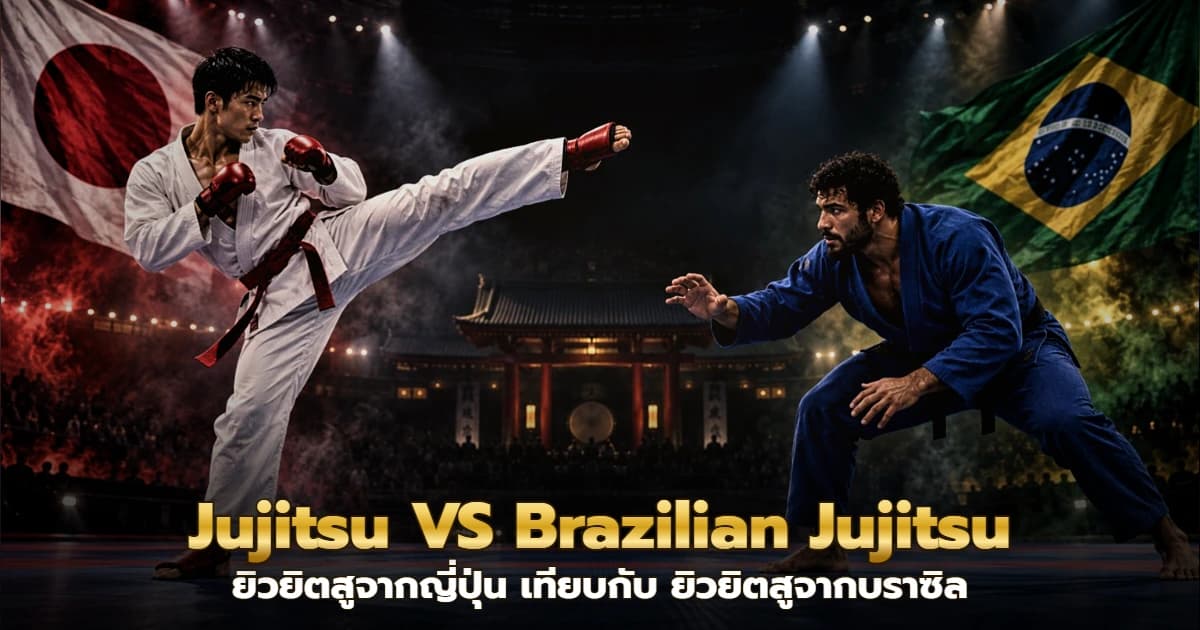
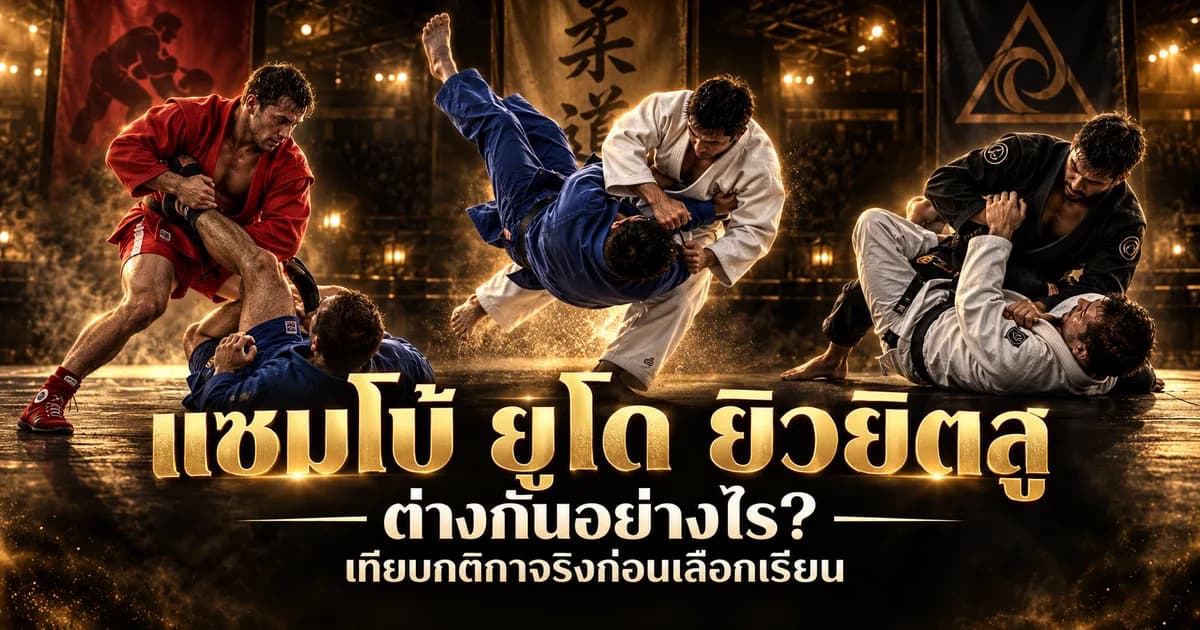
Sambo vs Judo vs Jujitsu: What Actually Differs, Read From the Rulebooks
The three grappling arts people mix up most often. This is not a which-is-stronger argument: it lays the four federations' own rulebooks side by side on leg locks, chokes, striking and what ends a match.
By
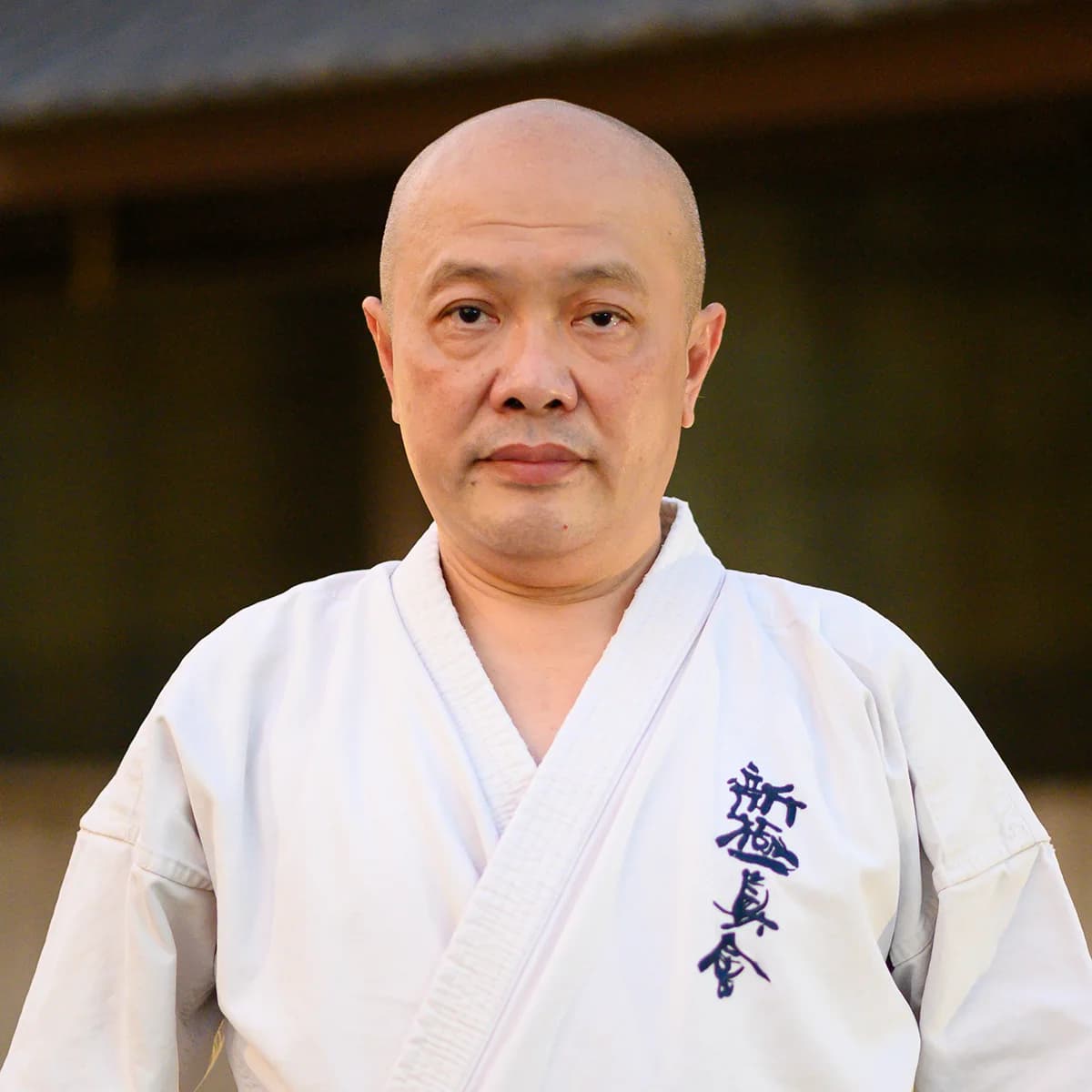 Thaninpong Supapitakpong (Phoenix)2nd Dan Shinkyokushin Karate · Founder and martial arts instructor, IMAC Dojo
Updated 5 Oct 2026
Reviewed by Ryu · Judo 2nd dan (Judo Association of Thailand) · SAT C-License jujitsu coach
- Author
- Thaninpong Supapitakpong (Phoenix)
- Published
- Last updated
- Reviewed by
- Ryu ·
- Sources
- 7
- Reading time
- 10 min
Short Answer
The decisive differences are in the rulebooks, not in the techniques. Sport sambo allows submissions on both arms and legs but forbids chokes and any striking, while combat sambo allows both chokes and strikes. Judo allows chokes at senior level but restricts joint locks to the elbow, and locking any other joint is an immediate hansoku-make. Brazilian jiu-jitsu has no striking at all, and permits heel hooks only for adult brown and black belts competing no-gi.
Key Takeaways
- Sport sambo allows leg locks but not chokes; combat sambo allows chokes and striking
- Judo permits joint locks on the elbow only, and any other joint is an instant hansoku-make
- Jujitsu is not one art but a collective name for older Japanese schools; BJJ grew out of judo taught in Brazil
- Sambo received full IOC recognition in 2021 but is still not on the Olympic programme
The question I hear most often from adults who walk into IMAC Dojo asking about courses is how sambo, judo and jujitsu differ, because all three grip the jacket, throw, and finish with a submission. From the side of the mat they look like the same thing wearing different names.
Let me be clear from the start: I am not a sambo instructor and not a jujitsu instructor. The art I hold a black belt in and teach myself is Shinkyokushin karate. Judo at IMAC Dojo is taught by a team of instructors with real competition experience, and combat sambo principles entered our curriculum through Khru Puriwat, a former Thai national team athlete in that discipline. Everything below is taken from the federations' own rules and pages rather than from memory or from clips online.
In this article
Why These Three Keep Being Compared
All three belong to the same family: arts that use clothing as a tool. You grip, you pull, you break the balance, and you finish with a throw, a hold or a joint lock. To an outsider the picture looks close enough that the three read as one art under three names.
Open the rulebooks, though, and the difference is not in the techniques, because many of the same throws exist in all three. The difference is in what each rulebook allows, what it forbids, and what ends a match. Those rules are what shape how people train and how they think over the years.
This article compares the three sides using documents from the International SAMBO Federation, the International Judo Federation, the Ju-Jitsu International Federation and the IBJJF rule book, which is the set most competitors meet in Brazilian jiu-jitsu.
Where Each One Came From, and They Are Not the Same Age
Jujitsu is the oldest of the three, and it is not a single art. On its history page JJIF names older schools such as Takenouchi Ryu, dated to 1532, along with Kito Ryu and Yoshin Ryu, and says Kito Ryu strongly influenced Kodokan judo. There is more on the JJIF sport pages and in our article on judo and jujitsu in Japan.
Judo has a much sharper starting point: Kano Jigoro established the Kodokan in 1882 and rebuilt training and competition out of those older schools. The full story is in our article on what judo is. Judo entered the Olympic programme in Tokyo in 1964, and both men and women have competed since Barcelona in 1992.
Sambo was born in the Soviet Union and is the youngest of the three. The FIAS history page names three key figures, V.S. Oschepkov, V.A. Spiridonov and A.A. Harlampiev. The name comes from the Russian самозащита без оружия, self-defence without weapons. FIAS treats 16 November 1938 as the sport's official birth date, and says the present name came into use in 1947.
Internationally, FIAS was founded at a general assembly in Madrid on 13 June 1984. The International Olympic Committee granted provisional recognition on 30 November 2018 and full recognition in 2021, as stated on the FIAS about page. Recognition is not inclusion, though: sambo is still not on the Olympic programme. Thailand has a national body listed by FIAS as the Sambo Association in Thailand.
The Rules Side by Side
This table compares sport sambo, judo under IJF rules, and Brazilian jiu-jitsu under IBJJF rules, because those are the three sets a competitor in Thailand is most likely to meet. Combat sambo is handled separately in the next section.
| Topic | Sport sambo | Judo, IJF rules | Brazilian jiu-jitsu, IBJJF rules |
|---|---|---|---|
| Where the system starts | Soviet Union, official birth date in 1938 | The Kodokan, 1882 | Built on judo taught in Brazil in the early twentieth century |
| Leg locks | Allowed; the rules describe submissions on arms or legs, but forbid heel twists and knee levers outside the natural plane | Not allowed; joint locks are restricted to the elbow | Only for adult brown and black belts competing no-gi |
| Chokes | Not allowed; listed among the prohibited techniques | Allowed at senior level | Allowed |
| Striking | None; direct impact on the face with hands, feet or head is forbidden | None in competition | None; treated as a disciplinary offence |
| What ends a match | A clean throw where the thrower stays standing, a submission, or a large enough points lead | Ippon, a hold-down held for the full time, or a submission to a choke or elbow lock | Submission, stoppage, points or a referee decision |
| Competition dress | Sambo jacket, shorts and sambo shoes | Judogi, competed barefoot | Gi or no-gi kit, competed barefoot |
Read down the table and it becomes clear why crossing over feels uncomfortable. A judoka entering sambo has to protect their own legs in a way they never had to before, and a sambist entering judo has to give up an entire category of finishes.
Sambo Is More Than One Thing, and That Is Where the Confusion Starts
The FIAS about page lists three competition disciplines: sport sambo, combat sambo and beach sambo. When somebody says sambo has punches and kicks, they mean combat sambo specifically, not sambo as a whole. The detail sits in the FIAS rules and documents.
In sport sambo the rules allow painful holds on the arms or the legs until the opponent submits, but chokeholds sit on the prohibited list, as does direct impact on the face with hands, feet or head. The combat sambo rules say the opposite: chokeholds are permitted both standing and on the ground, and kicks are allowed with any part of the foot. That is why practitioners of the two disciplines train very differently while using the same name for their art.
Both rulebooks agree on one class of prohibition, the twisting attacks: the foot knot and the knee lever applied outside the natural plane of the joint are forbidden in each. The other giveaway is visible from across the hall, because sambo is competed in shoes, unlike judo and jujitsu, which are competed barefoot.
IMAC Dojo does not run a separate sambo class. Combat sambo principles are used in the clinch and throwing ranges of the Wing Chun Sambo course, which keeps Wing Chun as its close-range core. Why the two arts are combined is explained in detail in Wing Chun and Sambo for real-life self-defense.
Judo and the Legs, and Why Judoka Rarely Meet Leg Locks
The IJF rules state plainly that joint locks are allowed on the elbow only, and that locking any other joint is hansoku-make, an immediate loss. The source sits in the IJF documents. That is the straightforward reason many judoka never train a defence against a leg lock across an entire competitive career.
The other frequent question is leg grabbing. The current IJF rules penalise hooking the leg with the hand or arm, and gripping the trousers, with shido. They also state that gripping under the belt down to the top of the inner thigh is allowed, and that gripping the leg is permitted once both athletes are clearly in a ne-waza situation. The restriction dates from the early 2010s, but I do not name a specific year here, because I could not find an IJF page that states one directly.
In the other direction, judo permits what sport sambo does not: the choke. Chokes and elbow locks are available at senior level and are kept out of the under-16 categories on safety grounds. For a sense of how far one rulebook can still be applied differently from country to country, read our article on judo competition rules in Japan and Thailand, and the class details are on the IMAC Dojo judo course page.
Jujitsu Is Not One Art, and BJJ Is Not Japanese Jujitsu
Jujitsu is a collective name for many separate Japanese schools of unarmed combat, not a single art with a single rulebook. JJIF itself says it does not represent one particular style but draws on the knowledge of several. Today JJIF runs several competition formats, including the Fighting System, Ne-Waza, the Duo System, the Show System, Contact Ju-Jitsu and Para Ju-Jitsu, and they look different enough that a spectator might not place them as one sport.
Brazilian jiu-jitsu, meanwhile, grew out of the Kodokan judo that was taught in Brazil in the early twentieth century, most often credited to Mitsuyo Maeda, who arrived there in 1914. The story of the Gracie family's training with Maeda is preserved mainly in family accounts rather than in federation records, so I write only what can be checked, and I do not state how many years anyone trained with anyone.
In today's competition the IBJJF rules contain no striking at all, and list punches, elbows, knees, head butts and kicks as disciplinary offences. Heel hooks and knee reaping, once illegal across the board, are now permitted for adult brown and black belts in the no-gi divisions, a change effective from 1 January 2021. The detail is in the IBJJF rules.
So Which One Should You Choose
It depends on the goal. If you want safe falling, balance breaking and throwing inside a system with a clear competitive path from childhood, judo answers that best. If you want to spend long stretches on the ground and solve problems with submissions, Brazilian jiu-jitsu is the most direct route. Sambo sits between them: judo-like throwing with far more room for leg attacks, and combat sambo adds striking on top of that.
If the goal is everyday self-defense, the useful question is not which art hits harder but whether the curriculum covers the ranges you would actually meet. A real situation starts at distance, passes through the clinch, and only then reaches the ground. An art that is excellent at one range alone always leaves a gap, and no art removes the risk by itself.
At IMAC Dojo judo runs as a course of its own, while sambo and jujitsu are not taught as separate classes: their principles are used in the throwing and ground ranges of the Wing Chun Sambo course. Students who already train judo or jujitsu and want to add distance and striking are often the group this course answers most directly.
Read next: What Is Jujitsu? How It Differs From BJJ and Judo.
See the Wing Chun Sambo course at IMAC Dojo, Ladprao 101Sources and further reading
- History of SAMBO — International SAMBO FederationReferenceAccessed 6 Sept 2026
- About FIAS and its disciplines — International SAMBO FederationReferenceAccessed 6 Sept 2026
- Rules and documents — International SAMBO FederationReferenceAccessed 6 Sept 2026
- Rules and documents — International Judo FederationReferenceAccessed 6 Sept 2026
- Ju-Jitsu competition disciplines — Ju-Jitsu International FederationReferenceAccessed 6 Sept 2026
- IBJJF rule book — IBJJFReferenceAccessed 6 Sept 2026
- Ju-Jitsu History — Ju-Jitsu International Federation (JJIF)ReferenceAccessed 30 Sept 2026
Frequently Asked Questions
What is the shortest way to say how sambo, judo and jujitsu differ?
It is the rules. Sport sambo allows leg locks but not chokes, judo allows chokes but restricts locks to the elbow, and Brazilian jiu-jitsu has the widest submission set on the ground but no striking at all. Combat sambo is the only one of the three whose rules include striking.
Does sambo really include punches and kicks?
Only combat sambo does. Its rules permit kicks and allow chokeholds both standing and on the ground. Sport sambo forbids direct impact on the face with hands, feet or head, and forbids chokes. So when you read a report or watch a clip, check which discipline it is first.
Are leg locks allowed in judo?
Not in IJF competition, whose rules allow joint locks on the elbow only. Locking any other joint is hansoku-make, an immediate loss. Grabbing the leg while standing is penalised with shido today, and is permitted once both athletes are clearly in a ne-waza situation.
Are jujitsu and BJJ the same thing?
Not quite. Jujitsu is a collective name for many Japanese schools older than judo, and JJIF runs several competition formats that look very different from one another. Brazilian jiu-jitsu grew out of the Kodokan judo taught in Brazil, and today competes under a different rulebook from JJIF.
If the goal is self-defense, which one should I pick?
Look at ranges rather than at names. A real situation starts at distance, passes through the clinch and only then reaches the ground, so an art that is excellent at one range alone always leaves a gap. The most direct route is a curriculum that trains keeping distance, entering, throwing and controlling on the ground, and no art removes the risk by itself.
Does IMAC Dojo teach sambo or jujitsu?
There is no separate sambo or jujitsu class. The classes on offer are karate, judo, Wing Chun and Wai Kru Muay Thai, and combat sambo and jujitsu principles are used only in the throwing and ground ranges of the Wing Chun Sambo course.
Ready to start martial arts?
Message IMAC Dojo to ask which course fits your age, goals, and training background.
Ask on LINE Official