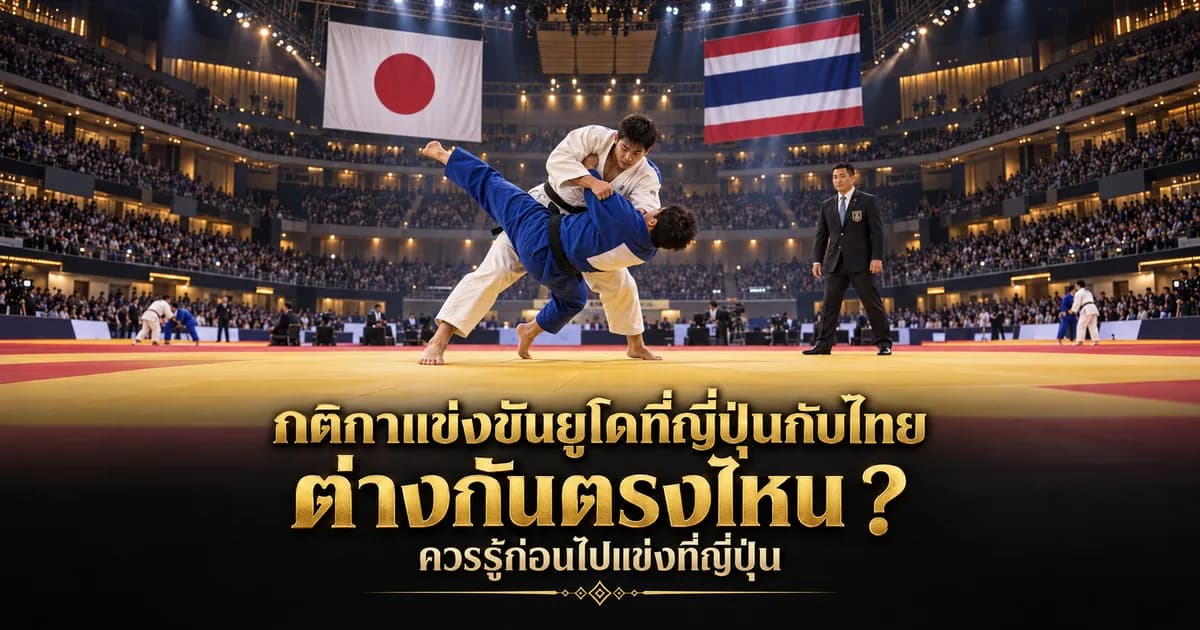
How Do Judo Competition Rules Differ Between Japan and Thailand? What to Know Before Competing There
The IJF brought yuko back in 2025 and Japan now scores it at home too. What genuinely differs today is the rules of some individual events and the youth regulation. Here is what to check before you enter.
By
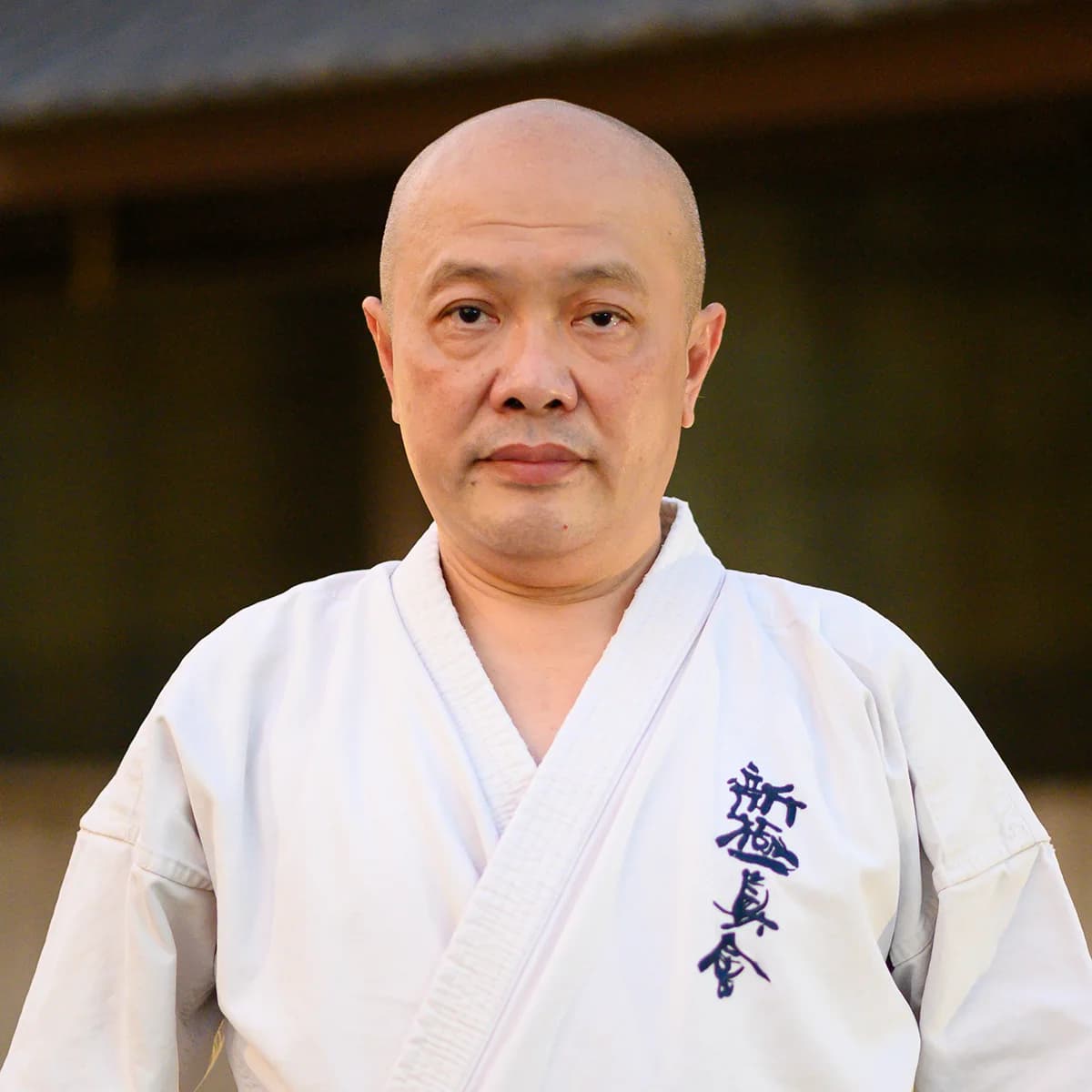 Thaninpong Supapitakpong (Phoenix)2nd Dan Shinkyokushin Karate · Founder and martial arts instructor, IMAC Dojo
Updated 5 Oct 2026
Reviewed by Ryu · Judo 2nd dan (Judo Association of Thailand) · SAT C-License jujitsu coach
- Author
- Thaninpong Supapitakpong (Phoenix)
- Published
- Last updated
- Reviewed by
- Ryu ·
- Sources
- 16
- Reading time
- 9 min
Short Answer
Judo in Thailand mainly follows the International Judo Federation (IJF) rules, and since 2025 those rules have brought yuko back as a third score after ippon and waza-ari. Japan adopted the same rules for its domestic competition from April 2025, so yuko is no longer a difference. What does differ is the event-specific rules of some tournaments, such as the All Japan Judo Championships, which set their own contest time, hold-down times, shido limit and leg-grab rule, and Japan's youth regulation, which bans chokes and joint locks from junior high school down. So before flying out, check which rulebook the event you are entering uses.
Key Takeaways
- The IJF brought yuko back in 2025, and Japan has used those rules domestically since April 2025, so yuko is no longer a difference.
- The All Japan Judo Championships use their own agreed rules: 5-minute contests (8 minutes in the final), waza-ari after a 15-second hold-down, disqualification on the fourth shido, and no golden score.
- The IJF still bans leg grabs below the top of the inner thigh, but since the 2025 edition the All Japan Championships allow gripping below the belt once you already hold your opponent.
- Japan's youth regulation bans chokes and joint locks from junior high school down, while IJF cadet events still allow chokes.
A question I hear often from parents and competitors at IMAC Dojo is how judo rules in Japan differ from the ones they know in Thailand, before they commit to flying out and entering a tournament at the source.
Let me be clear at the outset that I am not a judo instructor. The art I hold a black belt in and teach myself is Shinkyokushin karate; my role in judo is as the founder who sends students to compete and supports the coaching team. Judo at IMAC Dojo is taught by Ryu, Rain, Ken and Michelle, whose competition experience in Thailand and overseas comes to more than 20 years combined. What follows comes from what that team has met in practice, and from reading the source rules again so that every number here can be checked.
In this article
Why This Matters for Thai Competitors
Entering a tournament in Japan sounds like a change of country. It can also be a change of rulebook, because Japan layers three sets of rules: the IJF rules, which the All Japan Judo Federation applies to domestic competition; the extra agreed rules that some events write for themselves; and the youth regulation for competitors of junior-high age and below. Preparation therefore starts with asking which layer the event runs under, rather than simply training harder.
Our four judo instructors carry dan grades from the Judo Association of Thailand: Ryu and Rain at 2nd Dan, Ken and Michelle at 1st Dan, with Ken separately certified by the Kodokan in Japan. The programme and the team are set out on the IMAC Dojo judo course page.
Yuko Is Back, So It Is No Longer the Difference
In 2017 the IJF made a substantial revision ahead of the Tokyo Olympics: it removed the yuko score, leaving only ippon and waza-ari, set the hold-down times at 10 seconds for waza-ari and 20 seconds for ippon, cut the number of shido that cost the contest from four to three, and set contest time at four minutes for men and women alike.
The rules the IJF announced in December 2024 brought yuko back as a third score, and international use began at the Paris Grand Slam in February 2025. Yuko is given for a throw that lands the opponent on the side, the buttocks or the upper back, and for a hold-down of 5 to 9 seconds; waza-ari takes 10 to 19 seconds and ippon 20 seconds. However many yuko you score, they never add up to a waza-ari.
Japan did not keep the old rules for itself. The All Japan Judo Federation's summary of the new rules says they were introduced domestically from the All Japan Selected Judo Championships (全日本選抜体重別選手権大会) in April 2025, and the federation's own rules page now describes the same system: four-minute contests, yuko, disqualification on the third shido, and, if there is still no winner, golden score with no time limit.
An earlier version of this article said yuko was the biggest difference between Japan and Thailand. That stopped being true in 2025. If you read the same claim elsewhere, check which year's rules it quotes. In January 2026 the IJF said these rules remain largely unchanged, and that they will be fixed from the Ulaanbaatar Grand Slam until the Los Angeles 2028 Olympic Games.
Leg Grabs: Still Banned by the IJF, Allowed at the All Japan Championships Once You Have a Grip
Current IJF rules allow gripping below the belt down to the level of the top of the inner thigh, but leg grabbing, hooking the legs with the hand or arm, gripping the trousers and touching the leg from that level down are still penalised with shido. Meanwhile the Kodokan's list of technique names, kept by the institute where judo began, still includes leg-grab throws such as morote-gari (双手刈) and kuchiki-taoshi (朽木倒), and the IJF's Sport and Organisation Rules name a further set of Kodokan techniques that are not allowed in IJF events, among them kawazu-gake and kani-basami.
In Japan, the organising committee of the All Japan Judo Championships (全日本柔道選手権大会) and the women's Empress's Cup announced on 10 October 2024 a new agreed rule from the 2025 editions. The rules for the 2025 edition say that in standing, once you are gripping your opponent, grabbing or touching below the belt to attack or defend is not penalised, but going below the belt directly while not yet gripping is still a shido. The event is co-organised by the Kodokan and the All Japan Judo Federation, and the rule belongs to that event, not to international judo.
The other half of the picture is that the IJF rules still ban leg grabs. The All Japan Judo Federation's summary records that a major relaxation of leg grabs was one of the items a meeting considered in October 2024, before the new rules were announced, but the rules that came out still penalise them with shido, and the IJF will keep its rules fixed until the 2028 Olympics. So for now Japan has opened the door in its own event while the international stage keeps it shut.
Comparison Table: IJF Rules and the All Japan Championships
This table compares the current IJF rules, which Thailand mainly follows and Japan applies to domestic competition, with the agreed rules of the All Japan Judo Championships and the women's Empress's Cup, as published on the event pages for 2025 and 2026. Every cell can be checked against its source. If you are entering any other event in Japan, open that event's own regulations, because the federation says some events may adjust how the rules are applied.
| Item | IJF rules 2025–2028 (mainly followed in Thailand) | All Japan Championships, men's and women's (2025–2026) |
|---|---|---|
| Score levels | Ippon, waza-ari, yuko | Ippon, waza-ari, yuko (the same) |
| Contest time | 4 minutes | 5 minutes; 8 minutes in the final |
| Hold-down times | Ippon 20 seconds, waza-ari 10–19 seconds, yuko 5–9 seconds | Ippon 20 seconds, waza-ari 15 seconds or more, yuko 10 seconds or more |
| Which shido means disqualification | The third | The fourth |
| No winner when time runs out | Golden score, with no time limit | Decided by the referees, with no extension |
| Gripping below the belt | Allowed down to the top of the inner thigh; below that is shido | Allowed once you are already gripping; going below the belt without a grip is shido |
Japan's Youth Regulation: No Chokes or Joint Locks Through Junior High
Japan has a competition regulation for youth events that covers domestic contests for competitors of junior-high age and below. It runs those contests under IJF rules with added safety bans. The one parents should know is that using chokes or joint locks is a shido, and that intentionally choking an opponent or locking a joint is an immediate disqualification (hansoku-make).
The 2015 version of the regulation still let junior-high students use chokes, except sankaku-jime (三角絞); the current version has no such exception. The closing notes list several amendments in between, including one made on 24 January 2022 that took effect on 1 April 2022. Japanese press reported the same day that this amendment banned chokes completely at junior-high level, because competitors of that age had been rendered unconscious by chokes even at national events. The latest version, in force from 1 April 2026, renamed the regulation and added a ban on elementary-school pupils throwing from one knee.
That differs from IJF cadet events, the under-18 category, where chokes are still allowed. The IJF rules only state that a cadet who loses consciousness from a choke cannot continue in that competition. The two systems' age bands do not line up exactly, so a parent taking a child to compete needs to know whether the event uses Japan's youth regulation or the IJF cadet rules.
Japan's youth reform did not stop at technique restrictions; it extended to abolishing the national elementary school championship itself, which I have written about in judo and jujitsu in Japan. For a parent weighing this up, I think news like that reads as a good sign rather than an alarming one: it means the country where the art began was willing to change its own system once it found children were at risk.
Reihou: The Etiquette the Rules Actually Write Down
The IJF rules require the athletes to bow to each other before the contest begins and after it ends; if they do not bow, or bow incorrectly, the referee directs them to do so, and they must not shake hands before the start. In the dojo, the Kodokan's page on bowing explains that the two bows mainly taught are zarei (座礼), the seated bow, and ritsurei (立礼), the standing bow.
On celebrating a win, the IJF rules have no clause that bans celebrating as such. They do state that at IJF events an athlete who disrespects the opponent at the end of a contest risks disqualification and the loss of prize money and world ranking points, and they count insulting an opponent by word or gesture as an act against the spirit of judo. Punching the air or leaping in front of a beaten opponent is therefore not only a matter of image: if the referees read it as disrespect, there are penalties for it, and it runs against jita kyoei, a value the IJF writes into its own rules.
If you have read this far and are considering judo for your child: the judo class at IMAC Dojo takes students from age 8, and always begins with ukemi, the skill of falling safely. There is a fuller piece on that in what ukemi is, and on where the art itself comes from in what judo is.
See the judo course at IMAC Dojo, Ladprao 101Sources and further reading
- IJF: Wide consensus for the adapted rules of the next Olympic Cycle (9 Dec 2016) — International Judo FederationOfficialAccessed 5 Oct 2026
- IJF: Judo Presents the New Rules (13 Dec 2024) — International Judo FederationOfficialAccessed 5 Oct 2026
- IJF: New Rules: What to Remember (17 Dec 2024) — International Judo FederationOfficialAccessed 5 Oct 2026
- IJF: Rules Confirmed Ahead of a New Season (6 Jan 2026) — International Judo FederationOfficialAccessed 5 Oct 2026
- IJF Sport and Organisation Rules (SOR), version of 14 August 2026 — International Judo FederationOfficialAccessed 5 Oct 2026
- All Japan Judo Federation: summary of the changes in the 2025–2028 IJF refereeing rules (24 Jan 2025) — All Japan Judo FederationOfficialAccessed 5 Oct 2026
- All Japan Judo Federation: judo rules and scoring — All Japan Judo FederationOfficialAccessed 5 Oct 2026
- All Japan Judo Federation: applying the revised IJF rules at federation events (17 Mar 2026) — All Japan Judo FederationOfficialAccessed 5 Oct 2026
- All Japan Judo Federation: 2025 All Japan Championships and Empress's Cup regulations announced (10 Oct 2024) — All Japan Judo FederationOfficialAccessed 5 Oct 2026
- 2025 All Japan Judo Championships: competition rules — All Japan Judo FederationOfficialAccessed 5 Oct 2026
- 2026 All Japan Judo Championships: competition rules — All Japan Judo FederationOfficialAccessed 5 Oct 2026
- 2026 Empress's Cup All Japan Women's Judo Championships: competition rules — All Japan Judo FederationOfficialAccessed 5 Oct 2026
- All Japan Judo Federation: youth competition refereeing regulation (in force from 1 Apr 2026) — All Japan Judo FederationOfficialAccessed 5 Oct 2026
- Kodokan: list of judo technique names (柔道 技名称一覧) — Kodokan Judo InstituteOfficialAccessed 5 Oct 2026
- Kodokan: judo and bowing, the forms (柔道と礼、その作法) — Kodokan Judo InstituteOfficialAccessed 5 Oct 2026
- All Japan Judo Federation: special regulation for domestic youth competition, version of 30 Nov 2015 — All Japan Judo FederationOfficialAccessed 5 Oct 2026
Frequently Asked Questions
How do Kodokan judo rules differ from IJF rules?
Separate the layers first. The IJF writes the competition rules used internationally, while the Kodokan sets the system of technique names, which still includes leg grabs such as morote-gari even though the IJF penalises leg grabbing with shido; the IJF also bans some Kodokan techniques, such as kawazu-gake. The All Japan Championships, which the Kodokan co-organises, use IJF rules plus the event's own agreed rules, such as gripping below the belt once both athletes are already gripping. On scoring, both sides have had yuko since 2025.
What should I check before competing in judo in Japan?
First check whether the event uses IJF rules as they stand or adds its own agreed rules, because that decides the contest time, the hold-down times, how many shido mean disqualification, gripping below the belt, and how a contest is decided when time runs out. For competitors of junior-high age and below, also check the youth regulation on chokes and joint locks. Then look at the weight categories and the event's judogi rules.
Do Thailand and Japan use exactly the same judo rules?
Not entirely. Thailand mainly follows IJF rules, and Japan has applied IJF rules to domestic competition since April 2025, yuko included. What differs is the agreed rules of some events, such as the All Japan Championships, and the youth regulation, which bans chokes and joint locks from junior high school down.
How does my child start judo?
Start with ukemi, the skill of falling safely, before throwing technique, and there is no need to rush into competition. The judo class at IMAC Dojo takes students from age 8, judged alongside readiness to follow instructions and control the body.
Ready to start martial arts?
Message IMAC Dojo to ask which course fits your age, goals, and training background.
Ask on LINE Official