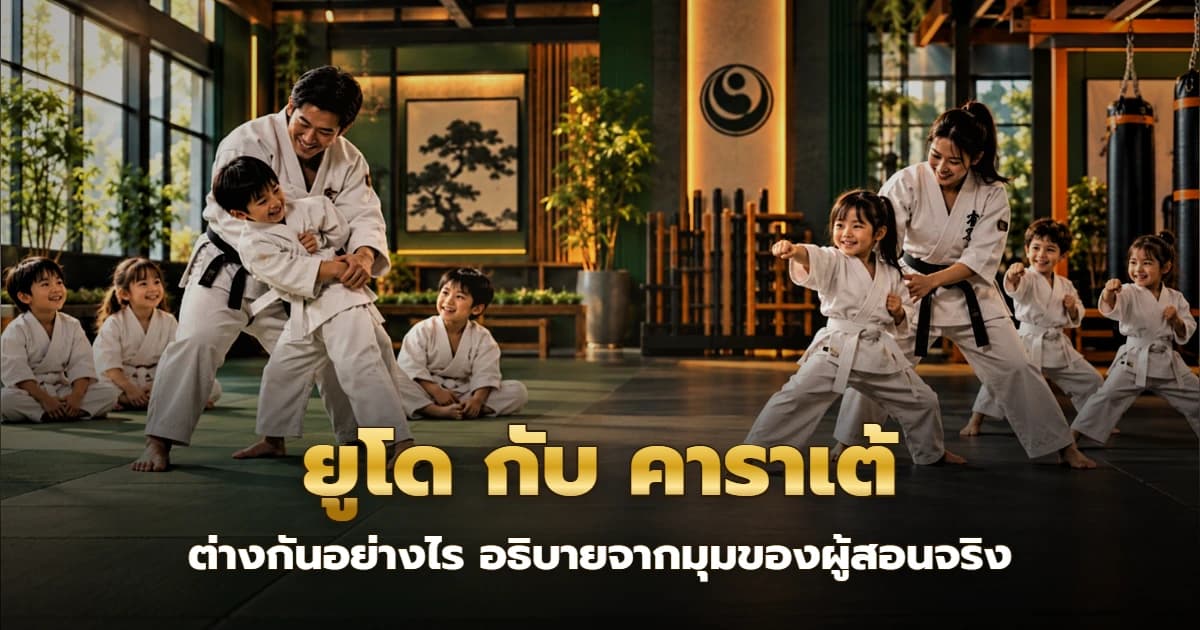
Judo vs Karate: How Do They Differ? Explained From a Real Instructor's Perspective
How judo and karate differ in technique, rules, the first lesson and the ages IMAC Dojo takes, and how to choose between them for a child or an adult beginner.
By
 Thaninpong Supapitakpong (Phoenix)Founder and instructor at IMAC Dojo
Updated 26 Sept 2026
- Author
- Thaninpong Supapitakpong (Phoenix)
- Published
- Last updated
- Sources
- 3
- Reading time
- 8 min
Short Answer
Judo is the art of gripping, throwing and controlling an opponent: the All Japan Judo Federation counts 68 throwing techniques (投技, nage-waza) and 32 grappling techniques (固技, katame-waza). Karate is a stand-up art of punches, kicks and blocks, trained through basics (基本, kihon), forms (型, kata) and sparring (組手, kumite). Judo's first lesson is how to fall safely (受け身, ukemi); karate's is stance and basics. At IMAC Dojo judo takes students from age 8 and Shinkyokushin Karate takes ages 7–60.
Key Takeaways
- Judo centres on gripping, throwing and ground control; karate on punching, kicking and keeping distance.
- The All Japan Judo Federation counts 100 judo techniques: 68 throws and 32 grappling techniques.
- Ukemi, safe falling, is judo's first lesson, before any real throwing.
- Shinkyokushin Karate is full contact, but its rules forbid hand strikes to the face, and beginners start with non-contact basics.
- At IMAC Dojo judo takes ages 8 and up; karate takes ages 7–60.
- Choose by the learner, the goal and the instructor rather than by the name of the art.
Almost every week a parent asks me how judo and karate differ, and which one their child should start with. There is no formula, because the two arts have different strengths and every learner is ready at a different time. IMAC Dojo teaches both judo and karate under one roof, so this article describes the difference as we see it on the mat, alongside information from the federations that can be checked.
In this article
The Core Techniques That Really Set the Two Arts Apart
The All Japan Judo Federation counts 100 judo techniques: 68 throwing techniques (投技, nage-waza) and 32 grappling techniques (固技, katame-waza). Grappling divides into pins (抑込技, osaekomi-waza), chokes (絞技, shime-waza) and joint locks (関節技, kansetsu-waza). In training, locks and chokes exist to make a partner submit, not to injure, and they are restricted by age: in Japan, primary-school competition bans both chokes and joint locks, as explained in How Do Judo Competition Rules Differ Between Japan and Thailand?. For judo's origins and Jigoro Kano, see What Is Judo?.
Karate training divides into basics (基本, kihon), forms (型, kata) and sparring (組手, kumite), using punches, kicks and blocks at standing range, with none of judo's throwing or ground fighting. The karate taught at IMAC Dojo is Shinkyokushin Karate, a full-contact (knockdown) style: in competition, body punches and head kicks are allowed but hand strikes to the face are not. Full contact does not mean a beginner absorbs impact on day one; we start with stance, movement and basics and raise the intensity as each person is ready. For an overview of karate, see What Is Karate?.
Ukemi: Why It Comes Before Real Judo
A common question is why judo students practise 受け身 (ukemi) before real judo. Judo is an art of throwing people to the ground, so students must learn to fall first. The All Japan Judo Federation publishes guidance specifically on ukemi: falling correctly protects the head and spreads the impact, and the ability to throw someone comes with the understanding that it must never be used off the mat, especially on hard ground. Training details are in What Is Ukemi?.
Well-taught children's judo starts with etiquette, movement, balance and falling practice step by step, not with children throwing each other hard in the first class. Only then does it move on to 乱取り (randori, free practice), which is closer to real competition. That order is why judo instructors spend more time on ukemi than outsiders expect.
Is Karate Really Safer Than Judo?
Parents ask this very often, and the honest answer is that we have no reliable data to say which art is safer overall. What we can say is that the risks come from different places. In judo they come from falling and being thrown, which ukemi exists to handle. In full-contact karate they come from the impact of punches and kicks, which rules and gradually rising intensity exist to control. The rules and the pain question in Kyokushin karate are covered in Is Kyokushin Karate Painful?.
In the end safety depends on the instructor running the class, pairing partners by size and level, and the students' discipline more than on the name of the art. If you are choosing a school, ask the instructor directly when beginners start contact or throwing, and how they decide someone is ready.
Judo vs Karate Comparison Table
| Feature | Judo | Karate (Shinkyokushin) |
|---|---|---|
| Range | Close, gripping the opponent's jacket | Standing, keeping punching and kicking distance |
| Main techniques | Throws (投技) and ground control (固技) | Punches, kicks, blocks; trained through 基本, 型 and 組手 |
| First lesson | Ukemi, falling safely | Stance and basics |
| Key rules | No punches or kicks; primary-school judo in Japan bans chokes and joint locks | Full contact; no hand strikes to the face |
| Guiding idea | 精力善用 自他共栄 (best use of energy, mutual welfare and benefit) | 押忍 (osu: perseverance and respect) |
| At IMAC Dojo | Ages 8 and up | Ages 7–60 |
The Right Age to Start
At IMAC Dojo the ages come from the actual course schedule. Judo takes students from age 8, because systematic ukemi and practice with a partner need patience and the ability to follow rules. Shinkyokushin Karate takes ages 7–60, because the early stage trains posture and basics without contact with a partner. Children younger than this are not yet within the ages of the classes the dojo runs.
Within those ages, every child is ready at a different time, so instructors look at concentration, stopping on command and care for a partner as well as age. Instructors and parents must say the same thing: never try throws, joint locks, chokes, punches or kicks on friends outside training. These techniques belong only where an instructor is in charge and the partner understands the rules. That is the spirit of 武道 (budo, the martial way): become strong, and never use that strength to bully anyone.
Judo or Karate? Start From the Family's Goal
I usually ask parents first what their real goal is. If it is for the child to gain confidence, discipline and respect for others, judo and karate serve that equally well, because both begin and end every session with a bow. The differences become clearer when you look at the learner's temperament and way of moving.
Learners who enjoy gripping, balance and solving problems at close range often enjoy judo, because it relies more on technique and timing than on raw strength. Learners who like to move fast and to make their forms sharp and precise often take to karate. But do not decide on a stereotype alone; some people change their interest after training for a while.
For families in Bangkok looking for a place to train, look at the instructor first, not the name on the sign. An instructor who understands how learners develop can adjust the intensity for each person. Days, times and fees are on the schedule and pricing page.
The Judo and Karate Taught at IMAC Dojo
IMAC Dojo teaches Judo from age 8 and Shinkyokushin Karate for ages 7–60. For adults starting karate in their working years, see Starting Karate at 30 to 60.
Our judo instructors hold the black belts listed on their profiles: Khru Ryu and Khru Rain hold 2nd Dan from the Judo Association of Thailand, Khru Ken holds 1st Dan certified by both the Association and the Kodokan in Japan, and Khru Michelle holds 1st Dan from the Association. In karate, all five instructors, including me, hold 2nd Dan in Shinkyokushinkai Karate. Judo classes are taught only by the instructors who hold judo grades.
Besides judo and karate, we run Wing Chun Sambo, focused on adults aged 25–60, and Wai Kru Muay Thai for ages 8–60. Each course has its own focus, and they are not designed to replace each other.
Conclusion
Judo and karate differ in range, technique, rules and first lesson: judo starts with falling, karate with stance. What they share is the need for an instructor who builds a safe foundation before intensity. I would like parents and anyone interested to look at the learner and the instructor rather than judge by the name of the art. Whichever you choose, what matters most is training with discipline, respecting others and enjoying learning over the long term.
Sources and further reading
- Judo techniques (Japanese) — All Japan Judo FederationOfficialAccessed 26 Sept 2026
- Recommending ukemi (Japanese) — All Japan Judo FederationOfficialAccessed 26 Sept 2026
- Kodokan Judo Institute — KodokanOfficialAccessed 26 Sept 2026
Frequently Asked Questions
Is judo or karate better for a shy child?
There is no fixed answer. Shy children can adapt to either, because both are taught step by step with clear etiquette. See whether the child is more comfortable gripping a partner, as in judo, or practising techniques at a distance, as in karate.
Should a 5-year-old start with judo or karate?
At IMAC Dojo karate takes ages 7–60 and judo takes ages 8 and up, so a 5-year-old is not yet within the ages of the classes the dojo runs.
Is judo really more injury-prone than karate?
There is no reliable data to say which art is safer overall. Judo's risk comes from falling and being thrown, which ukemi is there to handle; full-contact karate's comes from impact. Safety depends on the instructor running the class more than on the name of the art.
Why practise ukemi before serious judo?
Because judo throws people to the ground. Falling correctly protects the head and spreads the impact, so ukemi has to become automatic before throwing or randori with a partner.
Where should I look for judo or karate classes for kids in Bangkok?
Look mainly at the instructors' credentials and teaching approach, not only the location. At IMAC Dojo judo takes ages 8 and up and karate ages 7–60; days, times and fees are on the schedule and pricing page.
Can a child learn judo and karate at the same time?
Yes, if the child is within the ages of both classes and has enough rest. At IMAC Dojo the two are taught on different days, so they can be combined, but check physical readiness first because the two arts move very differently.
Can an adult with no martial arts background start judo or karate?
Yes. Both start from basics and put correct form before intensity. At IMAC Dojo karate takes students up to age 60, and judo takes ages 8 and up.
Ready to start martial arts?
Message IMAC Dojo to ask which course fits your age, goals, and training background.
Ask on LINE Official