
IMAC Dojo Judo Curriculum · Level 1
Judo Level 1: O Goshi — Understand the hip as a support
O Goshi brings the partner onto the hip with an arm passing under the armpit and around the back. Entry distance and forward imbalance work together; bending over and lifting someone does not explain the technique.
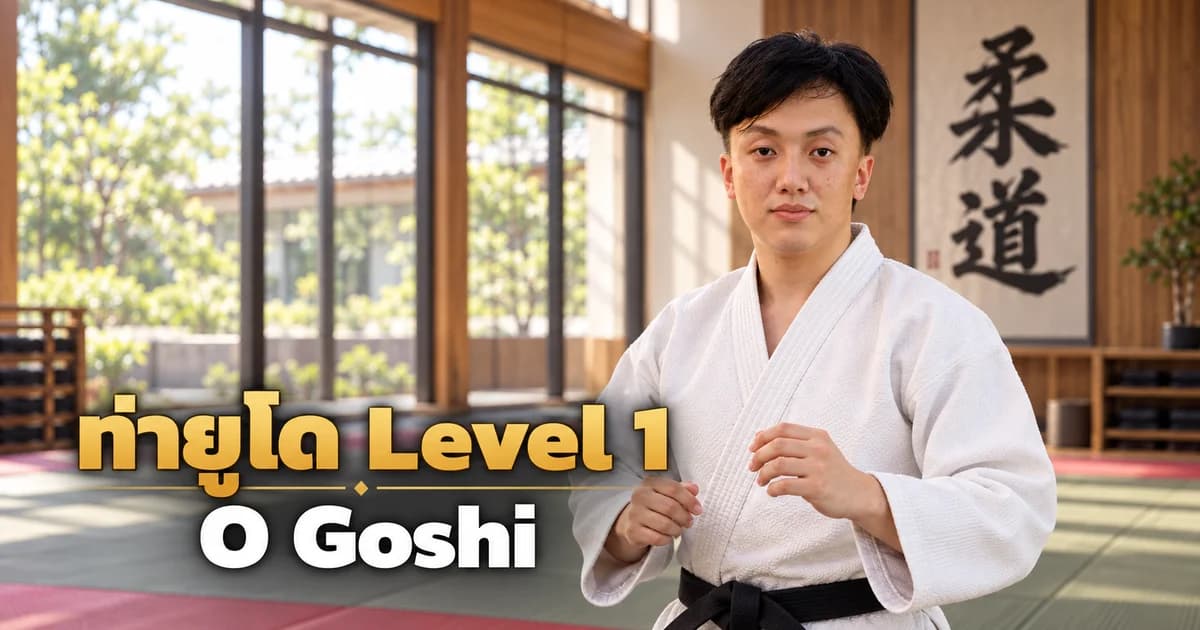
Compiled by Phoenix — Co-founder of IMAC Dojo
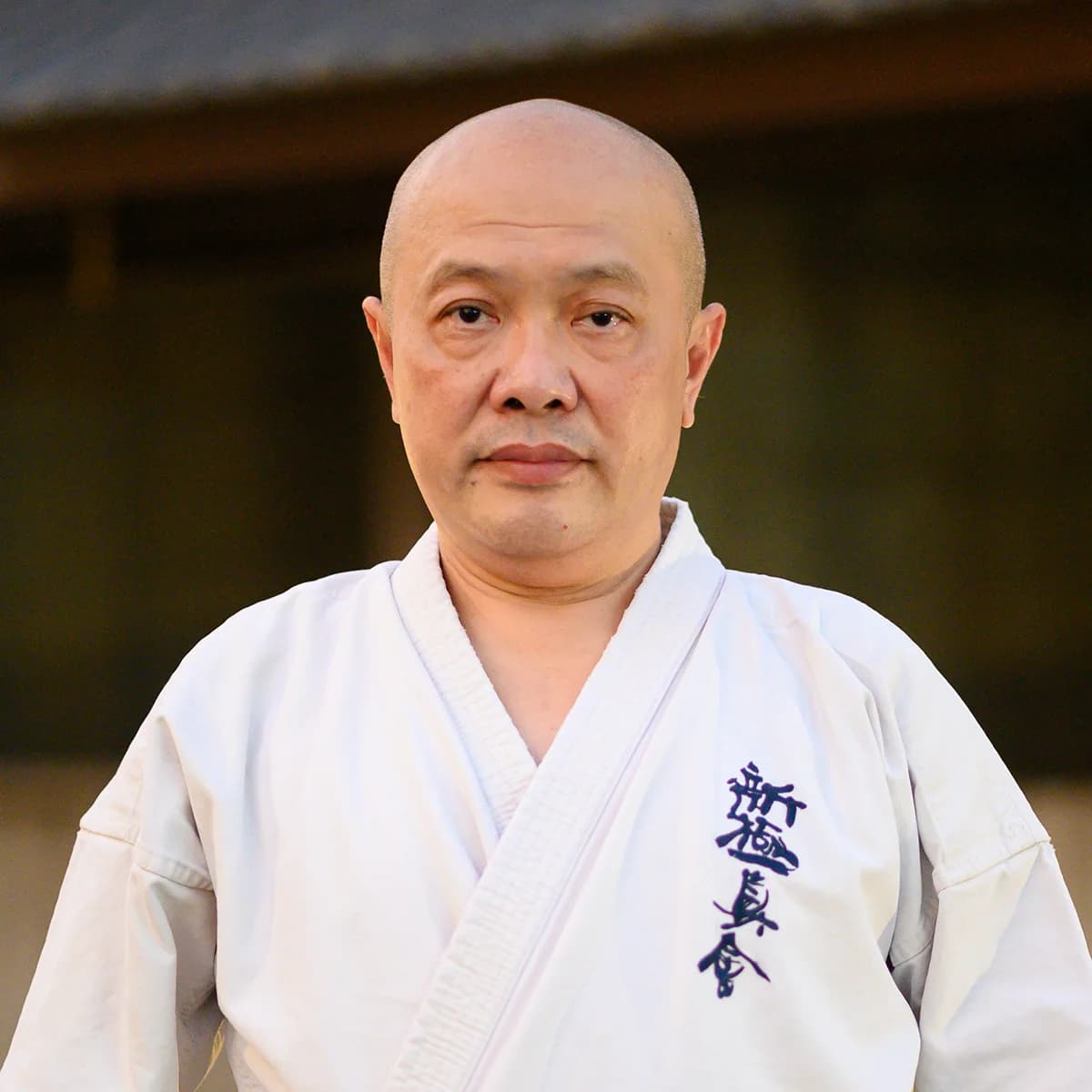 Thaninpong Supapitakpong (Phoenix)Co-founder of IMAC Dojo
Updated 29 Sept 2026
- Author
- Thaninpong Supapitakpong (Phoenix)
- Published
- Last updated
- Sources
- 1
- Reading time
- 3 min
Short Answer
O Goshi brings the partner onto the hip with an arm passing under the armpit and around the back. Entry distance and forward imbalance work together; bending over and lifting someone does not explain the technique.
Key Takeaways
- Check that the wrapping arm passes under the armpit rather than starting around the neck.
- Observe hip height and closeness before the knees extend.
- Follow the sleeve-control hand through the partner's landing.
Pause an O Goshi clip just before the partner rises. Where does the wrapping arm sit, how deeply has the hip entered, and have the two bodies connected?
In this article
What the name tells us
大腰, read o-goshi, literally combines the ideas of large and hip. It belongs to the hip-technique group. The name helps describe the hip's supporting role; it does not mean the technique is only for large people.
How the technique works
Kodokan describes forward or forward-corner imbalance, an arm under the armpit around the back, and loading the partner onto the hip before turning. The pulling hand and wrapping arm bring the bodies together rather than leave space behind the thrower.
Read o-goshi through uke's movement onto the hip as well as tori's turn. Kodokan describes reaching beneath the armpit around the waist and loading uke onto the rear of the hip. The wrap therefore connects the two torsos to the supporting position rather than acting as an isolated arm pull. Watch the space between the bodies before the lift and how the turn changes that space.
What to watch in the clips
- Check that the wrapping arm passes under the armpit rather than starting around the neck.
- Observe hip height and closeness before the knees extend.
- Follow the sleeve-control hand through the partner's landing.
A distinction worth noticing
Uki Goshi uses the hip as a turning point without the same deep loading. Tsuri Goshi uses a belt grip to assist the lift. Seeing someone travel over a hip is therefore insufficient to label every throw O Goshi.
O-goshi can resemble uki-goshi because both wrap an arm around the waist. Kodokan distinguishes loading onto the hip in o-goshi from the shallower hip engagement and twisting action of uki-goshi. Belt height or the height of uke in a frozen frame is not enough to identify the technique. Follow where uke passes across the hip and how the rotation develops.
Taking the lesson back to practice
If your hip enters but the partner stays behind, ask your instructor to check distance and pulling direction before adding effort. Slow entries without a throw can reveal the gap. Actual throws require prepared ukemi and instructor supervision.
The Level here refers to the IMAC Dojo curriculum. Use the article and clips to prepare questions and review them with your instructor. Practical training needs a suitable partner, space and controlled conditions.
Before a full throw, use the clip to ask your instructor about the direction of imbalance, the waist connection and support through the sleeve at the finish. If the movement becomes an effort to lift an upright, stable partner bodily, revisit the entry together. Fatigue or lifting effort does not establish that the underlying action is correct.
A story from Japan
Kodokan reproduces Kano's account in Judo Kyohon of using O Goshi aboard a ship. Kano says he supported his partner to prevent a head-first landing. It invites reflection on responsibility for a partner even after a throw succeeds.
Connect this with your next lesson
O Goshi — Video lesson 1
An IMAC Dojo clip accompanying O Goshi. Use the observations and distinctions in this article to guide your viewing.
Video published
Sources and further reading
- 大腰(おおごし)<腰技> — 講道館ReferenceAccessed 29 Sept 2026
Frequently Asked Questions
Does O Goshi require a belt grip?
Kodokan's main description has an arm passing under the armpit around the back. A belt grip used to lift is a useful point of comparison with Tsuri Goshi.
How does it differ from Uki Goshi?
Compare entry and support: O Goshi loads the partner more deeply onto the hip, while Uki Goshi turns them around a partially inserted hip.
Why does bending over not make the throw work?
Bending does not automatically disrupt balance. Have an instructor check hand direction, closeness and hip height before trying a stronger lift.
Ready to start martial arts?
Message IMAC Dojo to ask which course fits your age, goals, and training background.
Ask on LINE OfficialRelated Articles
Related Topics and Courses
Judo Thailand