
IMAC Dojo Judo Curriculum · Level 5
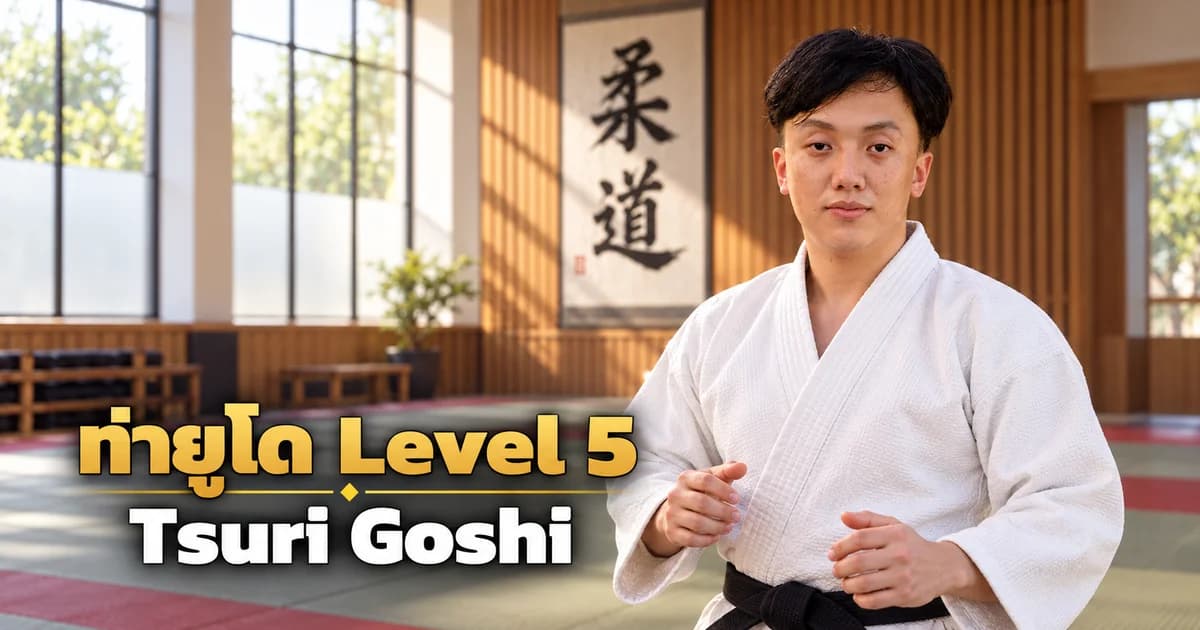
Judo Level 5: Tsuri Goshi — Read the belt grip’s lifting role
Tsuri Goshi grips the rear belt to draw and lift the partner onto the hip. The belt grip is functional, not decorative variation of O Goshi.
Compiled by Phoenix — Co-founder of IMAC Dojo
 Thaninpong Supapitakpong (Phoenix)Co-founder of IMAC Dojo
Updated 29 Sept 2026
- Author
- Thaninpong Supapitakpong (Phoenix)
- Published
- Last updated
- Sources
- 1
- Reading time
- 2 min
Short Answer
Tsuri Goshi grips the rear belt to draw and lift the partner onto the hip. The belt grip is functional, not decorative variation of O Goshi.
Key Takeaways
- Locate the rear-belt hand.
- Watch closeness before loading.
- Follow sleeve control through the landing.
Start at the hand behind the partner and follow it toward hip entry to see what tsuri contributes.
In this article
What the name tells us
釣腰, tsuri-goshi, is a hip technique. Tsuri suggests lifting or drawing up; do not confuse it with the longer Tsurikomi Goshi name.
How the technique works
Kodokan describes forward imbalance, drawing with the rear-belt grip and loading onto the hip. Observe hands connecting to entry rather than hip lifting alone.
Tsuri-goshi uses a rear-belt grip to connect uke to the hip in Kodokan's definition. The grip transmits movement; it is not simply a hand lifting the belt. Follow when uke reaches the hip and whether the sleeve hand continues working.
What to watch in the clips
- Locate the rear-belt hand.
- Watch closeness before loading.
- Follow sleeve control through the landing.
A distinction worth noticing
O Goshi wraps the back from under the armpit; Tsuri Goshi distinguishes the lifting belt grip. Passing over a hip does not make them identical.
Tsurikomi-goshi does not specify that same rear-belt grip. Sharing the word tsuri does not make the names interchangeable, and a waist wrap without a belt grip must also be read through its action.
Taking the lesson back to practice
Have an instructor check grip and distance slowly. Do not jerk the belt when entry falls short. If it feels like carrying, revisit imbalance first.
The Level here refers to the IMAC Dojo curriculum. Use the article and clips to prepare questions and review them with your instructor. Practical training needs a suitable partner, space and controlled conditions.
If the rear hand is hidden, leave the grip unresolved and provisionally observe body distance. Ask how grip and hip entry relate rather than lifting a partner higher by the belt to reproduce the image.
Connect this with your next lesson
Tsuri Goshi — Video lesson 1
An IMAC Dojo clip accompanying Tsuri Goshi. Use the observations and distinctions in this article to guide your viewing.
Video published
Sources and further reading
- 釣腰 — 講道館 柔道 技名称一覧 — 講道館ReferenceAccessed 29 Sept 2026
Frequently Asked Questions
Why is the belt grip important?
It supplies the lifting draw described for Tsuri Goshi. Watch its function, not merely whether it is held.
How does it differ from O Goshi?
O Goshi wraps from under the armpit; Tsuri Goshi uses the belt grip to help draw and lift.
Is it the same name as Tsurikomi Goshi?
They are separately named techniques. Compare hands and mechanism rather than shortening them into one label.
Ready to start martial arts?
Message IMAC Dojo to ask which course fits your age, goals, and training background.
Ask on LINE OfficialRelated Articles
Related Topics and Courses
Judo Thailand