
IMAC Dojo Judo Curriculum · Level 5
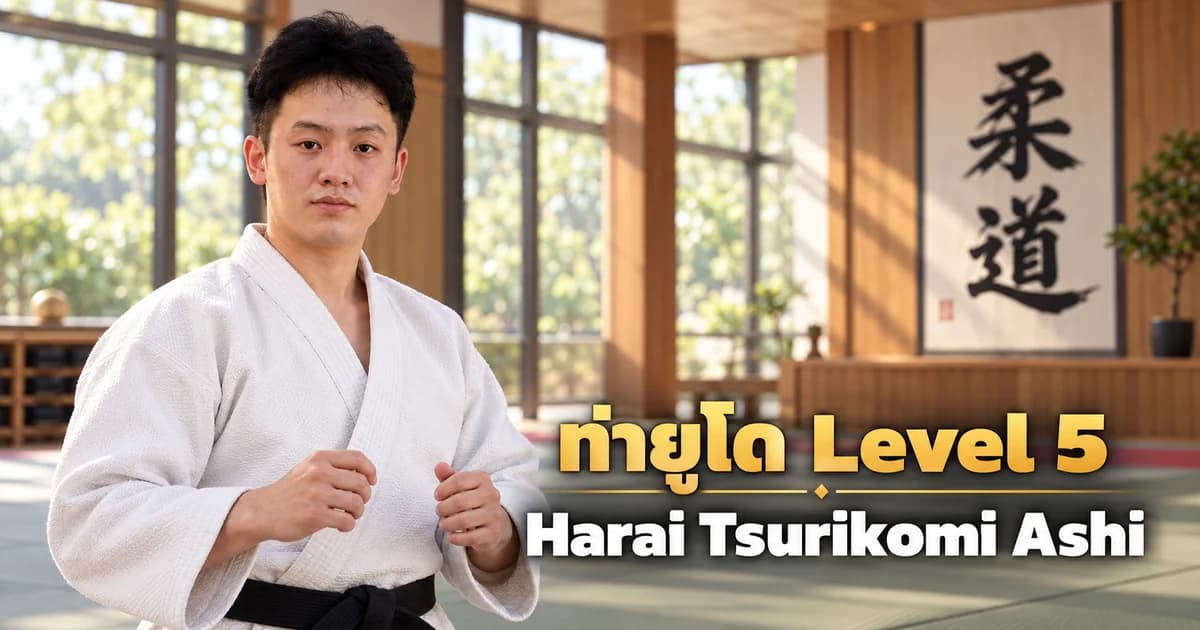
Judo Level 5: Harai Tsurikomi Ashi — Connect lifting hands to the upward sweep
Harai Tsurikomi Ashi joins forward lifting-drawing action with an upward ankle-area sweep. Observe upper body and foot together, not merely a higher Sasae foot placement.
Compiled by Phoenix — Co-founder of IMAC Dojo
 Thaninpong Supapitakpong (Phoenix)Co-founder of IMAC Dojo
Updated 29 Sept 2026
- Author
- Thaninpong Supapitakpong (Phoenix)
- Published
- Last updated
- Sources
- 1
- Reading time
- 2 min
Short Answer
Harai Tsurikomi Ashi joins forward lifting-drawing action with an upward ankle-area sweep. Observe upper body and foot together, not merely a higher Sasae foot placement.
Key Takeaways
- Watch the hands guide the upper body forward.
- Follow the upward ankle-area sweep.
- Observe the support leg while both actions connect.
The name describes several actions. Track the lifting hands first, then the foot that continues moving rather than staying as a check.
In this article
What the name tells us
払釣込足, harai-tsurikomi-ashi, is a foot technique combining sweep, lifting draw and foot in its name.
How the technique works
Kodokan describes lifting forward imbalance and sweeping the ankle upward from the front. Watch continuity between the hands and sweeping foot.
Harai-tsurikomi-ashi combines tsurikomi with sweeping upward from the front of uke's ankle in Kodokan's definition. Read upper-body guidance and lower-body action together; watching the foot alone hides how imbalance connects them.
What to watch in the clips
- Watch the hands guide the upper body forward.
- Follow the upward ankle-area sweep.
- Observe the support leg while both actions connect.
A distinction worth noticing
Sasae Tsurikomi Ashi checks; Harai Tsurikomi Ashi sweeps upward. Do not omit harai from similar long names and merge their mechanisms.
Sasae-tsurikomi-ashi supports at the ankle instead. Shared words do not make supporting and sweeping identical. Okuri-ashi-barai brings the feet together. Classify by what the foot does rather than memorizing similar names.
Taking the lesson back to practice
Separate hands and foot slowly with your instructor before reconnecting movement. If you must kick against a settled base, revisit imbalance.
The Level here refers to the IMAC Dojo curriculum. Use the article and clips to prepare questions and review them with your instructor. Practical training needs a suitable partner, space and controlled conditions.
At contact, ask whether the foot sweeps through or provides support, and where the hands guide uke. A harder leg swing cannot substitute for understanding the upper body's movement.
Connect this with your next lesson
Harai Tsurikomi Ashi — Video lesson 1
An IMAC Dojo clip accompanying Harai Tsurikomi Ashi. Use the observations and distinctions in this article to guide your viewing.
Video published
Sources and further reading
- 払釣込足 — 講道館 柔道 技名称一覧 — 講道館ReferenceAccessed 29 Sept 2026
Frequently Asked Questions
How does it differ from Sasae Tsurikomi Ashi?
Compare the upward sweep with a check near the ankle, not just the shared tsurikomi wording.
Should I watch feet before hands?
Try hands first, then connect the foot to see where the sweep fits within imbalance.
Is harai important in the name?
Yes. It distinguishes sweeping from other techniques sharing a lifting-drawing action.
Ready to start martial arts?
Message IMAC Dojo to ask which course fits your age, goals, and training background.
Ask on LINE OfficialRelated Articles
Related Topics and Courses
Judo Thailand