
IMAC Dojo Judo Curriculum · Level 3
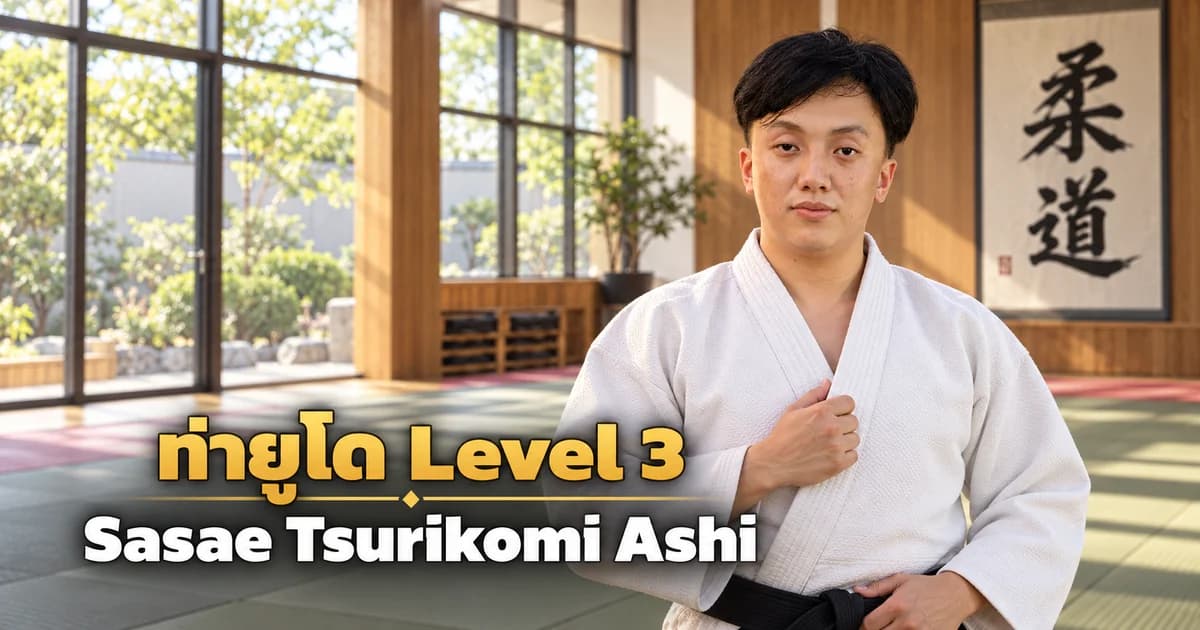
Judo Level 3: Sasae Tsurikomi Ashi — The foot checks movement while the hands continue it
Sasae Tsurikomi Ashi checks the partner near the ankle while the hands guide the upper body forward. Observe both actions; do not treat it as kicking the ankle to cause a fall.
Compiled by Phoenix — Co-founder of IMAC Dojo
 Thaninpong Supapitakpong (Phoenix)Co-founder of IMAC Dojo
Updated 29 Sept 2026
- Author
- Thaninpong Supapitakpong (Phoenix)
- Published
- Last updated
- Sources
- 1
- Reading time
- 2 min
Short Answer
Sasae Tsurikomi Ashi checks the partner near the ankle while the hands guide the upper body forward. Observe both actions; do not treat it as kicking the ankle to cause a fall.
Key Takeaways
- Follow the shoulder movement before the check acts.
- Identify ankle contact rather than assuming Hiza Guruma.
- Watch the thrower’s support leg during turning and hand action.
Following only the foot misses much of the action. Track hands and shoulders first, then return to the checking foot to see different roles sharing one moment.
In this article
What the name tells us
支釣込足, sasae-tsurikomi-ashi, is a foot technique. Sasae suggests support or checking; tsurikomi describes the lifting-drawing action.
How the technique works
Kodokan describes forward imbalance through lifting and drawing, with a foot checking near the ankle. The contact does not do everything: placing a foot against an unmoving partner does not explain the mechanism.
Sasae suggests supporting or blocking, while tsurikomi describes guiding uke up and in. Kodokan places the support at the ankle. The touching foot is therefore not a cue to push the leg far away; it works with the hands and the path of the rotating torso.
What to watch in the clips
- Follow the shoulder movement before the check acts.
- Identify ankle contact rather than assuming Hiza Guruma.
- Watch the thrower’s support leg during turning and hand action.
A distinction worth noticing
Hiza Guruma checks near the knee; this technique checks near the ankle. Both guide the body with the hands, but contact and distance differ. Simply moving the foot up or down does not leave everything else unchanged.
Hiza-guruma also combines support and rotation, but its contact is at the knee. This similarity does not justify freely moving the contact point or replacing support with a kick. Ask your instructor to distinguish the complete movement sequences.
Taking the lesson back to practice
Have an instructor set a distance where foot placement preserves your base, then review upper-body control slowly. If you need to kick to stop the partner’s leg, pause and check hand direction and timing.
The Level here refers to the IMAC Dojo curriculum. Use the article and clips to prepare questions and review them with your instructor. Practical training needs a suitable partner, space and controlled conditions.
Begin watching before the supporting foot contacts uke. If uke has not yet been guided into movement, ask when the hands and tori's movement act. This reveals a whole-body technique rather than a memorized pose with one foot raised.
Connect this with your next lesson
Sasae Tsurikomi Ashi — Video lesson 1
An IMAC Dojo clip accompanying Sasae Tsurikomi Ashi. Use the observations and distinctions in this article to guide your viewing.
Video published
Sources and further reading
- 支釣込足 — 講道館 柔道 技名称一覧 — 講道館ReferenceAccessed 29 Sept 2026
Frequently Asked Questions
How is checking different from kicking here?
The check cooperates with hands continuing the upper-body movement; impact against the ankle alone is not the technique.
How does it differ from Hiza Guruma?
The contact is near the ankle rather than the knee, requiring attention to distance and timing as well.
Why does placing my foot not turn the partner?
Ask whether imbalance and the hands continue guiding the body or have stopped. The checking point cannot replace body control.
Ready to start martial arts?
Message IMAC Dojo to ask which course fits your age, goals, and training background.
Ask on LINE OfficialRelated Articles
Related Topics and Courses
Judo Thailand