
IMAC Dojo Judo Curriculum · Level 5
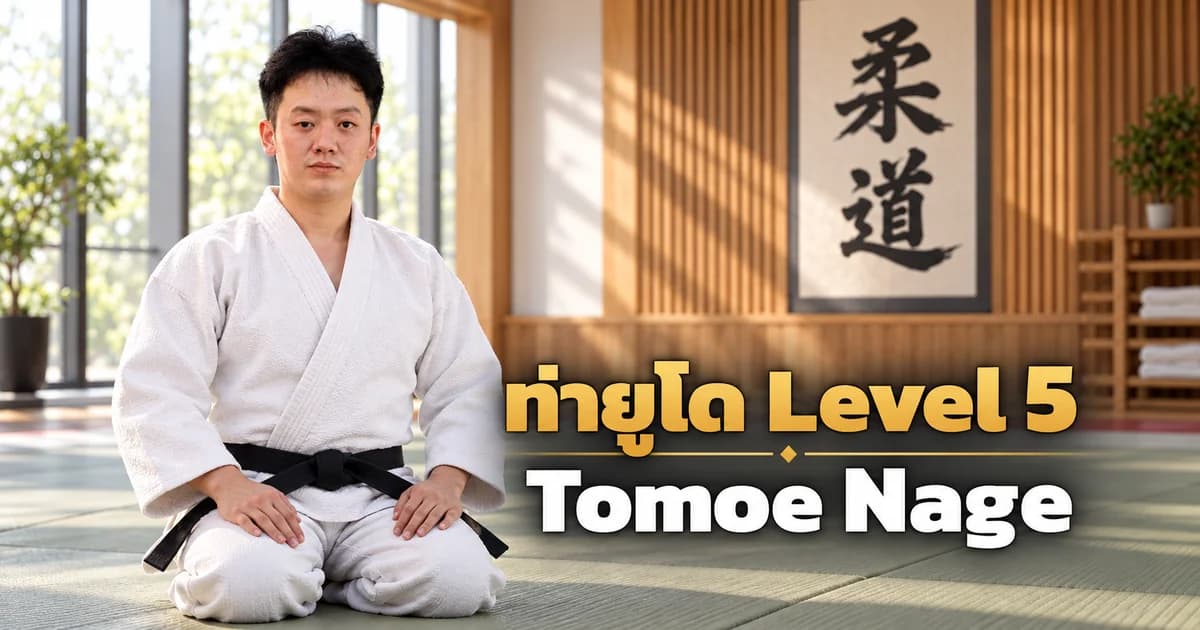
Judo Level 5: Tomoe Nage — The backward descent needs a direction
Tomoe Nage is a rear-sacrifice throw guiding the partner overhead, not simply lying down and kicking. Watch imbalance and hand connection before descent.
Compiled by Phoenix — Co-founder of IMAC Dojo
 Thaninpong Supapitakpong (Phoenix)Co-founder of IMAC Dojo
Updated 29 Sept 2026
- Author
- Thaninpong Supapitakpong (Phoenix)
- Published
- Last updated
- Sources
- 1
- Reading time
- 2 min
Short Answer
Tomoe Nage is a rear-sacrifice throw guiding the partner overhead, not simply lying down and kicking. Watch imbalance and hand connection before descent.
Key Takeaways
- Read imbalance before descent.
- Follow the hand-foot relationship through rotation.
- Observe control of the landing direction.
Start before the practitioner lies back rather than only watching the airborne partner.
In this article
What the name tells us
巴投, tomoe-nage, belongs to rear-sacrifice techniques. Tomoe evokes a curved turning shape.
How the technique works
Kodokan describes forward imbalance, lying back and sole contact with the lower torso to guide the partner overhead. Read the sequence, not one foot-contact frame as a self-training guide.
Tomoe-nage is ma-sutemi-waza: tori gives up standing support so uke's movement continues overhead, rather than lying down first and kicking uke upward. Kodokan includes forward imbalance and sole contact at the lower abdomen. Examine proximity before the descent.
What to watch in the clips
- Read imbalance before descent.
- Follow the hand-foot relationship through rotation.
- Observe control of the landing direction.
A distinction worth noticing
Sumi Gaeshi also sacrifices backward but differs in leg contact and rotational line. Lying back alone does not identify Tomoe Nage.
Sumi-gaeshi instead relates the lower leg to uke's inner thigh. That contact distinguishes the techniques even though both can involve a supine tori and uke travelling overhead.
Taking the lesson back to practice
Practise only when the instructor prepares partner and space, with receiving skills checked. Do not pull someone down without control or kick harder to compensate for timing.
The Level here refers to the IMAC Dojo curriculum. Use the article and clips to prepare questions and review them with your instructor. Practical training needs a suitable partner, space and controlled conditions.
Watch whether uke is moving before tori descends and whether upper-body control continues. An instructor must prepare the receiving side of practice; do not test the throw by lying down and kicking a partner.
Connect this with your next lesson
Tomoe Nage — Video lesson 1
An IMAC Dojo clip accompanying Tomoe Nage. Use the observations and distinctions in this article to guide your viewing.
Video published
Sources and further reading
- 巴投 — 講道館 柔道 技名称一覧 — 講道館ReferenceAccessed 29 Sept 2026
Frequently Asked Questions
Is lying down and kicking enough?
No. Controlled imbalance and guidance into rotation are necessary.
How does it differ from Sumi Gaeshi?
Compare leg contact and rotational line, not just the backward descent.
Where should viewing begin?
Before descent, to observe hands and imbalance leading into the turn.
Ready to start martial arts?
Message IMAC Dojo to ask which course fits your age, goals, and training background.
Ask on LINE OfficialRelated Articles
Related Topics and Courses
Judo Thailand