
IMAC Dojo Judo Curriculum · Level 5
Judo Level 5: Hane Goshi — Let hip and leg spring together
Hane Goshi is a hip technique springing the partner upward with hip and leg after forward imbalance. Observe connection rather than a jump by the thrower.
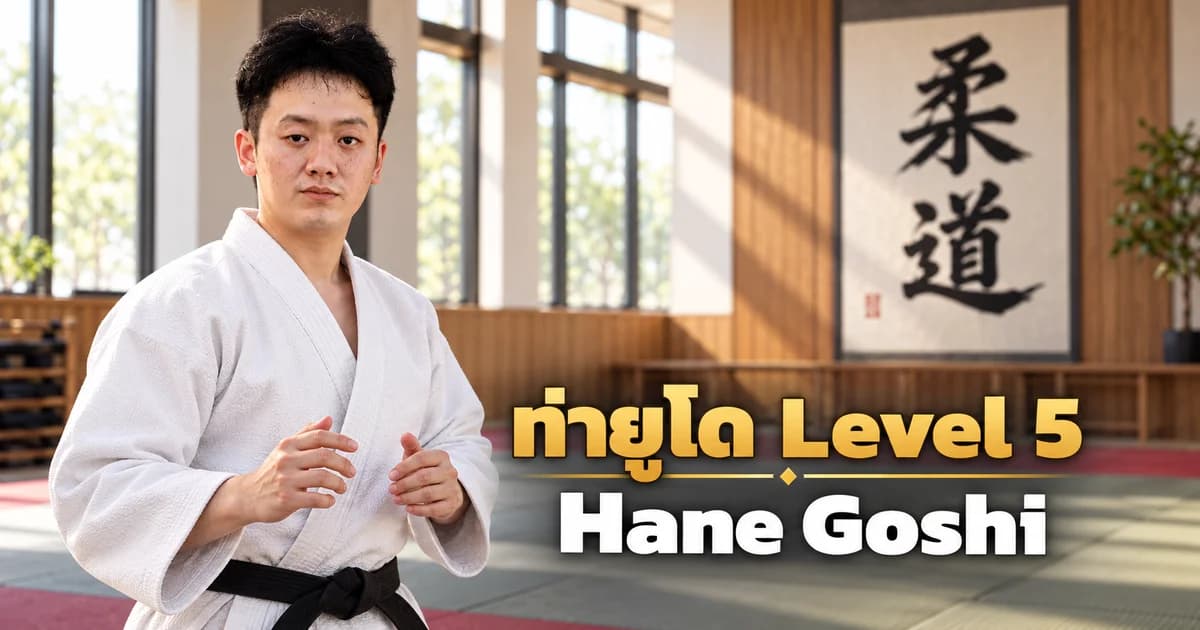
Compiled by Phoenix — Co-founder of IMAC Dojo
 Thaninpong Supapitakpong (Phoenix)Co-founder of IMAC Dojo
Updated 29 Sept 2026
- Author
- Thaninpong Supapitakpong (Phoenix)
- Published
- Last updated
- Sources
- 1
- Reading time
- 2 min
Short Answer
Hane Goshi is a hip technique springing the partner upward with hip and leg after forward imbalance. Observe connection rather than a jump by the thrower.
Key Takeaways
- Watch closeness before the spring.
- Follow hip and leg working together.
- Compare Harai Goshi’s sweep in the combined clip.
A combined clip also contains Harai Goshi and Uchi Mata. Separate each named segment and compare how leg and hip cooperate.
In this article
What the name tells us
跳腰, hane-goshi, belongs to hip techniques. Hane suggests springing, not an instruction for the practitioner to jump.
How the technique works
Kodokan describes forward imbalance followed by rear-hip and leg action springing upward. Follow the hands connecting the bodies and the transition from entry to spring.
Read hane-goshi's hip and working leg as one action. Kodokan describes springing upward with the rear hip and leg, not lifting with the arms and adding a leg swing. Follow how uke approaches the contact before the spring.
What to watch in the clips
- Watch closeness before the spring.
- Follow hip and leg working together.
- Compare Harai Goshi’s sweep in the combined clip.
A distinction worth noticing
Harai Goshi emphasizes sweeping; Uchi Mata is a foot technique acting at the inner thigh. The combined title does not make their names or categories interchangeable.
Harai-goshi emphasizes a sweep; uchi-mata acts at the inner thigh. All three can look similar while uke is airborne. In the combined clip, inspect the moments before the lift and the contact, not just the leg's direction.
Taking the lesson back to practice
Ask an instructor to check support-leg stability and entry before adding the spring. If you jump after a distant partner, reset distance and imbalance.
The Level here refers to the IMAC Dojo curriculum. Use the article and clips to prepare questions and review them with your instructor. Practical training needs a suitable partner, space and controlled conditions.
Discuss the standing base and continuing sleeve-hand connection with your instructor. If you need to jump or fling yourself to imitate the footage, revisit distance. More visible movement does not establish that the springing principle has occurred.
Connect this with your next lesson
Hane Goshi — Video lesson 1
An IMAC Dojo clip accompanying Hane Goshi. Use the observations and distinctions in this article to guide your viewing.
Video published
Combined Harai Goshi, Uchi Mata and Hane Goshi lesson
An IMAC Dojo clip accompanying Hane Goshi. Use the observations and distinctions in this article to guide your viewing.
Video published
Hane Goshi — Short demonstration 3
An IMAC Dojo clip accompanying Hane Goshi. Use the observations and distinctions in this article to guide your viewing.
Video published
Sources and further reading
- 跳腰 — 講道館 柔道 技名称一覧 — 講道館ReferenceAccessed 29 Sept 2026
Frequently Asked Questions
Is Hane Goshi a foot or hip technique?
Kodokan classifies it as a hip technique despite the important leg action.
Does hane mean I must jump?
No. It describes springing the partner with hip and leg.
How should I use the combined clip?
Select Hane Goshi’s segment, then compare hip and leg roles with the other two without merging their names.
Ready to start martial arts?
Message IMAC Dojo to ask which course fits your age, goals, and training background.
Ask on LINE OfficialRelated Articles
Related Topics and Courses
Judo Thailand