
IMAC Dojo Judo Curriculum · Level 5
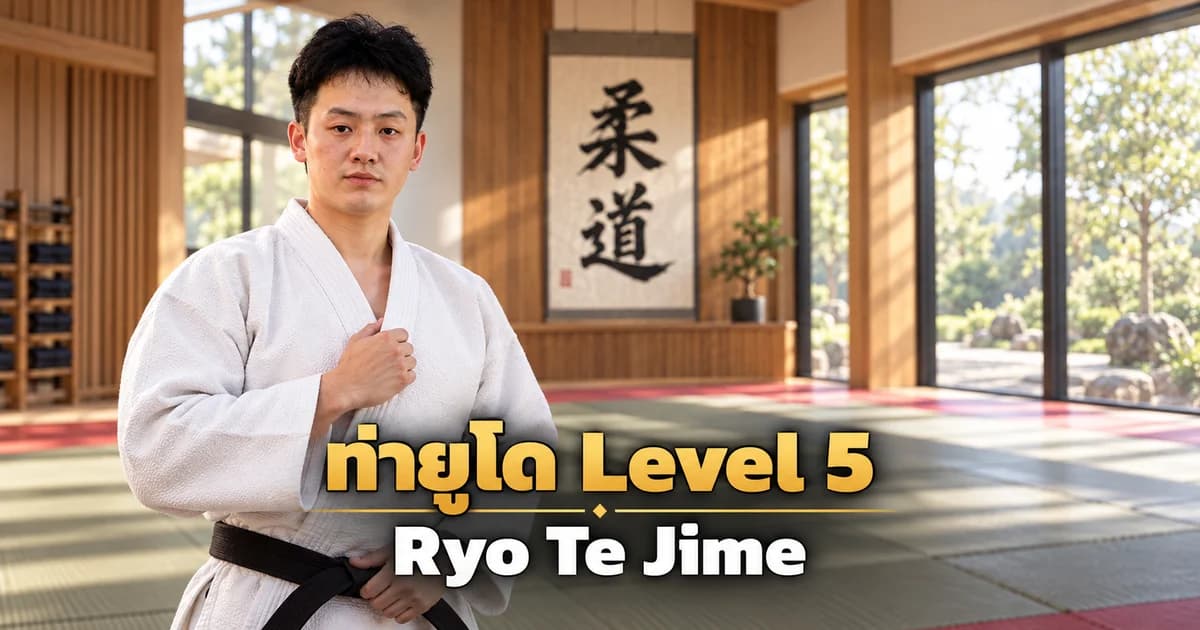
Judo Level 5: Ryo Te Jime — Two hands without crossed arms
Ryo Te Jime uses two hands on the front collars. Compare its uncrossed arm relationship with the Juji Jime group.
Compiled by Phoenix — Co-founder of IMAC Dojo
 Thaninpong Supapitakpong (Phoenix)Co-founder of IMAC Dojo
Updated 29 Sept 2026
- Author
- Thaninpong Supapitakpong (Phoenix)
- Published
- Last updated
- Sources
- 1
- Reading time
- 2 min
Short Answer
Ryo Te Jime uses two hands on the front collars. Compare its uncrossed arm relationship with the Juji Jime group.
Key Takeaways
- Observe each collar grip.
- Check whether the arms cross.
- Watch both hands release on stopping.
Start with arm alignment rather than force or the final result.
In this article
What the name tells us
両手絞, ryo-te-jime, means two-hand strangle.
How the technique works
Both hands work with collar and torso position. Two hands do not imply twice the force.
Ryo-te-jime names a specific technique, not every strangle using two hands. Kodokan specifies side-collar grips with the thumbs inside and the action of both hands. Examine the grips before comparing names.
What to watch in the clips
- Observe each collar grip.
- Check whether the arms cross.
- Watch both hands release on stopping.
A distinction worth noticing
Gyaku, Kata and Nami Juji Jime share crossed-arm positioning. Compare that pattern before examining grip details.
Juji-jime crosses the wrists, while tsukkomi-jime has a different hand action. Two hands near a neck are insufficient to identify ryo-te-jime.
Taking the lesson back to practice
Do not strike the neck with fists or pull violently. Practise slowly under instruction, agree on a signal and release both hands immediately when stopping.
The Level here refers to the IMAC Dojo curriculum. Use the article and clips to prepare questions and review them with your instructor. Practical training needs a suitable partner, space and controlled conditions.
Watch the initial grips before pressure and ask your instructor about wrist alignment and torso control. Enduring a strangle is not a drill in this article; communication and immediate release come before practical application.
Connect this with your next lesson
Ryo Te Jime — Video lesson 1
An IMAC Dojo clip accompanying Ryo Te Jime. Use the observations and distinctions in this article to guide your viewing.
Video published
Sources and further reading
- 両手絞 — 講道館 柔道 技名称一覧 — 講道館ReferenceAccessed 29 Sept 2026
Frequently Asked Questions
How is it different from Juji Jime?
Compare uncrossed front grips with crossed-arm forms.
Do two hands mean more force?
No. The name describes the working arrangement.
Which hand should release first?
Release control from both hands immediately when stopping.
Ready to start martial arts?
Message IMAC Dojo to ask which course fits your age, goals, and training background.
Ask on LINE OfficialRelated Articles
Related Topics and Courses
Judo Thailand