
IMAC Dojo Judo Curriculum · Level 1
Judo Level 1: Kesa Gatame — Control the shoulder with an adaptable base
Kesa Gatame is a side hold controlling the partner’s arm and shoulder region. Body weight and the leg base cooperate; a tight grip around the neck alone does not explain it.
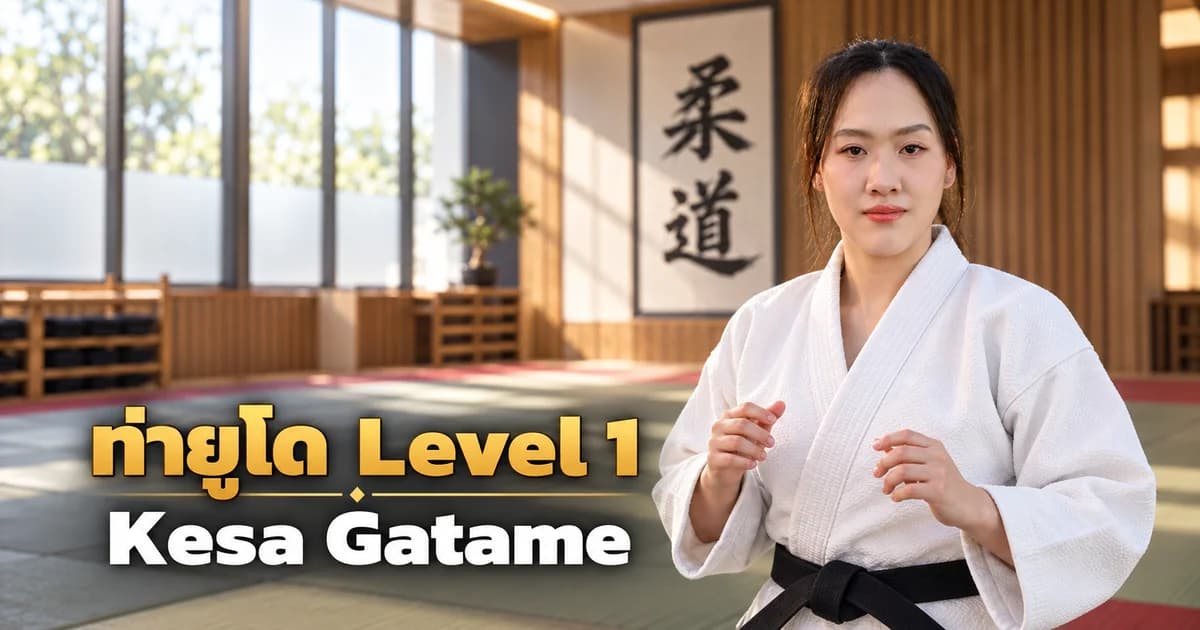
Compiled by Phoenix — Co-founder of IMAC Dojo
 Thaninpong Supapitakpong (Phoenix)Co-founder of IMAC Dojo
Updated 29 Sept 2026
- Author
- Thaninpong Supapitakpong (Phoenix)
- Published
- Last updated
- Sources
- 2
- Reading time
- 3 min
Short Answer
Kesa Gatame is a side hold controlling the partner’s arm and shoulder region. Body weight and the leg base cooperate; a tight grip around the neck alone does not explain it.
Key Takeaways
- Track whether the near arm remains controlled or slips free.
- Watch how the legs maintain a base as the bodies move.
- Observe chest contact with the upper body without neck twisting.
Instead of asking how hard the hold presses, ask whether its base survives the partner’s movement. This makes the legs and torso easier to notice.
In this article
What the name tells us
袈裟固, kesa-gatame, is a holding technique. Kesa refers to a diagonally worn robe, offering an image for the oblique side control across the body.
How the technique works
Kodokan describes controlling the near arm, gripping the rear collar and using the side of the chest against the upper body. Stability connects arm control, torso and base rather than pulling the head alone.
Kesa-gatame connects arm control with the side of tori's torso rather than relying only on weight over the chest. Watch whether uke can turn a shoulder towards tori and how tori's legs support the direction of the torso. Once uke moves, preserving that connection matters more than reproducing the starting pose.
What to watch in the clips
- Track whether the near arm remains controlled or slips free.
- Watch how the legs maintain a base as the bodies move.
- Observe chest contact with the upper body without neck twisting.
A distinction worth noticing
Kuzure Kesa Gatame changes one arm to an underhook beneath the far armpit. Similar names do not mean identical grips. Squeezing while leaving the legs unable to adjust can still lose the base.
The other arm distinguishes it from kuzure-kesa-gatame: Kodokan's kesa-gatame definition uses a rear-collar grip, whereas kuzure reaches beneath the far armpit. Not every seated position alongside the torso is the same hold. Tightening around the neck is not a substitute for closing a positional gap.
Taking the lesson back to practice
Ask an instructor to check arm control before adding partner movement. Use agreed resistance to review the base and stop at the partner’s signal. Increasing static pressure is not the only answer to an escape.
The Level here refers to the IMAC Dojo curriculum. Use the article and clips to prepare questions and review them with your instructor. Practical training needs a suitable partner, space and controlled conditions.
Nippon Budokan's teaching materials pair kesa-gatame with leg-switching and groundwork movement. The learning point is that the base adapts when the partner moves; the hold is not just a still image. Ask your instructor how to adjust that base while controlling the arm without pressing the neck.
Connect this with your next lesson
Kesa Gatame — Video lesson 1
An IMAC Dojo clip accompanying Kesa Gatame. Use the observations and distinctions in this article to guide your viewing.
Video published
Sources and further reading
- 袈裟固 — 講道館 柔道 技名称一覧 — 講道館ReferenceAccessed 29 Sept 2026
- 少年少女武道指導書:柔道・基本的指導方法 — 日本武道館ReferenceAccessed 29 Sept 2026
Frequently Asked Questions
Why does the hold loosen when the partner frees an arm?
The near arm contributes to shoulder control. Reset that control with an instructor instead of compensating by squeezing the neck.
What changes in Kuzure Kesa Gatame?
The other arm goes under the far armpit rather than using the rear-collar arrangement of Kesa Gatame.
Should I watch arms or legs first?
Start with the controlled arm, then follow how the leg base supports the torso’s movement. The two work together.
Ready to start martial arts?
Message IMAC Dojo to ask which course fits your age, goals, and training background.
Ask on LINE OfficialRelated Articles
Related Topics and Courses
Judo Thailand