
IMAC Dojo Judo Curriculum · Level 1–2
Judo Level 1–2: Kuzure Kesa Gatame — Change the arm control, retain the side base
Kuzure Kesa Gatame changes Kesa Gatame by placing an arm under the partner’s far armpit. Side-body control remains important, and the leg base must adapt to movement.
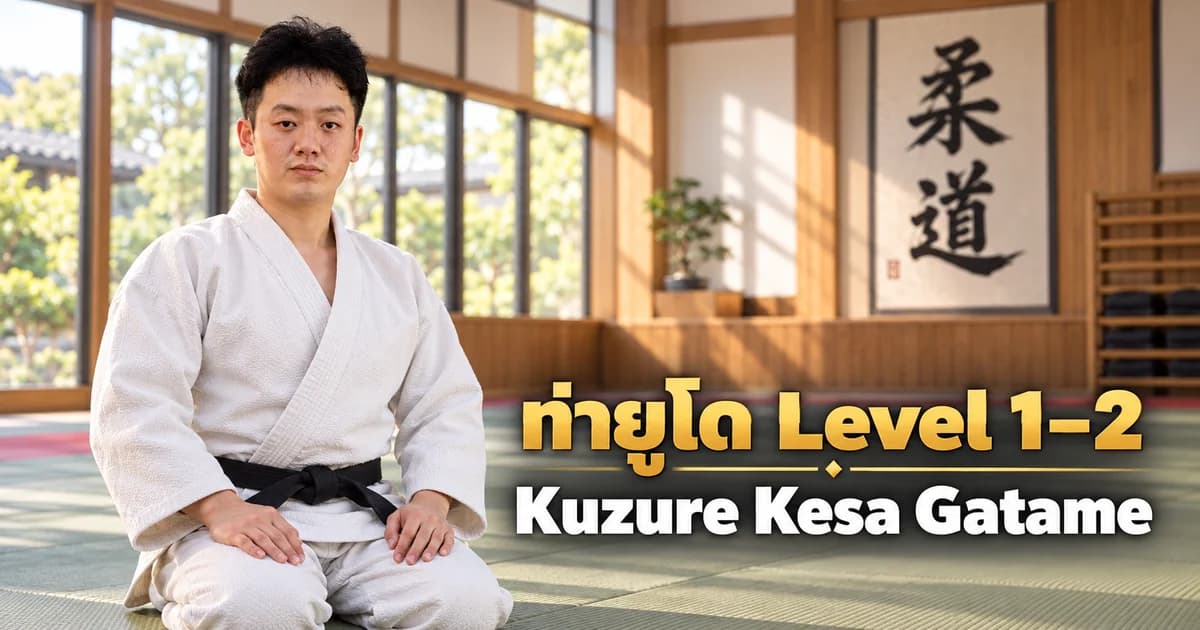
Compiled by Phoenix — Co-founder of IMAC Dojo
 Thaninpong Supapitakpong (Phoenix)Co-founder of IMAC Dojo
Updated 29 Sept 2026
- Author
- Thaninpong Supapitakpong (Phoenix)
- Published
- Last updated
- Sources
- 1
- Reading time
- 3 min
Short Answer
Kuzure Kesa Gatame changes Kesa Gatame by placing an arm under the partner’s far armpit. Side-body control remains important, and the leg base must adapt to movement.
Key Takeaways
- Locate the far-side underhook before following the leg base.
- Compare body distance across both Levels without treating every timing difference as a new technique.
- Check whether base adjustment preserves control of the near arm.
The clip collection lists this technique in Levels 1 and 2, so the clips are gathered in one article. Compare arm positions instead of assuming a different Level means a different technique.
In this article
What the name tells us
崩袈裟固, kuzure-kesa-gatame, is a modified scarf hold. Kuzure here describes a variation, not an incorrectly performed hold.
How the technique works
Kodokan describes near-arm control with the other arm inserted under the far armpit, while the side of the chest controls the upper body. This changes how arm control connects to the partner’s shoulder.
Kuzure denotes a variation of kesa-gatame, not a hold that has collapsed into an unusable shape. Kodokan retains control of the near arm while routing the other arm beneath the far armpit. Watch the relationship between uke's shoulders and the side of tori's chest, not merely the direction in which tori sits.
What to watch in the clips
- Locate the far-side underhook before following the leg base.
- Compare body distance across both Levels without treating every timing difference as a new technique.
- Check whether base adjustment preserves control of the near arm.
A distinction worth noticing
The far-side arm distinguishes it from Kesa Gatame; the side-seated silhouette alone may not. A useful error to discuss is losing the near arm while concentrating on the new underhook.
If a clip transitions from kesa-gatame, rewind to the change in the arm's route; the final poses can look very similar. The separate names help frame a precise question about what limits uke's rotation. They do not establish that one variation is superior in every situation.
Taking the lesson back to practice
Review both arm positions slowly, then add small agreed partner movement. If staying in place requires whole-body tension, revisit the base and contact distance with an instructor.
The Level here refers to the IMAC Dojo curriculum. Use the article and clips to prepare questions and review them with your instructor. Practical training needs a suitable partner, space and controlled conditions.
This article belongs to both Levels 1 and 2 because the CSV places it in both. One article supports revisiting the same principle rather than presenting two new techniques. With your instructor, compare holding the initial shape with adapting the base when uke moves the shoulders or hips.
Connect this with your next lesson
Kuzure Kesa Gatame — Video lesson 1
An IMAC Dojo clip accompanying Kuzure Kesa Gatame. Use the observations and distinctions in this article to guide your viewing.
Video published
Kuzure Kesa Gatame — Video lesson 2
An IMAC Dojo clip accompanying Kuzure Kesa Gatame. Use the observations and distinctions in this article to guide your viewing.
Video published
Sources and further reading
- 崩袈裟固 — 講道館 柔道 技名称一覧 — 講道館ReferenceAccessed 29 Sept 2026
Frequently Asked Questions
Why is this article labelled Level 1–2?
The same name occurs in both video-series Levels, so one article keeps every clip. These Levels belong to the IMAC Dojo curriculum.
Does kuzure mean a wrong technique?
No. Here it identifies a modified form with its own recognized technique name.
What most clearly distinguishes it from Kesa Gatame?
Look for the far-armpit underhook instead of the rear-collar arrangement, and check that the near arm remains controlled.
Ready to start martial arts?
Message IMAC Dojo to ask which course fits your age, goals, and training background.
Ask on LINE OfficialRelated Articles
Related Topics and Courses
Judo Thailand