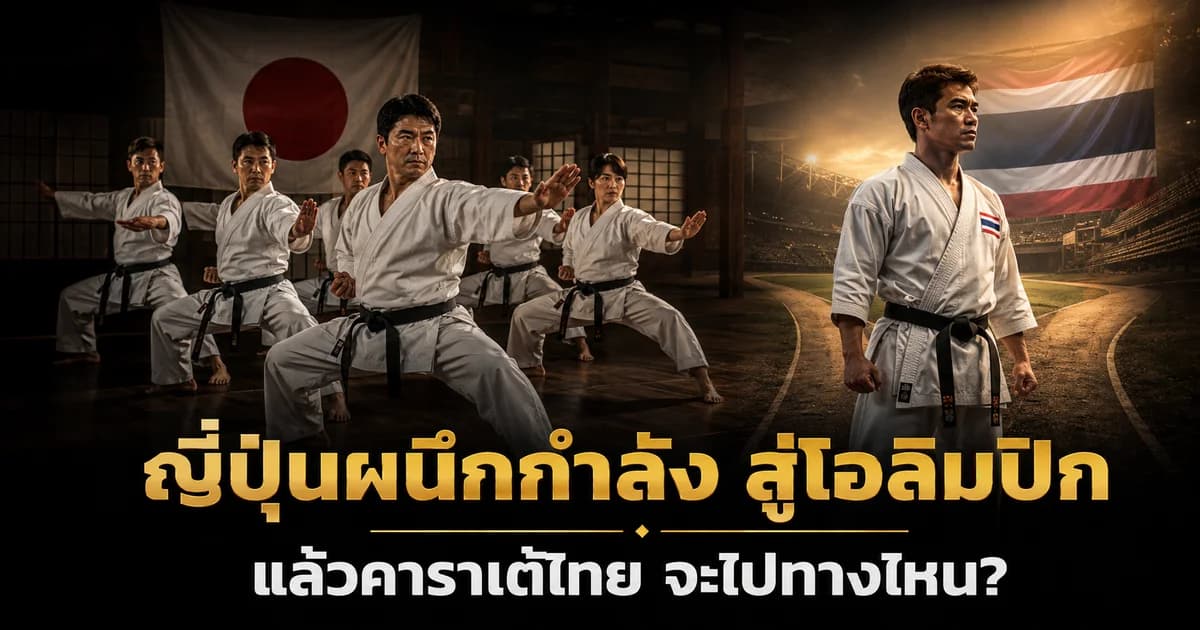
Japanese Karate Cooperates for the Olympic Path. Which Direction Is Thai Karate Heading?
Japan spent decades linking its point-rules karate and its full-contact karate until the art reached the Olympic stage. So where is Thai karate heading, and where does Shinkyokushin Karate stand in that picture?
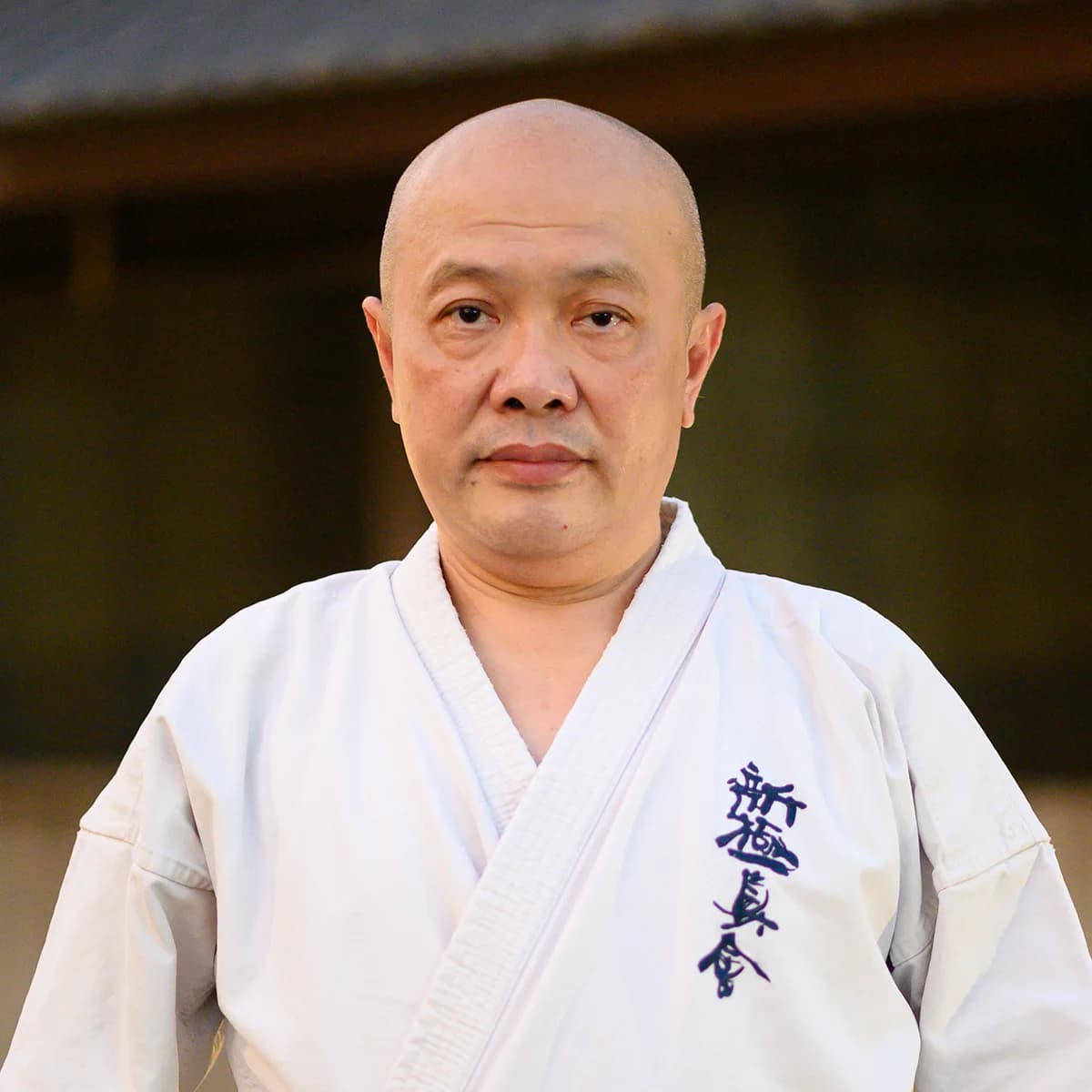
- Author
- Thaninpong Supapitakpong (Phoenix)
- Published
- Last updated
- Sources
- 4
- Reading time
- 7 min
Short Answer
Japan did not resolve the difference between point-rules karate (JKF/WKF) and full-contact karate (JFKO/WFKO) by merging the rules into one. It built a two-system way of working together, and on 16 April 2015 the JKF signed a friendship memorandum with IKO Kyokushinkaikan (not JFKO, and a different body from WKO Shinkyokushinkai). Thai karate, meanwhile, runs on WKF rules under the Thailand Karate Federation, while full-contact lineages such as Shinkyokushin Karate still stand on their own outside that pathway.
Key Takeaways
- The name 唐手, suggesting China hand, became 空手 or empty hand at the roundtable of Okinawan karate masters in Naha on 25 October 1936
- Japan spent decades connecting the point-rules and full-contact sides without merging the organisations or forcing one set of rules; the 2015 friendship memorandum was signed between the JKF and IKO Kyokushinkaikan, not JFKO
- Karate in Thailand grew on WKF rules because that is the international competition pathway that actually exists
- Shinkyokushin Karate and other full-contact lineages in Thailand still rely mainly on private dojos
I have been watching the news of cooperation between the two major karate lineages in Japan with real excitement, because it mirrors a question I keep asking myself: which direction will the future of Thai karate take while the world keeps changing?
I have loved this art since I learned that its roots are entangled with Chinese boxing. The original term was written 唐手, read in the Okinawan way as Tudi, literally China hand or the hand of the Tang dynasty. On 25 October 1936, a roundtable of senior Okinawan karate masters hosted by the Ryukyu Shimpo newspaper in Naha agreed to standardise the writing as 空手, meaning empty hand. Master Gichin Funakoshi, who laid the Shotokan foundation in Tokyo, had already been using the new characters in his writing before that.
In this article
From Chinese Boxing to the Spirit of Emptiness: A Misunderstanding That Can Be Cleared Up
The first time I read the history of karate, I did not expect that 唐, read as kara, originally referred to the Tang dynasty or China, and that 手 meant hand, together suggesting China hand, because the Okinawan art had blended deeply with Chinese boxing. In the early twentieth century, when relations between Japan and China were tense, a name meaning China hand became a sensitive matter, so the masters chose 空, which can also be read as kara.
For me that change was not only political. It lifted the art from a fighting technique to a Way, or Do: emptying the mind and setting the ego aside so that you can read the situation in front of you clearly. I tell this to every student at IMAC Dojo, because students who understand what they are training usually go further than students who only memorise movements. If you want to follow the Kyokushin line further, read our article on the history of Shinkyokushinkai karate alongside the story of Masutatsu Oyama.
How Japan Broke Down the Wall Before Karate Reached the Olympic Stage
The difference between the two approaches became visible in 1969: on 20 September that year Kyokushin held the 1st All Japan Karate Championship at the Tokyo Metropolitan Gymnasium under knockdown rules with genuine contact, in contrast to sundome (寸止め), where the strike is stopped before it lands and the bout is decided on points. Both approaches have their own reasoning, but over the decades that difference hardened into an institutional wall.
The full-contact side began moving at a meeting in the Akasaka district on 9 April 2012, then established the Japan Full Contact Karate Organization, JFKO, on 18 March 2013, and ran a signature campaign supporting karate's inclusion in the Olympics. In September of that same year Tokyo was chosen to host the 2020 Olympics, which made the conversation urgent for everyone.
The moment I find most important is 16 April 2015, when the Japan Karatedo Federation under chairman Takashi Sasagawa and the International Karate Organization Kyokushinkaikan under its kancho, Shokei Matsui signed a memorandum as friendly partner organisations to push for Olympic inclusion together. That was not a merger of rules. It was an acknowledgement that the other side has its own legitimate place.
The visible result is that karate appeared at the Tokyo 2020 Olympics under World Karate Federation (WKF) rules, and although it did not continue on the Paris 2024 programme, the relationship built between the organisations endured. In 2025 the full-contact side held the 1st World Full Contact Karate Championship, run by the World Fullcontact Karate Organization (WFKO), from 31 May to 1 June at Ariake Arena in Tokyo. The lesson I want the Thai karate world to see is that unity does not have to mean identical rules, but it does require a table where people genuinely talk.
How Karate in Thailand Arrived at This Point
Thailand's national karate body began in October 1976 as the Federation of All Thailand Karate-do Organizations, or FATKO. It was recognised by the Sports Authority of Thailand (SAT) in May 1987, was renamed the Thailand Karate-do Federation (TKF) in February 1996, and its name was adjusted under sports law until it became the Thailand Karate Federation in full in 2016.
Because the route to the SEA Games, the Asian Games and the Olympics runs on WKF rules, it is understandable that the association concentrates on that system. National team athletes have to train under the rules they will actually compete in. I respect the work the association has done over these decades, because building athletes who can stand on an international stage is not easy.
Still, this structure leaves one gap: practitioners of full-contact karate have no competition pathway inside the same system. That is the same gap Japan once had, before it found a way to connect two systems.
Why Full Contact Lineages Such as Shinkyokushin Karate Remain a Niche in Thailand
I teach the Shinkyokushin Karate lineage — the NPO World Karate Organization Shinkyokushinkai (WKO) — myself, so I see three layers of obstacles from the floor of the dojo. The first is that Muay Thai is Thailand's national martial art and already carries the country's attachment; when Thais think of full-force contact, they think of Muay Thai first. The second is that Taekwondo has built a broad and accessible black-belt pathway for children. The third is that the state competition pathway is tied to WKF rules, so full-contact practitioners have no arena inside that system.
Our dojo, IMAC Dojo in Ladprao, belongs to the WKO Thailand network led by Shihan Fumiaki Frank Nagashima, WKO Branch Chief Thailand, so we stand mainly on our own feet without state funding. I chose this path because I believe in training that puts safety and discipline before speed. If you are looking for martial arts classes in Ladprao that care about correct fundamentals rather than movements that merely look good, I think this path answers the need better than people expect. Karate is not only for competitors: working adults, parents and children all train it for health and confidence.
| Dimension | WKF lineages | Full contact, e.g. Shinkyokushin |
|---|---|---|
| Fighting rules | Controlled contact, decided on points | Full-force contact, no bare-hand strikes to the face or above the neck |
| Pathway in Thailand | Thailand Karate Federation | Private dojos such as IMAC Dojo |
| State competition route | A route to the national team | No route inside the same system yet |
Conclusion: A Hope That Does Not Require Anyone to Lose
Japan's story taught me that unity does not come from dissolving everyone into identical rules. It comes from the courage to sit down together and design sincere channels for working side by side. The JKF and IKO Kyokushinkaikan, from two lineages that had disagreed for decades, still signed as friendly partner organisations, and neither had to abandon its own identity.
So I hope that in the near future full-contact karate, such as Kyokushin and Shinkyokushin Karate, will have the chance to become part of the Thailand Karate Federation in a form that fits our own context, drawing on the lesson from Japan that has already proved it can be done. This hope is not built on arguing about who is more correct. Every organisation is devoted to the same art, and I respect the work of all of them sincerely.
While that door is still closed, my work at IMAC Dojo stays the same: passing on skill, discipline, safety and respect for this art to every student, whether or not the national competition route ever opens wider. If you would like to talk about training or watch a class, the schedule and fees page has the class times, and you can read the instructor background on the instructor profile.
- Phone
- 091-485-5445
- LINE
- @imacdojo
- Address
- 19, 21 Soi Pokaew 3 Yak 9, Klongchan, Bangkapi, Bangkok 10240, Thailand
Read next: Choosing a Karate Gym That Warms Up the Body According to Sports Science.
Sources and further reading
- Record of the friendship memorandum between the Japan Karatedo Federation and IKO Kyokushinkaikan (16 April 2015) — Japan Karatedo Federation (JKF)ReferenceAccessed 18 Aug 2026
- About the Japan Full Contact Karate Organization (JFKO) — Japan Full Contact Karate Organization (JFKO)ReferenceAccessed 18 Aug 2026
- Announcement of the 1st World Full Contact Karate Championship, 2025 — NPO World Karate Organization Shinkyokushinkai (WKO)ReferenceAccessed 18 Aug 2026
- Official website of the Thailand Karate Federation — Thailand Karate Federation (TKF)ReferenceAccessed 18 Aug 2026
Frequently Asked Questions
How has Thai karate developed over the past 50 years?
It began as the Federation of All Thailand Karate-do Organizations (FATKO) in 1976, was recognised by the Sports Authority of Thailand in 1987, was renamed TKF in 1996, and became the Thailand Karate Federation in full in 2016, growing on WKF rules because that is the international competition pathway.
Why did karate reach the Olympics only recently?
One reason is the disagreement between karate organisations inside Japan itself, between the point-rules lineage and the full-contact lineage, which left the art without one policy voice for a long time. The JKF signed a friendship memorandum with IKO Kyokushinkaikan on 16 April 2015, and karate appeared at the Tokyo 2020 Olympics under World Karate Federation (WKF) rules.
How does Shinkyokushin Karate differ from WKF karate?
Shinkyokushin uses full-force contact rules: bare-hand strikes to the face and above the neck are forbidden, while kicks to the head and punches to the body are allowed. WKF lineages control the contact and decide bouts on points. Both demand the same precise fundamentals.
Ready to start martial arts?
Message IMAC Dojo to ask which course fits your age, goals, and training background.
Ask on LINE Official