Lessons Learned from Training Wing Chun in China
My son Ryu-GeGe called after his first Wing Chun session in Xi'an to say nobody there rushes to finish a form: the teacher corrects your hand position degree by degree. This article gathers what we learned, from the art's real history to the state-recognised inheritor system and the discipline we brought back to IMAC Dojo.
By
 Thaninpong Supapitakpong (Phoenix)Founder and instructor at IMAC Dojo
Updated 9 Aug 2026
- Author
- Thaninpong Supapitakpong (Phoenix)
- Published
- Last updated
- Sources
- 5
- Reading time
- 8 min
Short Answer
The most important lesson from training Wing Chun in China is that the art did not, as legend claims, originate at the Shaolin Temple. The verifiable trail points to southern China in the 18th and 19th centuries and to the Red Boat Opera troupes, and the training culture in China today still values precision and martial ethics far above the speed of finishing the curriculum.
Key Takeaways
- The legend of the nun Ng Mui and Yim Wing Chun has no contemporary evidence behind it; the lineage that can genuinely be traced begins with Leung Jan in 19th-century Foshan.
- The standard curriculum has four stages: Siu Nim Tao (小念頭), Chum Kiu (尋橋), Biu Jee (標指), and the wooden dummy (木人樁).
- China listed Foshan Wing Chun as provincial intangible cultural heritage in 2011 and as national intangible cultural heritage in 2021.
- Training in China emphasises martial ethics: never strike first, never bully the weak.
- IMAC Dojo has brought that Chinese sense of discipline into how Wing Chun is taught in Bangkok.
This article is written by Phoenix, founder of IMAC Dojo, a Thai Wing Chun instructor, drawing on his son's first-hand experience of training in China. Historical points and Chinese state recognition are cited to checkable sources; anything that is anecdote or opinion is marked as such.
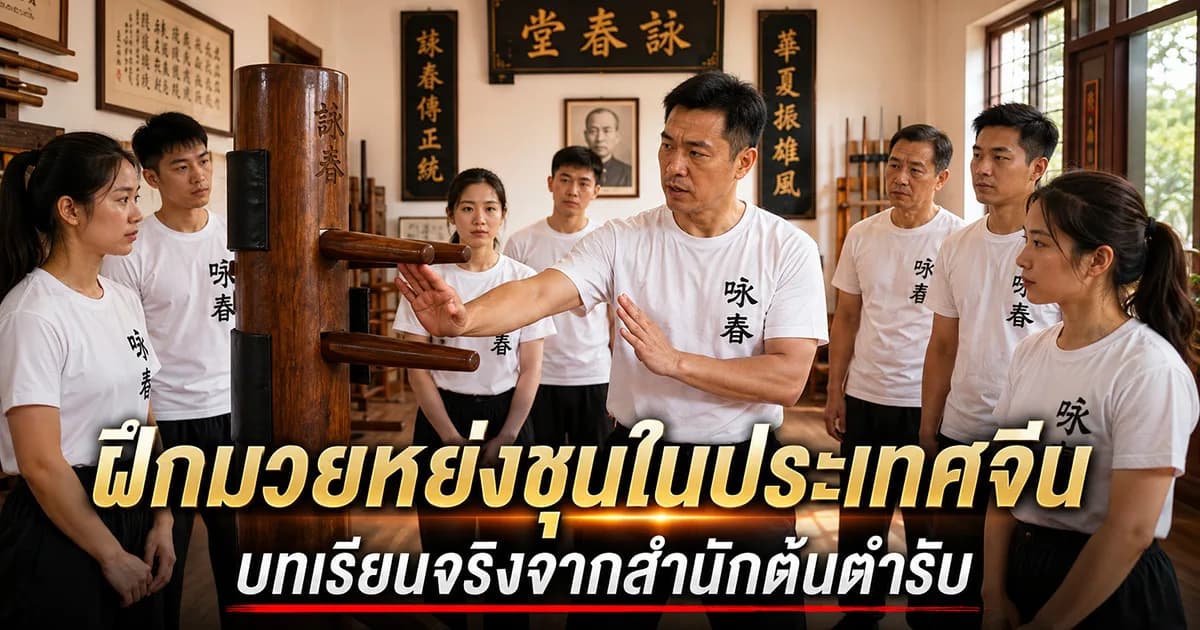
I still remember the day my son Ryu-GeGe called to tell me about his first Wing Chun training session in Xi'an. He said nobody there rushes to finish the form, and that the teacher corrects your hand position degree by degree, with a level of attention he had never seen before.
That single sentence made me think hard about how what we teach in Thailand differs, more deeply than I had imagined, from how martial arts are taught in China.
In this article
What is Wing Chun, and why travel all the way to Xi'an to study it?
The class format, schedule, and fees we now run in Bangkok from those lessons are on the IMAC Dojo Wing Chun course page, and every programme is listed on the full course listing.
Wing Chun (詠春, Yǒngchūn in Mandarin, Wing Ceon in Cantonese) is a close-range art that emphasises straight-line attacks, tight defence, and the short explosive power called Cun Jin (寸勁).
Ryu studied for his bachelor's and master's degrees at Northwestern Polytechnical University in Xi'an, Shaanxi Province. During that time he met a local teacher whose lineage runs back through Hong Kong to Grandmaster Ip Man. Having someone in the family learn Wing Chun directly in China gave us primary information quite different from translated Thai textbooks, especially on the fine detail of the Yi Ji Kim Yeung Ma (二字拑羊馬) stance, which a Chinese teacher will not let pass even if the hips are off by a single degree.
The Shaolin legend against what historians have actually found
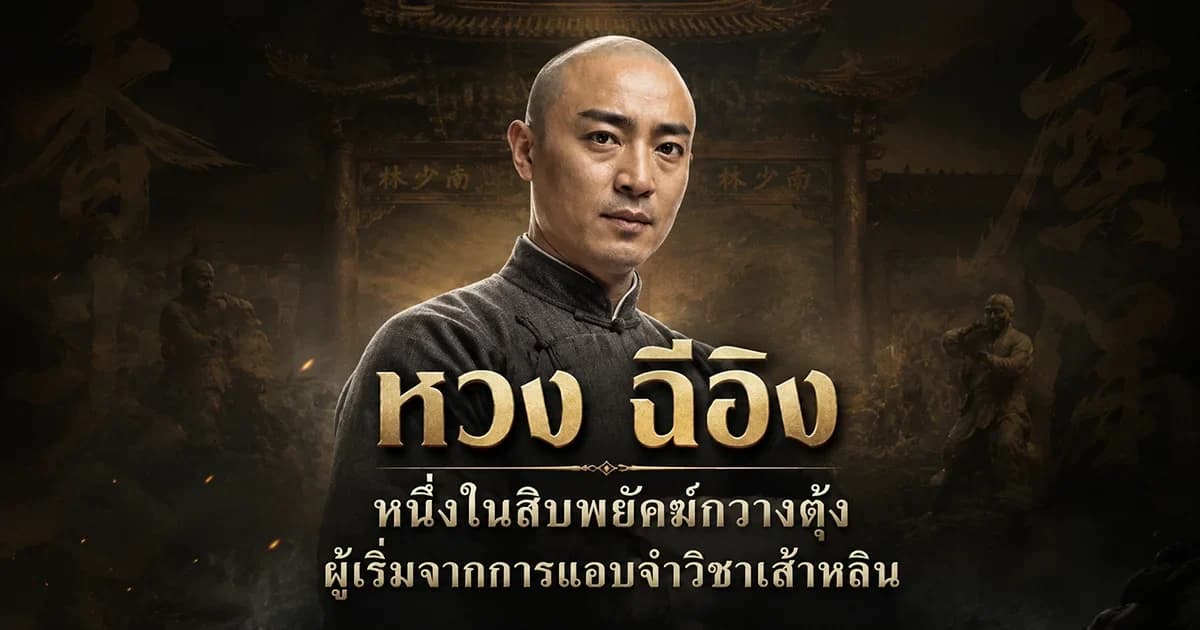
The stronger evidence places Wing Chun's development in southern China in the 18th and 19th centuries, connected to the Red Boat Cantonese opera troupes, whose boats served as both lodging and training space. The study on Cantonese popular culture and the creation of Wing Chun's opera rebels argues that several key parts of the Wing Chun mythos only took shape, or changed substantially, in the Republican period, while the lineage that can be traced with confidence begins with Leung Jan (梁贊), a doctor of Chinese medicine in 19th-century Foshan.
The art was built for rowing boats and narrow alleys where space is severely limited, which is why it has almost no high kicks or wide turns. The Ng Mui legend and what the evidence supports are covered in detail in Ng Mui and the origins of Wing Chun.
Chinese films tie Wing Chun to the Southern Shaolin Temple and to the nun Ng Mui, who supposedly devised the method after watching a snake fight a crane. Historically, no contemporary evidence has been found for Ng Mui, for Yim Wing Chun, or even for the Southern Shaolin Temple itself. The story was most likely composed later to rally Han Chinese sentiment against the Qing dynasty.
I tell my students that the historical truth is usually more interesting than the legend, because it shows the art was designed to solve the real problems of ordinary people rather than the problems of heroes in a novel.
Today's real inheritors in China
Foshan Wing Chun was listed as Guangdong provincial intangible cultural heritage in 2011 and entered the national list in 2021, the first Foshan martial art to do so. Material from China's intangible cultural heritage information centre records more than 200 Wing Chun schools in Foshan alone, over 19,000 square metres of training space, more than ten thousand registered disciples, one provincial-level representative inheritor and eight at municipal level.
| Master | Lineage | What can be verified |
|---|---|---|
| Guo Weizhan (郭偉湛) | Ip Man lineage, Foshan | Municipal-level representative inheritor in Foshan since 2013, in the same cohort as Ip Chun, and chairman of the Foshan Wing Chun Association |
| Zheng Zujie (鄭祖傑) | Fujian Wing Chun | Drove the intangible cultural heritage application for Fujian Wing Chun from 2008 and works on spreading the art to practitioners overseas |
| Leung Shiu Hung (梁紹鴻) | Direct student of Ip Man | Became Ip Man's first private student at the age of 13, introduced by Bruce Lee |
An interview with Zheng Zujie on carrying Fujian Wing Chun abroad shows that China treats Wing Chun as cultural work with a certification system and an international outreach goal, which is a different standard from simply opening a class.
China operates an official certification system for Intangible Cultural Heritage inheritors that can be checked through government bodies, rather than a school simply declaring its own status.
Authentic Chinese discipline, and what Ryu-GeGe met
The chain punch and the hand tools that work with it
The most visible trait of the art is the straight punch thrown in succession along the centerline at close range, which is why it is often described simply as the Wing Chun fist. The idea is not to punch as fast as possible but to hold the centerline first, so the punch can travel the shortest path without losing structure. The hand tools that work alongside it are Tan Sao (攤手), Bong Sao (膀手), Pak Sao (拍手) and Lap Sao (擸手), each of which moves the partner's arm off the centerline to open the path.
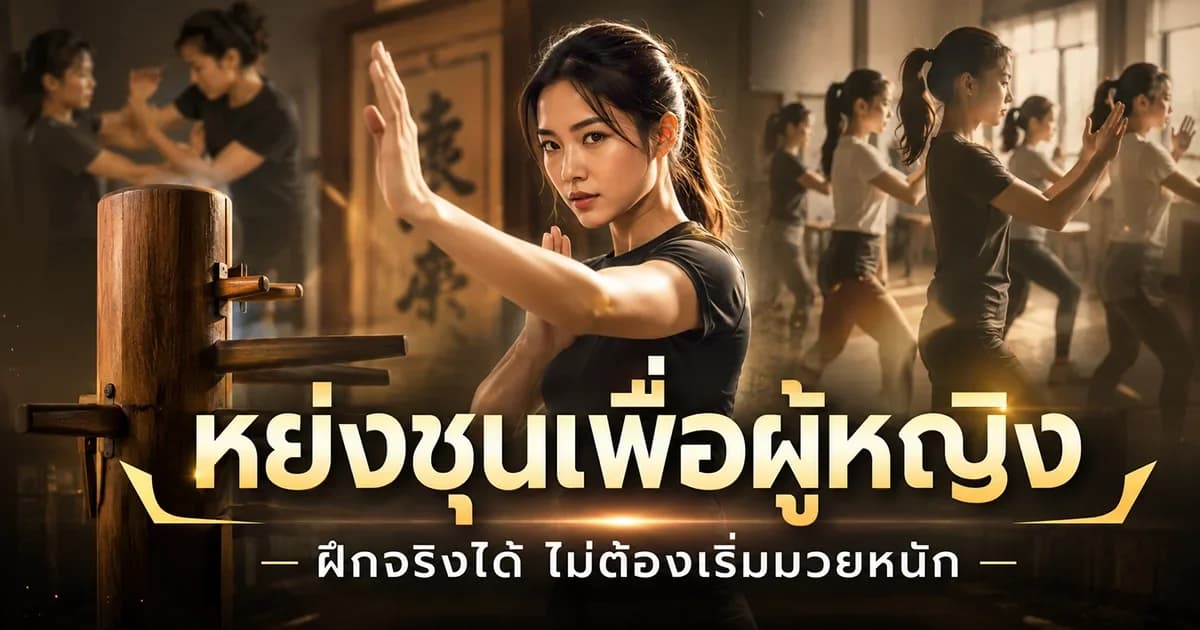
The syllabus runs through four stages: Siu Nim Tao (小念頭), Chum Kiu (尋橋), Biu Jee (標指), and the wooden dummy (木人樁). Why the leverage in Wing Chun suits a smaller practitioner is covered in Wing Chun and self-defence for women.
What impressed me most in Ryu-GeGe's account was the etiquette. Films portray challenges between schools, or contempt for rival schools, as if that were normal. In real life in Xi'an, almost every Chinese student respects the teacher wholeheartedly. Nobody comes to test techniques on others or to look down on another school, and both parents and students treat training as time spent with full intent.
The teacher was stricter about the precision of the principle than about how fast a form gets finished. That differs from what I have often seen in Thailand, where people who have watched a lot of Chinese films want to complete the whole syllabus quickly, then belittle another school once they have studied at one. I see that as an unfortunate misunderstanding, because it runs against the original spirit of the art. This observation is my own experience in the industry, not a survey finding.
Real training also covers the hand-contact drill Chi Sao (黐手), which builds sensitivity to an opponent's force through the fundamental positions Tan Sau (攤手), Bong Sau (膀手), and Fook Sau (伏手). The teacher in Xi'an corrects the hands point by point and lets nothing slide. At first Ryu-GeGe complained about drilling a single movement for an hour, and about taking most of a year to work through one set.
Applying the lessons at IMAC Dojo
Every course's times and fees sit on one page at the schedule and pricing page.
See the Wing Chun schedule, fees, and class format at Ladprao 101From all of this I carry three principles into how Wing Chun is taught in Bangkok: always put precision before speed, teach martial ethics alongside every technique, and cultivate respect for teachers of every school, not only our own.
Thai children who come to study Wing Chun or any other martial art deserve the culture that Chinese practitioners still genuinely keep, not only the elegant movements copied from films. Good children's martial arts are measured by safety and etiquette, not by how many forms a child can recite.
Sources and further reading
- Foshan Wing Chun enters the national intangible cultural heritage list — General Administration of Sport of ChinaReferenceAccessed 9 Aug 2026
- Foshan Wing Chun: a martial world that never disappeared — China Intangible Cultural Heritage CentreReferenceAccessed 9 Aug 2026
- Cantonese Popular Culture and the Creation of Wing Chun's Opera Rebels — Chinese Martial StudiesReferenceAccessed 9 Aug 2026
- Red Boat Opera Company — WikipediaCommunityAccessed 9 Aug 2026
- Interview with Zheng Zujie on Fujian Wing Chun — Fuzhou NewsReferenceAccessed 9 Aug 2026
Frequently Asked Questions
What is Wing Chun?
It is a Chinese martial art built for close range, with straight-line attacks and tight defence. The verifiable evidence places its development in southern China during the 18th and 19th centuries, and the lineage that can be traced with confidence begins with Leung Jan in Foshan.
What are the benefits of training Wing Chun?
It trains reflexes, focus, discipline, and close-range self-defence, and mainstream Chinese schools teach martial ethics alongside it. Individual results still depend on consistency and on how a particular school teaches.
Who are the grandmasters of Wing Chun?
Historically the important names include Leung Jan (梁贊) and Ip Man. Today China certifies cultural heritage inheritors officially, for example Guo Weizhan, a municipal-level inheritor in Foshan since 2013.
Is Wing Chun suitable for children?
Yes. It does not depend on heavy impact and favours technique over strength. Choose a school that separates contact levels by age and lets a child stop on a day they are not ready.
What should you look for when choosing a Wing Chun school?
Look for a lineage you can check, seriousness about ethics, and whether the teacher emphasises precision or simply moves students through the syllabus quickly. Ask directly how children and adults are separated in training.
What is the Wing Chun chain punch?
It is the trait the art is best known for: straight punches thrown in succession along the centerline at close range. It is trained together with hand tools such as Tan Sao, Bong Sao, Pak Sao and Lap Sao, and all of them are rooted in the four levels of the curriculum, from Siu Nim Tao through to the wooden dummy.
Ready to start martial arts?
Message IMAC Dojo to ask which course fits your age, goals, and training background.
Ask on LINE Official