Ng Mui: The Legendary Founder of Wing Chun and Inspiration for Beginners
Explore Ng Mui, the legendary founder of Wing Chun, the lineage to Ip Man, and why Wing Chun remains useful for adult self-defense training in Thailand.
By
 Thaninpong Supapitakpong (Phoenix)Founder and instructor at IMAC Dojo
Updated 9 Sept 2026
- Author
- Thaninpong Supapitakpong (Phoenix)
- Published
- Last updated
- Sources
- 1
- Reading time
- 6 min
Short Answer
Ng Mui (Wu Mei) is widely celebrated as the legendary founder and creator of Wing Chun kung fu. According to oral traditions, she formulated this close-range combat system based on structural alignment and efficiency over raw strength. In historical reality, her existence remains an unverified legend as there are no verified contemporary records.
Key Takeaways
- Legendary Founder: Credited with creating a specialized close-range system that counters brute force using leverage.
- Core Concepts: Emphasizes centerline control, economy of movement, and tactile reflexes (Chi Sao).
- Lineage Passing: Transmitted to Yim Wing Chun, passing through the Red Boat Opera to Grandmaster Ip Man.
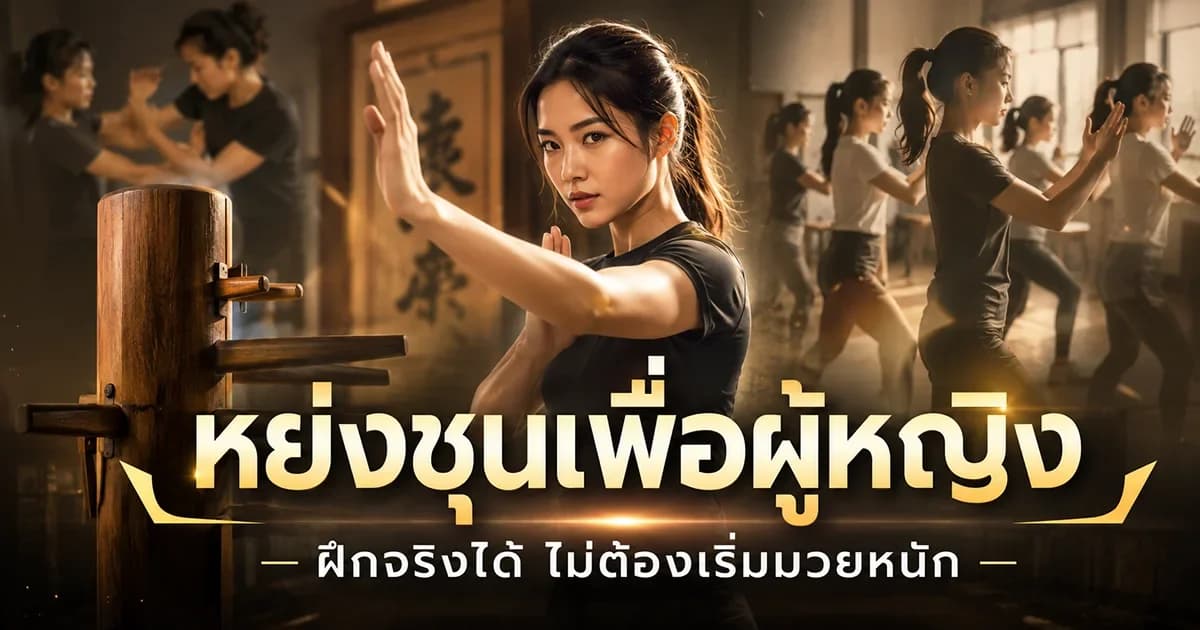
- Modern Application: Adults and beginners can study Wing Chun progressively through structure, balance, distance, and self-defense practice.
Author:Thaninpong Supapitakpong (Phoenix) | IMAC Dojo
The name Ng Mui or 五枚师太 (Wu Mei) is synonymous with the origin of Wing Chun kung fu . She is historically revered within martial arts schools as the grandmaster who conceptualized a system built on structural efficiency, centerline control, and close-quarters combat. If you are exploring options to learn Wing Chun in Thailand , understanding this lineage offers deep insight into modern biomechanics.
However, an objective look reveals that Ng Mui exists at the intersection of cultural legend and unverified history. To truly master the art, practitioners—especially mature adults looking for logical self-defense training in Bangkok —must value the philosophy while applying strict biomechanical principles on the mats.
In this article
Who is Ng Mui in Wing Chun History?
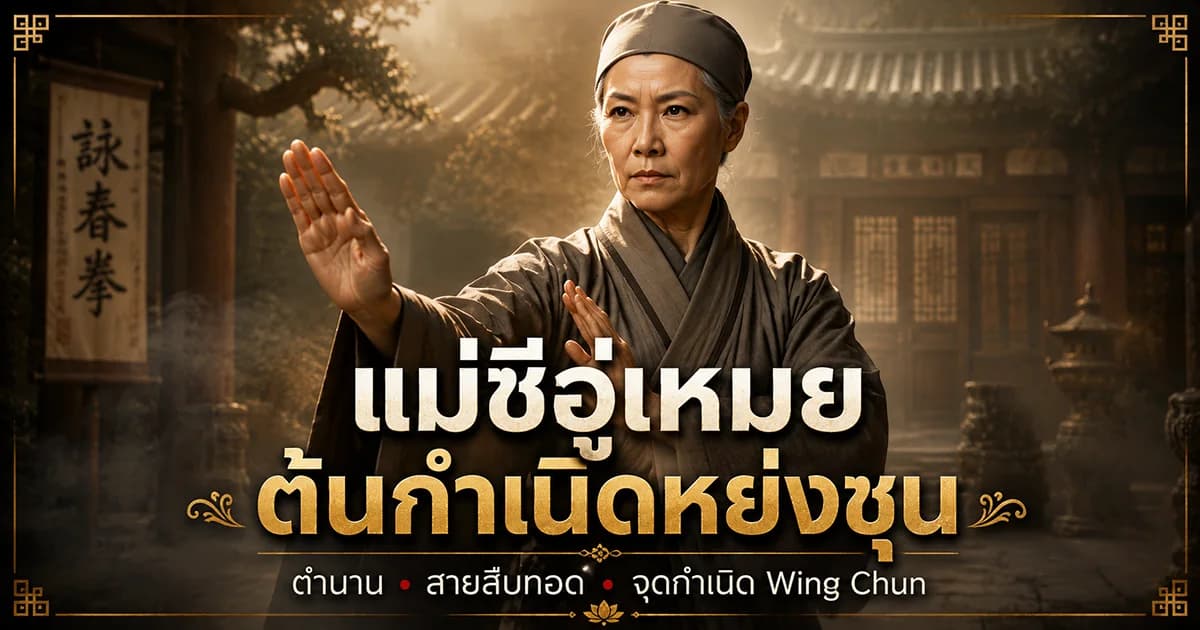
In Southern Chinese martial arts folklore, Ng Mui is depicted as a Buddhist nun possessing profound mastery over both spiritual and martial realms. Legends state she distilled various combat arts into a pure, practical core designed for survival without relying on raw muscular power.
For modern practitioners of Wing Chun Thailand, her name stands as a symbol of structural dominance, precise timing, and spatial awareness rather than a documented historical figure. This legendary inspiration continues to drive the curriculum of authentic Wing Chun classes worldwide.
Why is Ng Mui Credited with Creating Wing Chun?
The core philosophy of Wing Chun deviates drastically from arts that favor direct, heavy clashes. Ng Mui is credited because the art relies entirely on principles that maximize energy conservation:
- Structure Over Brute Force:Aligning skeletal structures to absorb and redirect incoming force efficiently.
- Economy of Movement:Utilizing short, direct, linear strikes along the central axis.
- Centerline Theory:Dominating and controlling the imaginary central plane of the combat engagement.
- Tactile Reflexes (Chi Sao):Training sensory awareness to respond immediately to an opponent's pressure.
The Wing Chun Lineage: From Ng Mui to Ip Man
Oral tradition states that Ng Mui taught her newly developed art to a young woman namedYim Wing Chun, after whom the style was eventually named. The art was specifically created to empower smaller individuals to neutralize larger, stronger aggressors safely.
The Wing Chun Lineage Diagram
Ng Mui → Yim Wing Chun → Leung Bok-chau → Red Boat Opera Group → Leung Jan → Chan Wah-shun / Leung Bik → Ip Man → Bruce Lee / Ip Chun / Ip Ching / Wong Shun Leung, and Modern Practitioners.
Note:This lineage represents the traditional lineage honored within the schools to respect the ancestors, rather than a universally agreed historical consensus. However, it clarifies how the systemized knowledge reached us today.
How to Read the Lineage Diagram
- The origin:the line starts with Ng Mui and passes to Yim Wing Chun and Leung Bok-chau, after which it was carried and developed by the figures of the Red Boat Opera era, who shaped it through practical use.
- The core of the system:it reaches Leung Jan, often honoured as one of the important masters of Wing Chun in the era when the system became clearer and more organised. From there the line branches to Chan Wah-shun and Leung Bik before converging significantly on Grandmaster Ip Man
- Reaching the world:Ip Man is the figure who opened Wing Chun to the public and passed it to famous students such as Bruce Lee, until it spread across continents and became Ip Man lineage Wing Chun, which has the most practitioners today.
What Makes Wing Chun Suited to Self-Defense
Looking at how the art is built shows why the system passed down from Ng Mui still holds its value for people who choose to learn Chinese martial arts for self-defense today:
| Core principle | How it applies in real self-defense |
|---|---|
| Centerline | Protects the body's central axis, where the vital organs sit, and attacks the target along the shortest straight line. |
| Structure over Brute Force | Uses joint angles, body structure, and weight transfer, so a smaller person can hold or dissolve the force of a larger one. |
| Close-Range Combat | Focuses on close range, which is the distance that actually occurs most often in real threatening situations. |
| Chi Sao (Sticking Hands) | Trains the arms to read pressure and direction by touch, so the response comes from feeling rather than from watching. |
How Adults and Beginners Can Start Wing Chun
Adults and beginners can start with stance, alignment, centerline, and close-range movement in a progressive sequence. The instructor should adjust intensity to each learner's foundation. Self-defense practice can develop awareness of distance, timing, and response, but it cannot guarantee safety in every situation; avoidance, leaving risk, and seeking help still come first.
Starting Your Wing Chun Journey in Thailand
If you are living in Bangkok and searching for a reputable Wing Chun school to begin training systematically, these are the points that matter most:
- Choose a school that teaches with structure:good Wing Chun should be explainable through scientific principles, reaction force, and logic, not through belief alone.
- Keep an open mind to both the legend and the analysis:study the story of Ng Mui with respect, as a philosophical inheritance, while training the body with logic and reason, so you can tell martial-arts fiction apart from the mechanics that actually work in the dojo.
- Train the basics consistently:the foundation form (Siu Nim Tao) and body structure are the core that lets you progress steadily to advanced Chi Sao.
Join Our Authentic Wing Chun Program in Bangkok
If you are looking tolearn Wing Chun in Thailand—whether starting from scratch, aiming to develop practical self-defense, or wanting to study the Ip Man system step-by-step—our classes offer a structured, scientific approach to this ancient art.
Wing Chun Thailand Training Course – IMAC DojoSources and further reading
- Ip ManPrimary
Frequently Asked Questions
Who is Ng Mui?
Ng Mui, also known as Wu Mei, is the legendary Buddhist nun credited in Wing Chun tradition with creating the art and passing it to Yim Wing Chun.
Did Ng Mui really create Wing Chun?
Most Wing Chun schools honor that story as lineage tradition, but modern historians still treat her life details as unverified because contemporary records are limited.
Is Wing Chun suitable for beginners in Thailand?
Yes. Wing Chun is suitable for beginners because it starts from posture, centerline, structure, and close-range self-defense rather than athletic power.
Why does the Wing Chun lineage chart matter?
It lets a student see how the art was handed down from one generation to the next in a clear order, and understand who carried and developed the principles on the way to the present day, for example from Ng Mui through to Ip Man. That gives confidence that what you are studying is a system with a traceable line of transmission.
How is Ip Man connected to Ng Mui?
Ip Man is regarded as a direct-line successor in a later generation according to the lineage chart, and he is the most important figure in bringing the inherited Wing Chun system into public view, which is how it became an internationally known martial art.
Can adults or complete beginners train Wing Chun?
They can begin with an instructor who adjusts sequence and intensity to their foundation. Training should progress through stance, centerline, distance, and partner work without treating martial arts as a guarantee of safety in real situations.
Where do you start when learning Wing Chun for self-defense?
You start with the centerline system and a stable stance. From there you learn to use the structure of the arms to defend against basic attacks, and you practise transmitting force through the joints so you can counter quickly at close range.
Ready to start martial arts?
Message IMAC Dojo to ask which course fits your age, goals, and training background.
Ask on LINE Official