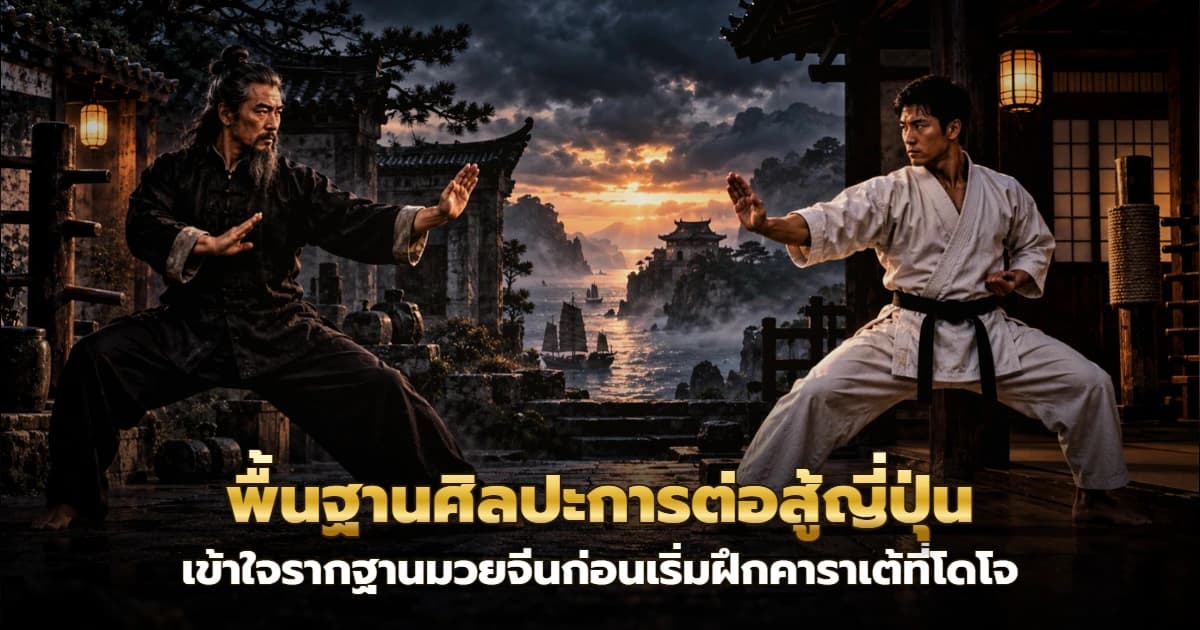
Southern Fist, Northern Kick: 南拳北腿, Shaolin Split Into Two Lineages — Was Either Truly Supreme?
An exploration of the Chinese martial arts concept 南拳北腿 (Southern Fist, Northern Kick), tracing its documented origins to the Song dynasty and comparing the postures, stances and philosophies of Northern and Southern styles.
By
 Thaninpong Supapitakpong (Phoenix)Founder and instructor at IMAC Dojo
Updated 22 Sept 2026
- Author
- Thaninpong Supapitakpong (Phoenix)
- Published
- Last updated
- Sources
- 8
- Reading time
- 13 min
Short Answer
Northern and Southern Shaolin are not opposing sides that you must choose between. They reflect the concept of 南拳北腿, in which Northern styles emphasize open, expansive postures and long-range kicks, while Southern styles emphasize short punches and a firm, low stance. The term 南拳北腿 was first recorded as early as the early Song dynasty (宋) at a national martial arts tournament — it is not something invented later by novels, as many people assume. As for the question of who was the true "lord of the martial world," historically and in actual practice there is no single answer, because each lineage developed according to the different physical conditions and environments of its people.
Key Takeaways
- 南拳北腿 has documented evidence appearing first at a nationwide martial arts tournament in the early Song dynasty, not as an invention of later novels.
- Northern styles show the character of 大开大合 (dà kāi dà hé — open and expansive), emphasizing long strides, spinning turns, and high kicks.
- Southern styles show the character of 沉桥硬马 (chén qiáo yìng mǎ — heavy, sinking bridge arms and a firm horse stance), emphasizing short punches and close-range fighting.
- The Ming dynasty was the turning point when both lineages fully developed their technical systems and established clearly distinct identities.
- Some Chinese martial arts, such as 八极拳 (Bājí Quán), blend both Northern and Southern elements so thoroughly that they can no longer be clearly separated.
- At IMAC Dojo, teaching Shaolin kung fu emphasizes understanding the principles of movement rather than judging which lineage is superior.
I've loved watching Chinese films since I was a kid, and nearly every one of them plants the idea in your head that the Shaolin Temple is the center of the martial world (Jianghu). But once I began training seriously in Chinese martial arts, up to the instructor level, I came to understand that Northern and Southern Shaolin are only part of a much bigger picture called 南拳北腿 (Nán Quán Běi Tuǐ — Southern Fist, Northern Kick), a phrase that summarizes the character of Chinese martial arts across the whole country, not just one school. This subject has real history recorded by Chinese scholars, but it also has legends embellished through wuxia novels until many people can no longer tell the two apart.
In this article
The Origin of 南拳北腿 Is Not Just a Movie Trope
Many people might think the phrase 南拳北腿 was simply concocted by screenwriters of wuxia films, but according to records in the text 武备志 (Wǔ Bèi Zhì — a record of military affairs and martial arts), this term genuinely traces back to the early Song dynasty. At a nationwide martial arts tournament held in the city of Changsha (长沙), eighteen martial schools were ranked. 太祖拳 (Tàizǔ Quán), created by 赵匡胤 (Zhào Kuāngyìn), the founding emperor of the Song dynasty, took first place, partly for political reasons, and it originated south of the Yellow River. Meanwhile, 临清潭腿 (Línqīng Tán Tuǐ), created by Master 昆仑大师 (Kūnlún Dàshī) at Longtan Temple, was honored as the lord of the eighteen schools, and it originated north of the same river.
I find this point extremely important, because it shows that the terms North and South in the world of Chinese martial arts did not arise from style alone, but were tied to geography and even to politics within the imperial court. When I began studying the history of Chinese martial arts in earnest, I was rather surprised to find that this subject had far deeper roots than I expected. It was not simply a convenient classification, but the result of real competition for supremacy in the martial world, dating back a thousand years.
The Key Turning Point in the Southern Song and Ming Eras
The Southern Song dynasty was a critical turning point for Southern styles, because the emergence of 岳家散手 (Yuè Jiā Sǎn Shǒu — the Yue family's bare-hand fighting art) laid a technical foundation centered on speed, with forceful strikes, an emphasis on finger techniques, an emphasis on slipping into the opponent's openings, and closing distance. This became the core of the close-range striking style that later defined Southern fist arts, and it laid the groundwork for the technique of 寸劲 (cùn jìn — short-distance explosive power), which emerged in a later era. By the time the Ming dynasty arrived — the golden age of ancient Chinese martial arts — both lineages had fully built out their own technical systems. Southern styles retained their agility while also developing sudden explosive power, becoming a genuine match for Northern styles.
Characteristics of Northern Styles: Grand Postures, Long-Range Kicks, Long Strides
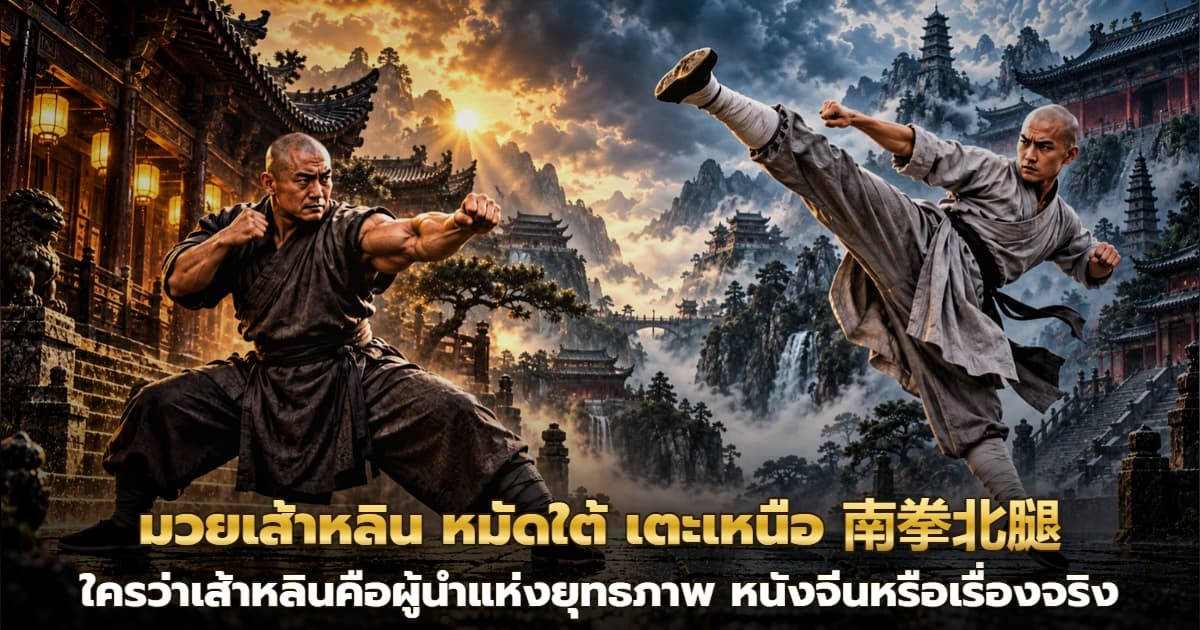
When I first began training in Chinese martial arts, I was deeply impressed by Northern styles, because their postures looked graceful and powerful. The technical description of Northern styles often uses the term 大开大合, meaning open, expansive postures that use a great deal of space, including high kicks, spinning turns, and in some lineages even leaping, airborne techniques that are both beautiful and demand high skill. The historical reason often cited is that northern China has a cold climate and vast open land, and people who grew up in this region tended to be tall, with long legs and a physical advantage in strength. This became the foundation for developing techniques that use momentum from spinning, throwing, charging impacts, and a comprehensive, varied kicking system.
The Chinese saying 手是两扇门,全凭腿打人 (Shǒu shì liǎng shàn mén, quán píng tuǐ dǎ rén — the hands are merely two door panels, while the legs are what truly do the fighting) reflects the image of Northern styles very clearly. I once tried practicing high kicks and long strides in the Northern style, and found that what looks beautiful is not there purely for show. It requires strong leg power, flexibility in the hips and back, and a very high level of balance and body control. If practiced incorrectly or without a good foundation, this kind of high kicking can become a weakness rather than a strength.
Characteristics of Southern Styles: Short Punches, Firm Stance, Close-Range Impact Power
Southern styles feel clearly different from Northern styles from the very first stance. The phrase 沉桥硬马 describes it most precisely: a heavy, sinking bridge arm and a firm horse stance. According to technical records, Southern techniques tend to have compact sequences, tight structure, with nothing wasted, using stances such as 四平马 (sì píng mǎ — the four-level balanced horse stance) and 三角马 (sān jiǎo mǎ — the triangle horse stance) as the core of a low base. This matches the saying 手是铜锤,脚是马 (shǒu shì tóng chuí, jiǎo shì mǎ — the hands are copper hammers, the feet are the horse), which states plainly that Southern styles prioritize leg stability alongside the weight of the punch.
I've noticed that a firm base in Southern styles does not mean the body must be stiff at all. Most of the power begins from the feet, travels through the waist, and then explodes out through the fist and forearm — similar to the principle of power transmission I teach in self-defense at IMAC Dojo. The technique 短桥寸劲 (duǎn qiáo cùn jìn — short bridge, short-distance power) and the power-loading principle 阔幅沉马 (kuò fú chén mǎ — a wide, sunken stance) make Southern styles well suited to close-range fighting, in line with the saying 一寸短,一寸险 (yí cùn duǎn, yí cùn xiǎn — an inch shorter, an inch more dangerous), meaning the closer you get to your opponent, the riskier it is, but also the greater the advantage if used well. Some Southern schools also incorporate vocalizing while exerting force, or 以声助威 (yǐ shēng zhù wēi — using sound to bolster power), which from my experience I see not merely as intimidating the opponent, but as genuinely helping to synchronize the rhythm of breath with the power of the technique.
A Comparison Table of Northern and Southern Styles, at a Glance
When I explain this to students at IMAC Dojo, I usually make a simple table first, because reading long paragraphs sometimes makes it hard to catch the differences quickly. The table below does not summarize every technique in Chinese martial arts, but selects the points that differ most clearly between the two lineages, so beginners can grasp the overall picture quickly.
| Aspect | Northern Styles | Southern Styles |
|---|---|---|
| Main posture | 大开大合 — open, expansive, uses a lot of space | 沉桥硬马 — heavy bridge arms, a firm low base |
| Signature stance | Long strides, spinning turns, high kicks | 四平马 and 三角马 — low, compact stances |
| Fighting range | Mid to long range, relying on leg length | Close range, relying on short bursts of impact power |
| Source of power | Momentum from turning the body and stepping | Transmitted from the feet through the waist, out the fist |
This table shows that the difference is not simply about who uses hands versus feet, but about a whole philosophy of managing distance and transmitting power through the body. I feel this is something moviegoers often overlook, because films tend to edit every scene to look equally beautiful, when in reality each lineage was designed to suit entirely different bodies and environments.
The Era When North and South Began to Merge — Not Forever Separate
Many people might assume that North and South must always remain separate, like parallel lines. But in reality, the history of Chinese martial arts shows the opposite direction. During the Ming and Qing dynasties, exchange between the two lineages grew increasingly intense. For example, 李家拳 (Lǐ Jiā Quán), the Li family style from Guangdong province that arose during the reign of Emperor Qianlong (乾隆), blended 凤阳功夫 (Fèngyáng Gōngfu) from Anhui province in the north with local Southern techniques from the Huizhou area, producing a system that combined the agility of the South with the solidity of the North within a single set.
By the 1930s, there is an example I enjoy telling my students often: 赖成己 (Lài Chéngjǐ) invented 南蛇过垌拳 (Nán Shé Guò Dòng Quán) by systematically combining 龙形八卦拳 (Lóngxíng Bāguà Quán) from the Northern lineage with 李家拳 from the Southern lineage. This was the first time the techniques of the two lineages were seriously merged into a new branch known as a North-South fusion style. I believe this reflects that earlier generations of Chinese martial artists were not bound by old frameworks, but were bold enough to experiment and combine what actually worked — an idea I try to instill in my own teaching of Shaolin kung fu at my dojo: don't cling to practicing one way for your entire life, but understand the principles first, then adapt them to your own body.
The clearest example of this fusion is 八极拳 (Bājí Quán), which, although classified as a Northern style, fully absorbed the close-range fighting concepts of Southern styles, including horse stances and stepping rhythms similar to Southern arts, while still retaining the full signature of 劈挂 (pī guà — chopping and swinging arm techniques of the Northern style), combined with powerful shoulder and hip impact techniques, earning it a reputation as a style that unites the strengths of both lineages in one. I once studied the structure of Bájí Quán briefly and was truly amazed at how Chinese martial arts never remained fixed within their old frameworks.
Chinese Martial Arts and Cultural Meaning — Not Just Fighting
Something I want to emphasize is that 南拳北腿 is not merely about fighting technique. It is also deeply embedded in local Chinese culture, especially in the Lingnan (岭南) region. Southern styles have an intense connection to nationalist history. The five famous martial families are 洪 (Hóng), 刘 (Liú), 蔡 (Cài), 李 (Lǐ), and 莫 (Mò), all of whom have roots connected to Southern Shaolin culture and the anti-Qing movement to restore the Ming dynasty in the past. Their spread through secret societies such as 天地会 (Tiāndìhuì — the Heaven and Earth Society) allowed Southern styles to take deep root among the common people, becoming a genuine expression of the patriotic spirit of the people of Lingnan. These martial arts did not merely teach fighting; they carried traditional values such as integrity, respect for teachers, and living together in harmony. I feel this is what sets Chinese martial arts apart from ordinary combat sports, because every posture and every rhythm always carries a philosophy of life within it.
In popular culture, 南拳北腿 has also become a shared memory across generations of Chinese people. The Hong Kong drama series 南拳北腿, broadcast in 1995, tells the story of 黄麒英 (Huáng Qíyīng), who trains in Southern styles under the king of the South, then joins forces with the heir of the Northern king to defeat evil forces. It features techniques such as 虎鹤双形拳 (Hǔ Hè Shuāng Xíng Quán — the twin forms of tiger and crane) and 佛山无影脚 (Fóshān Wú Yǐng Jiǎo — the shadowless kick of Foshan). I myself grew up watching this genre of film too, and I must admit that the fight scenes between Northern and Southern styles in those very films are what sparked my desire to study Shaolin kung fu seriously later on.
Today, the preservation of Northern and Southern Chinese martial arts is no longer confined to legend. Many regions in China have begun listing 李家拳 and 南蛇过垌拳 in provincial-level intangible cultural heritage registries. Textbooks and standardized grading systems are being developed, reducing reliance on oral transmission as in the past. Many schools in southern China have also begun including Southern kung fu in their curricula, so that a new generation of children can connect with their own cultural roots. I feel this approach is close to what I try to do at IMAC Dojo — to make ancient Chinese martial arts more accessible to ordinary people, not just to those who already have a foundation or are athletes.
Teaching Shaolin Kung Fu at IMAC Dojo: Understanding Principles Over Judging Winners
When people ask me whether Northern or Southern Shaolin is the true lord of the martial world, I usually answer directly that there is no single answer, because both lineages were designed to suit entirely different bodies and environments. Asking which lineage is superior is like asking whether a fish or a bird is the better swimmer. This kind of question suits entertainment in films more than actual practice. When I teach Shaolin kung fu at my dojo, I therefore focus first on helping students understand the principles of movement, whether it is transmitting power from the feet through the waist in the Southern style, or using momentum from turning the body in the Northern style.
In my eyes, kung fu is therefore not merely a set of beautiful postures meant for display, but a system of knowledge accumulated from thousands of years of real experience. At IMAC Dojo, I try to teach practitioners to understand why a given posture was designed the way it was, not just memorize the sequence of postures, because once the principle is understood, the practitioner can adapt it to suit their own body, whether they are tall and suited to Northern-style movements, or better suited to close-range Southern-style fighting. This is why I never tell my students that they must practice one style for their entire life.
Conclusion
Looking back at the original question of whether Northern or Southern Shaolin was the true lord of the martial world, I think the most honest answer is that neither side is decisively superior to the other. 南拳北腿 did not arise from a competition over who was better, but from people in each region intelligently adapting their martial art to suit their own bodies and environment. Northern styles teach a lesson in the breadth and freedom of movement, while Southern styles teach a lesson in stability and the power hidden within close range. The two lineages complement each other far more than they compete, contrary to how Chinese films often portray them. I hope this article helps readers view ancient Chinese martial arts with a deeper understanding — please do not believe that Shaolin is the ultimate form of Chinese martial arts or wushu, but rather see it as a symbolic expression of the use of the body within Chinese culture.
Sources and further reading
- Answer — WikipediaCommunityAccessed 22 Sept 2026
- The Answer (short story) — WikipediaCommunityAccessed 22 Sept 2026
- Open-ended question — WikipediaCommunityAccessed 22 Sept 2026
- 2026 Adelaide Football Club season — WikipediaCommunityAccessed 22 Sept 2026
- 2025 Adelaide Football Club season — WikipediaCommunityAccessed 22 Sept 2026
- World Karate Organization Shinkyokushinkai — WKOReferenceAccessed 22 Sept 2026
- Japan Karatedo Federation — JKFReferenceAccessed 22 Sept 2026
- Kyokushin — WikipediaCommunityAccessed 22 Sept 2026
Frequently Asked Questions
What does 南拳北腿 actually mean?
南拳北腿 translates literally as "Southern fist, Northern kick." It is a phrase that summarizes the distinguishing traits of Chinese martial arts from two regions. It does not mean that Southern styles have no kicking techniques, or that Northern styles have no punches.
How do Northern Shaolin and Southern Shaolin actually differ in real practice?
Northern styles emphasize open, expansive postures, long strides, and long-range kicks, while Southern styles emphasize a firm low base, short punches, and close-range fighting. This difference stems mainly from the geography and physical build of people in each region.
Which lineage was historically the true lord of the martial world?
There is no single answer, because both lineages developed according to different contexts, and in later eras the techniques of the two lineages were even merged, giving rise to new branches such as Bájí Quán and 南蛇过垌拳.
Since when has the term 南拳北腿 been recorded?
There is documented evidence in the text 武备志 showing that it first appeared in the early Song dynasty, at a nationwide martial arts tournament held in the city of Changsha. It is not something invented during the era of wuxia novels, as many people assume.
What style of Shaolin kung fu does IMAC Dojo teach?
At IMAC Dojo, the teaching of Shaolin kung fu emphasizes helping practitioners understand the principles of movement and how the body transmits power, rather than memorizing postures or judging whether the Northern or Southern lineage is superior. Practitioners learn concepts of balance, waist rotation, and transmitting power from the feet up through the body, which form the shared foundation of nearly every lineage of Chinese martial arts.
Ready to start martial arts?
Message IMAC Dojo to ask which course fits your age, goals, and training background.
Ask on LINE Official