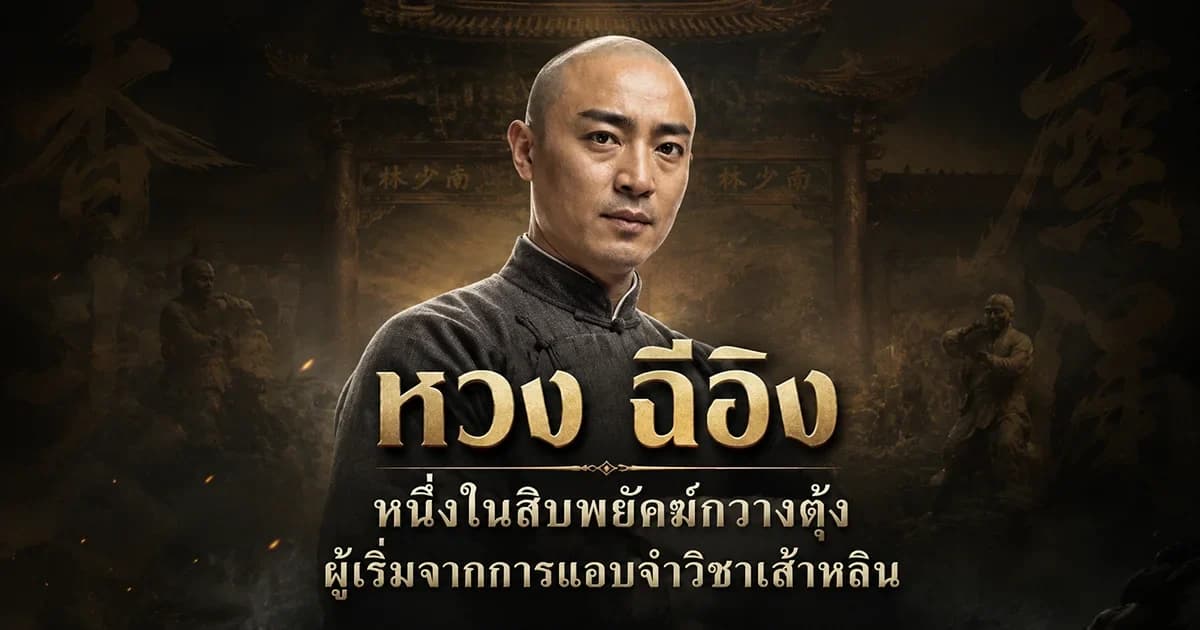
Huang Qiying: The Ten Tigers of Canton Master Behind Wong Fei-hung
Huang Qiying sits at the meeting point of southern Chinese martial arts history, oral tradition, Hung Kuen training, and the later fame of his son Wong Fei-hung. This guide separates common history, lineage storytelling, and modern media memory.
By
- Author
- Thaninpong Supapitakpong (Phoenix)
- Published
- Last updated
- Sources
- 3
- Reading time
- 8 min
Short Answer
Huang Qiying was a late Qing southern Chinese martial artist commonly listed among the Ten Tigers of Canton and remembered as the father of Wong Fei-hung. He is associated with Hung Kuen, Bo Chi Lam, and stories linking his training to Lu Acai and the Southern Shaolin tradition. Many details come from oral lineage and later popular culture, so they should be read with care.
Key Takeaways
- Huang Qiying is commonly listed as a Ten Tigers of Canton figure, while Wong Fei-hung belongs to the next generation.
- Lineage stories say Huang observed or learned from Lu Acai, a figure linked to Southern Shaolin transmission.
- Key terms include Hung Kuen, Gung Ji Fuk Fu Kuen, Fu Hok Seung Ying Kuen, and No Shadow Kick.
- Bo Chi Lam represents the memory of martial training, herbal healing, and teacher-student ethics in southern China.
- Ten Tigers of Canton lists circulate in several versions, so keep the commonly cited basics separate from film and television storytelling.
To understand who Huang Qiying was, it helps to see him not only as Wong Fei-hung's father, but as a bridge between Southern Shaolin legend, Hung Kuen training, folk medicine, and the remembered culture of Cantonese martial arts.
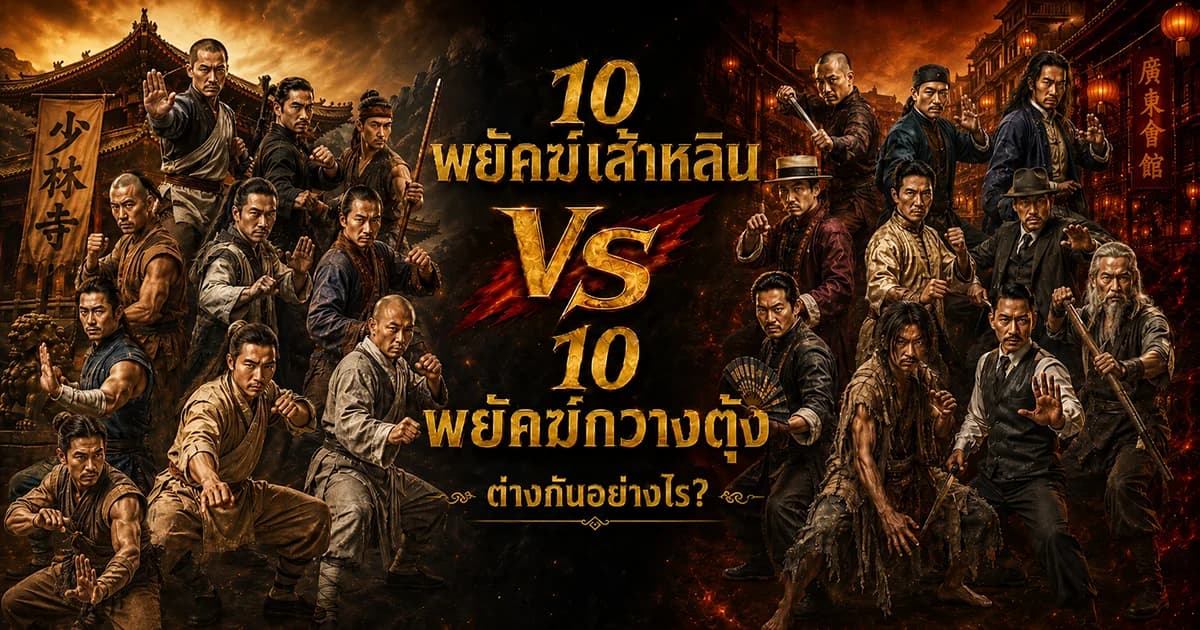
For the broader background, read the difference between Shaolin Ten Tigers and Guangdong Ten Tigers alongside this profile.
Wong Fei-hung became the cinematic face of Cantonese kung fu, yet the name that often appears in the Ten Tigers of Canton list is his father, Huang Qiying.
Huang Qiying's story is powerful because it moves through several layers: local martial history, oral lineage, Southern Shaolin legend, Hung Kuen training, herbal healing, and the later world of film. Reading those layers separately makes the story more useful, not less interesting.
This article treats dramatic stories such as secretly observing Lu Acai's training as lineage folklore unless stronger evidence is available, while still explaining why those stories mattered to practitioners.
In this article
Who was Huang Qiying?
The phrase Ten Tigers of Canton was not an official state title. It is a remembered and repeated martial arts grouping, and different lists can vary.
Huang Qiying, also written Wong Kei-ying in Cantonese romanization, is remembered as a southern Chinese martial artist from the late Qing period. Many sources give his approximate birth and death years as 1810 to 1886 and connect his home to the Nanhai Xiqiao area, today part of Foshan in Guangdong. Many retellings identify him as one of the Ten Tigers of Canton, a popular collective name for outstanding martial artists in Guangdong.
He is best known today as the father of Wong Fei-hung. That relationship matters, but it can also hide Huang Qiying's own importance. In martial memory, he stands between the older Southern Shaolin and Hung Kuen lineages and the later public fame of Bo Chi Lam.
The Lu Acai story and the Southern Shaolin thread
One widely repeated lineage story says that young Huang Qiying first observed Lu Acai's training before being accepted into deeper instruction. Lu Acai is often placed in the Southern Shaolin and Hung Kuen transmission connected to the monk Jee Sin, or Zhishan in Mandarin.
This should be read as martial folklore rather than a fully documented biography. Its value lies in what it teaches: the student watches carefully, proves sincerity, and earns trust before receiving a tradition.
Hung Kuen, Tiger-Crane, and the meaning of technique
Hung Kuen is a southern Chinese boxing tradition associated with rooted stances, bridge hands, whole-body power, and a balance between hardness and flexibility. In Huang Qiying stories, key forms include Gung Ji Fuk Fu Kuen, often translated as Taming the Tiger in the I-shaped pattern, and Fu Hok Seung Ying Kuen, the Tiger-Crane Double Form.
The famous No Shadow Kick should not be treated as a supernatural technique. It is better understood as a popular name for fast, deceptive kicking in close range, later amplified by films about Wong Fei-hung.
Huang Qiying, not Wong Fei-hung, in the Ten Tigers list
The practical takeaway: Huang Qiying is the Ten Tigers of Canton figure, while Wong Fei-hung is the next-generation icon who carried the memory further into popular culture.
A common mistake is to assume that Wong Fei-hung himself was one of the Ten Tigers of Canton. In the widely repeated lists, the name is Huang Qiying, his father. Wong Fei-hung belongs to the next generation and became much more famous because of public memory, films, and modern Cantonese martial culture.
Some modern films compress generations or attach Wong Fei-hung to the Ten Tigers for storytelling. That makes dramatic sense, but it is not the careful historical reading.
Bo Chi Lam and the martial-healing ideal
Explore related IMAC Dojo articles on Chinese Wushu and southern kung fu, Bai Shi teacher-student culture, and the IMAC Dojo instructor team.
Bo Chi Lam is remembered as more than a training place. It represents a cultural model where martial skill, herbal treatment, injury care, and public ethics stood together. The idea that martial arts and medicine share a root is common in southern Chinese martial culture.
For modern students, this does not mean romanticizing the past. It means remembering that serious training should protect the body, build character, and use skill responsibly.
The Ten Tigers of Canton list and where Huang Qiying sits in it
| Name commonly seen | Reading or common form | How the lineage remembers them |
|---|---|---|
| 王隐林 | Wong Yan-lam | Usually named as one of the leading fighters of his generation in Guangdong. |
| 黄澄可 | Wong Ching-ho | Often linked with hard-style boxing and with combining several arts. |
| 苏黑虎 | So Hak-fu | A name tied to the black tiger image and to heavy, grounded power. |
| 黄麒英 | Huang Qiying | Wong Fei-hung's father, and the representative of Hung Kuen and Bo Chi Lam. |
| 苏灿 / 苏乞儿 | So Chan / Beggar So | Became the popular image of the beggar who fights with drunken boxing. |
| 梁坤 | Leung Kwan (Tit Kiu Sam) | One of the big names usually connected with Hung Kuen and bridge-arm work. |
Because the Ten Tigers of Canton is not an official list issued by any single body, the versions in circulation differ somewhat depending on the book, the website, the school, or the local telling. The table below should therefore be read as the names most commonly cited, not as a final ruling that every source must agree on.
What matters for this article is that Huang Qiying is usually among the main names, and is placed there as the representative of Hung Kuen, of the tiger-crane line, and of the image of a teacher who joined fighting, healing, and the transmission of the art to students.
Enjoy the story, but keep the three layers apart
The first layer is the information repeated across many sources: that Huang Qiying was the father of Wong Fei-hung, that his name is connected with the Ten Tigers of Canton, and that he belongs to the Hung Kuen line of transmission. The second layer is the lineage telling passed among teachers, such as the story of learning from Lu Acai and the link to Jee Sin of Southern Shaolin. The third layer is the image created by films, television, and novels, which makes the story easy to remember, emotionally charged, and widely shared.
The problem is not any single layer. It is mixing all three together and then declaring the result to be settled history. Reading as a martial artist means respecting the storytelling while staying honest about the evidence, because that honesty is itself part of the ethics between teacher and student.
For students today, the story of Huang Qiying still teaches several things: humility in learning, patience with fundamentals, the importance of a teacher who chooses students carefully, and the idea that a good martial art should look after life rather than only win exchanges.
Context for IMAC Dojo: why an old Chinese martial arts story still matters
IMAC Dojo does not teach Hung Kuen, and this article is cultural background rather than a course page. Even so, the way this story is read matters to anyone training a martial art today, because the same habits apply: check who is teaching, ask what the training is actually for, and separate what can be verified from what is passed down as a good story.
That is the same standard we ask students to bring to any art, whether it is Judo, Karate, Wing Chun, or Chinese martial arts. Respect the tradition, train the fundamentals honestly, and let claims be measured against what can be shown in practice.
Further reading
- Chinese encyclopedia overview of Huang Qiying: Huang Qiying reference
- Hung Kuen background: Taiping Institute
- Cultural reading on Wong Fei-hung memory: Chunghwa Bookstore
Because Huang Qiying's story contains history, oral tradition, and popular culture, it is best to compare several sources and keep claims cautious.
Sources and further reading
Frequently Asked Questions
Who was Huang Qiying?
Huang Qiying was a southern Chinese martial artist commonly listed among the Ten Tigers of Canton and remembered as the father of Wong Fei-hung.
Was Wong Fei-hung one of the Ten Tigers of Canton?
In the commonly repeated lists, the Ten Tigers figure is Huang Qiying, Wong Fei-hung's father. Wong Fei-hung belongs to the following generation.
Did Huang Qiying really learn by secretly watching Lu Acai?
That story should be treated as lineage folklore unless stronger primary evidence is available. It remains meaningful because it expresses values of observation, sincerity, and teacher-student trust.
How is Hung Kuen connected to Huang Qiying?
Huang Qiying is usually described as an inheritor of the Hung Kuen line, a southern Chinese tradition built on rooted stances, bridge hands, and strong structure. He is linked above all to Gung Ji Fuk Fu Kuen and Fu Hok Seung Ying Kuen, the Tiger-Crane Double Form, which later became associated with Wong Fei-hung and the Foshan line.
Why does this story matter to modern students?
It shows that martial arts are not only techniques. They also involve patience, cultural memory, body care, ethical conduct, and respect between teacher and student.
How is Lu Acai connected to Southern Shaolin?
Several lineage tellings place Lu Acai in a line of transmission from the abbot Jee Sin of Southern Shaolin, but this detail is oral history and school legend rather than an official document that can be verified at every point.
What is Bo Chi Lam?
Bo Chi Lam is the name later generations remember as the Huang family's medicine shop and the place where the art was passed on. It reflects the idea, common in southern Chinese martial culture, that fighting and healing belong together.
How should you read the Ten Tigers story without getting confused?
Separate the commonly cited list, the tellings passed between teachers, and the images from films and television, because each layer has a different purpose. That is why some versions of the list do not match one another.
Ready to start martial arts?
Message IMAC Dojo to ask which course fits your age, goals, and training background.
Ask on LINE Official