Shaolin Ten Tigers vs Guangdong Ten Tigers: What Is the Difference?
A careful guide separating the legendary Shaolin Ten Tigers from the more Guangdong-based martial arts memory of the Guangdong Ten Tigers, with Hung Gar, Huang Qiying, Wong Fei-hung, and Southern Shaolin context.
By
 Thaninpong Supapitakpong (Phoenix)Founder and instructor at IMAC Dojo
Updated 9 Sept 2026
- Author
- Thaninpong Supapitakpong (Phoenix)
- Published
- Last updated
- Sources
- 3
- Reading time
- 10 min
Short Answer
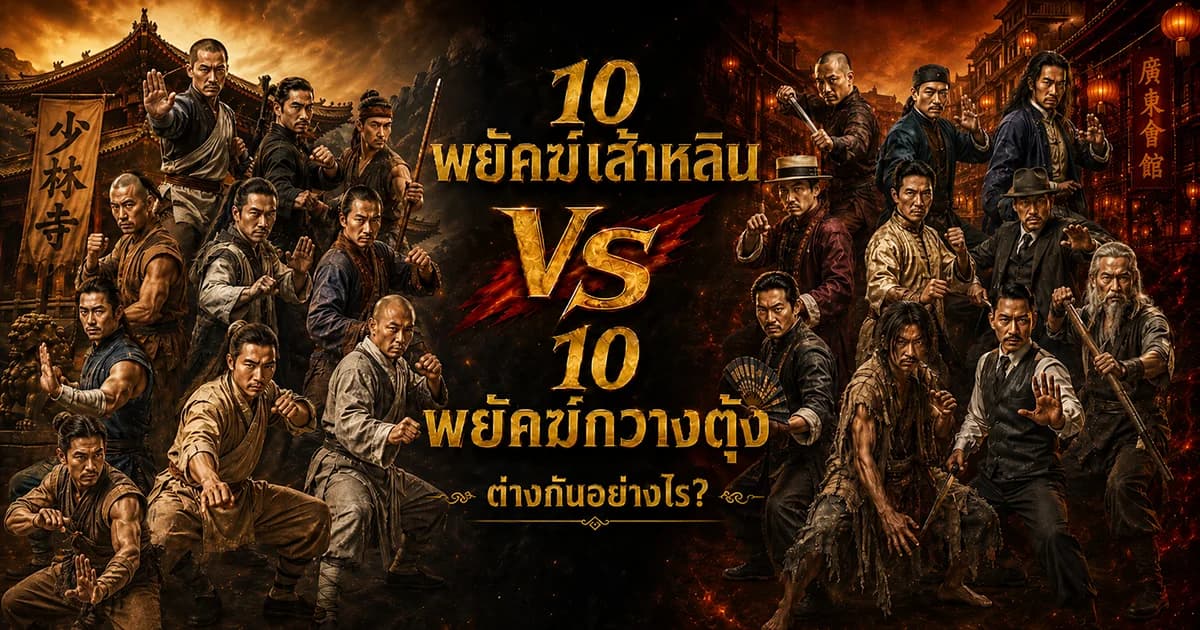
The Shaolin Ten Tigers and Guangdong Ten Tigers are not the same group. The Shaolin Ten Tigers belong mostly to Southern Shaolin legend, anti-Qing storytelling, and Kung Fu fiction. The Guangdong Ten Tigers are tied more closely to late Qing Guangdong martial culture, local schools, teachers, medicine halls, associations, and southern Chinese fighting lineages.
Key Takeaways
- Shaolin Ten Tigers are best read as a legendary Southern Shaolin layer.
- Guangdong Ten Tigers are closer to late Qing Guangdong martial arts memory.
- The two clusters connect through Southern Shaolin, Hung Gar, Luk Ah Choy, Huang Qiying, Wong Fei-hung, and Lam Sai-wing stories.
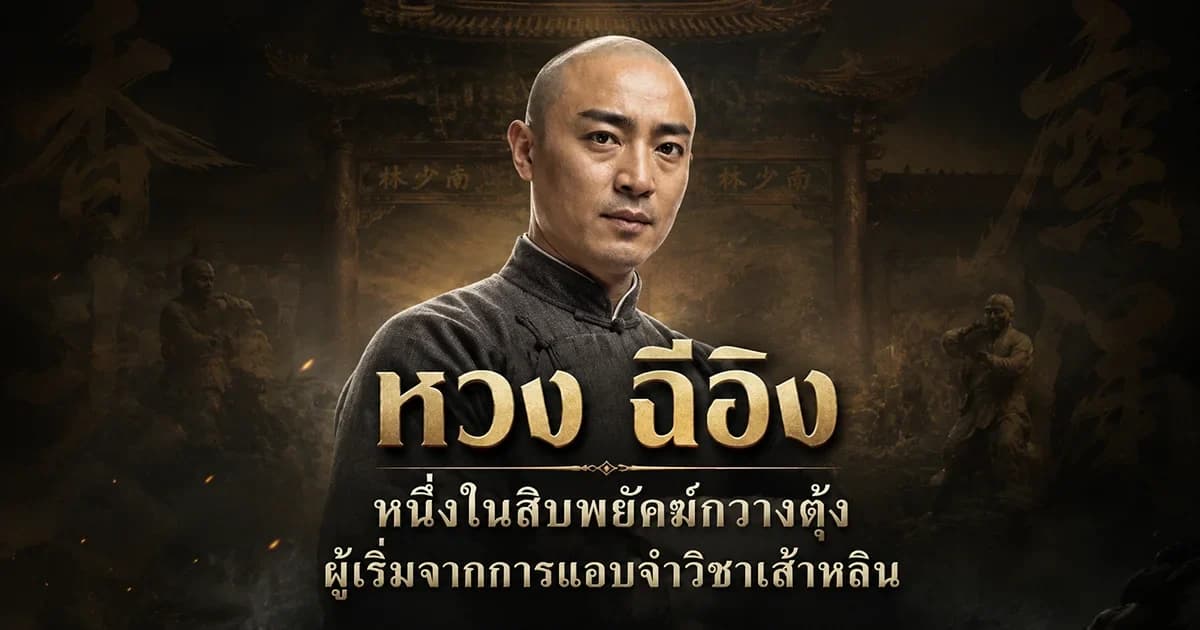
- Wong Fei-hung is usually not counted in the main Guangdong Ten Tigers list; his father Huang Qiying is.
- Different lists exist because the Ten Tigers tradition was shaped by oral history, opera, novels, films, and martial lineages.
The phrase Ten Tigers sounds precise, but in Chinese martial arts culture it often points to reputation, storytelling, and lineage memory rather than a formal register.
This article separates Southern Shaolin legend from Guangdong martial culture so readers can understand why the two famous Ten Tigers lists overlap in theme but not in people, period, or historical reliability.
In this article
The short difference
The clearest answer to Shaolin Ten Tigers vs Guangdong Ten Tigers is this: the Shaolin Ten Tigers are a legendary Southern Shaolin layer, while the Guangdong Ten Tigers reflect late Qing Guangdong martial society more directly.
| Topic | Shaolin Ten Tigers | Guangdong Ten Tigers |
|---|---|---|
| Historical layer | Legend, fiction, lineage memory | Local martial arts memory with several versions |
| Era | Usually linked to the early to mid Qing period | Late Qing Guangdong society |
| Main image | Southern Shaolin disciples and anti-Qing heroes | Teachers, fighters, medicine halls, and community schools |
| Key names | Hung Hei-gun, Fong Sai-yuk, Luk Ah Choy | Huang Qiying, Leung Kwan (Tit Kiu Sam), So Hak Fu, So Chan, Wong Yan-lam |
Why the Ten Tigers names cause confusion
In Chinese culture the word "tiger" does not only refer to the animal. It is a term of praise for someone skilled, brave, and well known in their own area, similar to calling a top fighter a tiger of the martial world. Because both groups carry the same phrase "Ten Tigers", readers easily assume they are the same set of people.
- Both groups belong to southern Chinese martial arts, so their contexts overlap.
- Some important names, such as Luk Ah Choy, Huang Qiying, and Wong Fei-hung, are often told within the same lineage story.
- Hong Kong films, wuxia novels, and television dramas often blend legend with history to make the story more entertaining.
- Ten Tigers lists differ from source to source because they come from different oral lines, teaching lines, and references.
To enjoy this subject without getting lost, keep three layers apart: the Southern Shaolin legend layer, the Guangdong community history layer, and the popular culture layer of films and novels.
How the Shaolin Ten Tigers sit in the legendary layer
The Shaolin Ten Tigers, or Shaolin Shi Hu (少林十虎), are usually told against a backdrop of Southern Shaolin, the destruction of the temple, the escape of its disciples, and the ideal of opposing the Qing and restoring the Ming. These stories are powerful as legend and as southern martial culture, but they should not be read as a historical register that can be verified at every point.
Names that many readers recognise, such as Hung Hei-gun, Fong Sai-yuk, and the monk Sam Tak, appear across kung fu literature and films from many eras. Some names leave traces in martial lineages, while others sit more clearly in the literary layer. The point is therefore not to memorise which list is the most correct, but to understand that the Shaolin Ten Tigers are a language of legend that explains the roots and spirit of southern boxing.
- Southern Shaolin: the root image of many southern martial lines
- Hung Hei-gun: the key figure linked to the birth of Hung Kuen
- Fong Sai-yuk: the young hero of kung fu literature and Chinese films
- Luk Ah Choy: the name that usually works as the bridge from legend into the Guangdong martial lines
How the Guangdong Ten Tigers sit close to teachers and schools
The Guangdong Ten Tigers, or Guangdong Shi Hu (广东十虎), are usually described in the late Qing setting, when Guangdong cities held martial schools, medicine halls, community associations, opera troupes, trade, and a real need for self-defence. The figures in this group therefore give the picture of teachers living inside a real society rather than Shaolin disciples in legend.
One especially important name is Huang Qiying, frequently mentioned in Guangdong Ten Tigers lists because he was the father of Wong Fei-hung, the man who later made Hung Kuen, the ethics of a martial teacher, and southern Chinese culture widely known through storytelling and film.
| Frequently cited name | Image in southern Chinese martial arts |
|---|---|
| Huang Qiying (黄麒英) | A Hung Gar teacher and the father of Wong Fei-hung |
| Leung Kwan, also called Tit Kiu Sam (梁坤 / 铁桥三) | Known for bridge arms and internal power within the Hung Kuen line |
| So Hak Fu (苏黑虎) | Associated with the black tiger image, or Hak Fu Kuen, in some accounts |
| So Chan, also called Beggar So (苏灿 / 苏乞儿) | Became the popular image of the beggar who uses drunken boxing |
Commonly cited names in both groups
The following names should be read as the names most commonly cited, not as an official list that settles every dispute, because each manual, website, martial line, novel, and drama may arrange the list differently.
| Commonly cited Shaolin Ten Tigers | Role in the storytelling | Commonly cited Guangdong Ten Tigers | Image or martial line |
|---|---|---|---|
| Hung Hei-gun (洪熙官) | The core of the Hung Kuen legend | Huang Qiying (黄麒英) | Father of Wong Fei-hung, Hung Kuen line |
| Fong Sai-yuk (方世玉) | The young hero of kung fu literature | Leung Kwan / Tit Kiu Sam (梁坤 / 铁桥三) | Reputation for bridge arms and Tit Sin Kuen |
| Luk Ah Choy (陆阿采) | The bridge from legend into the Huang Qiying line | So Hak Fu (苏黑虎) | Associated with Hak Fu Kuen or black tiger boxing in some accounts |
| Hu Huiqian (胡惠乾) | An important figure in the Hung Hei-gun story cycle | So Chan / Beggar So (苏灿 / 苏乞儿) | The Beggar So image and drunken boxing in Chinese culture |
| The monk Sam Tak (三德和尚) | A Shaolin monk of legend | Wong Yan-lam (王隐林) | Associated with Hap Ga Kuen in some accounts |
Hung Gar and the bridge between legend and Guangdong
Hung Gar or Hung Kuen is the thread that often connects both stories. In common lineage storytelling, Southern Shaolin leads to Hung Hei-gun, then Luk Ah Choy, Huang Qiying, Wong Fei-hung, and Lam Sai-wing. This should be read as cultural lineage memory, not as a fully documented modern archive.
For readers exploring Southern Chinese Kung Fu history, it helps to compare martial legends with broader cultural sources such as UNESCO Chinese martial arts and a general Kung Fu overview from Britannica.
Hung Kuen principles that make the Ten Tigers stories easier to read
Knowing the basic principles of Hung Kuen or Hung Gar explains why the Ten Tigers stories are told through images of power, stability, and the ethics of a martial teacher. Hung Kuen is not only attractive fighting shapes; it carries a clear system for training the body's foundation, the breath, the use of the arms, and the control of force.
| Principle or training method | Plain meaning |
|---|---|
| Horse stance, or ma bu (马步) | The leg and hip base that makes the body stable, able to receive force and issue it continuously |
| Bridge arms, or kiu sau (桥手) | Using the forearms to connect, receive, control, open a path, and redirect an opponent's line of force |
| Hard and soft working together | Not raw force alone, but knowing when to yield, receive, change, and counter |
| Sinking the breath into the dantian | Training the breath and torso in relation to force so that movement stays rooted and does not float |
Important forms often mentioned in the Hung Gar line include Gung Ji Fuk Fu Kuen, the tiger-taming form shaped like the character gung, Fu Hok Seung Ying Kuen, the tiger and crane double form, and Tit Sin Kuen, the iron wire form. These names show that Hung Kuen combines external power, breath control, and a systematic way of training physical quality.
Was Wong Fei-hung one of the Guangdong Ten Tigers?
The careful answer is no, not in the main version. The Guangdong Ten Tigers list usually includes Wong Fei-hung's father, Huang Qiying. Some later popular versions add Wong Fei-hung, which is why the topic becomes confusing.
Wong Fei-hung matters because he carried the Hung Kuen line into the next generation as a martial teacher, a herbal physician, and a symbol of southern Chinese virtue. His worldwide fame, however, was greatly amplified in the 20th century through novels, dramas, and Hong Kong films.
A popular-list reference such as Ten Tigers of Guangdong can be useful for comparing names, but it should be treated as a popular reference rather than a primary historical document.
Chinese terms worth knowing
| Chinese term | Reading and meaning | Context in this article |
|---|---|---|
| 少林十虎 | Shaolin Shi Hu / the Shaolin Ten Tigers | The legendary group in southern Chinese kung fu |
| 广东十虎 | Guangdong Shi Hu / the Guangdong Ten Tigers | Southern martial arts figures in late Qing Guangdong |
| 南少林 | Southern Shaolin | The legendary root of many southern martial lines |
| 洪拳 / 洪家拳 | Hung Kuen / Hung Ga Kuen / Hung Gar | The key martial line that connects the stories of both groups |
| 桥手 | Kiu sau / bridge arms | The principle of using the forearms to connect, receive, control, and open a line of force |
| 反清复明 | Fan Qing Fu Ming / oppose the Qing and restore the Ming | The ideal found in Southern Shaolin storytelling and kung fu literature |
| 铁线拳 | Tit Sin Kuen / the iron wire form | An important form in the Hung Kuen line relating to breath and internal power |
How films created misunderstandings
- Believing Wong Fei-hung was certainly one of the Guangdong Ten Tigers, when the main versions usually count Huang Qiying.
- Believing the Shaolin Ten Tigers and the Guangdong Ten Tigers are the same group, when they belong to different periods and different contexts.
- Believing every member of the Shaolin Ten Tigers has clear evidence, when many names sit in the layer of legend and literature.
- Believing Hung Kuen came straightforwardly from Hung Hei-gun alone, when Hung Kuen is the accumulated work of many generations.
Films and dramas carry real cultural value, because they introduce new generations to southern Chinese kung fu. When reading for historical understanding, however, it helps to separate which information is a pop culture image, which is a popular list, and which sits closer to community history.
If you must remember precisely
- Shaolin Ten Tigers = the Southern Shaolin legend layer, literature, and the anti-Qing ideal
- Guangdong Ten Tigers = southern martial arts figures in late Qing Guangdong society
- Hung Kuen and Hung Gar = the key bridge that lets the two stories be told as one continuous line
- Huang Qiying = the name usually found in the Guangdong Ten Tigers, while Wong Fei-hung is the son who became far more famous in modern culture
- Differing lists are not strange, because this subject sits between legend, teaching lines, and local history
Once this frame is clear, reading about southern Chinese martial arts becomes much easier, because we stop forcing everything into the single word "history" and start seeing belief, memory, and the training system passed down inside a community.
Learning Chinese martial culture at IMAC Dojo
This article sits inside the Chinese Wushu topic at IMAC Dojo. Students can also read about Wing Chun in Thailand, the Bai Shi ceremony, and the IMAC Dojo instructor team.
Read next: Southern Fist, Northern Kick: 南拳北腿, Shaolin Split Into Two Lineages — Was Either Truly Supreme?
Read more Chinese martial arts articlesSources and further reading
- UNESCO Chinese martial artsPrimary
- Kung Fu overview from BritannicaPrimary
- Ten Tigers of GuangdongCommunity
Frequently Asked Questions
Are the Shaolin Ten Tigers and Guangdong Ten Tigers the same group?
No. The Shaolin Ten Tigers belong mostly to Southern Shaolin legend and fiction, while the Guangdong Ten Tigers are tied more closely to late Qing Guangdong martial culture.
Was Wong Fei-hung a Guangdong Ten Tiger?
Usually no. The main list often includes his father Huang Qiying. Later popular versions sometimes add Wong Fei-hung.
How is Hung Gar related to both groups?
Hung Gar connects the stories through lineage memory from Southern Shaolin, Hung Hei-gun, Luk Ah Choy, Huang Qiying, Wong Fei-hung, and Lam Sai-wing.
Why do Ten Tigers lists differ?
The lists were shaped by oral transmission, opera, novels, films, websites, and martial lineages rather than a single official record.
Who were the Shaolin Ten Tigers?
The Shaolin Ten Tigers are a group of legendary figures in southern Chinese kung fu, linked to Southern Shaolin, anti-Qing storytelling, and wuxia literature. Several versions of the list exist.
Who were the Guangdong Ten Tigers?
The Guangdong Ten Tigers are southern Chinese martial arts figures in Guangdong during the late Qing period, such as Huang Qiying, Leung Kwan, So Hak Fu, and So Chan.
Did Southern Shaolin really exist?
The Southern Shaolin story has several layers, including local history, martial school legend, and literature, so it should be read carefully and not treated wholesale as literal history.
How should this article be used as a starting point for southern Chinese martial arts?
Start by separating Southern Shaolin legend from Guangdong martial arts history, then continue with Hung Kuen, Hung Gar, Wing Chun, and the teacher-student ceremonies of Chinese culture.
Ready to start martial arts?
Message IMAC Dojo to ask which course fits your age, goals, and training background.
Ask on LINE Official