What is Bai Shi? Chinese Martial Arts Tea Ceremony and Indoor Disciple Meaning
A practical guide to Bai Shi, the Chinese master-disciple ceremony, explaining the tea ritual, Shifu relationship, indoor disciple status, red envelope etiquette, and how to read the tradition responsibly today.
By
 Thaninpong Supapitakpong (Phoenix)Founder and instructor at IMAC Dojo
Updated 9 Sept 2026
- Author
- Thaninpong Supapitakpong (Phoenix)
- Published
- Last updated
- Sources
- 3
- Reading time
- 6 min
Short Answer
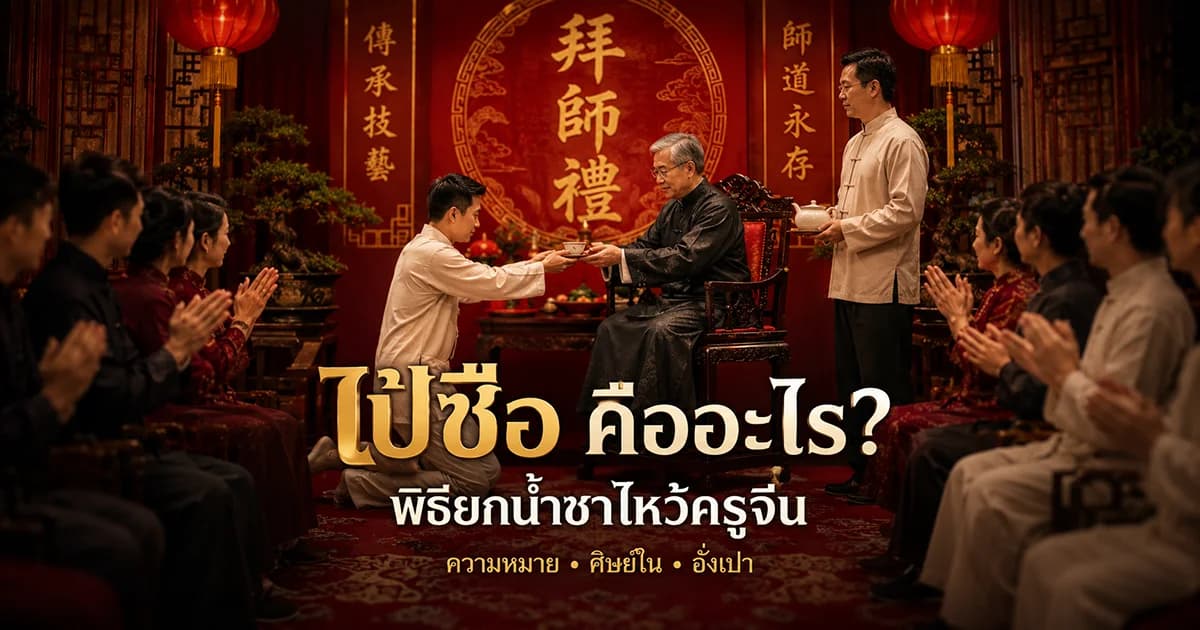
Bai Shi (拜师) is a traditional Chinese ceremony that formally establishes a master-disciple relationship. In Chinese martial arts such as Kung Fu, Taiji, and Wing Chun, it marks a student's sincere commitment to a teacher, lineage, ethics, and long-term learning. Its core symbols include serving tea, bowing, respect for ancestors, and a mutual promise of responsibility.
Key Takeaways
- Bai Shi is not simply a graduation photo moment; it is a cultural commitment between teacher and student.
- The tea ritual represents respect from the student and acceptance from the teacher.
- Indoor disciple status means trust and responsibility, not instant secret power.
- Red envelopes should remain a voluntary cultural gift, not a price tag for status.
- A healthy Bai Shi ceremony must be transparent, consensual, and grounded in real practice.
Bai Shi makes sense only when respect, trust, and long-term practice are stronger than ceremony, photos, or status.
In traditional Chinese culture, Bai Shi is not just a thank-you ceremony for a teacher. It is a formal ritual that turns ordinary instruction into a master-disciple relationship within a lineage.
For students interested in Chinese martial arts in Bangkok, understanding Bai Shi helps separate authentic cultural depth from empty performance. The ceremony can be beautiful, but only when it is voluntary, transparent, and connected to real training.
In this article
1. What is Bai Shi?
What is a Bai Shi ceremony in Kung Fu? The ritual looks formal, and sometimes mysterious from outside. In plain terms, Bai Shi means bowing to a teacher and being accepted into a teacher-student relationship.
Dao World describes a Bai Shi master ceremony as a formal moment of respect and acceptance; read more at Dao World: Bai Shi master ceremony.
2. Bai Shi and the Thai Wai Khru ceremony
How is Bai Shi different from a Thai wai khru ceremony? Both share a common root in respect for the teacher, but Bai Shi usually emphasises being formally received into a teacher-disciple system within a lineage, while the Thai wai khru is more often a broad ceremony of gratitude and respect toward teachers.
- Wai khru: expresses respect for teachers, can be done as a group, and does not necessarily change the student's status.
- Bai Shi: signifies accepting a teacher and being accepted as a disciple within a lineage, with obligations of discipline, reputation, and transmission of the art.
- Both ceremonies should come from genuine respect, not from coercion or from using ritual to build an image.
For the Muaythai context, continue with Wai Kru Muay Thai poses and the difference between Wai Kru and Ram Muay, including why eight is not one universal standard for every lineage.
3. Tea ritual, bowing, and six symbolic gifts
The tea ritual is the emotional center of Bai Shi. The student offers tea with humility; the teacher accepts it as a sign of recognition. In some lineages, the ceremony also includes bowing, ancestor respect, written vows, and symbolic gifts.
The roots of Bai Shi are often traced to the idea of 束脩之礼 (shu xiu zhi li), the gifts a student brought to a teacher to show sincere intent, to ask to be taught, and to ask to receive the transmission of the art.
| Symbol | Meaning |
|---|---|
| Tea | Respect, sincerity, and acceptance into the teacher-student bond |
| Bowing | Embodied humility and gratitude, not blind obedience |
| 芹菜 (Chinese celery) | Diligence: 芹 (qín) sounds like 勤 (qín), meaning diligent. |
| 莲子 (lotus seeds) | Endurance, and a mind ready to keep learning over the long term. |
| 红枣 (red dates) | The wish to progress and to succeed. |
| 桂圆 (dried longan) | Completeness, and success achieved in harmony. |
| 红豆 (red beans) | Good fortune, and a lineage that flourishes. |
| 干肉条 (strips of dried meat) | The oldest of the gifts, offered in respect to the one who passes the knowledge on. |
Kowtow, or 叩头, is a formal ceremonial bow to the ground. Some lineages still keep this form, while others have adapted it for the present day. What matters is not the number of bows but that they are offered willingly and with an understanding of their meaning.
4. Steps of a traditional Bai Shi ceremony
- 正衣冠: straighten clothing and appearance, showing readiness and composure.
- 净手净心: wash the hands and settle the mind, a symbol of clearing away distraction.
- 拜祖师: bow to the founding ancestors and the line of transmission before reaching the present teacher.
- 投师帖: submit the request to be accepted as a disciple, or the pledge to keep the school's rules.
- 敬茶: offer tea to the teacher; when the teacher accepts the tea, the disciple is formally accepted.
- 师父训话: the teacher gives words of guidance about ethics, discipline, and responsibility toward the art.
5. Shifu, indoor disciple, and real responsibility
Shifu (师父) usually carries more weight than the English word “teacher”: it holds both the sense of the person who transmits the art and that of an elder responsible for the student’s character. Shitu (师徒) is the teacher-disciple relationship that follows from it, covering training, guidance in conduct, and protecting the reputation of the lineage.
A teacher passes on more than techniques — usually a way of thinking, a way of training, and the ethical frame of the lineage.
The difference between an indoor and an outdoor disciple usually refers to trust and depth of responsibility. An outdoor student may follow the standard curriculum. An indoor disciple is accepted closer to the lineage and may receive more detailed guidance over time.
The Wu Style Taiji Quan & Qi Gong Association offers useful context for Bai Shi and discipleship at Wu Style Taiji Quan: Bai Shi. The important point is that deeper status should bring deeper responsibility, not ego.
6. Red envelopes and modern boundaries
A red envelope can be a respectful gift, but it should never become a forced purchase of rank. A legitimate ceremony must explain expectations clearly, keep money transparent, and let students decline without shame.
- No student should be pressured into Bai Shi.
- No title should replace actual training.
- No teacher should accept disciples without ethical responsibility.
7. Bai Shi and Chinese martial arts in Bangkok
Chinese martial arts include many traditions, from Taiji and Wing Chun to modern Wushu. For a broad overview of Kung Fu as a cultural term, see Britannica: Kung Fu.
At IMAC Dojo, readers can explore Chinese Wushu topics, the Ng Mui and Wing Chun article, and the instructor team to connect culture with real training.
8. Summary
Bai Shi is meaningful when it protects respect, ethics, and real transmission. It loses meaning when it becomes only a title, a photo opportunity, or a transaction.
Explore more IMAC Dojo martial arts articlesSources and further reading
- Dao World: Bai Shi master ceremonyPrimary
- Wu Style Taiji Quan: Bai ShiPrimary
- Britannica: Kung FuPrimary
Frequently Asked Questions
What is Bai Shi in Chinese martial arts?
Bai Shi is a traditional ceremony that formally establishes a teacher-disciple relationship in Chinese martial arts and other cultural lineages.
How is Bai Shi different from a wai khru ceremony?
A wai khru ceremony expresses respect for teachers in general. Bai Shi is more specific: it is a formal entry into a teacher-disciple relationship within a lineage.
Is Bai Shi still relevant today?
It can be, as long as the ceremony rests on free consent, transparency, respect, and genuine transmission of the art. If it is used to build power or to extract money, it should be questioned.
Why does the student serve tea to the teacher?
Serving tea expresses respect and sincerity. When the teacher accepts the tea, it symbolizes acceptance of the student into the lineage relationship.
What is an indoor disciple?
An indoor disciple is a student accepted into a deeper relationship of trust and responsibility. It does not mean instant secret knowledge; it implies long-term practice and ethical conduct.
Is a red envelope required for Bai Shi?
Customs vary by school. A red envelope may be a respectful gift, but it should be voluntary, transparent, and never treated as a price for buying status.
Ready to start martial arts?
Message IMAC Dojo to ask which course fits your age, goals, and training background.
Ask on LINE Official