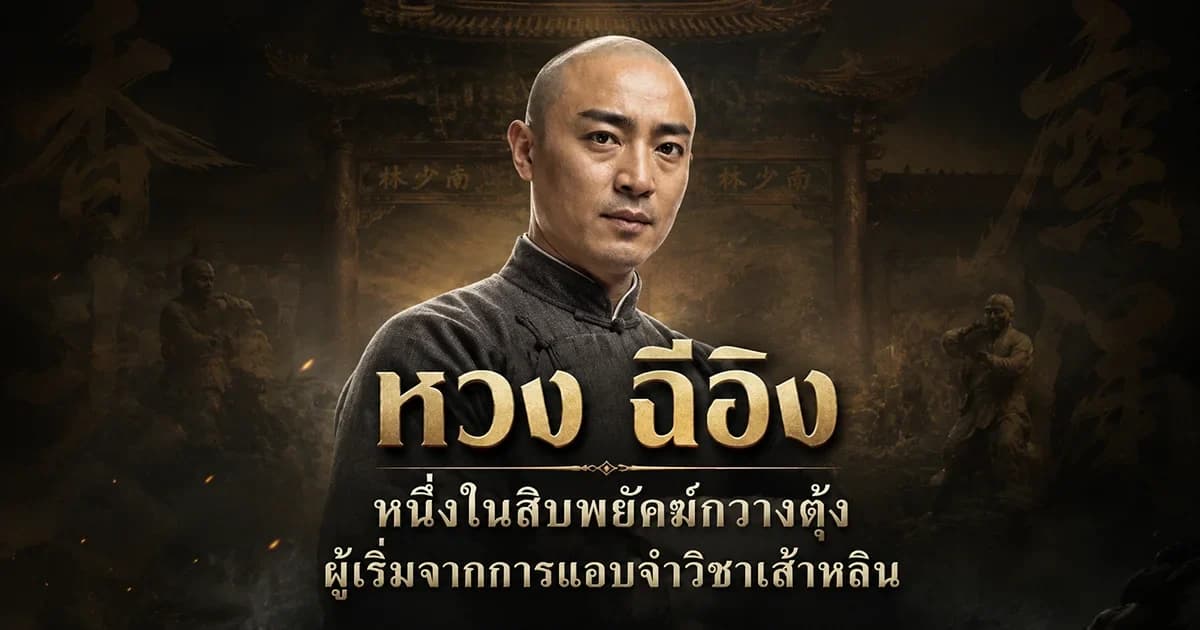
Wing Chun for Women: Self-Defense with Structure Instead of Strength
Wing Chun is a close-range martial art that uses centerline, structure, timing, and efficient movement. That makes it a practical entry point for women who want self-defense skills without starting with hard-contact sparring from day one.

By
- Author
- Thaninpong Supapitakpong (Phoenix)
- Published
- Last updated
- Sources
- 4
- Reading time
- 9 min
Short Answer
Wing Chun for women can be a useful self-defense starting point because it emphasizes structure, centerline control, close-range awareness, timing, and efficient movement rather than meeting force with force. It is suitable for beginners and smaller practitioners when taught safely. It should not be treated as a 100% safety guarantee; good self-defense also includes awareness, boundaries, distance, escape, and help-seeking.
Key Takeaways
- Wing Chun focuses on structure, centerline, and close-range control rather than raw strength.
- Beginners can start with stance, hand position, distance, and safe partner drills.
- Self-defense should prioritize awareness, boundaries, escape, and returning to safety.
- IMAC Dojo teaches Wing Chun as a structured long-term practice for adults, beginners, and women.
Many women want women's self-defense skills but hesitate because martial arts can look intense, painful, or designed only for already athletic people. Wing Chun for women offers a different entry point: learn structure, centerline, distance, and decision-making before chasing power.
If you are looking for a self-defense class Bangkok or wondering whether structure over strength is realistic, this guide explains where Wing Chun helps and where realistic safety limits still matter.
Wing Chun does not begin by asking how strong you are. It asks how you stand, how you protect your centerline, how you manage distance, and whether you can still make decisions when pressure moves close.
Wing Chun, also written Ving Tsun or Wing Tsun, is a southern Chinese martial art built around short movement, close-range structure, centerline protection, and efficient responses.
This article is not a promise that Wing Chun solves every dangerous situation. It is a practical guide for women who want to train self-defense without beginning with hard-contact sparring from day one or force-against-force drills.
In this article
Key Takeaways
- Wing Chun for women works best as structured training in distance, balance, centerline, and close-range awareness.
- Small beginners can start safely when the teacher adjusts intensity and partner work.
- Good self-defense means noticing risk early, creating distance, using voice and boundaries, and escaping when possible.
- No martial art can guarantee safety in every real-world situation.
What Wing Chun is
| Chinese term | Reading or common form | Meaning |
|---|---|---|
| 詠春 / 咏春 | Wing Chun (Ving Tsun, Wing Tsun) | The name of the southern Chinese boxing system known in English as Wing Chun |
| 中線 | Centerline | The centerline, the line of defense covering the important area at the front of the body |
| 黐手 | Chi Sao (sticky hands) | Sticky hands, the drill for feeling force and timing at close range |
| 葉問 | Ip Man | The important Wing Chun teacher who made this line of the art widely known |
Wing Chun is a southern Chinese martial art built around close-range fighting, control of the centerline, the use of body structure, short movement, and fast responses. The English name appears in several forms, such as Wing Chun, Ving Tsun, or Wing Tsun, depending on the romanisation used by each line of transmission.
People seeing Wing Chun for the first time may feel the movements look short, small, and undramatic. The heart of the art, however, is stripping away what is unnecessary until only movement that is direct, economical, and connected to the structure of the body remains.
How to read the legend of women at the origin of Wing Chun
You can read more about the context of this legend in Ng Mui and the origin legend of Wing Chun on the IMAC Dojo blog
In the traditional telling, Wing Chun is often linked with the nun Ng Mui and with a young woman named Yim Wing Chun, who used the art to protect herself from a forced marriage. The story carries real power, because it makes Wing Chun remembered as an art connected with women, with intelligence, and with principle over raw strength.
It should be stated clearly, however, that the accounts of Ng Mui and Yim Wing Chun are lineage legend rather than history that can be verified at every step. Several works in Chinese martial studies point out that the origin legends of Wing Chun mix folklore, literature, and the later identity-building of schools.
What Wing Chun teaches women first
For more background, read IMAC Dojo's article on Ng Mui and the Wing Chun legend, while remembering that origin stories should be treated as lineage folklore rather than fully verified history.
Wing Chun teaches the body to organize itself before adding speed or pressure. A beginner learns how to stand, align the elbows, keep the hands useful, protect the centerline, and avoid spending strength in the wrong direction.
For many women, that is a more inviting start than being told to hit harder on day one. The training still becomes serious over time, but it begins with understanding rather than intimidation.
Why close-range structure matters
Many everyday safety concerns happen at close distance: a crowded walkway, a lift, a parking area, or someone stepping too close and grabbing an arm. Wing Chun is useful to study because it focuses on the space directly in front of the body, not only long-range strikes.
The goal is not to stand and trade blows. The goal is to recognize pressure, protect the centerline, create a moment to move, and return to safety as soon as possible.
Real-life situations where Wing Chun principles help
Walking back to a condo at night should not begin with the fantasy of fighting. It begins with awareness: noticing exits, keeping the phone away when needed, choosing visible areas, and recognizing when someone is closing distance. Wing Chun supports the next layer by teaching hand position, body angle, centerline protection, and how to move when someone enters personal space.
In a lift or narrow corridor, wide movements are hard to use. Wing Chun training is relevant because it studies short paths, balance, and the space immediately in front of the body. Practical safety still comes first: stand where you can access the buttons, avoid being trapped in corners, and leave when a place feels unsafe.
If someone grabs an arm or pulls a bag, good training should not teach a single magic answer. Force, angle, distance, and intention differ each time. A better approach is to learn principles: avoid pulling straight back against strength, use body direction and hip movement, create a moment to step away, and prioritize escape over punishment.
For women who dislike ordinary gym routines, Wing Chun can also be a meaningful movement practice. For readers drawn to Chinese culture, Wing Chun is more than a quick set of self-defense techniques: it is a way into the teacher-to-student tradition, the thinking behind the centerline, the value placed on economy of movement, and the roots of southern Chinese boxing as they have been handed down through many lines of transmission. It combines balance, coordination, posture, concentration, partner sensitivity, and gradual physical confidence without asking beginners to become fighters on the first day.
What good Wing Chun self-defense training should give beginners
First, it should give a clearer sense of body boundaries. Self-defense does not begin when an attack happens; it begins when you recognize a distance that feels wrong, move early, use your voice, and ask for help before the situation escalates.
Second, it should give repeatable basics: stance, hand position, elbow alignment, centerline awareness, distance control, receiving pressure, and changing angle. These details look simple, but they are the foundation that lets a beginner use less wasted strength.
Third, it should build confidence without overconfidence. A good teacher should make clear that the best self-defense result is usually prevention, risk reduction, escape, and returning home safely, not proving that you can beat everyone.
Finally, it should provide a respectful training community. Women and beginners need a class where they can ask questions, make mistakes, practice slowly, and never feel pushed into intensity they are not ready for.
How IMAC Dojo approaches Wing Chun
See the Wing Chun Bangkok course, meet the IMAC Dojo instructor team, or browse more IMAC Dojo martial arts articles.
At IMAC Dojo, Wing Chun training is built from fundamentals: stance, centerline, hand position, timing, contact drills, distance, angles, and safe partner practice. Beginners do not need previous martial arts experience.
For women who prefer a careful start, the value is in having teachers who can watch shoulder tension, elbow position, weight distribution, and whether the student is using too much force.
Training for confidence without false confidence
There is also a question worth answering plainly, because a lot of clips and forum threads conclude that Wing Chun does not work: whether it is effective at all. The most accurate answer is that it depends on what you train and how. The system is built for close range, keeping structure, holding the centerline and responding through contact, which is a different problem from a rules-based match you can prepare for. What always has to be added is resistant partner work, conditioning and consistent practice. Whatever the art, avoiding the situation remains the first option.
Self-defense training can improve confidence, but confidence must not become carelessness. Good training should repeatedly remind students that avoidance, distance, voice, help-seeking, and escape are often more important than fighting.
Research on sexual assault resistance and self-defense programmes suggests that well-designed training can improve confidence and reduce victimization risk in specific populations. These findings support the value of training, but they do not mean any one class or martial art guarantees an outcome.
Further reading
The following references are useful for context. Read them carefully because study populations, programmes, and results differ.
Conclusion
Women do not need to wait until they are strong, fit, or fearless before starting self-defense. Confidence often appears after training begins, when the body learns to stand more clearly, protect its space, and respond under gentle pressure.
Wing Chun is worth considering for women who want a principled start: not hard-contact sparring first, not strength first, but structure, awareness, and steady practice.
Sources and further reading
Frequently Asked Questions
Is Wing Chun good for women's self-defense?
Wing Chun can be a useful self-defense starting point for women because it emphasizes structure, centerline, distance, timing, and efficient close-range movement rather than raw strength.
Can small women learn Wing Chun?
Yes. Smaller beginners can learn Wing Chun when training starts with stance, alignment, centerline, safe partner drills, and realistic limits rather than hard-contact training from day one.
Do beginners have to spar hard right away?
No. Responsible training should add pressure gradually. Beginners should first learn posture, distance, boundaries, voice, safe partner work, and how to leave a risky situation.
Does Wing Chun guarantee safety?
No martial art can guarantee safety in every real situation. Wing Chun should be combined with awareness, boundary setting, voice, escape, and help-seeking.
Do beginners need martial arts experience?
No. Beginners can start with fundamental posture, hand position, distance, and movement before adding more pressure.
Does Wing Chun really work for self-defense?
It works as a foundation for self-defense if it is trained correctly and with an understanding of the limits of real situations. Wing Chun helps with close range, receiving force, holding the centerline, and short counters.
Where should you start when learning self-defense?
Start with awareness, keeping distance, using your voice and setting boundaries, standing stably, and finding a safe space. Physical technique is then trained systematically on top of that.
Ready to start martial arts?
Message IMAC Dojo to ask which course fits your age, goals, and training background.
Ask on LINE Official