
IMAC Dojo Judo Curriculum · Level 5
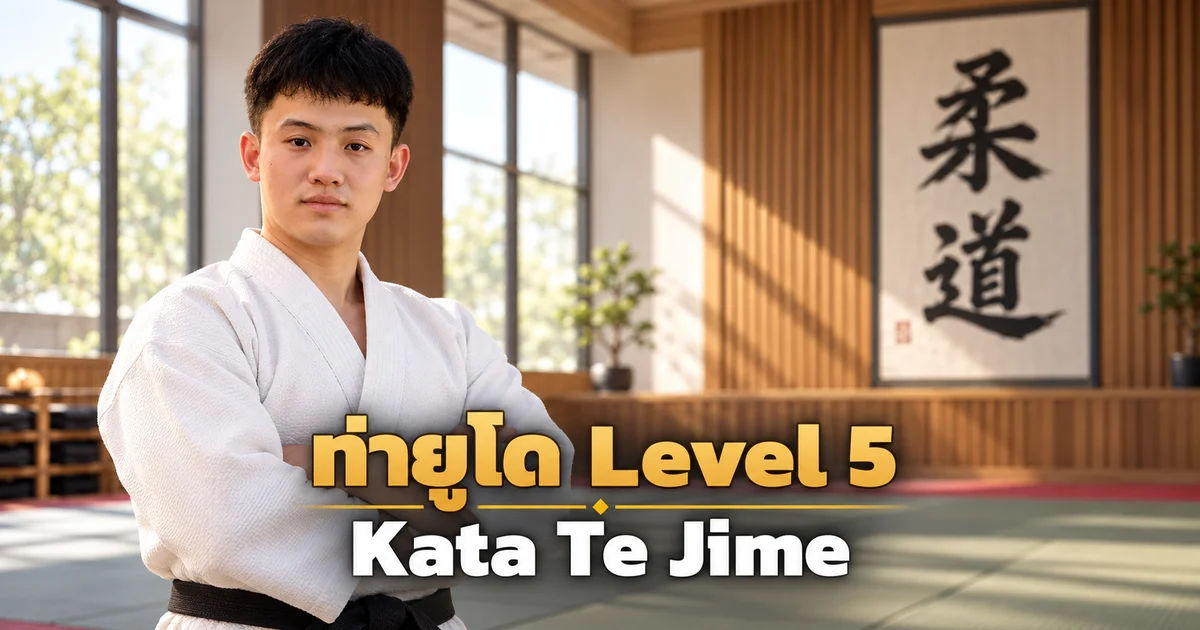
Judo Level 5: Kata Te Jime — One hand does not work in isolation
Kata Te Jime emphasizes one hand and the collar in a strangle. Whole-body control still matters; maximum squeezing is not the aim.
Compiled by Phoenix — Co-founder of IMAC Dojo
 Thaninpong Supapitakpong (Phoenix)Co-founder of IMAC Dojo
Updated 29 Sept 2026
- Author
- Thaninpong Supapitakpong (Phoenix)
- Published
- Last updated
- Sources
- 1
- Reading time
- 2 min
Short Answer
Kata Te Jime emphasizes one hand and the collar in a strangle. Whole-body control still matters; maximum squeezing is not the aim.
Key Takeaways
- Identify the principal collar grip.
- Observe how posture controls position.
- Watch immediate release when stopping.
Begin with the collar grip, then widen your attention to posture and the partner’s available movement.
In this article
What the name tells us
片手絞, kata-te-jime, means one-hand strangle.
How the technique works
The principal hand works with the collar and positional control. Read grip and base together rather than treating hand count as the whole explanation.
Kata-te-jime specifies one hand's main collar action in Kodokan's definition, but that does not mean body position or the other arm has no controlling role. Read the collar hand within the whole-body arrangement.
What to watch in the clips
- Identify the principal collar grip.
- Observe how posture controls position.
- Watch immediate release when stopping.
A distinction worth noticing
Ryo Te Jime emphasizes two hands, while Hadaka Jime does not use the collar in the same way. These differences help identify the techniques.
Do not confuse it with kata-ha-jime: te means hand, while ha refers to a different configuration involving uke's arm. Reading the kanji helps avoid combining clips or explanations of different techniques.
Taking the lesson back to practice
The instructor must select an appropriate progression and partner. Never practise to unconsciousness or strike the throat; release immediately on a signal.
The Level here refers to the IMAC Dojo curriculum. Use the article and clips to prepare questions and review them with your instructor. Practical training needs a suitable partner, space and controlled conditions.
If the collar hand is obscured, record that limitation before asking the instructor. The number of visible hands is not proof of how many are functioning. Separate positioning from increasing neck pressure.
Connect this with your next lesson
Kata Te Jime — Video lesson 1
An IMAC Dojo clip accompanying Kata Te Jime. Use the observations and distinctions in this article to guide your viewing.
Video published
Sources and further reading
- 片手絞 — 講道館 柔道 技名称一覧 — 講道館ReferenceAccessed 29 Sept 2026
Frequently Asked Questions
Does the other hand have no role?
No. The name identifies the principal hand action, not the absence of whole-body control.
How does it differ from Ryo Te Jime?
Compare the principal one-hand and two-hand actions.
Should I watch the collar or squeezing force?
Start with collar and position; force is not the objective.
Ready to start martial arts?
Message IMAC Dojo to ask which course fits your age, goals, and training background.
Ask on LINE OfficialRelated Articles
Related Topics and Courses
Judo Thailand