
IMAC Dojo Judo Curriculum · Level 4
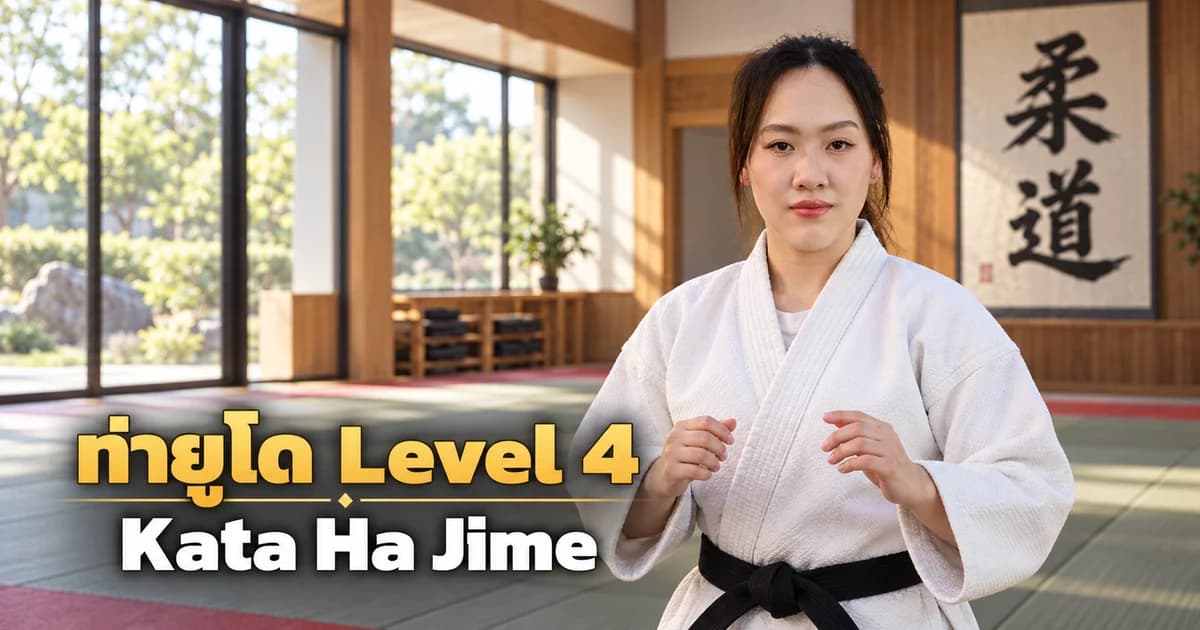
Judo Level 4: Kata Ha Jime — The controlled arm distinguishes the technique
Kata Ha Jime combines a collar grip with control of one partner arm from behind. Observe that arm’s changing position as well as the collar.
Compiled by Phoenix — Co-founder of IMAC Dojo
 Thaninpong Supapitakpong (Phoenix)Co-founder of IMAC Dojo
Updated 29 Sept 2026
- Author
- Thaninpong Supapitakpong (Phoenix)
- Published
- Last updated
- Sources
- 1
- Reading time
- 2 min
Short Answer
Kata Ha Jime combines a collar grip with control of one partner arm from behind. Observe that arm’s changing position as well as the collar.
Key Takeaways
- Identify the collar hand.
- Trace the arm passing under the partner’s armpit.
- Follow the controlled arm and release on signal.
Separate what each hand does, then follow the partner’s controlled arm to distinguish this from Okuri Eri Jime.
In this article
What the name tells us
片羽絞, kata-ha-jime, is a strangle technique. The single-wing image helps remember the one-arm control.
How the technique works
Kodokan describes one hand on the collar and the other arm passing under the armpit to control the partner’s arm. Read those different roles rather than treating every arm as simply adding strangle force.
Kata-ha-jime combines collar use with control of one of uke's arms. Kodokan describes the other arm passing beneath the armpit and raising uke's arm, a relationship that distinguishes it from okuri-eri-jime.
What to watch in the clips
- Identify the collar hand.
- Trace the arm passing under the partner’s armpit.
- Follow the controlled arm and release on signal.
A distinction worth noticing
Okuri Eri Jime emphasizes its two collar grips; one-arm control distinguishes Kata Ha Jime. Rear position alone does not identify the technique.
The image of a single wing does not turn shoulder twisting into the goal. Have an instructor check the arm arrangement, because rear footage can conceal much of the elbow and shoulder alignment.
Taking the lesson back to practice
Have an instructor check arm and collar placement without pressure. Do not force the partner’s arm beyond its movement range. Agree on stop signals and release immediately.
The Level here refers to the IMAC Dojo curriculum. Use the article and clips to prepare questions and review them with your instructor. Practical training needs a suitable partner, space and controlled conditions.
Pause during positioning and identify which hand works with the collar and which arm controls uke's arm. If unclear, preserve the question rather than forcing a partner's arm upward to match the picture.
Connect this with your next lesson
Kata Ha Jime — Video lesson 1
An IMAC Dojo clip accompanying Kata Ha Jime. Use the observations and distinctions in this article to guide your viewing.
Video published
Sources and further reading
- 片羽絞 — 講道館 柔道 技名称一覧 — 講道館ReferenceAccessed 29 Sept 2026
Frequently Asked Questions
What does single wing suggest?
Control of one arm, not a throwing category or a requirement to use force on one side alone.
How does it differ from Okuri Eri Jime?
Compare the arm controlling the partner’s arm with Okuri Eri Jime’s two-collar arrangement.
Where should I start watching?
Start with the collar hand, then trace the other arm and the partner’s controlled arm to see each role.
Ready to start martial arts?
Message IMAC Dojo to ask which course fits your age, goals, and training background.
Ask on LINE OfficialRelated Articles
Related Topics and Courses
Judo Thailand