
IMAC Dojo Judo Curriculum · Level 4
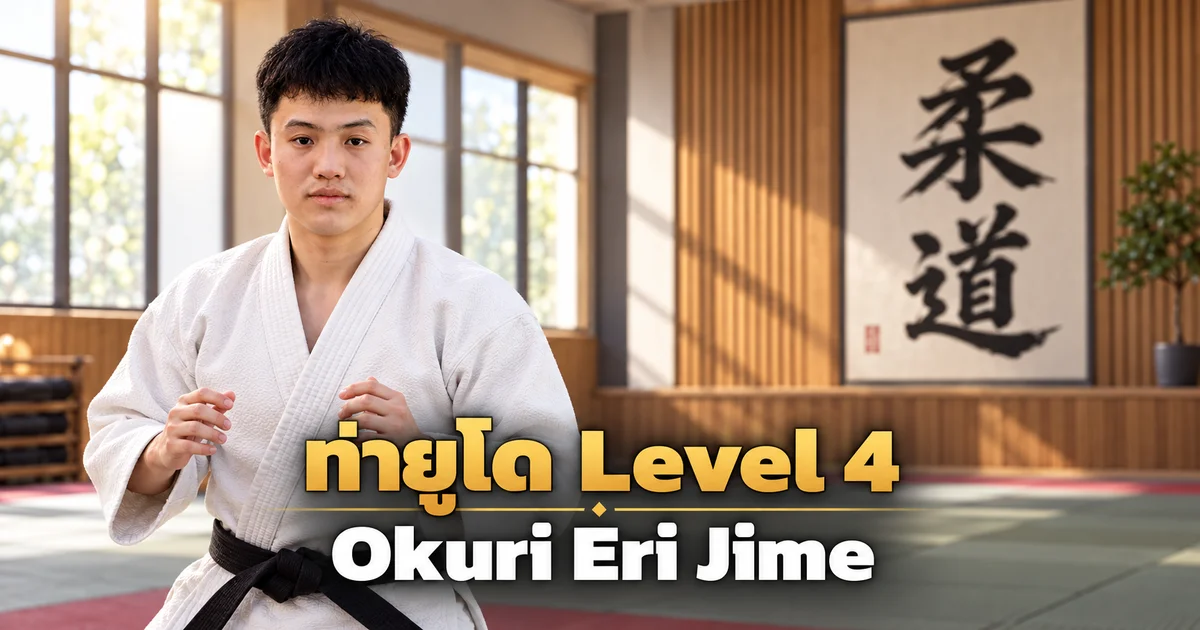
Judo Level 4: Okuri Eri Jime — Separate the two collar-hand roles
Okuri Eri Jime uses judogi collars with two hands performing different roles from behind. Trace arm paths and grips rather than merely noticing hands near the neck.
Compiled by Phoenix — Co-founder of IMAC Dojo
 Thaninpong Supapitakpong (Phoenix)Co-founder of IMAC Dojo
Updated 29 Sept 2026
- Author
- Thaninpong Supapitakpong (Phoenix)
- Published
- Last updated
- Sources
- 1
- Reading time
- 2 min
Short Answer
Okuri Eri Jime uses judogi collars with two hands performing different roles from behind. Trace arm paths and grips rather than merely noticing hands near the neck.
Key Takeaways
- Trace each collar grip.
- Compare the different arm paths.
- Observe immediate release on signal.
Eri points you toward the collar. Follow each hand separately, then their relationship to the torso.
In this article
What the name tells us
送襟絞, okuri-eri-jime, is a strangle technique. Eri means collar, distinguishing it from non-cloth Hadaka Jime.
How the technique works
Kodokan describes different collar positions and hand directions from behind. This article identifies structure; the instructor checks actual placement and pressure.
Okuri-eri-jime uses the collar as the medium of control. Kodokan describes one hand passing in front of the neck and another beneath the armpit to the other collar. Read both hands together; one collar grip near the neck does not reveal the whole structure.
What to watch in the clips
- Trace each collar grip.
- Compare the different arm paths.
- Observe immediate release on signal.
A distinction worth noticing
Kata Ha Jime uses one arm to control the partner’s arm differently. A shared rear approach does not make the names interchangeable. Watching only one collar can conceal this distinction.
Cloth use distinguishes it from hadaka-jime, while kata-ha-jime adds a specific relationship to arm control. From behind they can appear similar, so seek a view that reveals the grips.
Taking the lesson back to practice
Review names and grips with an instructor without strangle pressure. Agree on stop signals and release immediately; do not pull cloth harder to test whether the grip is correct.
The Level here refers to the IMAC Dojo curriculum. Use the article and clips to prepare questions and review them with your instructor. Practical training needs a suitable partner, space and controlled conditions.
Use the clip to identify arm routes and grips before asking your instructor, not to test progressively stronger collar pulls. Practice must allow signalling and immediate release, not endurance of a strangle.
Connect this with your next lesson
Okuri Eri Jime — Video lesson 1
An IMAC Dojo clip accompanying Okuri Eri Jime. Use the observations and distinctions in this article to guide your viewing.
Video published
Sources and further reading
- 送襟絞 — 講道館 柔道 技名称一覧 — 講道館ReferenceAccessed 29 Sept 2026
Frequently Asked Questions
What does eri mean?
Collar, distinguishing this from a non-cloth technique such as Hadaka Jime.
Why follow each hand separately?
Their grips and functions differ; one hand alone does not show the whole structure.
Is it the same as Kata Ha Jime?
No. Compare Kata Ha Jime’s control of the partner’s arm with this collar-grip arrangement.
Ready to start martial arts?
Message IMAC Dojo to ask which course fits your age, goals, and training background.
Ask on LINE OfficialRelated Articles
Related Topics and Courses
Judo Thailand