
IMAC Dojo Judo Curriculum · Level 5
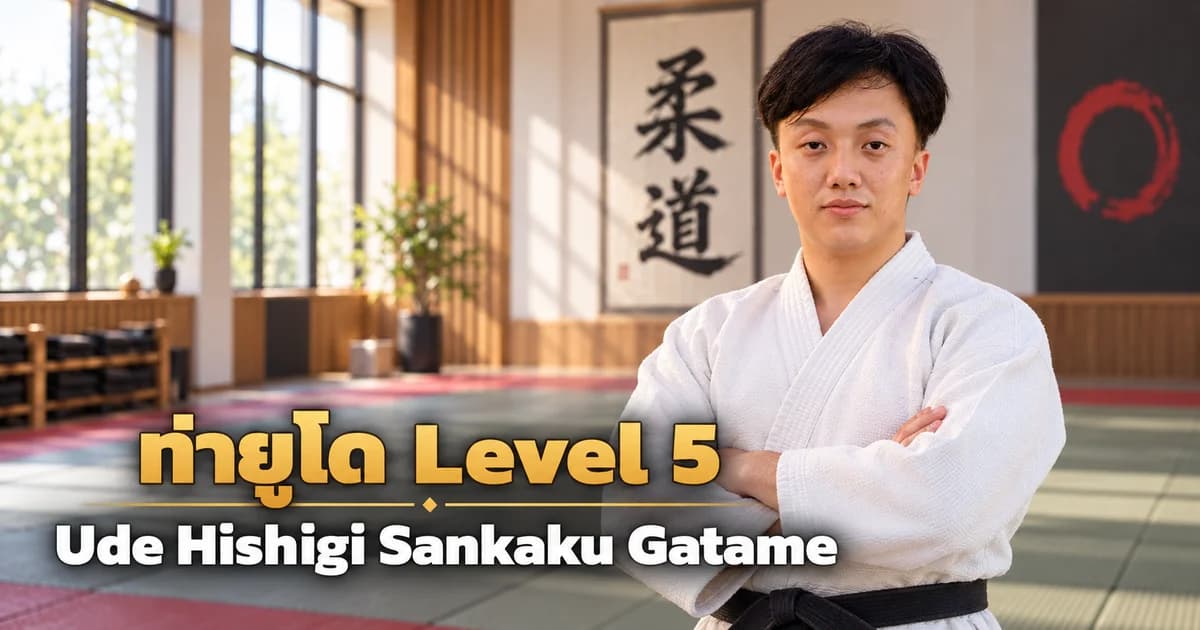
Judo Level 5: Ude Hishigi Sankaku Gatame — A triangle with an elbow-joint purpose
Ude Hishigi Sankaku Gatame combines triangular leg control with an elbow-joint action. It differs from the strangle Sankaku Jime.
Compiled by Phoenix — Co-founder of IMAC Dojo
 Thaninpong Supapitakpong (Phoenix)Co-founder of IMAC Dojo
Updated 29 Sept 2026
- Author
- Thaninpong Supapitakpong (Phoenix)
- Published
- Last updated
- Sources
- 1
- Reading time
- 2 min
Short Answer
Ude Hishigi Sankaku Gatame combines triangular leg control with an elbow-joint action. It differs from the strangle Sankaku Jime.
Key Takeaways
- Observe upper-body control by the legs.
- Follow the controlled arm separately.
- Watch both hands and legs release on stopping.
Crossed legs are not the final answer: follow what the hands do to the arm.
In this article
What the name tells us
腕挫三角固, ude-hishigi-sankaku-gatame, is a joint technique. Sankaku means triangle.
How the technique works
The legs restrict upper-body movement while arm control establishes the joint action. Separating these functions makes the clip easier to read.
Ude-hishigi-sankaku-gatame uses a triangular leg structure to control the upper body, but elbow control makes it kansetsu-waza. Kodokan includes rotational or extending arm action. Follow the controlled arm, not just the triangle.
What to watch in the clips
- Observe upper-body control by the legs.
- Follow the controlled arm separately.
- Watch both hands and legs release on stopping.
A distinction worth noticing
A triangular shape appears in both this technique and Sankaku Jime, but their purposes differ. Not every triangle is a strangle.
Sankaku-jime can share a similar leg shape but is a strangle. A shared base does not make the controlling effect identical. Distinguish the leg structure from what is being done to the arm.
Taking the lesson back to practice
Let an instructor set the practice form. Do not unknowingly combine neck compression and elbow pressure. Stop and release immediately on a signal or discomfort.
The Level here refers to the IMAC Dojo curriculum. Use the article and clips to prepare questions and review them with your instructor. Practical training needs a suitable partner, space and controlled conditions.
Pause before the hands move and ask which arm is enclosed and where the elbow line lies. Do not combine neck and arm pressure experimentally to discover which technique is occurring.
Connect this with your next lesson
Ude Hishigi Sankaku Gatame — Video lesson 1
An IMAC Dojo clip accompanying Ude Hishigi Sankaku Gatame. Use the observations and distinctions in this article to guide your viewing.
Video published
Sources and further reading
- 腕挫三角固 — 講道館 柔道 技名称一覧 — 講道館ReferenceAccessed 29 Sept 2026
Frequently Asked Questions
How is it different from Sankaku Jime?
This is an elbow-joint technique; Sankaku Jime is a strangle.
Are the legs enough to identify it?
No. Observe control of the arm too.
What releases when stopping?
Both arm and leg control, without retaining one part.
Ready to start martial arts?
Message IMAC Dojo to ask which course fits your age, goals, and training background.
Ask on LINE OfficialRelated Articles
Related Topics and Courses
Judo Thailand