
IMAC Dojo Judo Curriculum · Level 7
Judo Level 7: Yoko Gake — Read the edge of support before sacrifice
Yoko Gake is a side sacrifice related to imbalance toward the outer edge of the foot. Do not read it as an ankle kick alone.
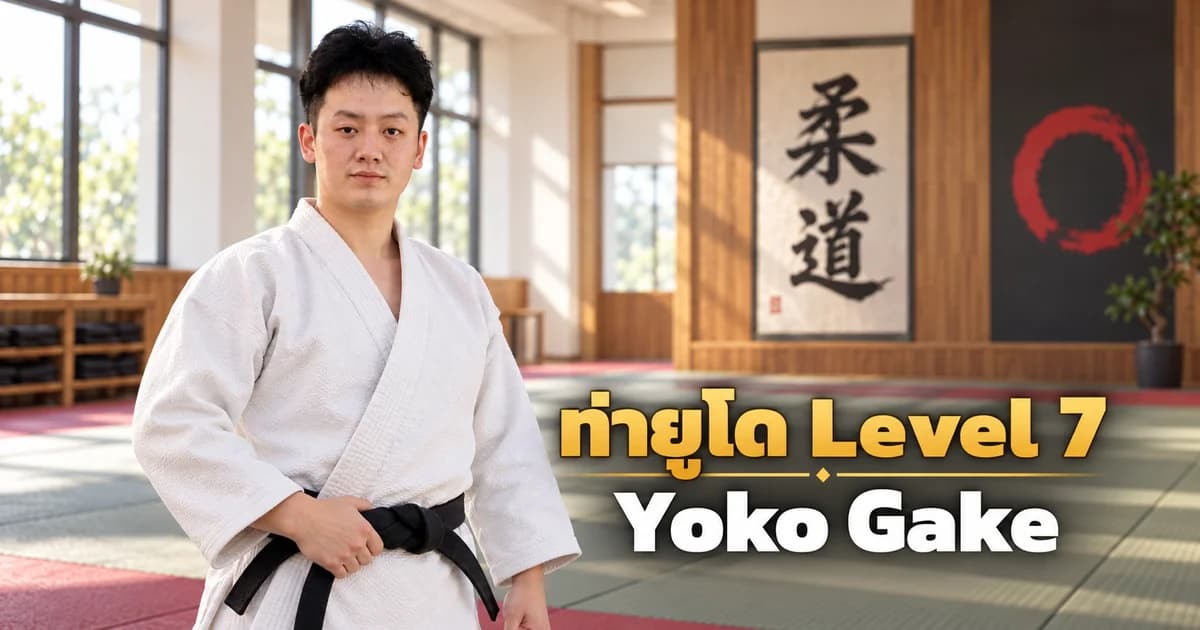
Compiled by Phoenix — Co-founder of IMAC Dojo
 Thaninpong Supapitakpong (Phoenix)Co-founder of IMAC Dojo
Updated 29 Sept 2026
- Author
- Thaninpong Supapitakpong (Phoenix)
- Published
- Last updated
- Sources
- 1
- Reading time
- 2 min
Short Answer
Yoko Gake is a side sacrifice related to imbalance toward the outer edge of the foot. Do not read it as an ankle kick alone.
Key Takeaways
- Observe weight near the foot’s outer edge.
- Relate foot contact to torso direction.
- Watch descent with hand guidance.
Watch weight on the partner’s foot before contact, then follow both bodies.
In this article
What the name tells us
横掛, yoko-gake, combines side and hooking and belongs to side sacrifices.
How the technique works
Upper-body control, foot action and sideways descent work together. Watching only the feet misses the reason for imbalance.
Yoko-gake takes uke towards the little-toe side of the foot and acts at the outer ankle during a side sacrifice in Kodokan's definition. Read the torso losing support with the low contact, not as an isolated ankle kick.
What to watch in the clips
- Observe weight near the foot’s outer edge.
- Relate foot contact to torso direction.
- Watch descent with hand guidance.
A distinction worth noticing
Ko Soto Gake is a foot technique; sacrifice is central to Yoko Gake. Shared gake does not make them interchangeable.
Ko-soto-gake may also act outside the leg, but yoko-gake includes sideways sacrifice. Against yoko-otoshi, inspect the outer-ankle action. Begin the comparison before either partner reaches the mat.
Taking the lesson back to practice
Do not kick the ankle or pull down an unprepared partner. An instructor must check knee alignment and receiving; practise slowly before linking descent.
The Level here refers to the IMAC Dojo curriculum. Use the article and clips to prepare questions and review them with your instructor. Practical training needs a suitable partner, space and controlled conditions.
Watch while uke is still standing and ask where the imbalance opens a landing path. Do not test by sweeping a stable standing partner's ankle. Receiving and support must be learned together.
Connect this with your next lesson
Yoko Gake — Video lesson 1
An IMAC Dojo clip accompanying Yoko Gake. Use the observations and distinctions in this article to guide your viewing.
Video published
Sources and further reading
- 横掛 — 講道館 柔道 技名称一覧 — 講道館ReferenceAccessed 29 Sept 2026
Frequently Asked Questions
Are the feet alone enough to watch?
No. Include the upper body and sacrifice direction.
How is it different from Ko Soto Gake?
Compare foot-technique and side-sacrifice mechanisms.
Why watch the edge of support?
To see imbalance before contact rather than assume kicking alone causes the throw.
Ready to start martial arts?
Message IMAC Dojo to ask which course fits your age, goals, and training background.
Ask on LINE OfficialRelated Articles
Related Topics and Courses
Judo Thailand