
IMAC Dojo Judo Curriculum · Level 3
Judo Level 3: Ude Hishigi Ude Gatame — Distinguish arm control from the crosswise hold
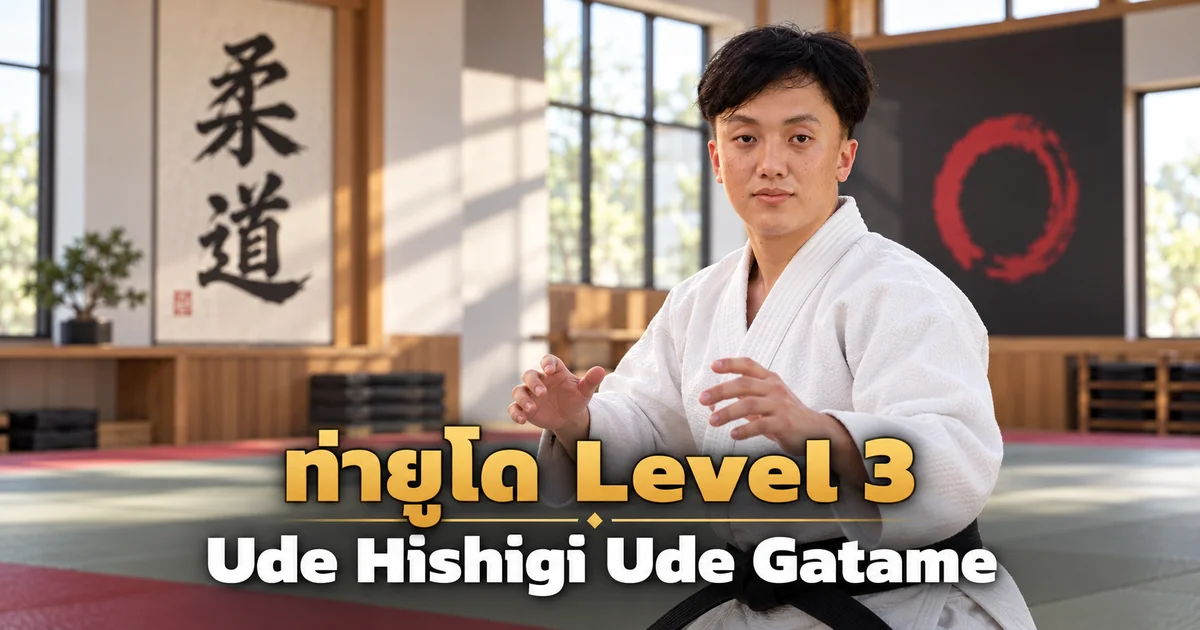
Ude Hishigi Ude Gatame uses the shoulder region and arms to control the partner’s arm. Its structure differs from Juji Gatame’s crosswise body-and-leg arrangement. Watch the wrist’s relationship to the body.
Compiled by Phoenix — Co-founder of IMAC Dojo
 Thaninpong Supapitakpong (Phoenix)Co-founder of IMAC Dojo
Updated 29 Sept 2026
- Author
- Thaninpong Supapitakpong (Phoenix)
- Published
- Last updated
- Sources
- 1
- Reading time
- 2 min
Short Answer
Ude Hishigi Ude Gatame uses the shoulder region and arms to control the partner’s arm. Its structure differs from Juji Gatame’s crosswise body-and-leg arrangement. Watch the wrist’s relationship to the body.
Key Takeaways
- Compare the partner’s wrist with the practitioner’s shoulder region.
- Trace where both hands control instead of guessing from similar names.
- Observe immediate stopping and release on signal.
The repeated ude can make the name easy to confuse. Use visible landmarks: where is the practitioner’s shoulder, and how do both hands relate to the partner’s arm?
In this article
What the name tells us
腕挫腕固, ude-hishigi-ude-gatame, is a joint technique, often shortened here to Ude Gatame. The full name helps distinguish it from Ude Garami.
How the technique works
Kodokan describes the practitioner’s neck-and-shoulder region controlling the partner’s wrist, with the hands controlling around the elbow. Observe the connection between these points rather than testing joint pressure from a video.
Ude-hishigi-ude-gatame uses different body parts to retain the wrist and control the elbow line. Kodokan places the wrist near tori's neck and shoulder while the hands control the arm. Watch the entire arm alignment rather than the apparent strength of downward hand pressure.
What to watch in the clips
- Compare the partner’s wrist with the practitioner’s shoulder region.
- Trace where both hands control instead of guessing from similar names.
- Observe immediate stopping and release on signal.
A distinction worth noticing
Ude Garami interlocks the arms, while Juji Gatame involves a different leg structure. This is not merely a new label for any captured arm. Losing wrist position and pressing harder is a reason to stop for an instructor’s check.
It differs from ude-garami's wrapped arm and self-wrist grip, and from juji-gatame's thigh control. Identifying what retains the arm lets you read a clip without increasing pressure to discover which lock is working.
Taking the lesson back to practice
Review placement without joint pressure. Have an instructor check distance and arm alignment, agree on a stop signal and release immediately. A partner’s pain is not a measure of correct technique.
The Level here refers to the IMAC Dojo curriculum. Use the article and clips to prepare questions and review them with your instructor. Practical training needs a suitable partner, space and controlled conditions.
Ask how the wrist remains at the shoulder and whether uke can still move that shoulder before extension. Check through light positioning with supervision, not by applying a sudden elbow press to compensate for a gap.
Connect this with your next lesson
Ude Hishigi Ude Gatame — Video lesson 1
An IMAC Dojo clip accompanying Ude Hishigi Ude Gatame. Use the observations and distinctions in this article to guide your viewing.
Video published
Sources and further reading
- 腕挫腕固 — 講道館 柔道 技名称一覧 — 講道館ReferenceAccessed 29 Sept 2026
Frequently Asked Questions
Is Ude Gatame different from Ude Garami?
Yes. Ude Garami interlocks the arms; this technique uses the shoulder region to help control the wrist with a different hand arrangement.
Should I watch the legs as in Juji Gatame?
The distinguishing points here are wrist, shoulder region and hands, rather than Juji Gatame’s thigh control of the upper arm.
Should I press harder if the wrist moves out of position?
No. Stop and reset with your instructor rather than compensate for lost control with pressure.
Ready to start martial arts?
Message IMAC Dojo to ask which course fits your age, goals, and training background.
Ask on LINE OfficialRelated Articles
Related Topics and Courses
Judo Thailand