
IMAC Dojo Judo Curriculum · Level 1–2
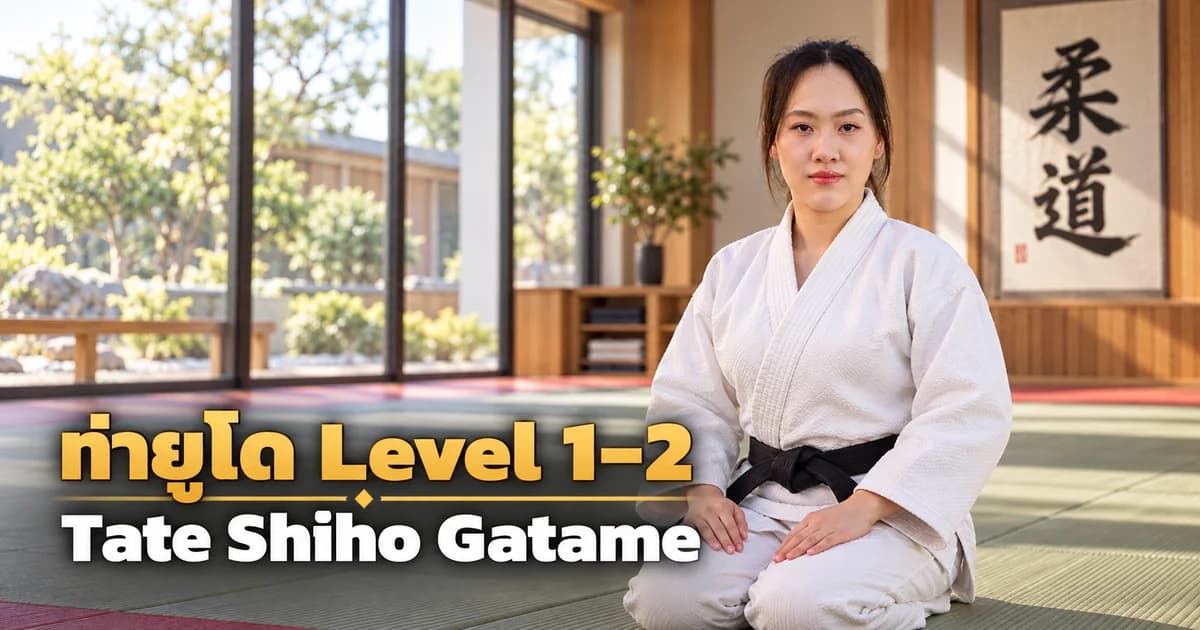
Judo Level 1–2: Tate Shiho Gatame — Maintain lengthwise control while adapting
Tate Shiho Gatame aligns the holder along the partner’s body. Arm-and-neck-region control works with the legs controlling the lower body, so look beyond simply being astride someone.
Compiled by Phoenix — Co-founder of IMAC Dojo
 Thaninpong Supapitakpong (Phoenix)Co-founder of IMAC Dojo
Updated 29 Sept 2026
- Author
- Thaninpong Supapitakpong (Phoenix)
- Published
- Last updated
- Sources
- 1
- Reading time
- 2 min
Short Answer
Tate Shiho Gatame aligns the holder along the partner’s body. Arm-and-neck-region control works with the legs controlling the lower body, so look beyond simply being astride someone.
Key Takeaways
- Compare the lengthwise alignment of both bodies.
- Follow how the controlled arm contributes to upper-body control.
- Watch legs and torso adjust together when the partner moves.
The clip collection places this technique in Levels 1 and 2, gathered here. Partner movement is a useful moment to observe whether upper- and lower-body control remain connected.
In this article
What the name tells us
縦四方固, tate-shiho-gatame, is a holding technique. Tate suggests a vertical or lengthwise orientation, compared here with yoko, meaning side.
How the technique works
Kodokan describes facing a supine partner, using the arms to control one arm and the neck region, the legs to control the lower body, and chest and abdomen against the upper body. Observe the relationship among these areas.
Tate-shiho-gatame aligns tori along uke, but being on top does not alone establish control. Kodokan combines upper-body arm-and-neck control, the legs enclosing the lower body, and chest-and-abdomen contact. Observe whether upper and lower control remain connected when uke moves.
What to watch in the clips
- Compare the lengthwise alignment of both bodies.
- Follow how the controlled arm contributes to upper-body control.
- Watch legs and torso adjust together when the partner moves.
A distinction worth noticing
Sitting astride alone does not fully describe Tate Shiho Gatame. If upper control slips while the legs remain rigid, the base may fail to adapt. Do not replace alignment and distance adjustment with neck squeezing.
Compared with yoko-shiho-gatame, the change is more than rotating the lying position. Tori's base and the direction of uke's attempted turn now relate differently. Read the arms and legs in this specific hold rather than transferring every instruction from side control.
Taking the lesson back to practice
Review positioning and control with an instructor before increasing pressure, then add small agreed movements. Reset when the base is lost; forcing an unchanged pose through every angle is not the learning goal.
The Level here refers to the IMAC Dojo curriculum. Use the article and clips to prepare questions and review them with your instructor. Practical training needs a suitable partner, space and controlled conditions.
Watch when tori's chest moves away from uke and how that changes control. Discuss it with your instructor during slow practice to distinguish balance from arm tension. The article serves two curriculum levels while describing the same technique.
Connect this with your next lesson
Tate Shiho Gatame — Video lesson 1
An IMAC Dojo clip accompanying Tate Shiho Gatame. Use the observations and distinctions in this article to guide your viewing.
Video published
Tate Shiho Gatame — Video lesson 2
An IMAC Dojo clip accompanying Tate Shiho Gatame. Use the observations and distinctions in this article to guide your viewing.
Video published
Sources and further reading
- 縦四方固 — 講道館 柔道 技名称一覧 — 講道館ReferenceAccessed 29 Sept 2026
Frequently Asked Questions
Is Tate Shiho Gatame simply a mounted position?
Being astride is only part of the picture. The technique also includes specific upper- and lower-body control.
Why are there clips from two Levels?
The clip collection repeats the name in curriculum Levels 1 and 2, so their clips are gathered for comparison.
What should I watch when the receiver moves?
Check whether arm, torso and leg control adapt together rather than only whether the holder stays on top.
Ready to start martial arts?
Message IMAC Dojo to ask which course fits your age, goals, and training background.
Ask on LINE OfficialRelated Articles
Related Topics and Courses
Judo Thailand