What Is Hapkido? A Korean Martial Art's Journey to Thailand
The founder of IMAC Dojo draws on his own nunchaku training and his family's Hapkido black belts to explain what Hapkido is, where it came from, the associations in Thailand, its four technical areas, its belt system and how it differs from Aikido, with a video of Michelle.
By
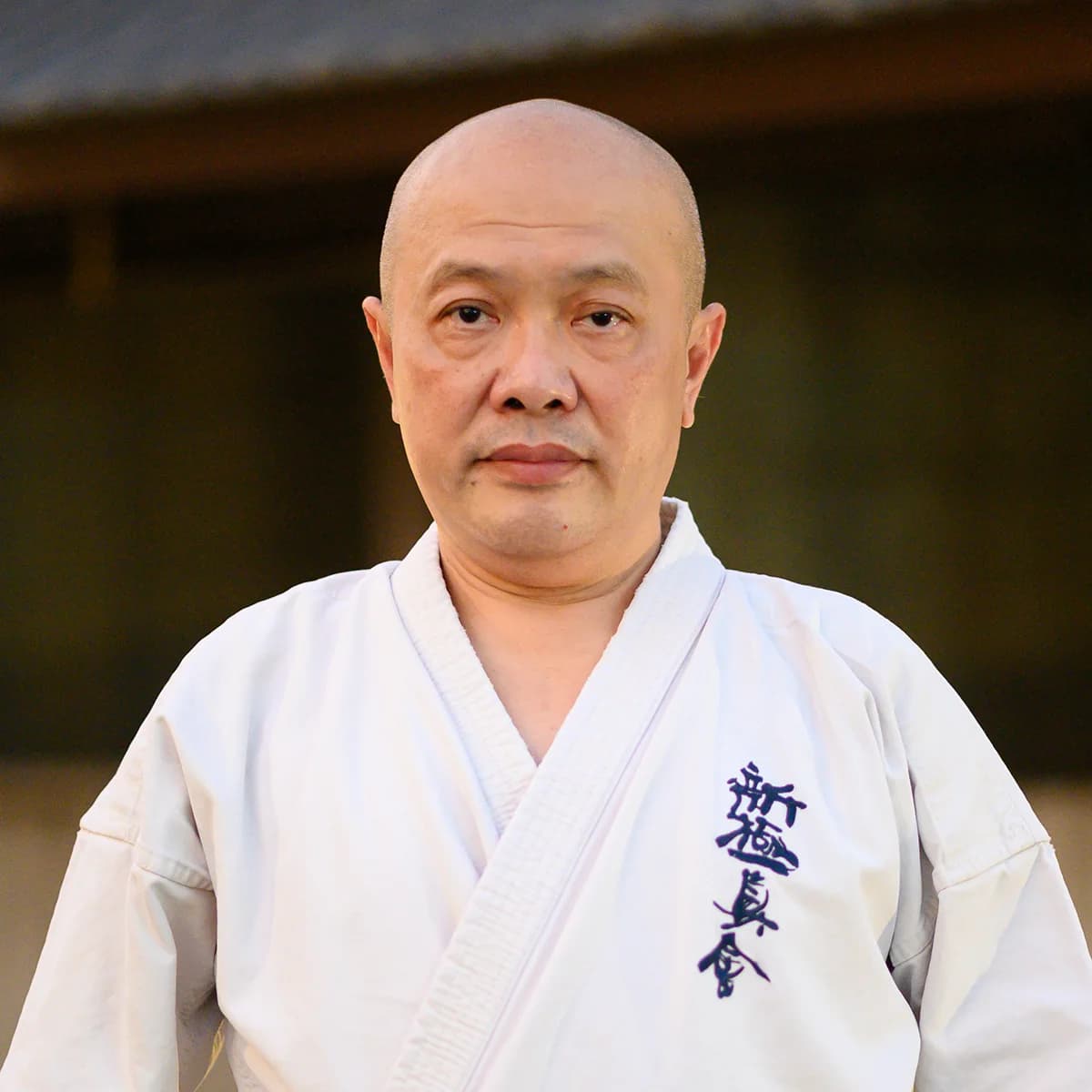
- Author
- Thaninpong Supapitakpong (Phoenix)
- Published
- Last updated
- Sources
- 9
- Reading time
- 11 min
Short Answer
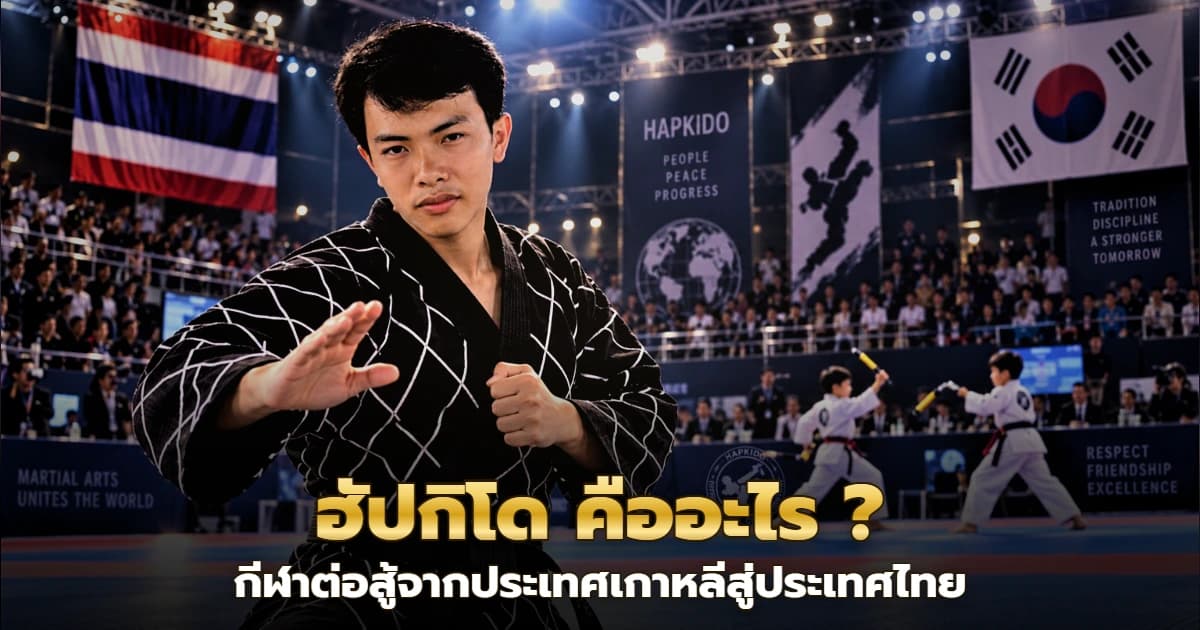
Hapkido (합기도, written 合氣道) is a South Korean martial art that puts joint locks, throws, kicks and strikes, and weapons into one system. Its joint-locking core comes from Japan's 大東流合気柔術 (Daito-ryu Aiki-jujutsu), which Choi Yong-sul brought back and taught in Daegu after 1945. Its defining trait is turning an opponent's force into control instead of meeting force with force. Thailand has several associations, among them the Thailand Hapkido Association, a member of the International Hapkido Federation (I.H.F.), and Thailand hosted the I.H.F. world championships in 2024.
Key Takeaways
- The name 합기도 is written 合氣道 and is usually translated as the way of coordinated energy (hap 合 coordination, gi 氣 energy, do 道 way).
- Its joint locks and throws come from Daito-ryu Aiki-jujutsu, which Choi Yong-sul taught in Korea after 1945; the name Hapkido came into use in 1961.
- The curriculum has four areas: strikes, joint locks, throws with breakfalls (낙법), and weapons.
- Thailand has several associations, each tied to a different Korean organisation and each with its own belt system.
- I.H.F. competitions include sparring, empty-hand forms, weapon forms and hoshinsul (self-defence).
- Hapkido and Aikido share the same characters and a common root, but mainstream Aikido holds no competitions, while Hapkido uses far more kicks, strikes and weapons.
Years ago I saw a Facebook ad for nunchaku classes near Pak Kret and took my son to try one, with no idea that I was touching the edge of a much larger discipline. What is Hapkido, exactly? I only understood it clearly as my black belt test approached, when I realised that what I had learned for years was a small part of an art that spans throws, joint locks and weapons. In this article I write as someone who trained himself and sent his family to train, and I have checked the facts about the Hapkido world against the sources listed at the end.
In this article
What Is Hapkido, in Terms of Etymology and Philosophy
When I started learning nunchaku with Khru Hop at Central Ramindra, I did not even know that what I was learning was part of Hapkido. I only found out as my black belt test approached. Looking back into it, I learned that the name 합기도 (Hapkido) is written with the Chinese characters 合氣道, usually translated as 합 (合, hap), coordination or harmony; 기 (氣, gi), energy or breath; and 도 (道, do), the way. Together they describe a philosophy that avoids meeting force with force and instead turns the opponent's own force into a tool for controlling the situation.
Historically, the Encyclopedia of Korean Culture records that after Korea's liberation in 1945, Choi Yong-sul (최용술) returned from Japan and opened a training hall in Daegu. His teacher is known to have been Takeda Sokaku (武田惣角) of Daito-ryu Aiki-jujutsu (大東流合気柔術). At first Choi called what he taught yawara (柔) or hapki-yusul (合氣柔術); the name Hapkido came into use when his students opened training halls under it in 1961. The Korean kicks and strikes seen in Hapkido today were added by later students. Some lines trace them to taekkyeon (택견), others to different sources, and the question is still disputed. That is why Hapkido carries Japanese-style joint locks and Korean-style kicks in one art.
The Path of Hapkido: From Korea to Thailand
In Korea itself, Hapkido split into several organisations from the 1970s, such as the Korea Hapkido Association (대한합기도협회), founded in 1971, and the International Hapkido Federation (I.H.F.), founded by Grand Master Myung Jae-nam (명재남) in August 1974. He later created Hankido in 1984, and the same organisation also teaches the sword art Hankumdo. Its headquarters moved to Yongin in 1993, and since 2001 its black belts have counted for bonus points in Korean police recruitment. Today Myung Sung-kwang (명성광) is the federation's president. With so many organisations, technique names, syllabi and belt systems do not match exactly from one line to the next.
In my own family, Hapkido has always gone hand in hand with Taekwondo: my wife and Ken both hold black belts in the two arts. Taekwondo gives fast, powerful kicks, while Hapkido fills what competition Taekwondo does not stress: escaping grabs, joint locks, breakfalls and dealing with weapons at close range. Today Hapkido in Thailand is a full competitive sport. Thailand hosted the WORLD I.H.F. HAPKIDO CHAMPIONSHIPS 2024 at the Nonthaburi Provincial Administrative Organisation stadium on 3-4 August 2024, with athletes from 12 countries competing for a royal trophy bestowed by Her Royal Highness Princess Maha Chakri Sirindhorn, and the Director-General of the Department of Physical Education opened the event. The association's calendar also lists provincial, regional and inter-school competitions, so Hapkido is no longer the supplementary art I knew in the past.
Governing Organisations and Main Associations in Thailand
Thailand does not have a single Hapkido association, and each one is tied to a different Korean line. From the associations' own documents, I could confirm the following. The Thailand Hapkido Association (THA) describes itself as a member of the International Hapkido Federation (I.H.F.), handled registration and published the outline for the 2024 world championships, and runs both a colour-belt promotion syllabus and a black belt preparation camp. The Hapkido Martial Arts Association organises youth Hapkido championships. The Moo Moo Kwan line (무무관) has its parent association in Korea, and Moo Moo Kwan Hapkido (Thailand) publishes its own syllabus and belt system.
From what I have seen of this scene, having several associations at once spreads training opportunities across more areas, but it also means belt names and tests differ by affiliation. If you are choosing where to train, the first question to ask is which association the instructor belongs to, and which organisation will issue your black belt.
The Four Pillars of Hapkido Technique
The Hapkido curriculum really does cover fighting at every range. The Thailand Hapkido Association's website divides it into striking vital points, joint locking and controlling an opponent empty-handed, and weapons, while many lines list throws and breakfalls as a separate area, making four in all: strikes with fists, elbows, knees and feet; joint locks and breaks; throws with breakfalls (낙법, nakbeop), which the Standard Korean Language Dictionary defines as techniques for protecting the body safely when falling; and weapons, including the short stick, cane, long staff, sword and the nunchaku I trained in directly. The breakfall principle is the same one behind ukemi (受身) in judo.
I will admit plainly that joint locks and close-range throws were never my strength or my preference. By temperament I prefer direct fighting like karate or Chinese boxing. But I cannot deny how useful these techniques are for real self-defence, especially when a larger opponent grabs you at a range where punches and kicks have no room to work. So I sent my wife and children to train seriously in Hapkido. Today our family has three instructors who hold Hapkido black belts: Patty, 2nd Dan; Ken, 2nd Dan; and Michelle, 1st Dan, who also holds a 1st Dan in nunchaku. Some of my students have also taken nunchaku to competition and won gold medals. What I saw clearly is that breakfalls are an essential foundation: if you cannot fall safely, practising advanced throws becomes a risk rather than a skill you are building.
For weapons, the video at the end of this article is an example: Michelle competing with a nunchaku form combined with the Shaolin long staff at the 2020 Thailand Hapkido Championship. The I.H.F. rules allow both the long staff and nunchaku in the weapon forms category.
The Belt Rank System and Black Belt Testing in Thailand
Hapkido divides ranks into two groups: geup (급), the colour belts for foundation-level practitioners, and dan (단), the black belts for advanced levels. Beginners wear a white belt and always start with body discipline, etiquette and breakfalls. But the number of ranks and the belt colours are not a single standard; each association sets its own. One clearly published example is the belt system of Moo Moo Kwan Hapkido (Thailand), shown in this table.
| Rank | Belt |
|---|---|
| Beginner | White |
| 8th geup | Yellow |
| 7th geup | Green |
| 6th geup | Light blue |
| 5th geup | Brown |
| 4th geup | Purple |
| 3rd geup | Orange |
| 2nd geup | Red |
| 1st geup | Red-black |
| 1st-9th dan | Black |
The point I want to stress is that a Hapkido black belt is not something a training hall can simply hand out on its own; you must pass through the association you belong to. The Moo Moo Kwan line states that its black belts are certified by the Moo Moo Kwan headquarters and the I.H.F., and that only black belt holders may sit the instructor licence exam, while the Thailand Hapkido Association runs a black belt preparation camp before its tests. That rigour is something parents can use to check a training hall.
How Does Hapkido Differ from Aikido? The Question People Confuse Most Often
I was once confused about this myself, because Hapkido is written 合氣道, the same characters as Aikido (modern Japanese writes 氣 in its simplified form 気, so you see 合気道). Read in Japanese it is Aikido; read in Korean it is Hapkido. The two share a root in Daito-ryu Aiki-jujutsu, since Morihei Ueshiba, Aikido's founder, also sought instruction from Takeda Sokaku. But when I studied Aikido for a while, I found the balance of techniques very different. Aikido centres on throws and joint locks that flow with the opponent's force, while Hapkido clearly adds far more kicks, strikes and weapons.
The table below summarises the differences I have seen in practice and in each side's own documents.
| Aspect | Hapkido | Aikido |
|---|---|---|
| Origin | South Korea, after 1945, from Daito-ryu Aiki-jujutsu with Korean kicks and strikes added | Japan; Morihei Ueshiba developed it from Daito-ryu Aiki-jujutsu |
| Kicks | Many, a core part of the syllabus | Very few |
| Weapons | Short stick, cane, long staff, sword and nunchaku | Many dojos train the wooden sword (bokken), staff (jo) and wooden knife (tanto) |
| Competition | Sparring, empty-hand forms, weapon forms and hoshinsul | The Aikikai holds no win-or-lose competitions, but the Tomiki line holds randori competitions |
I went on to study Aikido for a while because I wanted to see the source for myself, and found that the two arts complement each other very well. If anyone asks me how Hapkido and Aikido differ, my short answer is: the same skeleton, but completely different muscles around it. For the wider picture of Japanese budo, read What are the Japanese martial arts.
Is Hapkido Good for Children? A Father's Perspective
Having actually sent my children to learn Hapkido, I see it as an art well suited to children for building discipline and defensive rather than offensive self-defence skills. The principle of using an opponent's force helps a small child deal with someone bigger without relying on strength alone, and a correctly learned breakfall is a skill they can carry with them when they slip and fall in everyday life.
That said, I want to warn parents looking for a place for their child to learn Hapkido: choose a training hall whose instructors clearly belong to an association and whose belt system can be verified, not just one with polished advertising. Children who start young gain discipline in waiting their turn, respect for their instructor and training partners, and breakfall skills that stay with them for life. What I noticed in my own children is that Hapkido did not make them more aggressive at all. On the contrary, they became more patient and better at reading a situation before reacting, which I see as the result of a philosophy that always teaches you to think before using force.
For parents still unsure which martial art their child should start with, I will say plainly that there is no single right answer for everyone. Some children suit direct striking arts like karate; others are better at controlling an opponent the way Hapkido does. What matters is getting the right fundamentals first, whatever the art, because a solid foundation makes it easier to go on to other arts later. If you are comparing arts for your child, read Karate or Taekwondo: which should a child learn.
Conclusion
Looking back on my own path, from the first day I took my son to try nunchaku near Pak Kret to the day I understood the full picture of Hapkido, I see this art's charm in the fact that it does not force everyone to become the strongest fighter in the room. It teaches you to turn the force of a situation to your advantage, whether you are a small child facing a bigger classmate or a working adult who wants self-defence skills to carry through life. Hapkido in Thailand today has associations behind it, a clear belt system, and Thailand has already hosted a world championship. If you are looking for a martial art that values control over collision, I think Hapkido is well worth studying seriously.
Michelle's nunchaku and Shaolin long-staff form at the 2020 Thailand Hapkido Championship
Michelle (Pimnapat Supapitakpong) competing with a weapon form that combines nunchaku and the Shaolin long staff at the 2020 Thailand Hapkido Championship, Fashion Island shopping centre, Bangkok, on 6 December 2020.
Video published
Sources and further reading
- Hapkido (합기도) - Encyclopedia of Korean Culture — Academy of Korean StudiesReferenceAccessed 27 Sept 2026
- History of the International Hapkido Federation (I.H.F.) - Jaenam Musulwon — International H.K.D. Federation / Jaenam MusulwonReferenceAccessed 27 Sept 2026
- Thailand Hapkido Association - member of the I.H.F. — Thailand Hapkido AssociationReferenceAccessed 27 Sept 2026
- Khaosod: WORLD I.H.F. HAPKIDO CHAMPIONSHIPS 2024 in Nonthaburi — KhaosodReferenceAccessed 27 Sept 2026
- Moo Moo Kwan Hapkido (Thailand): syllabus and belt rank — Thailand Moo Moo Kwan HapkidoReferenceAccessed 27 Sept 2026
- 낙법 (nakbeop) - Standard Korean Language Dictionary — National Institute of Korean LanguageReferenceAccessed 27 Sept 2026
- History of Aikido - Aikikai Foundation — Aikikai FoundationReferenceAccessed 27 Sept 2026
- About Aikido - Aikikai Foundation — Aikikai FoundationReferenceAccessed 27 Sept 2026
- Rules for randori competition - Japan Aikido Association — Japan Aikido AssociationReferenceAccessed 27 Sept 2026
Frequently Asked Questions
What is Hapkido, and how does it differ from karate?
Hapkido focuses on turning an opponent's force into joint locks and throws, alongside kicks and weapons, while karate focuses on direct striking with fists and feet. The two arts therefore suit people with different fighting temperaments.
At what age can children start learning Hapkido?
There is no common age rule shared by every association; each training hall sets its own. More important than age is whether the hall teaches breakfalls and discipline before moving on to throws.
Do Hapkido and Aikido really use the same Chinese characters?
Yes. Hapkido is written 合氣道, the same characters as Aikido, which modern Japanese writes as 合気道. Read in Korean it is Hapkido, in Japanese Aikido. The two share a root in Daito-ryu Aiki-jujutsu, but they are separate arts with a very different balance of techniques.
Which organisation must one go through to test for a Hapkido black belt in Thailand?
You test through the association your instructor belongs to, such as the Thailand Hapkido Association, a member of the I.H.F., or the Moo Moo Kwan line, whose black belts are certified by its headquarters in Korea. Each has its own belt system and tests, so ask before enrolling which organisation will issue your black belt.
Is Hapkido suitable for adults who have never trained in a martial art before?
To a degree, yes, because the principle of using an opponent's force does not rely on strength alone. Beginners should still choose a training hall that stresses breakfalls and safety before moving on to advanced throws.
What role has Thailand played on the world Hapkido stage?
Thailand hosted the WORLD I.H.F. HAPKIDO CHAMPIONSHIPS 2024 at the Nonthaburi Provincial Administrative Organisation stadium on 3-4 August 2024, with athletes from 12 countries, and Thai youth athletes won gold, silver and bronze medals at the event.
Ready to start martial arts?
Message IMAC Dojo to ask which course fits your age, goals, and training background.
Ask on LINE Official