
Ten Tigers No. 2: Wong Ching-ho (黄澄可) and the "Nine Dragon Fist": Real Man or Screen Character?
Wong Ching-ho is the second of the Ten Tigers of Canton. Search for his name on Chinese websites and you will find a detailed biography, complete with a ten-move Nine Dragon Fist. But when I traced the sources, the oldest appearance of the name is in a novelist's list, and the Nine Dragon Fist comes from a 1999 ATV television series. This article shows where each claim comes from.
- Author
- Thaninpong Supapitakpong (Phoenix)
- Published
- Last updated
- Sources
- 30
- Reading time
- 20 min
Some drafts are prepared with the help of AI writing tools. The named author reads and edits every article and decides what is published. Editorial policy
Short Answer
Wong Ching-ho (黄澄可, Mandarin Huang Chengke) is No. 2 on the list of the Ten Tigers of Canton, but no Qing-era evidence that mentions his name has yet been found. Chinese Wikipedia says his art and his years of birth and death are unknown. The oldest appearance of the name is in the list of the Ten Tigers written by the Hong Kong novelist with the pen name 我是山人. The Nine Dragon Fist (九龙拳) and the ten moves that Chinese websites describe come from the 1999 ATV television series in which Wong Ching-ho is the lead character.
Key Takeaways
- Wong Ching-ho is No. 2 both on the list by the novelist 我是山人 and on the most widely used list.
- No Qing-era evidence that mentions Wong Ching-ho has yet been found. Chinese Wikipedia says his art and his years of birth and death are unknown.
- The Nine Dragon Fist and its ten moves come from the 1999 ATV series. The clan-history website that tells the story itself writes that only seven of the moves appear in the series.
- There are three claimed birthplaces: Sanshui, Jiulong town in Yingde, and a village in the series. None of them has an original source.
- No school today has been found that claims a lineage from Wong Ching-ho.
Search for Wong Ching-ho on Chinese-language websites and you will find a biography that looks complete: a barefoot country boy goes to the city, studies with three famous teachers, and then creates the Nine Dragon Fist himself, with ten moves. It reads in every way like the life of a real person.
But when I traced the claims one by one, I found that almost all of them lead back to a single television series. As for the name Wong Ching-ho itself, the oldest appearance I can trace is in a novelist's list. So Wong Ching-ho is the second tiger in the [Ten Tigers of Canton](/en/blog/ten-tigers-kungfu) series, and one of the five not yet found outside fiction and drama.
So in this article I do not retell the biography copied from a script. Instead I show where each claim comes from, what the real dragon styles of Guangdong are like, and how a character could turn into "history" on the web. For names I use the Cantonese romanisation best known in English, with the Chinese characters at first mention, and pinyin where no Cantonese form is established in English.
In this article
Wong Ching-ho: quick facts
| Topic | Details |
|---|---|
| Name | 黄澄可: Mandarin Huang Chengke, Cantonese Wong Ching-ho |
| Place among the Ten Tigers | No. 2, both on the list by the novelist 我是山人 and on the most widely used list |
| Birth and death | No source gives them |
| Art attributed to him | The Nine Dragon Fist (九龙拳, Jiulong Quan), from the 1999 ATV series. Chinese Wikipedia says his real art is unknown |
| Claimed birthplace | Sanshui (三水), Jiulong town in Yingde (英德), or a village in the series. No original source |
| Claimed teachers | Luk Ah-choi (陆阿采), Wong Kei-ying (黄麒英) and Iron Bridge Three (铁桥三). No evidence |
| Earliest appearance of the name found | The Ten Tigers list by the novelist 我是山人 (陈劲, 1916–1974) |
| On screen | The 1979 Shaw Brothers film · the 1999 ATV series, in which he is the lead character |
| School that carries on his line | None found |
| Level of evidence | Not yet found outside novels, drama and websites that copy one another |
Who was Wong Ching-ho: the name, the place in the list, and what the search turns up
Wong Ching-ho (黄澄可) is read Huang Chengke in Mandarin. The character 澄 means clear or still, and 可 means "can" or "may". I have not found any source that explains where the name comes from, and you need to be careful when searching, because some question-and-answer sites miswrite the name as 黄橙可, where 橙 means orange.
Why he is the second tiger
Wong Ching-ho is No. 2 on the oldest list that can be traced, the one the writer with the pen name 我是山人 included in the preface to his novel《武坛二虎》, which was quoted in a Chinese question-and-answer thread in 2007. He is also No. 2 on the most widely used list. This matters, because it means the name Wong Ching-ho existed before the 1999 television series, but it is still a name from a novel.
I tell the story of the different versions of the list in detail in the main article, Who Were the Ten Tigers of Canton? No. 2 is only his place in the list, not a ranking of skill.
What the encyclopedia says plainly
Chinese Wikipedia has a table of the Ten Tigers giving each man's birthplace, art and years. In Wong Ching-ho's row, the art column reads unknown, with a note that the Nine Dragon Fist was invented by the ATV series and is not real history, and the years column also reads unknown. Apart from that, the row gives just a birthplace, Sanshui, with no footnote to say where it comes from.
English Wikipedia is briefer: Wong Ching-ho was a student of Luk Ah-choi (陆阿采), and in fiction he is portrayed as using the Nine Dragon Fist. The sentence about Luk Ah-choi has no footnote of its own, so it remains a single-source claim.
The biography Chinese websites tell, and the traces that it comes from TV
From barefoot country boy to Guangzhou
The biography that Chinese websites copy from one another most often is on the clan-history website 族谱网. It says that Wong Ching-ho was good-natured, generous, clever and fond of helping others; that he began as a barefoot country boy who left home for the provincial capital, received guidance from Luk Ah-choi, Wong Kei-ying and Iron Bridge Three, came through many fights to the death, and then created the Nine Dragon Fist himself, and that when the country was in danger he joined the other tigers in giving his blood and flesh.
This story contains no place name that can be checked, no year, no name of a school, and no event with a record. Set beside someone with evidence, such as Wong Kei-ying, whose year of death the Foshan Museum records, Wong Ching-ho's biography is only a character's personality.
The three teachers he is credited with
The three teachers in the story are names known in the Hung Kuen (洪拳) line: Luk Ah-choi (陆阿采), Wong Kei-ying's teacher according to legend; Wong Kei-ying, father of Wong Fei-hung (黄飞鸿); and Iron Bridge Three (铁桥三, Cantonese Tit Kiu Sam), or Leung Kwan (梁坤). But no record says that any of them had a student called Wong Ching-ho.
It is worth noting that in the 1999 ATV series Wong Kei-ying is Wong Ching-ho's teacher. A set of stills from the series on a Chinese news site in 2020 is even titled "英雄广东十虎,黄澄可师傅黄麒英", meaning Wong Kei-ying, Wong Ching-ho's teacher in the series. The teacher-and-student relationship in the web biography therefore matches the relationship in the series.
The trace that slipped through
The clearest evidence that this biography comes from the series is on that same 族谱网 page. In the middle of the biography is an inserted heading, "影视作品中的黄澄可", meaning "Wong Ching-ho in film and television", which shows the text was copied from a page describing the character. And in the section on the Nine Dragon Fist, the same page itself says that the fist has ten moves, but unfortunately only seven of them appear in the television series.
A website that calls itself a clan register (族谱) does not cite any clan register at all. The sentence about seven moves in the series makes it plain that the writer was describing what appeared on a television screen. So I class this biography as a story from the series, not history.
Three birthplaces: Sanshui, Yingde, or a village in the series
Wong Ching-ho has at least three birthplaces, and none of them says where it comes from.
| Place claimed | Who claims it | Status |
|---|---|---|
| Sanshui (三水) | The table on Chinese Wikipedia, and a list on a news aggregator site | No original source |
| Jinzao village (金造村), Jiulong town (九龙镇), Yingde (英德) | A single answer on a question-and-answer site in 2016 | Cannot be checked |
| Madong village (麻东村) | The 1999 ATV series | A setting in the series |
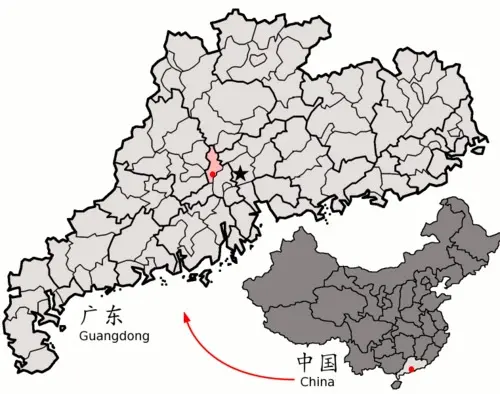
Sanshui, where three rivers meet
The claim that Wong Ching-ho came from Sanshui is found in the table on Chinese Wikipedia, which has no footnote, and in a list on a news aggregator site that writes "九龙拳-黄(广东三水)". But the same list gives So Chan's nickname as 吴状元 and writes Lai Yan-chiu's surname as 李 instead of 黎, so it cannot be used as evidence. I have not yet found Wong Ching-ho's name in Sanshui's local records.
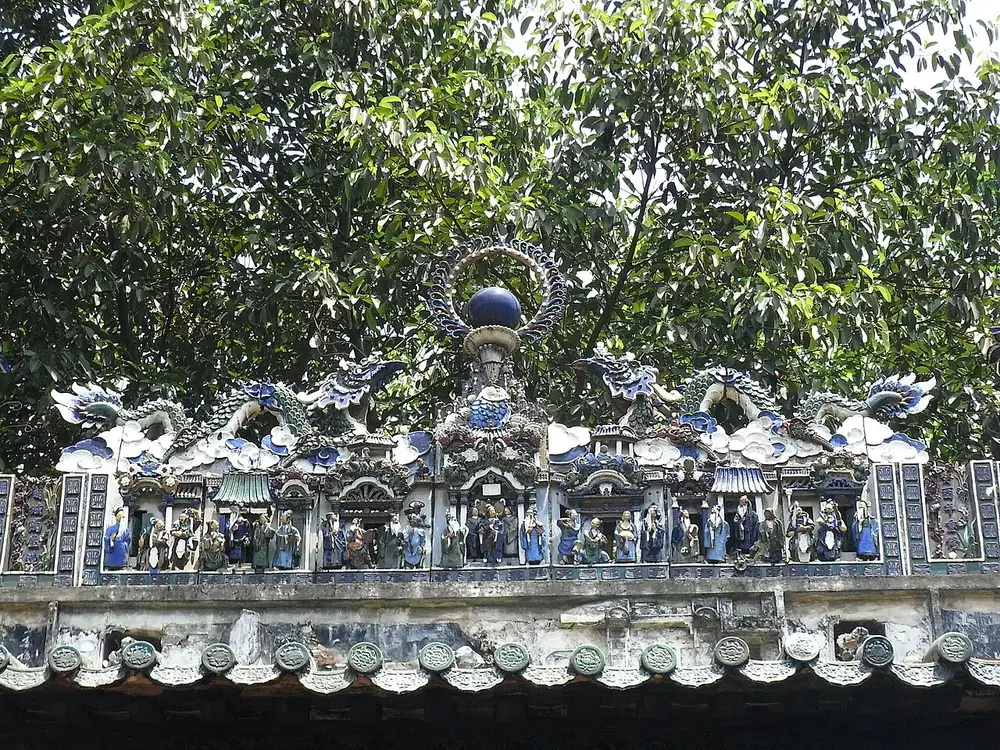
Sanshui itself has a clear history. Chinese Wikipedia records that Sanshui County was established on 10 June 1526, took its name from the Xi, Bei and Sui rivers, which meet within the county, and since 2003 has been a district of Foshan. If Wong Ching-ho was real and came from Sanshui, he was a Cantonese speaker from Guangdong, not a Teochew.
Jiulong town in Yingde: a name that matches the fist
The second version comes from a question-and-answer site. In 2009 someone asked whether Wong Ching-ho's Nine Dragon Fist still existed, and in 2016 someone answered that it still survives in Jinzao village, Jiulong town, Yingde, but is hard to learn, because it is not taught to people from other villages or of other surnames. The answer gives no teacher's name, picture or document.
Jiulong town (九龙镇) really is on the list of towns of Yingde city in Guangdong, but I have not found any information about a boxing style of that name there. I think it is probably a link drawn between the town's name, Jiulong ("Nine Dragons"), and the Nine Dragon Fist. That is my own observation, not a conclusion.
Madong village in the series
The third version comes straight from the series. Chinese Wikipedia summarises Wong Ching-ho's role in the 1999 ATV series as a villager from Madong village (麻东村), simple and honest by nature, who uses the Nine Dragon Fist and has a complicated relationship with two female characters. The village is a setting in the series.
Is the Nine Dragon Fist (九龙拳) real?
The explanation Chinese websites use is that the Nine Dragon Fist combines nine arts in one, and that when it strikes it is like nine dragons soaring into the sky (九龙冲天), changing without end. The 九龙 in the name of the fist therefore means nine dragons, and has nothing to do with Kowloon (九龙) in Hong Kong, which is written with the same characters.
The ten moves that are described
The same web page gives names for ten moves. I put them in a table to show what the website writes, not to suggest that this is a boxing manual.
| Move | Chinese name | In the series, according to the website |
|---|---|---|
| Swimming Dragon | 游龙势 | Appears |
| Spinning Dragon | 旋龙势 | Appears |
| Seizing the Dragon | 擒龙势 | Appears |
| Swaying Dragon | 摆龙势 | Appears |
| Sinking Dragon | 沉龙势 | Appears |
| Coiled Dragon | 盘龙势 | Appears |
| Parting Dragon | 分龙势 | Appears |
| Entwining Dragon | 缠龙势 | Does not appear |
| Flying Dragon | 飞龙势 | Does not appear |
| Nine Dragons | 九龙势 | Does not appear. Combines the strengths of the first nine moves |
The fact that the website divides the moves into "appears in the series" and "does not appear in the series" is in itself evidence that the whole list of moves is a description of the series, not of a boxing manual or the account of any boxing teacher.
Where the Nine Dragon Fist comes from
Chinese Wikipedia puts it most directly: the Nine Dragon Fist was invented by the ATV series and is not real history. As for lists that tie a signature art to each of the Ten Tigers one by one, such as "九龙拳 黄澄可", the oldest I have found is in an answer on a question-and-answer site in 2010, after the series had aired. The list from 我是山人's novel, as quoted, gives no art for any of the ten.
I do not yet know what art Wong Ching-ho uses in 我是山人's novel or in the 1979 Shaw Brothers film. If anyone finds that the Nine Dragon Fist appeared before 1999, this conclusion will have to change.
The Nine Dragon Fist of Zhejiang: same name, different story
While searching, I found another style called 九龙拳, but a long way from Guangdong. The 2009 intangible cultural heritage list of Kaihua County (开化) in Zhejiang Province records that Fulin village (富林村) has its own village boxing, including a Nine Dragon Fist known as "the fist within the fist" and a staff set called the Eight Immortals Crossing the Sea. The village nominated it itself. It has no connection with Wong Ching-ho. I mention it so that you know that if you meet this name in another source, it may be a different story.
The real dragon styles of Guangdong
If you want to know what a Cantonese style that really uses the image of the dragon looks like, there is a well-evidenced example: Dragon style (龙形拳, Mandarin Longxing Quan, Cantonese Lung Ying). China's Ministry of Culture and Tourism describes it as an intangible cultural heritage item at Guangdong provincial level, stressing short-range and close-quarters striking and quick movement, and strict about posture: sunken shoulders, dropped elbows, upright body, drawn-in abdomen, loose waist and a small stance.
English Wikipedia says that this Dragon style can be traced back to the monk Tai Yuk (大玉) of a temple on Mount Luofu, who taught it to Lam Yiu-gwai (林耀桂, Mandarin Lin Yaogui) around 1900, and Lam Yiu-gwai then taught it in Guangzhou. The same page says there are no reliable records from before that monk. Even a style with good evidence still has a layer of legend at its origin.
Beyond that, dragon techniques are common in southern Chinese boxing. A Chinese dictionary explanation says that Southern Fist often takes the five animals, dragon, tiger, leopard, snake and crane, as its core content, so dragon techniques are not any one person's special art. All of these are real styles with no connection to Wong Ching-ho. If you are interested in an overview of southern Chinese boxing, read How Many Southern Chinese Kung Fu Styles Are There?
The "Ten Tigers of Canton" were born at the tip of a pen
The writer 我是山人
Since Wong Ching-ho's biography has no other source, the oldest source is this writer. Chinese Wikipedia records that 我是山人 was really named Chen Jin (陈劲), was born in 1916 and died in Hong Kong on 25 August 1974, and was a martial arts novelist famous for his stories of Shaolin heroes such as Hung Hei-gun and Fong Sai-yuk. An article on 163.com gives a different real name, Chen Lujing (陈鲁敬), a native of Foshan. I use the information from Wikipedia, which cites contemporary newspapers.
The list in the novel, and book titles that disagree
The 2007 thread says the list is in the preface to the novel《武坛二虎》, while the article on 163.com says it is in a novel called《广东十虎传》. So the book titles still disagree, but both versions give the same list, with Wong Fei-hung in it and Chau Tai (周泰) left out, and with Wong Ching-ho at No. 2 in both. I have not yet seen a copy of either novel.
What the history of Guangdong martial arts says
The same article on 163.com says that in the 1980s members of the Guangdong Wushu Association compiled the book《广东武术史》(History of Guangdong Martial Arts), checking it so thoroughly that invented characters such as Fong Sai-yuk were cut out. The writer then quotes the lineage material from that book, and concludes for himself that Wong Ching-ho, So Hak-fu (苏黑虎), Lai Yan-chiu (黎仁超), Beggar So (苏乞儿), Iron Finger Chan (铁指陈) and 谭济鹤 (Tan Jihe) did not really exist in the history of Guangdong wushu. A 2019 article on the same site, with very similar content, puts it more strongly: the compilers searched until they had to admit that these six did not exist.
This needs careful reading. What the article quotes from the book is a list of real people in various lineages; the statement that six men did not exist is the columnist's conclusion, drawn from not finding the names in the book. I have not yet seen《广东武术史》itself, and not finding a name in one book is still not evidence that the person never lived. But for Wong Ching-ho, every line of search agrees that there is not yet any evidence that he was real.
From the cinema to television: Wong Ching-ho in films and series
| Year | Title | Who plays Wong Ching-ho | Notes |
|---|---|---|---|
| 1978 | The film《广东十虎》(Ten Tigers of Shaolin) | No information found yet | English Wikipedia says it was the first time the Ten Tigers appeared on screen |
| 1979 (some sources say released at the end of 1980) | The Shaw Brothers film《广东十虎与后五虎》, directed by Chang Cheh (张彻) | Tu Lung (屠龙), another screen name of Dick Wei (狄威) | The English credits spell the character's name Wang Cheng Ke |
| 1999 | The ATV series《英雄之广东十虎》, 40 episodes | Au Kam-tong (欧锦棠) | Wong Ching-ho is the lead character, and the series is the source of the Nine Dragon Fist |
English Wikipedia calls the 1978 film the first time the Ten Tigers appeared on screen, but I have not yet found whether the film has a Wong Ching-ho character. For the Shaw Brothers film, Chinese Wikipedia gives a release year of 1979, with Tu Lung playing Wong Ching-ho, which agrees with English Wikipedia, where Dick Wei plays a character named Wang Cheng Ke, but the release date is given as 25 December 1980.
The work with the greatest effect on online information is the 40-episode ATV series of 1999, in which Au Kam-tong plays Wong Ching-ho, and comes first in the cast list. The series is set in the late Qing and makes the Ten Tigers contemporaries who fight side by side. It was this character in this series who gave Wong Ching-ho the Nine Dragon Fist, a simple, honest personality and a home in Madong village, all of which were later copied as "history".
I have not yet found a Thai release title for this Shaw Brothers film or for the ATV series that I can verify. If you have seen a Thai video cover or poster for either, please let me know.
Late-Qing Guangzhou, the world the stories are set in
Although there is no evidence for Wong Ching-ho himself, the world the stories place him in was real: Guangzhou and Foshan in the 19th century, crowded trading cities.
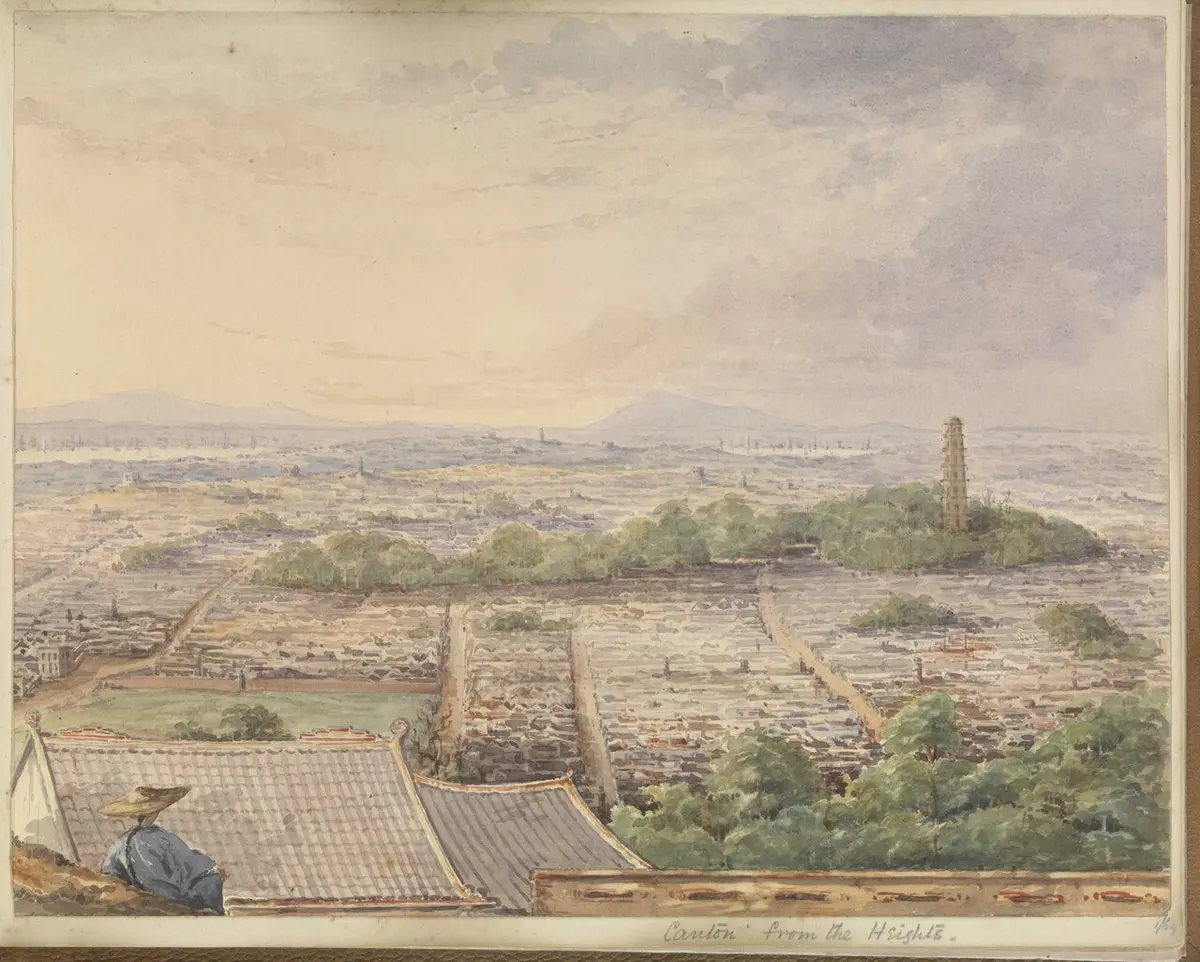
Boxing teachers, trade guilds and challenging other schools
The same 族谱网 page has a paragraph that gives the general picture: in the late Qing the country was unsettled, villages and trade guilds competed to hire skilled boxing teachers, Guangzhou had many boxing schools taking students, and going to challenge another school (踢馆) was common; the winner gained students, the loser closed his school and went home. This paragraph has no reference and does not describe any particular case, so I use it only as background.
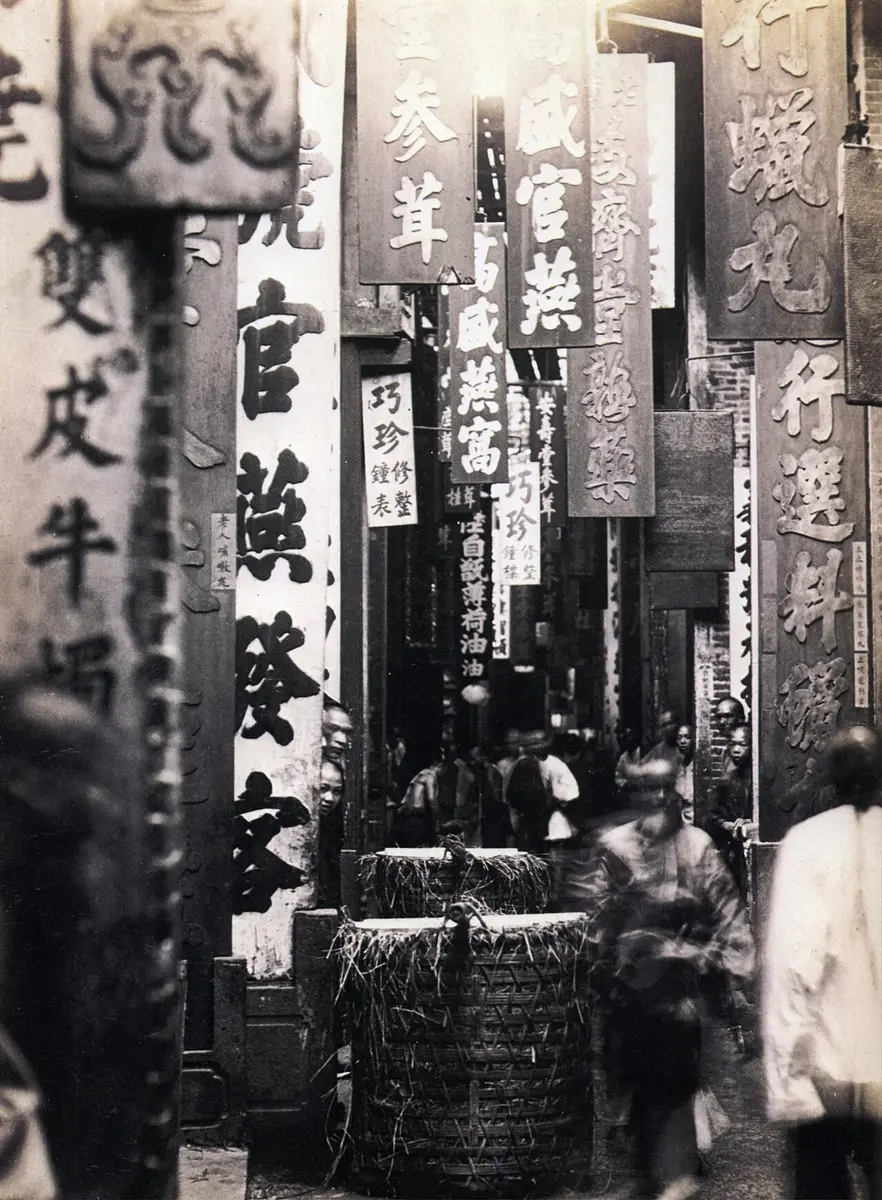
Boxing teachers who were also bonesetters
A better-evidenced example comes from a real person in this series. The Foshan Museum records that Wong Fei-hung opened his first boxing school at 16 in the Xiguan (西关) district of Guangzhou, and Chinese Wikipedia records that after his father, Wong Kei-ying, died in 1886, Wong Fei-hung opened the medicine shop and bonesetting clinic Po Chi Lam (宝芝林) in Guangzhou. This example reflects how many Cantonese boxing teachers of the time made a living by setting bones and selling bruise medicine alongside teaching boxing. The story of this father and son is in Episode 4: Wong Kei-ying.
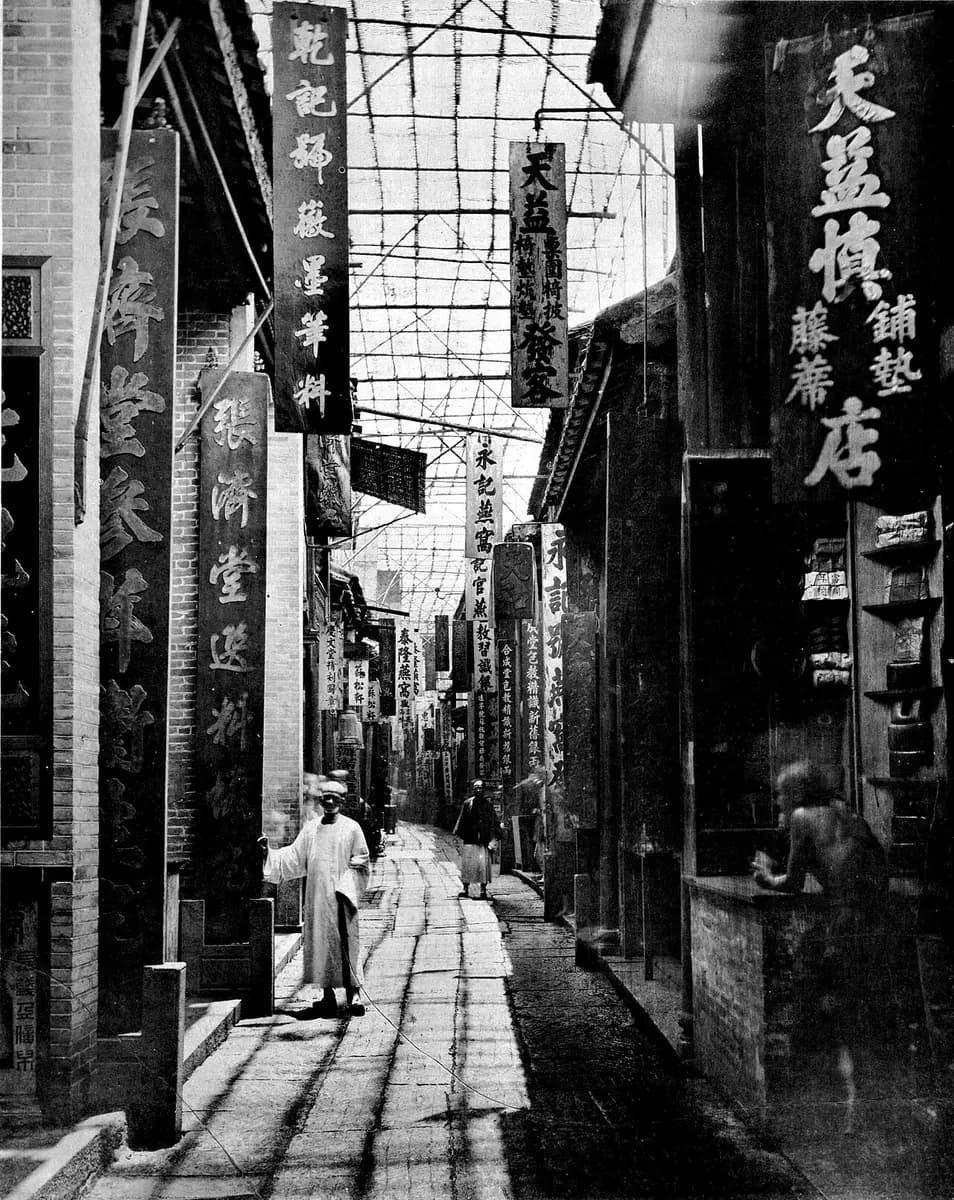
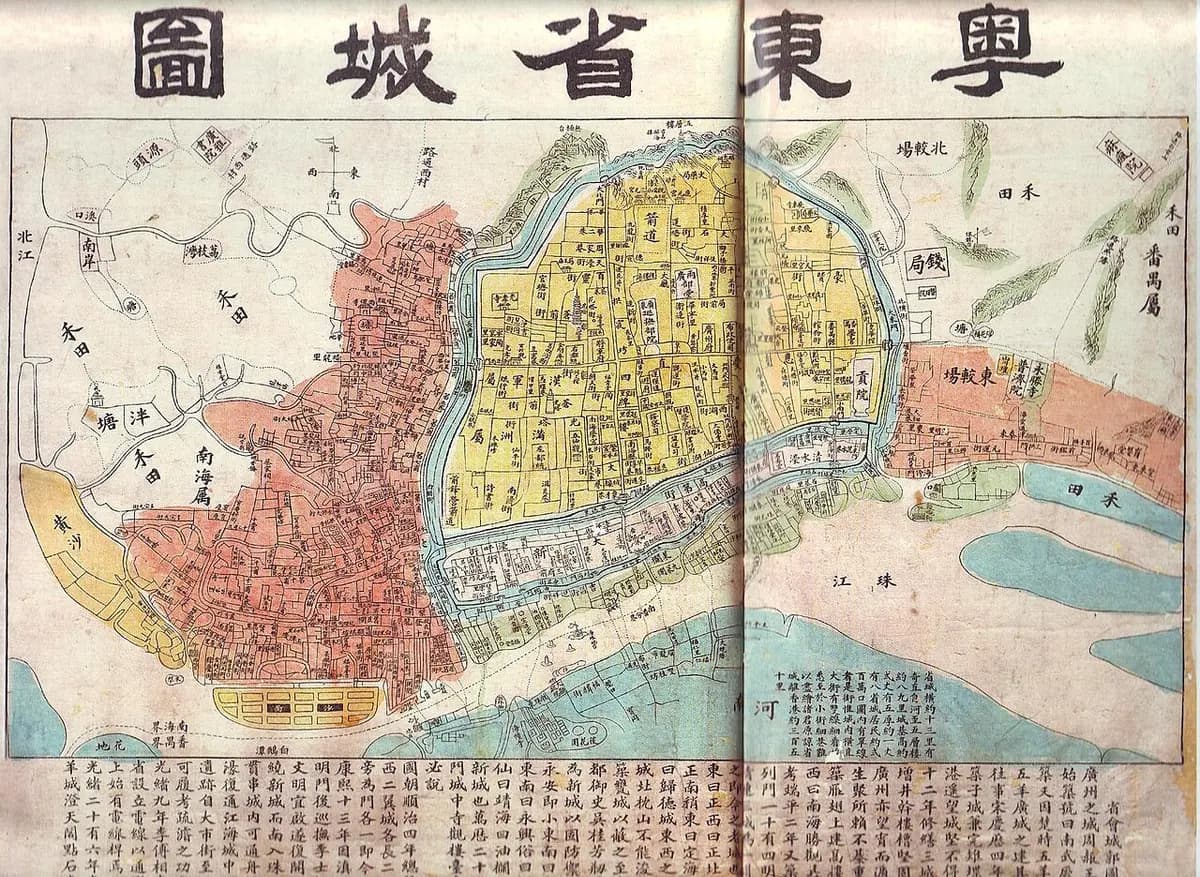
How a character became "history"
Wong Ching-ho's story is a good example of how a character can become a historical person on the web. I set out the path below, following the evidence I found.
- 我是山人's novel lists the Ten Tigers, mixing real people such as Wong Kei-ying and Iron Bridge Three with names not found anywhere else, such as Wong Ching-ho.
- Hong Kong films of 1978–1980 put the Ten Tigers on screen, making every name seem equally real.
- The 1999 ATV series makes Wong Ching-ho the lead character, with a personality, a birthplace, teachers and the Nine Dragon Fist.
- After 2000, question-and-answer sites, open encyclopedias and clan-history websites copy the character's script as biography, and some pages even carry over the heading about the series.
- Later web lists add a birthplace and an art for every one of the ten, until it all looks like checked information.
I must stress that not finding evidence does not prove that Wong Ching-ho never existed. Many village boxing teachers of that era left no documents, and the novelist may have heard the name somewhere. But without evidence, I will not write his story as history.
Common mistakes in Thai and Chinese posts
- "The Nine Dragon Fist is an ancient style that is still handed down." The ten-move set that is described comes from the 1999 ATV series. No school in Guangdong teaching a style of this name has yet been found.
- Citing the ten move names as a boxing manual. They describe scenes in the series.
- "Wong Ching-ho was a student of Luk Ah-choi, Wong Kei-ying and Iron Bridge Three." No record says any of these teachers had a student of this name. In the series, Wong Kei-ying is his teacher.
- "Wong Ching-ho was born in Sanshui," stated as fact. There is no original source.
- Using a website that calls itself a clan register as evidence. The text on that page is a character script from the series.
- Writing the name as 黄橙可. The correct name is 黄澄可.
- Translating 九龙 in the fist's name as "Kowloon". 九龙 in the name of the fist means nine dragons.
- "The Ten Tigers of Canton series aired in 1990." The ATV series aired in 1999.
- "The history of Guangdong martial arts declares that Wong Ching-ho did not exist." That is a columnist's conclusion, drawn from not finding the name in the book.
- Using the Nine Dragon Fist of a village in Zhejiang as evidence. It is a style with the same name and a different story.
Questions still without answers
- Which of 我是山人's novels has Wong Ching-ho as a character, and what art does it give him?
- What art does Wong Ching-ho use in the 1978 film and the 1979 Shaw Brothers film? Did the Nine Dragon Fist exist before the 1999 series?
- Who first wrote that Wong Ching-ho came from Sanshui?
- Are the list in the preface to《武坛二虎》and the novel《广东十虎传》the same book?
- Under what titles were the Shaw Brothers film and the ATV series shown in Thailand?
If you have old books, or Thai video covers of these films, please let me know and I will add the information to the article.
Real southern Chinese boxing, and Wing Chun at IMAC Dojo
The Nine Dragon Fist is boxing from a TV series, but plenty of southern Chinese boxing is still really practised in Guangdong. IMAC Dojo has a Wing Chun Sambo course, rooted in Wing Chun, another southern Chinese style that came out of Foshan. If you want to know how southern Chinese boxing uses low stances and short-range arms, read Why Cantonese Boxing Stands Low and Rarely Kicks High.
The previous episode in this series is Episode 1: Wong Yan-lam (王隐林), the next is Episode 3: So Hak-fu, and you can read the full list of all ten at Who Were the Ten Tigers of Canton?
See the Wing Chun Sambo courseSources and further reading
- 广东省 黄澄可 — 族谱网CommunityAccessed 25 Oct 2026
- 有谁知道广东十虎的啊(引《武坛二虎》自序) — 搜狗问问 (2007)CommunityAccessed 25 Oct 2026
- 黄澄可的九龙拳 — 搜狗问问 (2009/2016)CommunityAccessed 25 Oct 2026
- 广东十虎有谁了? — 搜狗问问 (2010)CommunityAccessed 25 Oct 2026
- 广东十虎排名 广东十虎是哪几个? — 酷米网 (2023)CommunityAccessed 25 Oct 2026
- "广东十虎"的提法最先出自小说家 — 网易订阅 (2021)CommunityAccessed 25 Oct 2026
- 为什么不能按武功高低给"广东十虎"排名?因为真人和假人没法排 — 网易订阅 (覃仕勇, 2019)CommunityAccessed 25 Oct 2026
- 廣東十虎 — 维基百科 (中文)CommunityAccessed 25 Oct 2026
- 我是山人 — 维基百科 (中文)CommunityAccessed 25 Oct 2026
- Ten Tigers of Canton — WikipediaCommunityAccessed 25 Oct 2026
- 英雄之廣東十虎 — 维基百科 (中文)CommunityAccessed 25 Oct 2026
- 英雄广东十虎 演员表 (1999) — 电视猫ResearchAccessed 25 Oct 2026
- 英雄广东十虎,黄澄可师傅黄麒英 — 新浪看点 (2020)CommunityAccessed 25 Oct 2026
- 廣東十虎與後五虎 — 维基百科 (中文)CommunityAccessed 25 Oct 2026
- Ten Tigers from Kwangtung — WikipediaCommunityAccessed 25 Oct 2026
- 三水区 — 维基百科 (中文)CommunityAccessed 25 Oct 2026
- 英德市 — 维基百科 (中文)CommunityAccessed 25 Oct 2026
- 九龙拳(第二批开化县非遗代表作名录简介) — 开化新闻网 / 浙江在线 (2009)ResearchAccessed 25 Oct 2026
- 龙形拳 — 中华人民共和国文化和旅游部 (2024)OfficialAccessed 25 Oct 2026
- Dragon Kung Fu — WikipediaCommunityAccessed 25 Oct 2026
- 南拳的解释 — 好工具 hao86CommunityAccessed 25 Oct 2026
- 黄飞鸿 — 维基百科 (中文)CommunityAccessed 25 Oct 2026
- 佛山黄飞鸿——黄飞鸿史略 — 佛山市博物馆 (Wayback 2019)OfficialAccessed 25 Oct 2026
- Location of Sanshui within Guangdong (Herr Klugbeisser, CC BY-SA 3.0) — Wikimedia CommonsCommunityAccessed 25 Oct 2026
- Lubao Ancestral Temple, Sanshui (ITammyT16, CC BY-SA 3.0) — Wikimedia CommonsCommunityAccessed 25 Oct 2026
- 'Canton from the Heights' (Lt James Henry Butt, 1869) — Wikimedia CommonsCommunityAccessed 25 Oct 2026
- Canton commercial street view, c. 1880 (Lai Afong) — Wikimedia CommonsCommunityAccessed 25 Oct 2026
- Physic Street, Canton (John Thomson, c. 1873) — Wikimedia CommonsCommunityAccessed 25 Oct 2026
- Map of Guangzhou 1900 — Wikimedia CommonsCommunityAccessed 25 Oct 2026
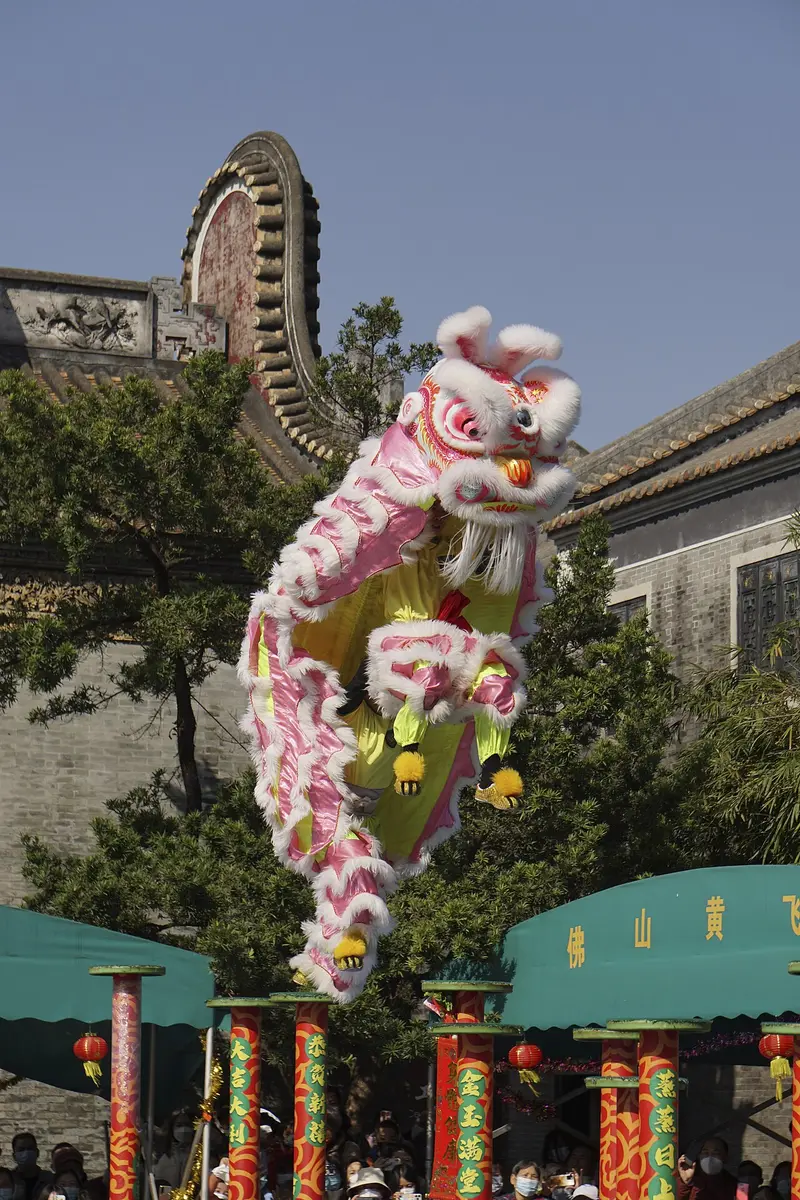
- Lion Dance at Foshan Ancestral Temple (Hexocat, CC BY-SA 4.0) — Wikimedia CommonsCommunityAccessed 25 Oct 2026
Frequently Asked Questions
Was Wong Ching-ho a real person?
No Qing-era evidence that mentions Wong Ching-ho has yet been found. The oldest appearance of the name is in the Ten Tigers list by the novelist 我是山人, and Chinese Wikipedia says his art and his years of birth and death are unknown. Not finding evidence does not prove he never existed, but the biography told on the web comes from a TV series.
Is the Nine Dragon Fist a real martial art?
The ten-move Nine Dragon Fist that is described comes from the 1999 ATV series. The website that tells the story itself says that only seven of the moves appear in the series. No school in Guangdong teaching a style of this name has yet been found.
Who played Wong Ching-ho?
In the 1979 Shaw Brothers film he was played by Tu Lung, also known as Dick Wei, and in the 1999 ATV series by Au Kam-tong, who played the lead character.
Where was Wong Ching-ho from?
Some sources say Sanshui, now a district of Foshan; some say Jiulong town in Yingde; and in the series he comes from Madong village. No source says where its information comes from.
Was Wong Ching-ho really Wong Kei-ying's student?
That comes from the character's biography and from the 1999 ATV series, which makes Wong Kei-ying his teacher. There is no record that Wong Kei-ying, Luk Ah-choi or Iron Bridge Three had a student of this name.
Where does the name "Ten Tigers of Canton" come from?
The oldest list that can be traced is in a novel by the Hong Kong writer with the pen name 我是山人 (Chen Jin, 1916–1974). The name then became famous through Hong Kong films of 1978–1980 and the 1999 ATV series.
If I want to know Guangdong's real dragon styles, what should I look at?
Dragon style (龙形拳), which is an intangible cultural heritage item at Guangdong provincial level, and the dragon techniques in the five-animal boxing of southern China. Both are real styles with no connection to Wong Ching-ho.
Ready to start martial arts?
Message IMAC Dojo to ask which course fits your age, goals, and training background.
Ask on LINE OfficialRelated Articles
 Chinese WushuWho Were the Ten Tigers of Canton (广东十虎)? All 10 Names, and Who Was Real or Legend
 Chinese WushuTen Tigers No. 1: Wong Yan-lam (王隐林), Former Monk of Mount Dinghu Who Passed On Hop Gar (侠家拳)
 Chinese WushuHow Many Southern Chinese Kung Fu Styles Are There? 32 Documented Styles, from Wing Chun to Hung Kuen