
IMAC Dojo Judo Curriculum · Level 6
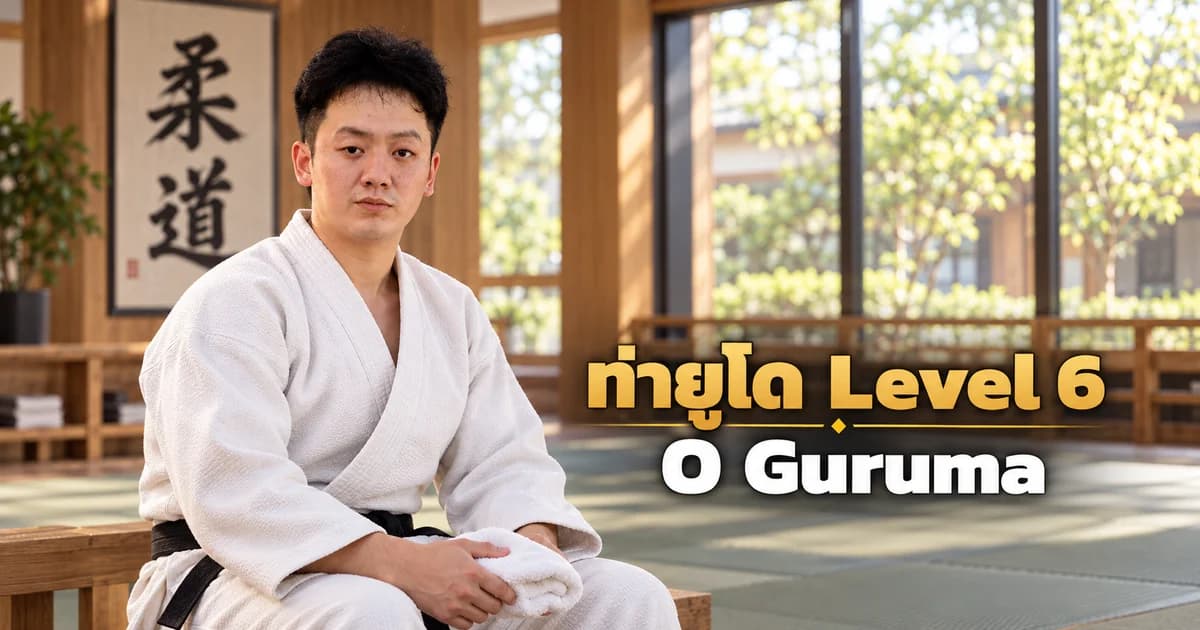
Judo Level 6: O Guruma — A higher leg axis does not mean more force
O Guruma is a foot technique using a leg axis near the partner’s lower torso and upper thighs. Major is not an instruction to use more force.
Compiled by Phoenix — Co-founder of IMAC Dojo
 Thaninpong Supapitakpong (Phoenix)Co-founder of IMAC Dojo
Updated 29 Sept 2026
- Author
- Thaninpong Supapitakpong (Phoenix)
- Published
- Last updated
- Sources
- 1
- Reading time
- 2 min
Short Answer
O Guruma is a foot technique using a leg axis near the partner’s lower torso and upper thighs. Major is not an instruction to use more force.
Key Takeaways
- Watch imbalance before the axis forms.
- Observe contact height.
- Follow hands and rotation around the axis.
Compare contact with Ashi Guruma and follow the hands guiding the upper body around the axis.
In this article
What the name tells us
大車, o-guruma, means major wheel and belongs to foot techniques.
How the technique works
After forward imbalance, the leg axis works with hand guidance. Read the whole body rather than seeing the leg as a barrier alone.
O-guruma uses the leg as an axis around uke's lower abdomen and upper thighs in Kodokan's definition. Read how uke rotates across it, not how hard tori swings the leg. Large is not a command to raise the leg beyond a suitable partner-specific distance.
What to watch in the clips
- Watch imbalance before the axis forms.
- Observe contact height.
- Follow hands and rotation around the axis.
A distinction worth noticing
Ashi Guruma contacts lower, near the knees. Compare lower-torso and upper-thigh contact in O Guruma, rather than distinguishing by speed.
Ashi-guruma's axis is lower near the knee; harai-goshi involves hip support and sweeping. Follow contact before uke becomes airborne rather than only the raised leg.
Taking the lesson back to practice
Do not raise the leg while your own base is unstable. Have an instructor check distance and knee alignment; practise slowly with a prepared receiver.
The Level here refers to the IMAC Dojo curriculum. Use the article and clips to prepare questions and review them with your instructor. Practical training needs a suitable partner, space and controlled conditions.
Ask whether uke is already unbalanced at approach and how the axis relates to tori's base. Do not increase leg impact to force uke across.
Connect this with your next lesson
O Guruma — Video lesson 1
An IMAC Dojo clip accompanying O Guruma. Use the observations and distinctions in this article to guide your viewing.
Video published
Sources and further reading
- 大車 — 講道館 柔道 技名称一覧 — 講道館ReferenceAccessed 29 Sept 2026
Frequently Asked Questions
Does major mean greater force?
No. Use the name to remember rotation, not prescribe force.
How does it differ from Ashi Guruma?
Compare contact height and the rotational line.
Must I watch the hands?
Yes. They guide the partner around the leg axis.
Ready to start martial arts?
Message IMAC Dojo to ask which course fits your age, goals, and training background.
Ask on LINE OfficialRelated Articles
Related Topics and Courses
Judo Thailand