
IMAC Dojo Judo Curriculum · Level 4
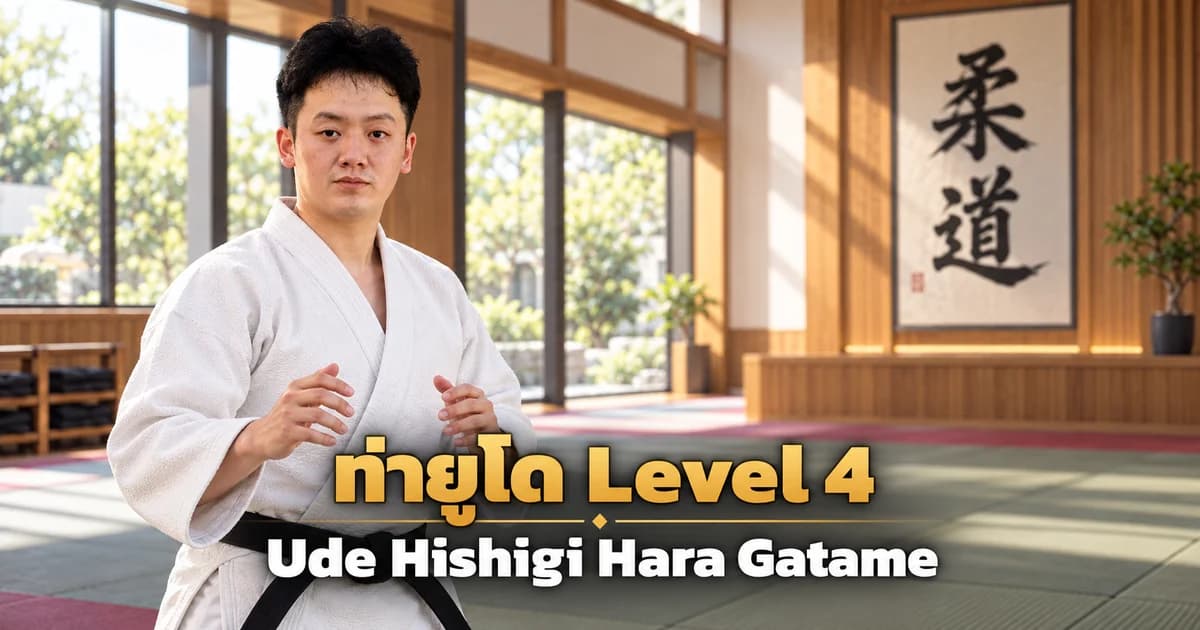
Judo Level 4: Ude Hishigi Hara Gatame — Read the abdomen’s role in arm control
Ude Hishigi Hara Gatame relates the partner’s arm to the practitioner’s abdomen while controlling the wrist. It is an arm-joint technique, not an attack on the abdomen.
Compiled by Phoenix — Co-founder of IMAC Dojo
 Thaninpong Supapitakpong (Phoenix)Co-founder of IMAC Dojo
Updated 29 Sept 2026
- Author
- Thaninpong Supapitakpong (Phoenix)
- Published
- Last updated
- Sources
- 1
- Reading time
- 2 min
Short Answer
Ude Hishigi Hara Gatame relates the partner’s arm to the practitioner’s abdomen while controlling the wrist. It is an arm-joint technique, not an attack on the abdomen.
Key Takeaways
- Follow wrist control.
- Identify abdominal rather than armpit contact.
- Observe control before and after the partner signals.
Hara draws attention to the torso, but follow the hand and partner’s arm too rather than seeing only body pressure.
In this article
What the name tells us
腕挫腹固, ude-hishigi-hara-gatame, is a joint technique. Hara names the practitioner’s abdomen within the structure.
How the technique works
Kodokan describes wrist control and arm contact at the abdomen from the partner’s side. Observe alignment and contact, with an instructor checking the actual details.
Hara-gatame uses the abdomen as contact with the controlled arm, while the target in Kodokan's definition remains the elbow. It is not pressure on the partner's abdomen. In the full name, hara identifies tori's tool and ude the controlled limb.
What to watch in the clips
- Follow wrist control.
- Identify abdominal rather than armpit contact.
- Observe control before and after the partner signals.
A distinction worth noticing
Waki Gatame uses the armpit; Hara Gatame uses the abdominal region. Similar hand grips can obscure that distinction.
Compared with waki-gatame, torso contact shifts from armpit to abdomen. Check the wrist location and the arm's route rather than treating the poses as interchangeable names.
Taking the lesson back to practice
Position without joint pressure. Do not shift weight suddenly to test effectiveness. Have an instructor check the arm line and agree on stopping signals.
The Level here refers to the IMAC Dojo curriculum. Use the article and clips to prepare questions and review them with your instructor. Practical training needs a suitable partner, space and controlled conditions.
Have your instructor establish the position without arching to add pressure, so you can see how the grip maintains arm alignment. Understand release and stopping before considering tighter control.
Connect this with your next lesson
Ude Hishigi Hara Gatame — Video lesson 1
An IMAC Dojo clip accompanying Ude Hishigi Hara Gatame. Use the observations and distinctions in this article to guide your viewing.
Video published
Sources and further reading
- 腕挫腹固 — 講道館 柔道 技名称一覧 — 講道館ReferenceAccessed 29 Sept 2026
Frequently Asked Questions
Does this control an arm or the abdomen?
The arm. The abdomen is a body part used by the practitioner in the structure.
What distinguishes it from Waki Gatame?
Compare abdominal contact with armpit contact rather than watching the hands alone.
Why not test it by dropping weight?
Review must remain controlled. An instructor checks position without joint pressure instead of using a sudden load as proof.
Ready to start martial arts?
Message IMAC Dojo to ask which course fits your age, goals, and training background.
Ask on LINE OfficialRelated Articles
Related Topics and Courses
Judo Thailand