
Retreating in Muay Thai — manage distance, change angle and recover your stance
Where do you finish, which way do you face, and can you move again? These questions reveal more than simply stepping backward.

Compiled by Phoenix — Co-founder of IMAC Dojo
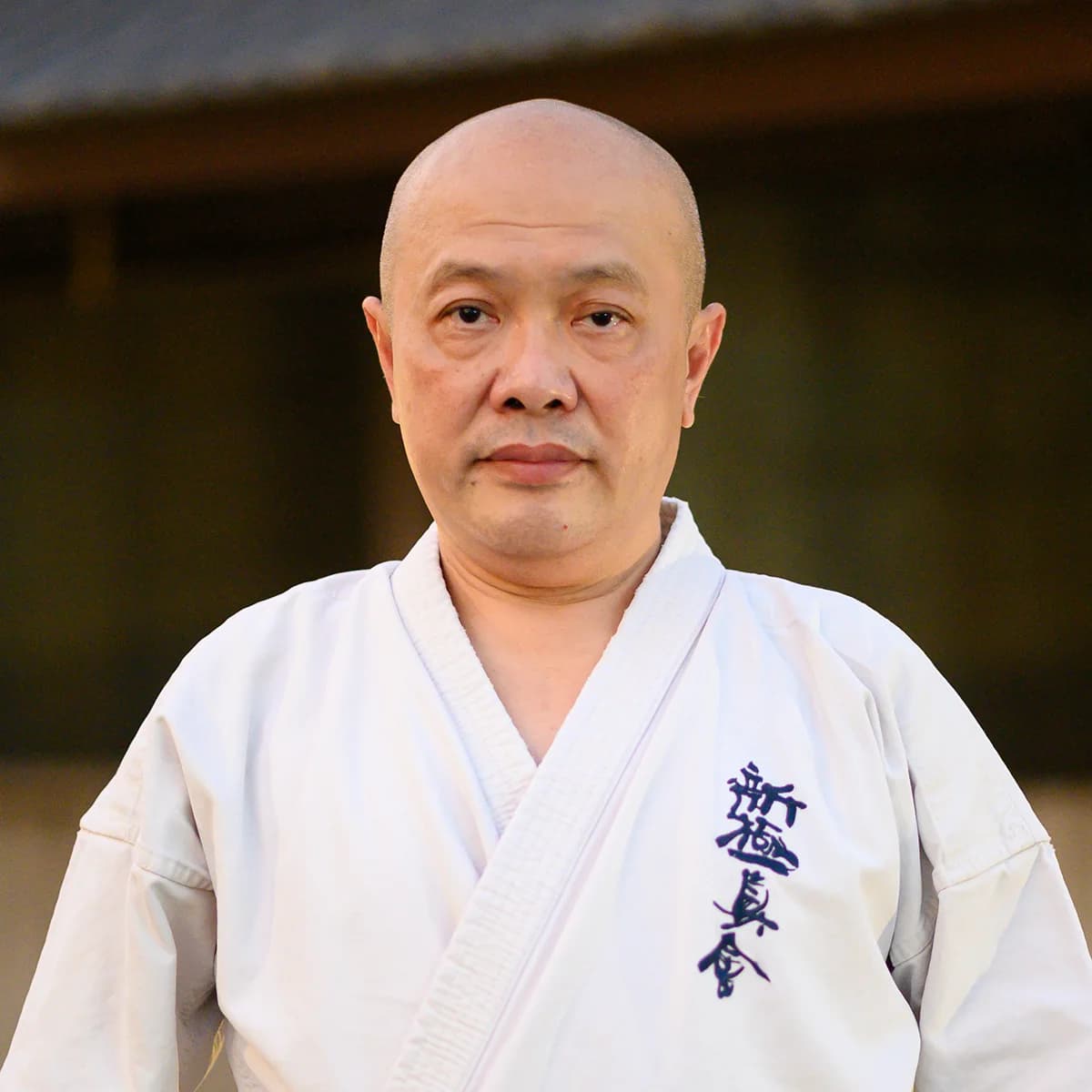 Thaninpong Supapitakpong (Phoenix)Co-founder of IMAC Dojo
Updated 30 Sept 2026
Assigned content reviewer: Patty
- Author
- Thaninpong Supapitakpong (Phoenix)
- Published
- Last updated
- Sources
- 1
- Reading time
- 4 min
Short Answer
This set covers alternating, diagonal, crossing-turn and angle-changing retreats. Read the change in distance, finishing lead side and body orientation together. Distinguish a basic retreat that retains the lead from versions that alternate or turn.
Key Takeaways
- Compare the finish with the starting point and partner's line.
- Basic and alternating retreats have different foot-sequence tasks.
- Crossing or turning forms require attention to the transition.
- Include the hands and recovery in the same task as the feet.
Retreating may sound like moving the feet backward. In Muay Thai practice, we also need to know how the distance changes, whether we still face the partner, and whether the lead has changed. Watching only the distance traveled can miss the relationship between the feet. Four pairs of clips help separate these questions for instructor review.
In this article
Separate basic and alternating retreats first
The Department of Physical Education manual describes a basic retreat with the rear foot moving first and the front foot following to preserve stance spacing. It treats alternating retreat separately, changing the lead and coordinating the hands. The foot sequence of one should not automatically be used to judge the other.
Read the pair labeled retreat or alternating retreat according to its course label. Identify the lead before and after the movement, then ask how the hands and torso adjust. Seeing one foot pass the other is not enough to diagnose an error without knowing which form is being practiced.
A diagonal retreat changes more than distance
Moving off a straight line changes both fore-aft and lateral position relative to the start. Follow the feet and chest orientation, not only how far the demonstrator travels. The manual separates angled movement from straight advances and retreats, providing a useful basis for questions about position.
The edge of the screen does not necessarily represent the partner's line; a camera angle can make diagonal motion look straight. Compare different views when available and ask how the finishing body position relates to the original line. This article does not prescribe one angle for every situation.
A crossing-turn retreat needs its middle phase
The clip name includes retreating, crossing and turning. Watch from the first foot placement through recovery instead of memorizing only the finish. Useful questions concern which foot moves first, when the torso starts to change direction, and where the hands are during the transition.
A cue for basic retreat may not explain the whole crossing-turn form. Ask an instructor to check this specific pattern. If the order is unclear, return to the demonstration slowly and describe it in your own words before adding speed; do not infer the sequence from the title alone.
Read the angle retreat against the original line
The Thai name for this pair points to an angle change and withdrawing a foot. Assessment should go beyond the shape made by the feet: which way does the body face after the withdrawal, and does the base permit another movement? The full CSV label is retained so readers can identify the matching pair.
The manual's angled movement provides a conceptual comparison, not confirmation that every phase matches this clip. Documentary material establishes positional principles; the particular form being learned depends on its demonstration and instructor feedback.
Study one pair before linking forms
The eight clips cover angle retreat with foot withdrawal, crossing-turn retreat, diagonal retreat and alternating retreat, each with practice and demonstration. Follow one pair through start, transition and finish before switching forms. This helps distinguish a sequencing problem from a stance-control problem.
Summarize three things afterward: whether the lead changes, where the position moves, and which way the body finishes facing. Replay the relevant moment if any answer is unclear instead of repeatedly watching everything. Partner use requires further agreement with the instructor about distance, line and speed.
Check recovery, not just retreating speed
Ask an instructor to inspect feet closing enough to alter the stance, a long step that requires resetting, an unnoticed dropped hand, or a turn that ends without clear orientation. Check individual moments rather than treating speed as proof of distance control.
Define the practice area and check the space behind you. Solo work helps clarify sequence but does not demonstrate distance management against a partner's weapon. Bring a short recording to your instructor and ask where the feet and torso stop coordinating so the correction addresses an observable issue.
Return to the course for review
Read about Muaythai Anywhere and Khru Patty, the assigned content reviewer. Dance and ceremony are covered in the Wai Kru Muay Thai course.
Angle retreat with foot withdrawal — practice
Compare lead side, foot order and body orientation from start to recovery, then review the matching companion clip.
Video published
Angle retreat with foot withdrawal — demonstration
Compare lead side, foot order and body orientation from start to recovery, then review the matching companion clip.
Video published
Crossing-turn retreat — practice
Compare lead side, foot order and body orientation from start to recovery, then review the matching companion clip.
Video published
Crossing-turn retreat — demonstration
Compare lead side, foot order and body orientation from start to recovery, then review the matching companion clip.
Video published
Diagonal retreat — practice
Compare lead side, foot order and body orientation from start to recovery, then review the matching companion clip.
Video published
Diagonal retreat — demonstration
Compare lead side, foot order and body orientation from start to recovery, then review the matching companion clip.
Video published
Alternating retreat — practice
Compare lead side, foot order and body orientation from start to recovery, then review the matching companion clip.
Video published
Alternating retreat — demonstration
Compare lead side, foot order and body orientation from start to recovery, then review the matching companion clip.
Video published
Sources and further reading
- Muaythai Palasueksa Style: advancing, retreating, alternating steps and angles, printed pages 70–77 — Department of Physical Education, Institute of Muay Thai ArtReferenceAccessed 29 Sept 2026
Frequently Asked Questions
Must the rear foot lead every retreat?
The manual uses that order for a basic retreat retaining the lead. Alternating and angled forms are treated separately, so identify the intended form before judging its foot order.
Does seeing crossed feet mean the movement is wrong?
Not necessarily: this set specifically includes a crossing-turn retreat. Examine the whole form with an instructor instead of applying a warning from a different pattern without context.
What should I compare in diagonal versus straight retreat?
Read lateral displacement alongside fore-aft distance and check the finishing torso direction. Distance traveled alone is insufficient.
Should I practice retreating fast immediately?
First understand the start, transition and recovery. Let the instructor adjust speed to your ability to retain the form and meet the task.
Why keep practice and demonstration clips with the same name?
Use the demonstration for the overall movement and its practice partner for review. Matching names identify a pair, not a reason to remove either URL.
Ready to start martial arts?
Message IMAC Dojo to ask which course fits your age, goals, and training background.
Ask on LINE OfficialRelated Articles
Related Topics and Courses
Muaythai