
Muay Thai stance and readiness — base, guard and course posture names
Read the relationship between feet, hands and torso before copying a still, then use clip names to ask each form's role in the course.
Compiled by Phoenix — Co-founder of IMAC Dojo
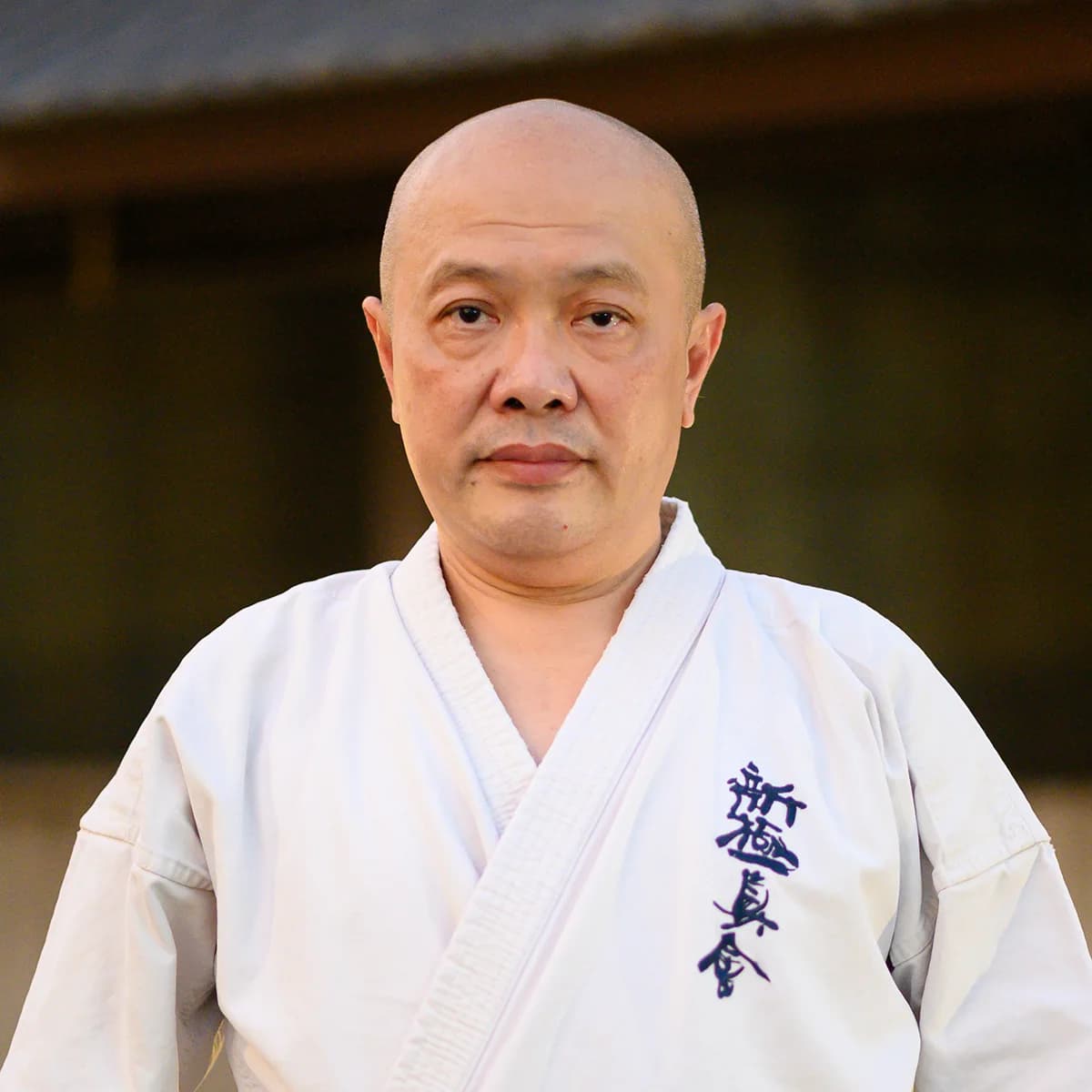 Thaninpong Supapitakpong (Phoenix)Co-founder of IMAC Dojo
Updated 30 Sept 2026
Assigned content reviewer: Patty
- Author
- Thaninpong Supapitakpong (Phoenix)
- Published
- Last updated
- Sources
- 1
- Reading time
- 3 min
Short Answer
A Muay Thai stance coordinates base, feet, fists and torso before movement. DPE describes foot placement, lead and rear fists, and torso alignment. Su, Rap Suek and Sakot Thap are course-clip labels to interpret in context, not fixed tactical functions to infer from the names.
Key Takeaways
- Read the base before fist height.
- Lead and rear fists relate to lead and rear feet.
- Continue reading the stance when movement begins.
- Preserve both original Sakot Thap spellings pending instructor confirmation.
Are raised hands enough to be ready? Hands alone cannot answer: the base and torso must work together when stepping or returning. These stance, Su, Rap Suek and Sakot Thap clips provide a framework for observation before instructor review.
In this article
Begin with lead and rear feet
Printed page 64 describes stance and foot placement with different roles for lead and rear feet, using spacing as a starting point for balance. The illustration is one example, not a fixed measurement for every learner.
Identify facing direction and lead foot, then ask whether support can be reorganized after a weight change. Distinguish the demonstrator's left and right from screen directions, especially when the camera angle changes.
Read fists and torso together
Page 67 relates the lead fist to the lead foot, the rear fist to the face and elbows to the torso, alongside an unforced torso alignment. Relationships matter more than copying a fist position from a single frame.
Also follow the hand that is not moving. When one hand changes, what do the other hand and elbow do? This helps an instructor distinguish memorized hand shapes from understanding the whole arrangement.
Read Su, Rap Suek and Sakot Thap in course context
The CSV and canonical clip titles place these names in the stance material. The cited manual does not establish exact definitions matching all three clips, so this article does not assign one exclusively offensive or defensive function to each.
Clip uM8Dxo-Ulls and VWvMOwmLcXU use different Thai spellings of Sakot Thap in their actual titles and CSV records. Both originals remain in the evidence for Khru Patty to confirm the course wording. A spelling difference alone proves neither different nor identical forms.
From a ready position into movement
Page 69 connects movement with weight transfer and balance and notes multiple footwork forms. Review should continue beyond standing still: after a short movement, can feet and guard be arranged for the assigned task?
Ask about an extra correcting step, hands dropping when support changes, or torso turning away from the practice direction. Review one event at a time instead of using a still image to rank a stance as best for every situation.
Separate overviews from named forms across eight clips
Begin with the stance-skills or combined ready-position clip, then choose Su, Rap Suek or Sakot Thap individually. Basic-labelled and similarly named clips have distinct URLs; keep them for actual comparison.
Record lead foot, hands, starts, finishes and questions without assuming an older and newer clip are interchangeable. Begin with instructor-led positioning and movement rather than using this article to justify impact testing with a partner.
Return to the course for review
Read about Muaythai Anywhere and Khru Patty, the assigned content reviewer. Dance and ceremony are covered in the Wai Kru Muay Thai course.
Su
Observe support, hands and torso; note names and transitions needing instructor confirmation.
Video published
Rap Suek
Observe support, hands and torso; note names and transitions needing instructor confirmation.
Video published
Sakot Thap
Observe support, hands and torso; note names and transitions needing instructor confirmation.
Video published
Stance skills
Observe support, hands and torso; note names and transitions needing instructor confirmation.
Video published
Combined ready positions
Observe support, hands and torso; note names and transitions needing instructor confirmation.
Video published
Su — basics
Observe support, hands and torso; note names and transitions needing instructor confirmation.
Video published
Rap Suek — basics
Observe support, hands and torso; note names and transitions needing instructor confirmation.
Video published
Sakot Thap — alternate original spelling
Observe support, hands and torso; note names and transitions needing instructor confirmation.
Video published
Sources and further reading
- Muaythai Palasueksa Style: stance and movement, pages 64–69 — Department of Physical Education, Institute of Muay Thai ArtReferenceAccessed 29 Sept 2026
Frequently Asked Questions
Do raised hands alone make a stance?
Read base, feet, torso and fists together, especially when moving or returning.
Do the two Sakot Thap spellings mean the same form?
The titles genuinely differ, but names alone cannot establish equivalence. Both remain pending instructor confirmation of form and wording.
Must my stance match the picture's width?
Use it to read relationships, not universal measurements. Ask the instructor to review support and movement.
Which clip should come first?
Start with a stance overview or combined ready positions, then compare named forms and note uncertainties.
Ready to start martial arts?
Message IMAC Dojo to ask which course fits your age, goals, and training background.
Ask on LINE OfficialRelated Articles
Related Topics and Courses
Muaythai