
Basic Muay Thai footwork — move forward, backward and sideways with your stance
Before adding diagonals or turns, check whether your stance moves with you in four directions. Arriving feet and a ready body may not happen together.

Compiled by Phoenix — Co-founder of IMAC Dojo
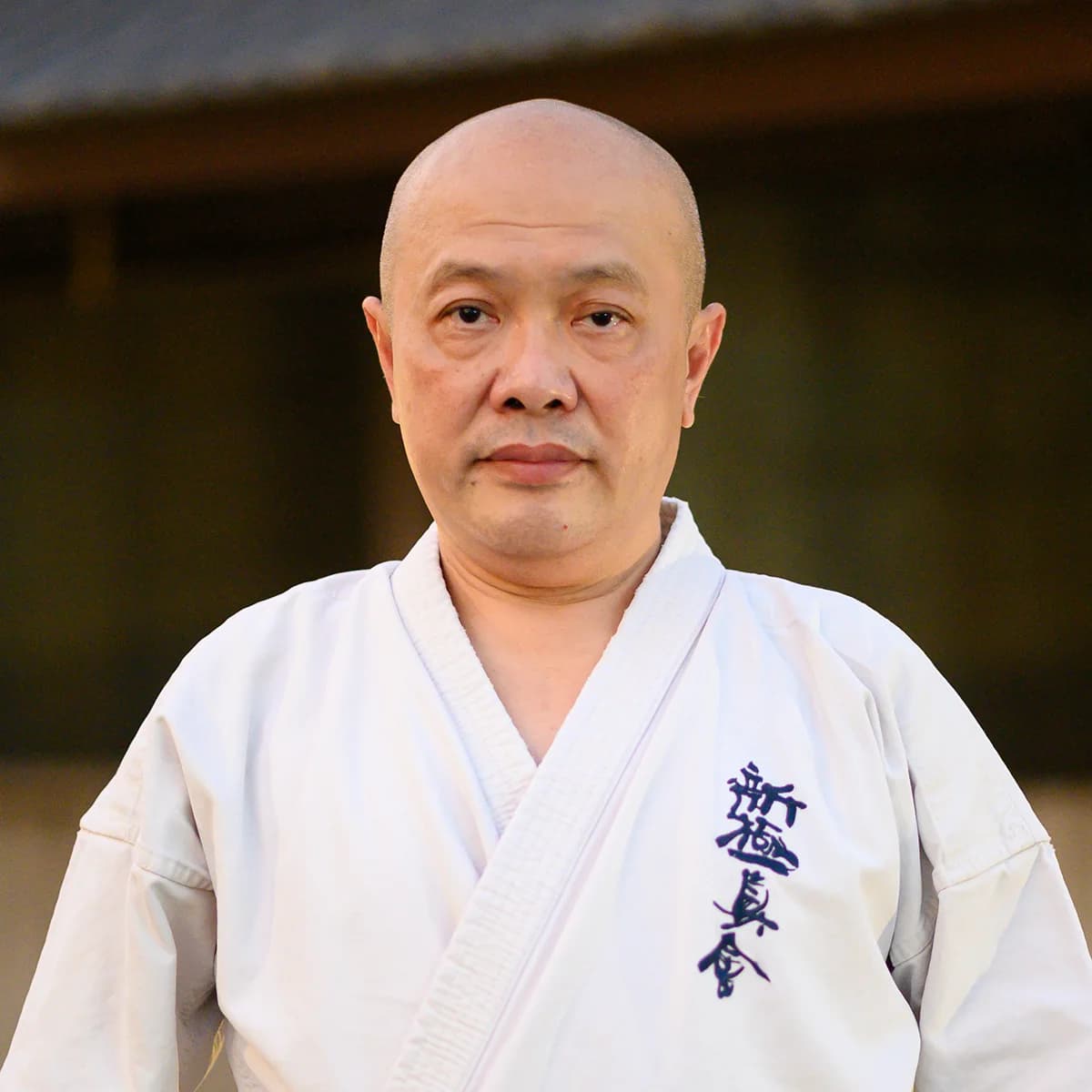 Thaninpong Supapitakpong (Phoenix)Co-founder of IMAC Dojo
Updated 30 Sept 2026
Assigned content reviewer: Patty
- Author
- Thaninpong Supapitakpong (Phoenix)
- Published
- Last updated
- Sources
- 1
- Reading time
- 4 min
Short Answer
This article pairs demonstrations and practice for forward, backward, left and right stepping, with two overview clips. Check how feet, hands and torso coordinate during movement and after stopping before adding angle changes or weapons.
Key Takeaways
- Establish your starting stance as a reference.
- Follow the initiating and following foot through a full movement.
- Distinguish lateral relocation from circling a partner.
- Use overviews to connect topics, then revisit the unclear pair.
When learning punches or kicks, the visible weapon can draw attention away from the feet managing distance below. If the base changes after one movement, the next skill starts from a different position. Basic stepping lets us understand the guard stance in motion, not only while standing still.
In this article
Establish a reference from your own stance
The Department of Physical Education manual introduces the relationship between feet, hands and torso before movement. Identify the lead side, general foot spacing, torso direction and hand position before reading a clip. There is no need to guess a measured stance width from an image.
Compare that starting stance with the position after one movement. If the shape changes, ask whether it belongs to the exercise or happened unintentionally. An instructor can clarify what should remain and what adjusts for the task.
Forward and backward: follow both feet
The manual describes a basic advance as front foot first, rear foot following, and a basic retreat as rear foot first, front foot following, preserving the base relationship. This reminds viewers not to stop watching after the first foot moves, but to see when the stance is complete again.
The collection has separate demonstration-practice pairs for straight forward and backward stepping. Use each clip to identify the form being learned instead of mixing it with alternating advances or retreats, covered in other articles with different lead-side tasks.
Left and right: separate relocation from turning
Lateral movement and circling have different relationships to a partner, and the manual distinguishes them. In the left or right pair, observe where the base moves and whether body orientation changes instead of calling every lateral movement circling.
Read sides from the demonstrator's perspective. A person facing the camera can trigger unintended mirroring. Compare both directions from a clearly identified lead, using the same questions about hands and feet after movement.
The following foot is part of the skill
Beginners may concentrate on the first step and miss the following foot. That later phase reveals whether the base returns to a usable arrangement. Watch once for the initiating foot, again for the following foot, then review the whole body.
Ask an instructor whether the feet become close or wide enough to require resetting, the hands leave their intended position, or the torso moves ahead of its support. Corrections should come from the learner's motion rather than one universal stride length.
Use ten clips as a review base
Eight clips form right, left, straight-backward and straight-forward pairs. Two further CSV entries are titled Muay Thai Movement and Movement and serve as overviews according to their labels. All ten URLs are retained; the overview titles do not establish unreviewed details about their contents.
Start with the direction needing attention, demonstration first and practice next. During an overview, note moments to revisit instead of trying everything at once. The overview then links back to a specific, clear task.
Check four-direction foundations before adding complexity
Before diagonal, crossing or pivoting work, have an instructor check whether you know the start and finish in four directions and can explain how hands and torso coordinate with the feet. Readiness includes recognizing what needs correction when the stance changes, not merely copying quickly.
Define a clear practice area and inspect the direction of travel. Partner work needs further agreement about distance and speed. Solo movement develops sequence; using it to enter distance or leave an attack line needs a context-specific task from the instructor.
Return to the course for review
Read about Muaythai Anywhere and Khru Patty, the assigned content reviewer. Dance and ceremony are covered in the Wai Kru Muay Thai course.
Rightward step — practice
Follow the initiating and following feet, then check hands and torso as the base reforms after movement.
Video published
Rightward step — demonstration
Follow the initiating and following feet, then check hands and torso as the base reforms after movement.
Video published
Leftward step — practice
Follow the initiating and following feet, then check hands and torso as the base reforms after movement.
Video published
Leftward step — demonstration
Follow the initiating and following feet, then check hands and torso as the base reforms after movement.
Video published
Straight backward step — practice
Follow the initiating and following feet, then check hands and torso as the base reforms after movement.
Video published
Straight backward step — demonstration
Follow the initiating and following feet, then check hands and torso as the base reforms after movement.
Video published
Straight forward step — practice
Follow the initiating and following feet, then check hands and torso as the base reforms after movement.
Video published
Straight forward step — demonstration
Follow the initiating and following feet, then check hands and torso as the base reforms after movement.
Video published
Muay Thai movement overview
Review the overview and note moments to revisit in the direction-specific pairs.
Video published
Movement overview
Review the overview and note moments to revisit in the direction-specific pairs.
Video published
Sources and further reading
- Muaythai Palasueksa Style: stance and movement, printed pages 64–79 — Department of Physical Education, Institute of Muay Thai ArtReferenceAccessed 29 Sept 2026
Frequently Asked Questions
Should I rebuild my stance after every step?
Review how movement carries the base, hands and torso together. If every step needs a separate reset, ask an instructor to inspect timing and movement size instead of rushing past it.
Is straight forward stepping the same as alternating advance?
The course lists different names and clips. Read the lead-side task of the current form rather than automatically substituting the alternating clip.
Is lateral stepping the same as circling?
Do not combine them automatically. The manual distinguishes circling and lateral movement; compare the new position and relationship to the partner's line.
Should both overview clips be retained?
Both remain as provided in the CSV, supporting review before returning to direction-specific pairs. Similar names do not prove identical content.
When should I add diagonals or pivots?
Have an instructor review the basic start, finish, stance recovery and hand-base relationship before defining a more complex task.
Ready to start martial arts?
Message IMAC Dojo to ask which course fits your age, goals, and training background.
Ask on LINE OfficialRelated Articles



Related Topics and Courses
Muaythai