
Straight knees in Muay Thai — lead leg, rear leg and the supporting base
Height alone does not explain a straight knee. Read its direction, the supporting leg and hand position, while separating lead/rear lessons from defence across six clips.

Compiled by Phoenix — Co-founder of IMAC Dojo
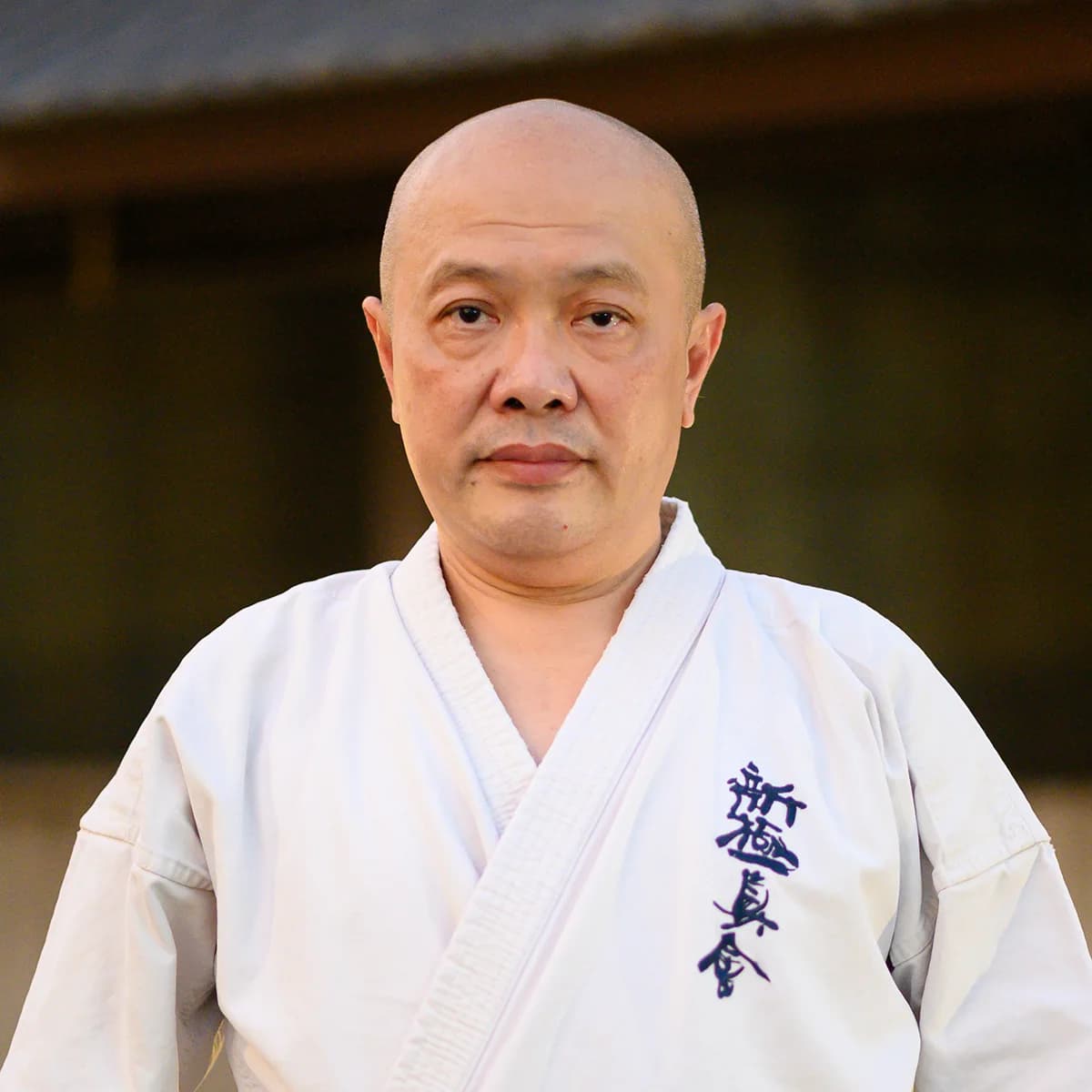 Thaninpong Supapitakpong (Phoenix)Co-founder of IMAC Dojo
Updated 30 Sept 2026
Assigned content reviewer: Patty
- Author
- Thaninpong Supapitakpong (Phoenix)
- Published
- Last updated
- Sources
- 1
- Reading time
- 4 min
Short Answer
A straight knee moves the knee of a folded leg towards the front, with balance on the other leg read alongside it. The DPE manual covers both sides and discusses a clinching knee in a partner-control context. This article separates lead knees, rear knees, foundations and defence, rather than assuming every straight knee starts with a neck grip.
Key Takeaways
- Lead/rear identifies the leg in the stance, not forward/backward knee travel.
- Straight and diagonal knees differ by direction, not simply height.
- The supporting leg and hands still have jobs as the knee rises.
- Separate defence clips from striking practice.
The most noticeable part of a straight-knee clip is one knee rising. Watch the other leg at the same time: support is changing from two legs to one. Looking only at height can hide the beginning and return to readiness.
Printed pages 110–113 of Muaythai Palasueksa Style explain straight knees followed by diagonal knees. This article uses that distinction to read six Muaythai Anywhere clips, separating demonstrations, practice and defence before examining details.
In this article
Straight describes direction, not a demand for maximum height
The manual describes folding the leg and lifting the knee, with the foot behind the folded leg. This differs from extending a leg for a teep, even though both weapons can move forwards. Asking which part is used and whether the leg folds or extends distinguishes them better than watching the foot alone.
Height in an image depends on the task and demonstrator's position; it is not the only measure of correctness. Ask an instructor to explain the intended path and distance before treating one frame as a standard for everyone.
Read lead and rear knees from the stance
Lead and rear in these clip groups describe the leg initially in front or behind in the stance. A rear knee does not mean a knee travelling backwards. Changing the lead leg changes the relationship with left and right, so read each clip's starting position again.
Each side has a demonstration and practice clip. Pair the same side first, then compare the other using the same questions: which leg supports before the lift, and how does the foot return afterwards? A different side label does not establish that every movement detail is identical.
Read the supporting leg, hands and return to readiness
When one leg rises, read the other leg's support together with the trunk. The manual also discusses protective hand positioning. Cropping attention to the knee alone cannot explain the whole movement; watch from before the lift through the return.
Common viewing-led mistakes include chasing height until leaning is needed to recover, or dropping the hands because attention is on the leg. These are questions for an instructor to assess, not reasons to force additional range alone. Separate reviewing the movement from applying force to equipment.
A clinching-knee example does not require every straight knee to start with a neck grip
The manual uses the heading straight knee or clinching knee and includes partner-control imagery. Read that relationship within the example, without turning it into a rule that every straight-knee clip needs a partner or neck grip.
Distinguish studying the weapon's form from studying distance with a partner. Hand use may differ between those tasks. Take questions about control to an instructor in class instead of pulling a partner's neck to copy a picture.
Compare straight and diagonal knees before comparing speed
The next manual pages distinguish the diagonal knee, describing a diagonally upward path and hip action. The difference concerns the knee's route, not a claim that one must be stronger or higher.
If the camera makes the paths look similar, replay the start and use the demonstrator's orientation rather than screen left and right. This clip group covers straight knees. Diagonal knees clarify the name's boundaries; no absent diagonal-knee clip is added to the group.
Choose among six clips by the question you want answered
Start with the foundational straight-knee clip, then select the lead or rear demonstration/practice pair for your task. Both sides total four clips. The remaining clip demonstrates straight-knee defence, where you must distinguish the striker from the defender.
There is no separate defence-practice clip in this group, so do not assume a pair equivalent to the striking lessons. Check player titles and note moments when the supporting leg is obscured for discussion with an instructor, rather than filling gaps from a video title.
Return to the course for review
Read about Muaythai Anywhere and Khru Patty, the assigned content reviewer. Dance and ceremony are covered in the Wai Kru Muay Thai course.
Straight-knee defence — demonstration
Straight-knee defence — demonstration from Muaythai Anywhere. Use the title to identify side and task, then read knee direction and the supporting leg with the manual.
Video published
Rear straight knee — practice
Rear straight knee — practice from Muaythai Anywhere. Use the title to identify side and task, then read knee direction and the supporting leg with the manual.
Video published
Rear straight knee — demonstration
Rear straight knee — demonstration from Muaythai Anywhere. Use the title to identify side and task, then read knee direction and the supporting leg with the manual.
Video published
Lead straight knee — practice
Lead straight knee — practice from Muaythai Anywhere. Use the title to identify side and task, then read knee direction and the supporting leg with the manual.
Video published
Lead straight knee — demonstration
Lead straight knee — demonstration from Muaythai Anywhere. Use the title to identify side and task, then read knee direction and the supporting leg with the manual.
Video published
Straight knee — foundations
Straight knee — foundations from Muaythai Anywhere. Use the title to identify side and task, then read knee direction and the supporting leg with the manual.
Video published
Sources and further reading
- Muaythai Palasueksa Style: straight and diagonal knees, printed pages 110–113 — Department of Physical Education, Institute of Muay Thai ArtReferenceAccessed 29 Sept 2026
Frequently Asked Questions
What do lead and rear knees mean?
They identify the legs in front and behind in the demonstrator's stance. Read the starting position, not screen left/right. Rear does not mean the knee travels backwards.
How does a straight knee differ from a teep?
A straight knee uses the knee with the leg folded; a teep sends the foot. Both can travel forwards, but the same explanation should not be applied to both.
Must a straight knee always use a neck grip?
That conclusion is unwarranted. The manual includes a clinching-knee context, but studying the weapon's form and controlling distance with a partner are distinct tasks.
Can height distinguish straight and diagonal knees?
Height alone is insufficient. The manual separates a straight path from the diagonally upward path of a diagonal knee; read direction with the trunk.
How are the six clips divided?
One foundations clip, two lead-knee clips for demonstration and practice, two rear-knee clips for demonstration and practice, and one straight-knee defence demonstration.
Ready to start martial arts?
Message IMAC Dojo to ask which course fits your age, goals, and training background.
Ask on LINE OfficialRelated Articles



Related Topics and Courses
Muaythai