
Paksa Waek Rang — read inside reception through feet, arms and head
Inside entry does not end with stepping closer. Paksa Waek Rang asks us to read the receiving arms and head together to understand positioning inside the attacking arm.
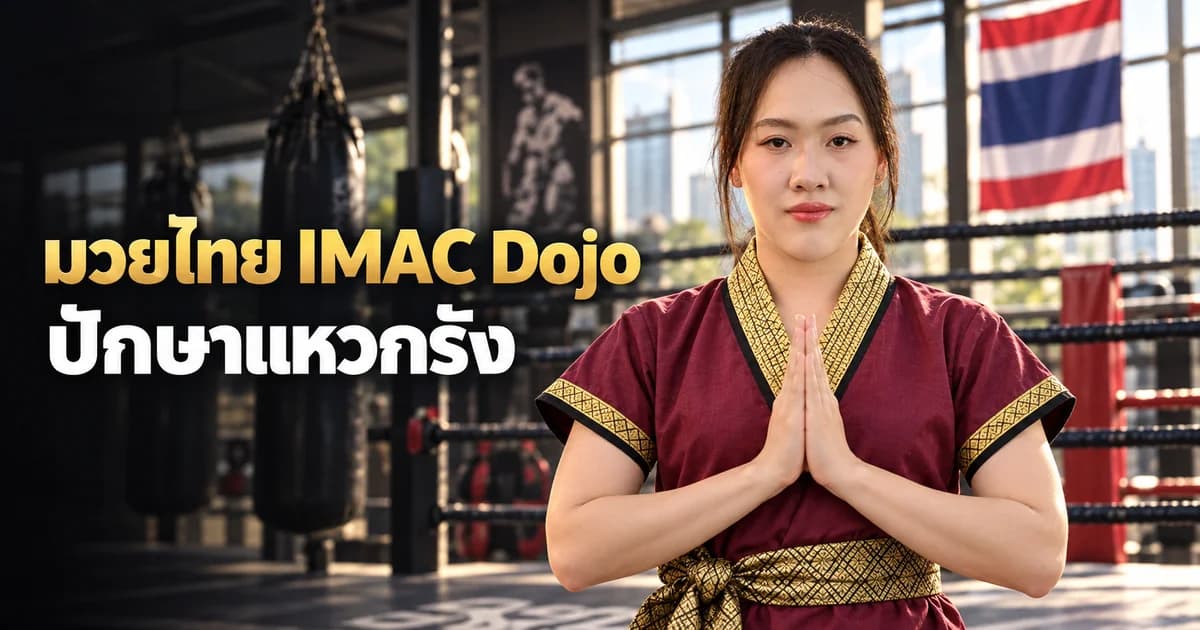
Compiled by Phoenix — Co-founder of IMAC Dojo
 Thaninpong Supapitakpong (Phoenix)Co-founder of IMAC Dojo
Updated 30 Sept 2026
Assigned content reviewer: Patty
- Author
- Thaninpong Supapitakpong (Phoenix)
- Published
- Last updated
- Sources
- 1
- Reading time
- 3 min
Short Answer
The DPE manual labels Paksa Waek Rang an inside reception. The receiver steps diagonally inside the punching arm while arranging the receiving arms and head. Read the whole-body relationship rather than spreading the arms to imitate the name's image.
Key Takeaways
- The manual labels it inside reception.
- The diagonal entry relates to the attacking arm.
- Read receiving arms and head together.
- Compare Salap Fan Pla by entry side and Inao Thaeng Krit by its elbow continuation.
Paksa Waek Rang may look explainable from its two arms, but the manual gives equal reason to study foot entry and head position. Copying the arms alone may leave us unable to explain which side of the incoming punch we occupy.
Printed pages 130–131 of Muaythai Palasueksa Style label the lesson inside reception. Start by locating the relationship to the attacking arm, then follow the receiver's arms and trunk.
In this article
Inside is a relationship, not a screen direction
The manual begins with a straight punch and a diagonal step inside the attacking arm. That reference allows comparison across camera angles or switched partner positions.
Before studying reception, identify the attacking arm and the side occupied by the attacker's trunk. This is more precise than memorizing screen left or right, which is not a technical reference.
The receiving arms work with the head position
The manual describes raising the receiving arms and placing the head between them while following the incoming punch. This is not merely spreading the arms, but arranging protection with the head's location.
Follow shoulders, head and attacking arm as a group, then distinguish each hand. If the camera hides the space between the arms, hand shapes alone cannot confirm the head position shown in the manual.
After entry, the base must still be explainable
The manual combines a diagonal step and trunk position with reception. Entering is therefore not simply walking straight in and raising the arms afterwards. Read the feet before and after entry to understand the change relative to the punch.
Ask an instructor when inside entry begins and when arms and trunk connect with the feet. Slower viewing can separate images, but does not prescribe fixed pauses for every drill.
Use different questions for two comparisons
Salap Fan Pla is outside reception in the manual; Paksa Waek Rang is inside. Compare which side of the attacking arm the receiver moves to, rather than whether both patterns show raised arms.
Inao Thaeng Krit also enters inside but emphasizes an elbow response. A shared entry can connect learning without collapsing the two names into one technique simply because both are inside.
Review the entry and what remains unclear
The attached Muaythai Anywhere clip is named Paksa Waek Rang. Use the manual to frame the starting punch, entry feet, receiving arms and head. These are observation points, not confirmation that every position or spoken explanation is present in the clip.
Review copying spread arms without identifying the side, moving closer while ignoring the head, or watching hands while missing the base. Ask an instructor to separate reception and stepping in controlled partnered work before connecting the lesson's rhythm.
Connect understanding with the lesson
Read about Muaythai Anywhere and Khru Patty, the assigned content reviewer. For dance, see the Wai Kru Muay Thai course.
Paksa Waek Rang — reading the inside reception
A Muaythai Anywhere clip accompanying the DPE manual's inside step, receiving arms and head position.
Video published
Sources and further reading
- Muaythai Palasueksa Style: Paksa Waek Rang, printed pages 130–131 — Department of Physical Education, Institute of Muay Thai ArtReferenceAccessed 29 Sept 2026
Frequently Asked Questions
What defines inside?
The incoming punching arm and attacker's trunk, not screen directions. The manual gives the receiver a diagonal entry inside that arm.
Why watch the head?
The manual explains head position with the receiving arms. Seeing the hands alone cannot confirm the whole arrangement.
How does it differ from Salap Fan Pla?
The manual labels Paksa Waek Rang inside reception and Salap Fan Pla outside reception. The entry side relative to the attacking arm distinguishes them.
Is it the same as Inao Thaeng Krit?
Inside entry is comparable, but Inao Thaeng Krit emphasizes the elbow continuation. Their names should not be treated as fully interchangeable.
Ready to start martial arts?
Message IMAC Dojo to ask which course fits your age, goals, and training background.
Ask on LINE OfficialRelated Articles
Related Topics and Courses
Muaythai