
Mon Yan Lak — understanding the push-kick response through distance and base
The same weapon can answer different problems. Mon Yan Lak begins with an incoming straight punch, inviting study of hand-and-leg distance, trunk position and the base supporting the push kick.
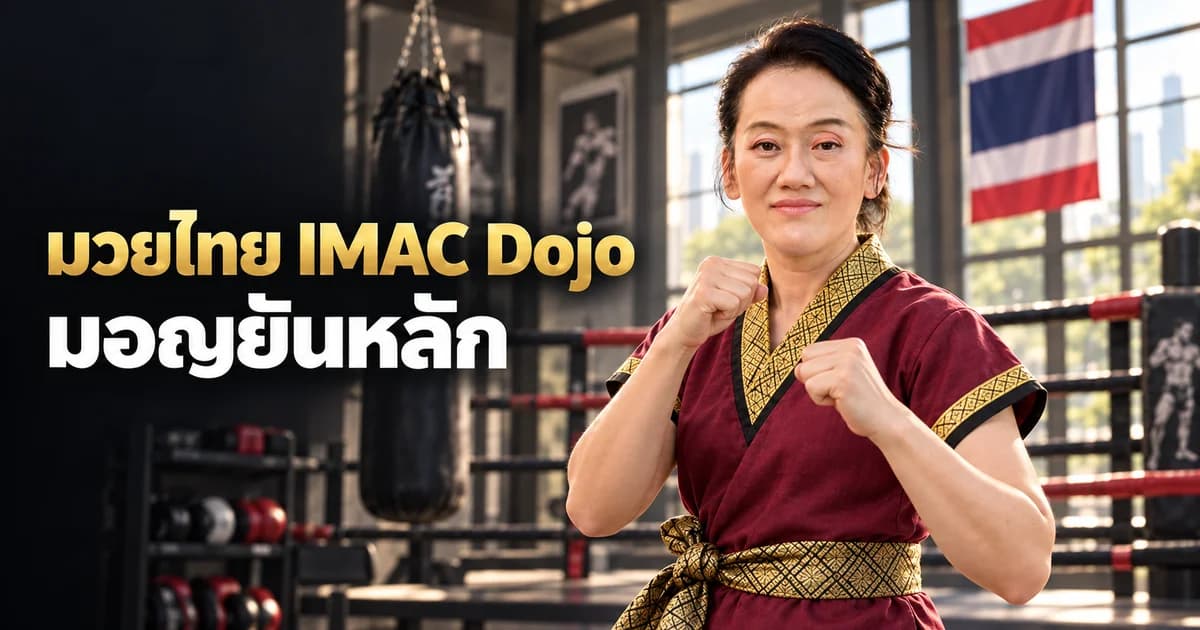
Compiled by Phoenix — Co-founder of IMAC Dojo
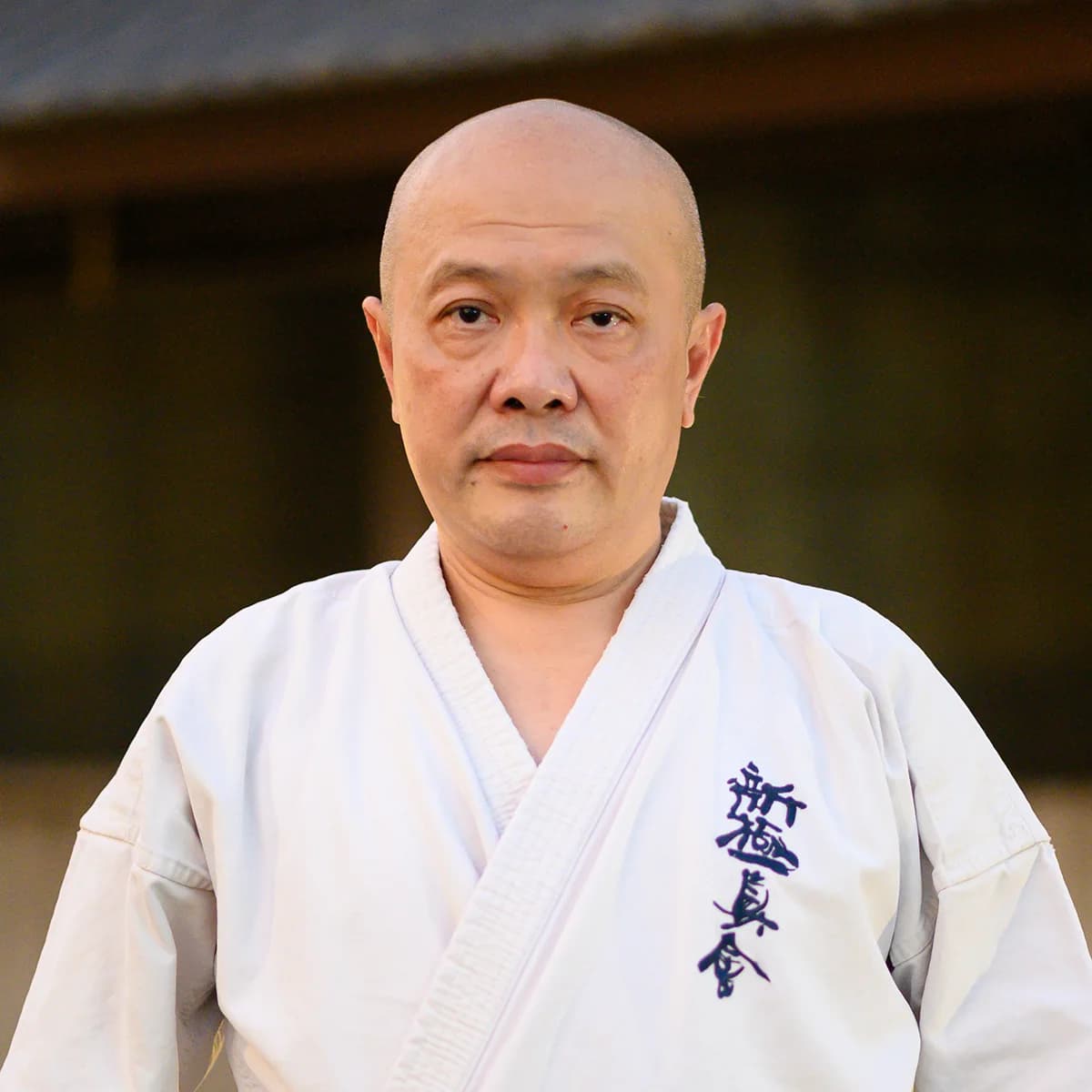 Thaninpong Supapitakpong (Phoenix)Co-founder of IMAC Dojo
Updated 30 Sept 2026
Assigned content reviewer: Patty
- Author
- Thaninpong Supapitakpong (Phoenix)
- Published
- Last updated
- Sources
- 1
- Reading time
- 4 min
Short Answer
The DPE manual presents Mon Yan Lak as answering a punch with a push kick. The attacker enters with a straight punch while the receiver positions the trunk and responds with the foot. Read changing distance, the supporting leg and upper-body protection to distinguish the pattern from an isolated kick without a situation.
Key Takeaways
- The manual begins with a straight punch.
- Read the push kick together with trunk positioning.
- The supporting leg and guard still matter when a leg rises.
- Wirun Hok Klap answers a kick with a push kick, so its starting problem differs.
One push-kick image may tell us which weapon is used, but not why it was selected. Mon Yan Lak adds that second question: the manual begins with the other person's straight punch rather than the extended leg.
Printed pages 140–141 of Muaythai Palasueksa Style describe answering a punch with a push. Reading the clip in that context draws attention to changing distance and the receiver's position, not merely how far the kick reaches.
In this article
The push kick here answers a punch situation
The manual has the attacker advance with a straight punch and the receiver push towards the trunk with the foot. Receiving an attack therefore does not always mean using an arm block; it can involve positioning and another weapon in response to the incoming problem.
Mon Yan Lak is a Mae Mai name. The source used does not explain an ethnic origin or inventor in detail, so the word Mon is not used to infer history. What the text supports is the relationship between the advancing punch and push-kick response.
Punch and kick distance change as people move
The attacker advances in the manual, so distance is not a fixed number before the pattern starts. Read the kick through both people's positions at the same moment, rather than assuming from an extended leg that it works at any time.
Compare the frame before the punch begins with the phase when the foot travels out. Ask how the receiver positions the trunk relative to the closing distance. This helps study timing without making one demonstration a rule for using a push kick against every punch.
When one leg rises, the supporting leg must remain part of the reading
The manual identifies a supporting leg during the kick and describes leaning the trunk. Lean and base therefore belong together. Watching only the outgoing foot may hide where the trainee has transferred their body.
The written explanation also retains face protection, so read it alongside the finishing picture. One visible arm position cannot explain the whole process. An instructor can separate how the arms change during preparation, kicking and the return to stance.
The same push-kick weapon, a different problem from Wirun Hok Klap
The manual uses Wirun Hok Klap against a kick and Mon Yan Lak against a straight punch. Different starting weapons change what matters in observation. A straightened leg alone is not a reason to interchange the names.
Comparing an inside-elbow entry such as Inao Thaeng Krit also highlights distance. Ask where the receiver stands relative to the attacking arm, without concluding that one pattern is better in every situation.
Include the phases before and after the kick
The attached Muaythai Anywhere clip is named Mon Yan Lak. Use the manual to frame questions about the starting punch, trunk position, base and kick line. These are questions, not confirmation that the clip narrates every element.
Review mistakes such as copying a lean without checking the base or watching leg extension while skipping the return to stance. Ask an instructor to check the slow sequence and select equipment drills for the task, rather than testing how hard a partner can be pushed backwards.
Return to the course for review
Read about Muaythai Anywhere and Khru Patty, the assigned content reviewer. For dance and ceremony, see the Wai Kru Muay Thai course.
Mon Yan Lak — answering a punch with a push kick
A Muaythai Anywhere clip for studying the DPE manual's straight-punch situation, trunk position, supporting base and push kick.
Video published
Sources and further reading
- Muaythai Palasueksa Style: Mon Yan Lak, printed pages 140–141 — Department of Physical Education, Institute of Muay Thai ArtReferenceAccessed 29 Sept 2026
Frequently Asked Questions
Does Mon Yan Lak answer a punch or a kick?
The cited manual begins with a straight punch answered by a push kick. Wirun Hok Klap is the push-kick response to a kick.
Should I copy the lean in the picture every time?
Read the lean with the supporting leg and distance rather than making one picture a standard for everyone. Ask an instructor how the position relates to the drill.
Do the hands still matter when the leg is used?
Yes. The manual retains face protection. Read the hands with the base and kick rather than assuming a lifted leg permits abandoning the guard.
Can every straight push kick be called Mon Yan Lak?
The name should not replace every use of the weapon. This article concerns the manual's punch-response Mae Mai, while a straight push kick can appear in many drills.
Ready to start martial arts?
Message IMAC Dojo to ask which course fits your age, goals, and training background.
Ask on LINE OfficialRelated Articles
Related Topics and Courses
Muaythai