
Dap Chawala — redirecting a punch and connecting the response
Read the hands as two different jobs: one arranges the incoming punch line while the other responds. The step and turn belong to the defense; this is not merely exchanging punches from the same position.
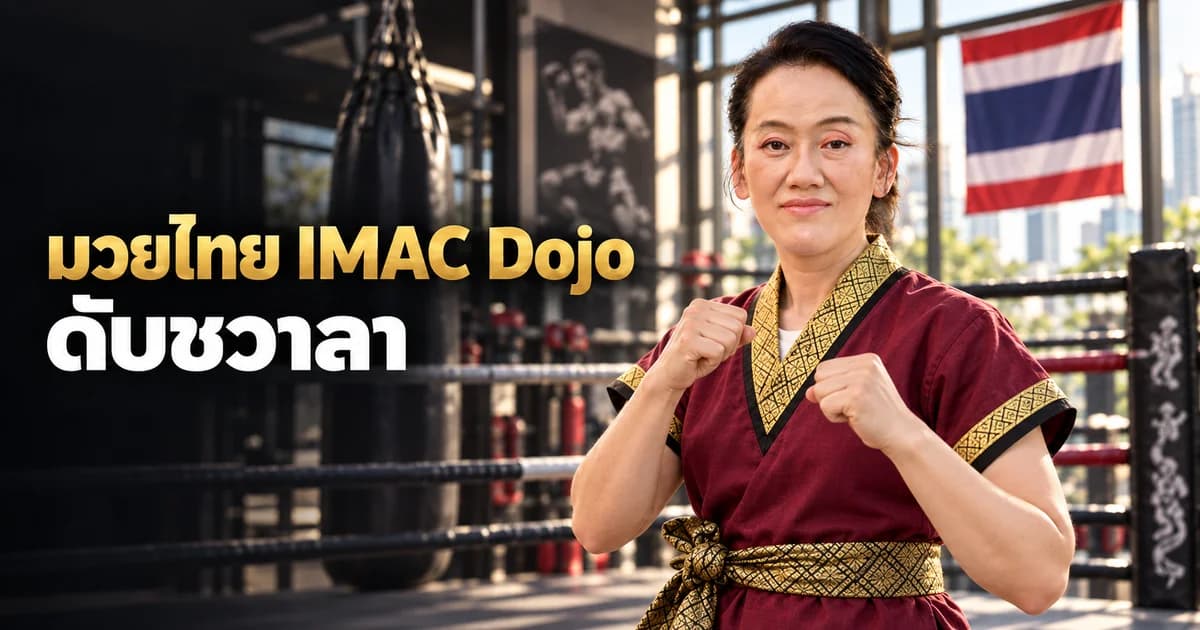
Compiled by Phoenix — Co-founder of IMAC Dojo
 Thaninpong Supapitakpong (Phoenix)Co-founder of IMAC Dojo
Updated 30 Sept 2026
Assigned content reviewer: Patty
- Author
- Thaninpong Supapitakpong (Phoenix)
- Published
- Last updated
- Sources
- 1
- Reading time
- 4 min
Short Answer
Dap Chawala is a Mae Mai pattern described in the DPE manual as closing or redirecting a straight punch and returning a punch. Its key relationship joins the receiving hand, responding hand and repositioning step. Reading only the counterpunch leaves the incoming attack unexplained.
Key Takeaways
- Separate the receiving hand's job from the responding hand's job.
- Read the diagonal step and turn before judging from the final image of two arms.
- Managing the attack line is part of the pattern, not an optional preliminary.
- Review with partner roles and contact set by an instructor.
Two people with crossing arms can look as though both are simply punching. Dap Chawala asks something more precise: which hand changes the incoming punch line, and where does the receiver move as the other hand answers?
This explanation refers to Muaythai Palasueksa Style, printed pages 152–153. The DPE manual describes Dap Chawala as closing the punch and punching back. We use that principle to organize viewing questions for the Muaythai Anywhere clip, without adding an origin story the source does not establish.
In this article
A figurative name and a technical task
Dap Chawala evokes extinguishing a light. What the manual establishes technically is receiving the punch line and answering with a punch. Do not turn the name into a claim that it guarantees unconsciousness or use the metaphor instead of explaining the movement.
The manual starts with the attacker's straight punch and the receiver's entry. It is a paired situation, not an isolated fist shape. Solo review can help remember sequence and formulate questions about direction; timing in relation to another person belongs in an instructor-defined exercise.
Read the hands as separate roles
In the manual, one arm closes or presses the incoming arm's line while the other hand punches. Watching only the returning hand leaves the treatment of the original attack unexplained. Pause before the returning punch reaches its position and ask what the receiving hand is doing.
Connecting timing does not mean moving both hands as fast as possible. It means not losing either role from your understanding. If you can name only the punching hand, describe the receiving hand again so an instructor can tell whether you remember cause and response or only the counter.
The feet change the situation from a stationary exchange
The manual combines a diagonal step and body turn with the arms. Reading the whole body shows that managing the punch line is not only a hand task. The trunk's position relative to the incoming line is also part of the exercise.
Compare the positions before and after the step: how do the shoulders and foot base relate to the partner? An illustrative image does not require one fixed angle for every person. If the body appears to remain on the old line despite moving hands, ask which movement task the instructor intends.
Different from a straight punch or Salap Fan Pla
A straight-punch lesson isolates one weapon. Dap Chawala explores how that weapon connects with receiving an attack. Knowing the punch shape is a foundation to build on, but cannot replace reading the receiving hand and the feet that arrange distance.
The manual emphasizes outside reception in Salap Fan Pla and closing the punch while returning a punch in Dap Chawala. Both may reposition the body, but merging their explanations would lose their separate tasks. Ask which role the lesson needs to reveal before comparing its details.
Trace the response back to the defense
The attached Muaythai Anywhere clip is titled Dap Chawala. First watch the whole pattern, then choose moments before and after the response to follow the receiving hand. If only the returning punch catches your eye, go back to the beginning of the step and ask how the original attack line is handled.
Useful questions for an instructor concern reaching too far with the receiving hand, dropping guard to hurry the reply or abandoning the receiving role before positioning is complete. These are exercise checks, not allegations that the demonstrator makes those mistakes. Separate visible details from camera obstructions and seek an explanation instead of guessing.
Review the roles before increasing the pace
Return to the learning context through the Muaythai Anywhere information and read the profile of Khru Patty, the assigned content reviewer. Ceremony and dance belong to the separate Wai Kru Muay Thai course, rather than this punch-defense task.
Dap Chawala — redirecting the punch and responding
The Muaythai Anywhere lesson accompanies questions about the receiving arm, repositioning feet and returning hand, compared with the Mae Mai explanation in the article.
Video published
Sources and further reading
- Muaythai Palasueksa Style: Dap Chawala, printed pages 152–153 — Department of Physical Education, Institute of Muay Thai ArtReferenceAccessed 29 Sept 2026
Frequently Asked Questions
Is Dap Chawala simply a counterpunch?
That description is incomplete. The manual connects closing or redirecting the punch with returning a punch and repositioning through a step.
Which hand should I watch first?
After the overview, try following the receiving hand before the responding hand, which already draws attention. Separating the roles helps you retain the defensive part.
Does the name guarantee a punching result?
No. The name is figurative, not evidence of a guaranteed outcome. This article concerns the relationship between receiving the attack and positioning.
Should my partner punch quickly to test the pattern?
Have an instructor establish the roles, timing and contact first. Increasing speed before understanding the receiving hand and feet does not explain whether the pattern is correct.
Ready to start martial arts?
Message IMAC Dojo to ask which course fits your age, goals, and training background.
Ask on LINE OfficialRelated Articles
Related Topics and Courses
Muaythai